
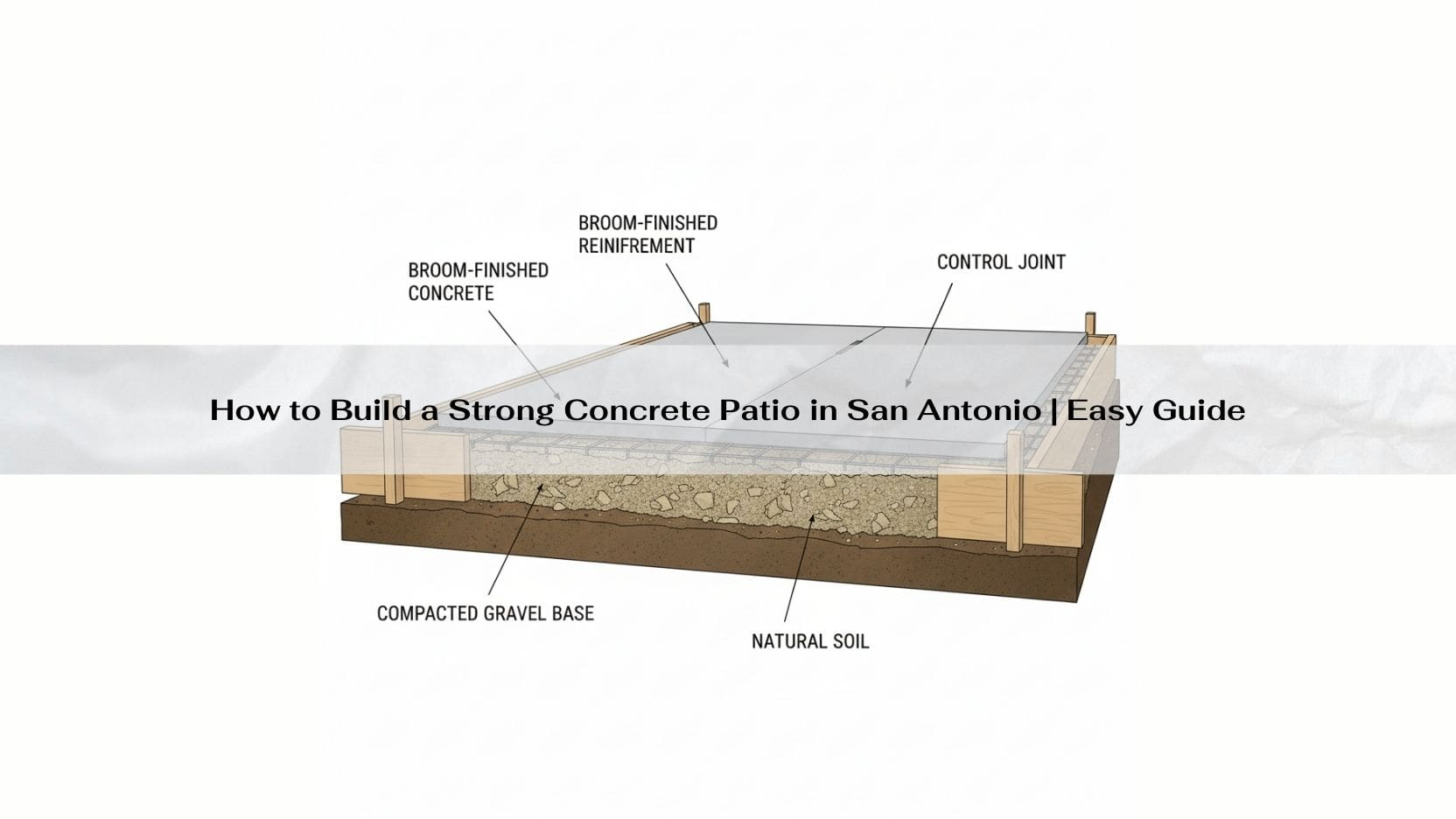
A concrete patio is one of the best upgrades for homes and commercial spaces in San Antonio. It adds comfort, improves outdoor living, and boosts property value. One homeowner said, “I wanted a space where my family could sit outside without worrying about the Texas heat. A concrete patio made that easy.”
San Antonio’s weather, strong sun, sudden rain, and shifting soil makes it important to build patios the right way. A well-made patio can last decades with almost no maintenance.
1. Plan Your Patio Layout
Before you start, think about how you will use the patio. Will it be for seating, grilling, or outdoor dining? Space matters. Most experts suggest at least 120–200 square feet for a comfortable layout.
Sunlight also matters. A sunny area works well for morning coffee. A shaded area stays cooler in the Texas heat.
Drainage is important too. A small slope helps water flow away from your home. Builders in San Antonio often say, “You don’t want water sitting near the foundation. Even a mild slope makes a big difference.”
2. Choose the Right Concrete Mix
Concrete patios in Texas need strength. A 3,000–3,500 PSI concrete mix works well for most residential patios. Commercial patios may need 4,000 PSI or more.
Decorative finishes like stamped concrete or stained concrete are popular in San Antonio because they give the look of stone or tile for a much lower price. Many property managers prefer these finishes because they are slip-resistant and easy to clean.
A recent outdoor flooring report shows more than 70% of homeowners choose concrete because it lasts longer than wood or pavers.
3. Prepare the Ground
Good ground prep is the secret to a long-lasting patio. Studies on concrete surfaces show that soil movement causes most cracks, not the concrete itself.
Steps include:
- Mark the patio area
- Remove 4–6 inches of soil
- Add a gravel base
- Compact the base for strength
A contractor said, “If the base fails, the patio fails. It’s that simple.”
4. Build Sturdy Forms
Forms hold the shape of your patio. Wood boards work for most projects.
Well-built forms keep edges straight and help maintain the slope for drainage. This is especially important in areas with heavy rain like San Antonio.
5. Pour and Finish the Concrete
Pouring concrete takes timing and skill. After pouring, the surface is leveled with a screed. Then it’s smoothed using a float.
For safety, a broom finish adds texture so the surface is not slippery when wet. This is helpful for homes with kids or businesses expecting foot traffic.
Control joints should be added every 4–6 feet. These joints guide cracking so it happens in clean lines instead of random breaks.
6. Cure the Concrete the Right Way
Curing is the final step. Most patios reach full strength after 28 days.
In hot weather, moisture curing is important. Studies show concrete cured with moisture stays up to 20% stronger than dry-cured concrete.
Most patios can handle light foot traffic after 24–48 hours.
7. Add Features that Boost Value
San Antonio homeowners often upgrade patios with:
- Fire pits
- Built-in seating
- Stained or colored concrete
- Outdoor kitchens
- Sealed surfaces for UV protection
These upgrades can increase outdoor living value by 8–12%, according to recent real estate reports.
One builder said, “People in Texas spend a lot of time outdoors. A good patio pays you back.”
Final Thoughts
A concrete patio is a smart investment for homes and businesses in San Antonio and Houston. It’s strong, affordable, and works well in the Texas climate. With the right planning and construction steps, your patio can stay beautiful for years.
For more cell us at 713-504-2341, Email: info@affordableconcretesanantonio.com