
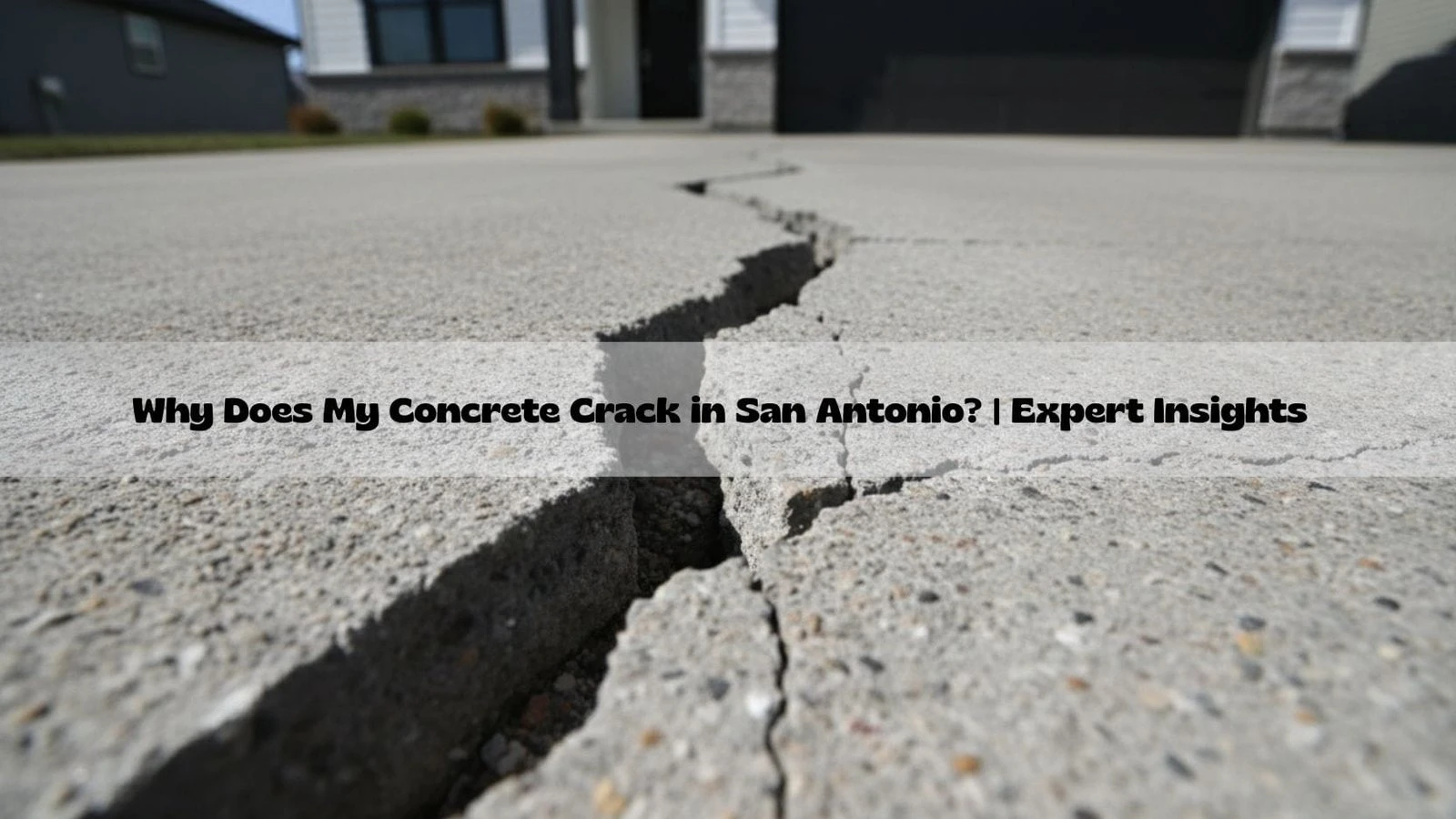
Concrete is a durable material used in many construction projects, from driveways and patios to foundations and sidewalks. However, despite its strength, concrete is prone to cracking over time. If you’re asking, Why does my concrete crack in San Antonio?, you’re not alone. Concrete cracking is a common issue, especially in regions like San Antonio, where the climate and soil conditions can significantly impact concrete durability.
In this article, we’ll explore the reasons why concrete cracks in San Antonio, how to prevent it, and the best ways to repair cracked concrete. Whether you’re dealing with small surface cracks or large structural issues, understanding the causes and solutions will help maintain the longevity of your concrete surfaces.
What Causes Concrete to Crack?
Concrete is a mixture of cement, water, aggregates, and sometimes additives that work together to create a strong, solid surface. However, several factors can cause this surface to crack over time. In San Antonio, the following reasons are the most common contributors to concrete cracking:
1. Shrinkage and Curing Issues
Concrete naturally shrinks as it dries and cures. If the curing process isn’t done correctly, this shrinkage can lead to surface cracking. This is often seen in newly poured concrete that hasn’t been properly maintained during the curing process.
2. Temperature Fluctuations
San Antonio experiences a hot, dry climate, with temperatures varying significantly throughout the year. Concrete expands in the heat and contracts in the cold. This continuous thermal cycling can cause the concrete to crack over time. Temperature fluctuations can also exacerbate shrinkage, leading to more prominent cracks.
3. Soil Movement
The soil beneath concrete plays a crucial role in its stability. San Antonio’s expansive clay soils are prone to shifting due to moisture changes. When the soil beneath the concrete becomes too dry or overly saturated, it can cause the concrete to shift, resulting in cracks. The foundation of a concrete slab can crack if the soil beneath it moves.
4. Improper Concrete Mix
A poorly mixed batch of concrete can have an improper balance of water and cement, which compromises its strength and flexibility. This leads to a higher likelihood of cracking, especially in the early stages after pouring. Contractors should always ensure the right mix is used for each specific project.
5. Heavy Loads and Traffic
Heavy traffic or constant pressure on concrete surfaces, such as driveways or sidewalks, can lead to cracks. Over time, the weight of vehicles or other heavy objects can cause the concrete to crack, especially if the slab wasn’t designed to support such loads.
6. Poor Installation or Overloading
If the concrete was poorly installed or the load requirements were miscalculated, cracks can appear over time. Whether the concrete was poured without proper reinforcement, or the slab was too thin, the structure will be vulnerable to cracking.
How to Prevent Concrete Cracks in San Antonio
Prevention is key when it comes to maintaining the integrity of your concrete. While some environmental factors are out of your control, there are a number of steps you can take to minimize the risk of cracks:
1. Ensure Proper Concrete Curing
Proper curing is essential for the durability of concrete. Ensure that the concrete is kept moist for a sufficient amount of time after pouring to avoid premature shrinkage and cracking. Curing compounds can be used to retain moisture and prevent rapid evaporation.
2. Install Expansion Joints
Expansion joints allow concrete to expand and contract with temperature changes without causing cracks. These joints are often placed in areas with heavy traffic or where temperature fluctuations are more extreme. They provide a space for the concrete to move without causing damage.
3. Use Reinforcement Techniques
Using reinforcement such as rebar or wire mesh within the concrete slab helps to maintain its structural integrity. This is particularly important for larger projects like driveways and foundations. Reinforcement helps distribute weight and reduces the chances of cracking under pressure.
4. Level and Compact the Soil
Before pouring concrete, it’s important to ensure that the soil beneath is properly compacted and leveled. Soil that is uneven or not adequately compacted can shift over time, causing the concrete to crack. For expansive soils, consider using soil stabilization techniques to prevent movement.
5. Control the Moisture Around Concrete
To avoid soil movement that leads to cracks, it’s important to control moisture levels around concrete. This can be achieved by ensuring proper drainage and avoiding excessive water pooling around concrete surfaces.
6. Choose the Right Concrete Mix
Make sure the concrete mix is designed to meet the needs of the specific environment and load requirements. For example, if your project involves areas that will bear heavy loads, you may need a stronger concrete mix with additional reinforcement.
How to Repair Cracked Concrete in San Antonio
Even with proper care, cracks can still form over time. If you’ve noticed cracks in your concrete, don’t panic. There are several ways to repair them, depending on the severity of the damage.
1. Small Cracks
For minor surface cracks, a simple concrete patching compound can be used to fill in the gap. These products are widely available and can be applied with a putty knife or trowel. After filling the crack, smooth out the surface for a seamless finish.
2. Larger Cracks
For larger cracks that run deep into the concrete, the area will need to be cleaned out and reinforced before applying a patching material. It’s essential to fill in the crack with a durable bonding agent or a concrete filler that will withstand pressure and weather.
3. Cracked Concrete Slabs
If the crack is large enough to affect the structural integrity of the concrete slab, you may need professional help. Cracked slabs often require more extensive repairs, such as the installation of reinforcement or complete resurfacing of the affected area.
When to Call a Professional Concrete Contractor
While minor cracks can often be fixed as a DIY project, larger and more severe cracks should be assessed by a professional concrete contractor. If you’re dealing with foundation issues, extensive cracking, or shifting concrete, a contractor will be able to diagnose the problem and offer effective solutions.
If you’re experiencing concrete cracks in San Antonio, contact us at Affordable Concrete San Antonio for expert repair services. We provide top-notch concrete solutions that ensure long-lasting results for your concrete surfaces.
Conclusion
Concrete cracks can be a frustrating issue, but understanding the causes and solutions can help you prevent further damage. In San Antonio, the main culprits of concrete cracking include shrinkage, temperature fluctuations, soil movement, and improper installation. By following proper installation techniques and preventive measures, you can significantly reduce the chances of cracks forming.
For expert concrete repair services in San Antonio, call us 713-504-2341 today and get your concrete surfaces fixed by professionals who understand the local climate and soil conditions.