
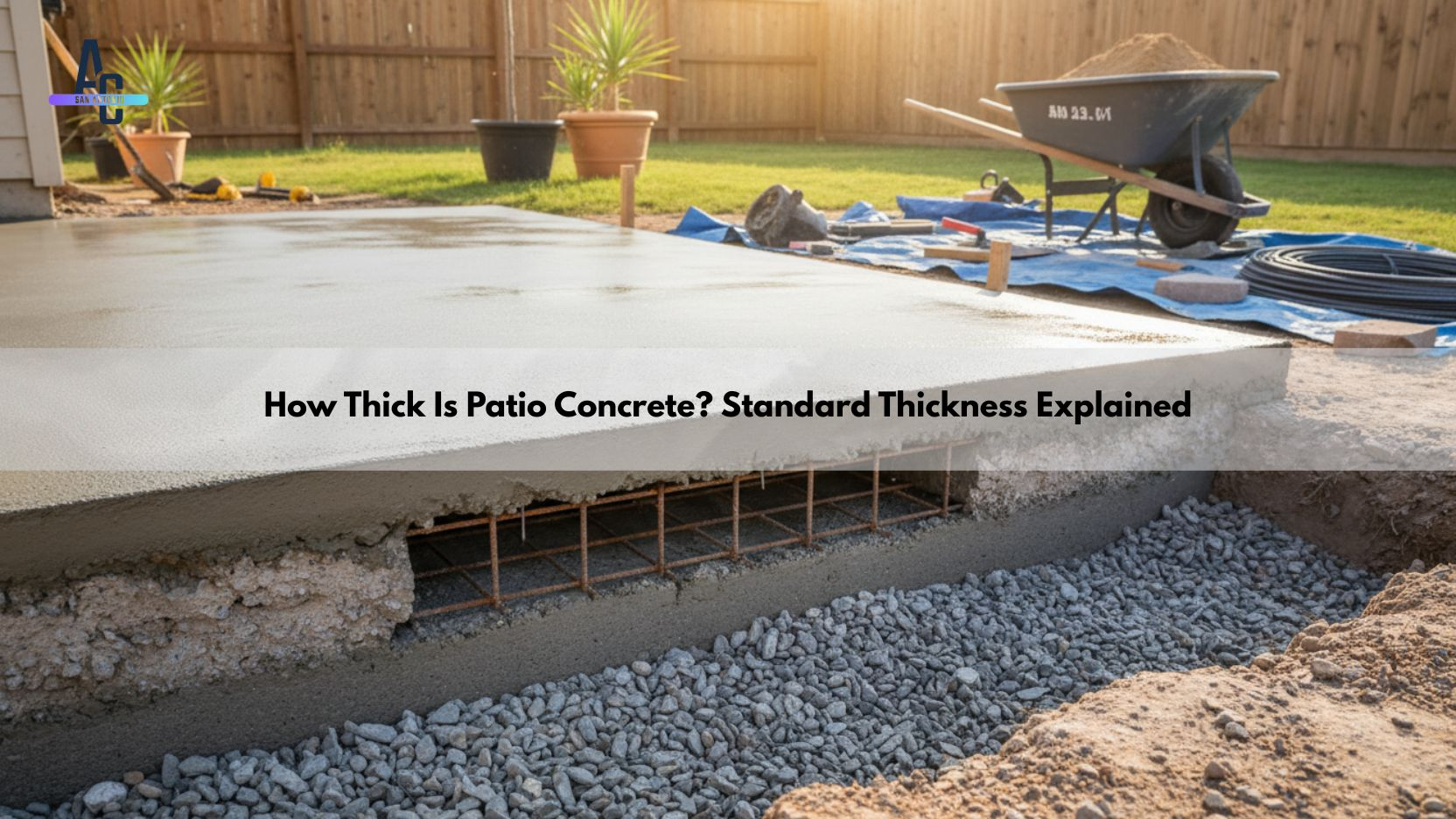
“How thick is patio concrete?” sounds like a simple question but in practice, it’s one of the most common reasons patios crack, settle, or fail prematurely.
From a concrete contractor’s perspective, thickness is not just a number. It directly affects load capacity, durability, drainage behavior, crack resistance, and long-term maintenance costs. Pouring a patio that’s too thin may save a little money upfront, but it often leads to expensive repairs or full replacement within a few years.
In most residential situations, the correct patio concrete thickness is 4 inches. However, that is not a universal rule. Soil conditions, climate, reinforcement, base preparation, and intended use can all justify thicker slabs.
This guide explains how thick patio concrete should be, why that thickness matters, when thicker is required, and what actually causes patio slabs to fail in the real world so you can make a decision that lasts decades, not seasons.
Key Takeaways
- 4 inches is the standard patio concrete thickness for residential foot traffic and outdoor furniture
- 5–6 inches is recommended for patios supporting hot tubs, outdoor kitchens, or heavy loads
- Concrete thickness alone is not enough base preparation and reinforcement are equally critical
- Thinner slabs fail due to soil movement, freeze-thaw cycles, and poor subgrade, not concrete strength
- Cutting corners on thickness often leads to cracking, settling, and premature replacement
What Is the Standard Thickness for Patio Concrete?
For most homes, the industry-accepted standard is clear:
A residential concrete patio should be 4 inches thick.
This thickness is widely used because it balances structural performance, material cost, and ease of installation. When installed correctly, a 4-inch slab can handle:
- Regular foot traffic
- Patio furniture and grills
- Planters and light décor
- Normal residential weather exposure
However, this standard assumes proper base preparation and reinforcement. A 4-inch slab poured on poorly compacted soil can fail faster than a 6-inch slab built on a stable base.
Why 4 Inches Works
- Provides sufficient flexural strength for residential loads
- Allows proper curing without excessive shrinkage stress
- Compatible with standard rebar or wire mesh reinforcement
- Meets most residential building guidelines and contractor best practices
This is why 4 inches is often described as the minimum acceptable thickness, not an automatic guarantee of durability.
When Does a Patio Need Thicker Concrete?
There are many situations where 4 inches is not enough.
Use-Based Thickness Recommendations
| Patio Use Case | Recommended Thickness |
| Light residential patio | 4 inches |
| Outdoor kitchen or fireplace | 5 inches |
| Hot tub or spa | 6 inches |
| Commercial patio | 6–8 inches |
| Vehicle access (rare cases) | 6+ inches |
Why Thicker Concrete Is Necessary
Concrete does not fail because it is weak it fails because stress exceeds its ability to flex without cracking. Thicker slabs distribute stress over a wider area, reducing cracking risk.
Situations that increase stress include:
- Concentrated point loads (hot tubs, masonry features)
- Uneven soil settlement
- Expansive clay soils
- Freeze-thaw cycles
- Heavy snow loads
In these cases, adding thickness is cheaper than repairing structural damage later.
Concrete Thickness vs Strength: A Critical Distinction
Many homeowners assume higher PSI concrete can compensate for reduced thickness. This is a costly misconception.
Why PSI Does Not Replace Thickness
- PSI measures compressive strength, not bending resistance
- Patio slabs fail due to flexural stress, not crushing
- Thinner slabs crack even with high-strength concrete
A 3-inch slab made with high-PSI concrete will still crack under normal patio conditions.
Thickness controls load distribution. Strength controls surface durability. You need both.
The Role of the Base: Thickness Alone Is Not Enough
From a contractor’s standpoint, the most common patio failures are caused by poor base preparation, not insufficient concrete strength.
Proper Base Requirements
A well-built patio slab should sit on:
- 4–6 inches of compacted crushed stone or gravel
- Soil compacted to prevent settlement
- Proper grading for water runoff
- Optional vapor barrier in certain climates
Why the Base Matters More Than an Extra Inch of Concrete
- Prevents differential settlement
- Improves drainage beneath the slab
- Reduces freeze-thaw heaving
- Supports uniform load transfer
A 4-inch slab on a solid base outperforms a 6-inch slab poured on loose soil.
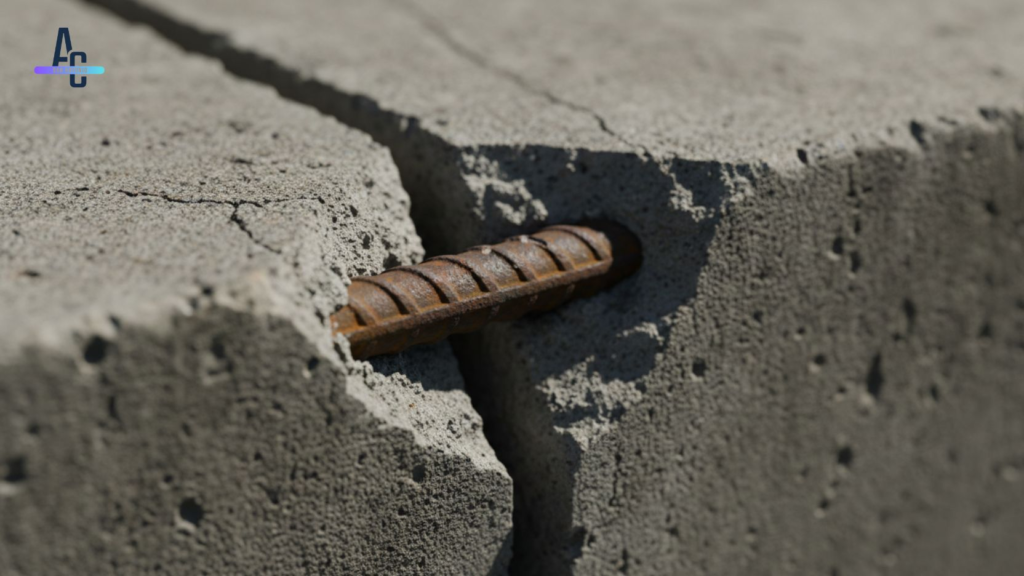
Reinforcement: What Actually Prevents Cracking?
Concrete cracks. The goal is controlling where and how it cracks, not eliminating cracks entirely.
Common Reinforcement Options
- Welded wire mesh – standard for residential patios
- Rebar grid – preferred for thicker slabs and heavy loads
- Fiber-reinforced concrete – helps with micro-cracks, not structural support
What Reinforcement Does (and Doesn’t Do)
- Reinforcement does not prevent cracking
- It holds cracks tight and prevents displacement
- Improves long-term durability and appearance
Skipping reinforcement to save money is one of the most common professional regrets.
Climate Considerations That Affect Patio Thickness
Environmental conditions significantly influence slab performance.
Cold Climates
- Freeze-thaw cycles cause soil movement
- Thicker slabs reduce stress concentration
- Proper base drainage is critical
Hot, Dry Climates
- Rapid moisture loss increases shrinkage cracking
- Proper curing matters more than extra thickness
Wet or Poorly Drained Areas
- Saturated soil weakens slab support
- Thicker concrete plus drainage solutions are recommended
In challenging climates, 5 inches becomes a practical minimum, even for standard patios.
Common Mistakes, Risks, and Consequences
1. Pouring 3 Inches “Because It Looks Thick Enough”
- Why it happens: Cost cutting or bad advice
- What goes wrong: Cracking within months
- How to avoid it: Never pour less than 4 inches for a patio
2. Skipping the Base Layer
- Why it happens: Time pressure or budget constraints
- What goes wrong: Settling, uneven slabs, drainage failure
- How to avoid it: Always compact gravel base properly
3. Assuming Reinforcement Is Optional
- Why it happens: Misunderstanding concrete behavior
- What goes wrong: Widening cracks and slab movement
- How to avoid it: Use mesh or rebar consistently
4. Ignoring Load Changes
- Why it happens: Future upgrades not considered
- What goes wrong: Hot tub or kitchen added later causes cracking
- How to avoid it: Plan thickness for future use, not just today
Step-by-Step: How Professionals Determine Patio Concrete Thickness
- Evaluate soil conditions: Identify clay, sand, or mixed soil and drainage behavior
- Assess intended load: Furniture vs structural features vs concentrated weight
- Account for climate exposure: Freeze-thaw risk, rainfall, temperature swings
- Design base depth and compaction: Adjust thickness if base conditions are marginal
- Select reinforcement strategy: Match rebar or mesh to slab thickness
- Set thickness with long-term use in mind: Slightly thicker now prevents expensive retrofits later
This process avoids guesswork and ensures predictable performance.
Cost vs Longevity: Is Thicker Concrete Worth It?
Upfront Cost Difference
- Increasing from 4 to 5 inches adds ~25% more concrete
- Labor cost difference is minimal
- Reinforcement cost remains similar
Long-Term Financial Reality
- Thicker slabs last longer
- Reduced repair and replacement costs
- Higher resale appeal
In contractor experience, adding one extra inch often extends service life by a decade or more under demanding conditions.
Special Cases Where Standard Advice Does Not Apply
Rooftop or Elevated Patios
- Require engineered slab thickness
- Structural load calculations mandatory
Sloped or Retaining-Wall Adjacent Patios
- Higher lateral soil pressure
- Thicker slabs and reinforced edges required
Patios Integrated with Driveways
- Must meet driveway thickness standards
- 6 inches minimum recommended
These scenarios require professional evaluation standard residential guidelines are not sufficient.
FAQs
Is 4 inches of concrete thick enough for a patio?
Yes, 4 inches is sufficient for most residential patios with proper base preparation and reinforcement. It is not adequate for hot tubs, heavy masonry features, or poor soil conditions.
Can I pour a patio thicker only in certain areas?
Yes. Contractors often thicken sections under heavy loads while keeping the rest at 4 inches. This approach balances cost and performance when planned correctly.
Does thicker concrete prevent cracking?
Thicker concrete reduces crack severity and frequency, but it does not eliminate cracking. Proper joints, curing, and reinforcement are still required.
Is fiber-reinforced concrete enough without rebar?
No. Fiber helps control micro-cracks but does not replace structural reinforcement for patio slabs.
How thick should a concrete patio be in cold climates?
In freeze-thaw regions, 5 inches is often a safer minimum, combined with excellent drainage and a compacted base.
Can an existing thin patio be reinforced later?
Surface reinforcement is limited. Structural thickness cannot be added without overlay systems or replacement. Planning thickness upfront is always cheaper.
Final Thoughts: Getting Patio Concrete Thickness Right
So, how thick is patio concrete supposed to be?
For most homes: 4 inches minimum.
For heavier use, difficult soils, or future upgrades: 5–6 inches is the smart choice.
Concrete patios fail not because homeowners choose bad materials but because thickness, base preparation, and load planning are underestimated. Getting these right upfront delivers decades of performance with minimal maintenance.
If you want professional guidance tailored to your soil, climate, and usage plans, consult a qualified contractor for expert evaluation and long-term results.