
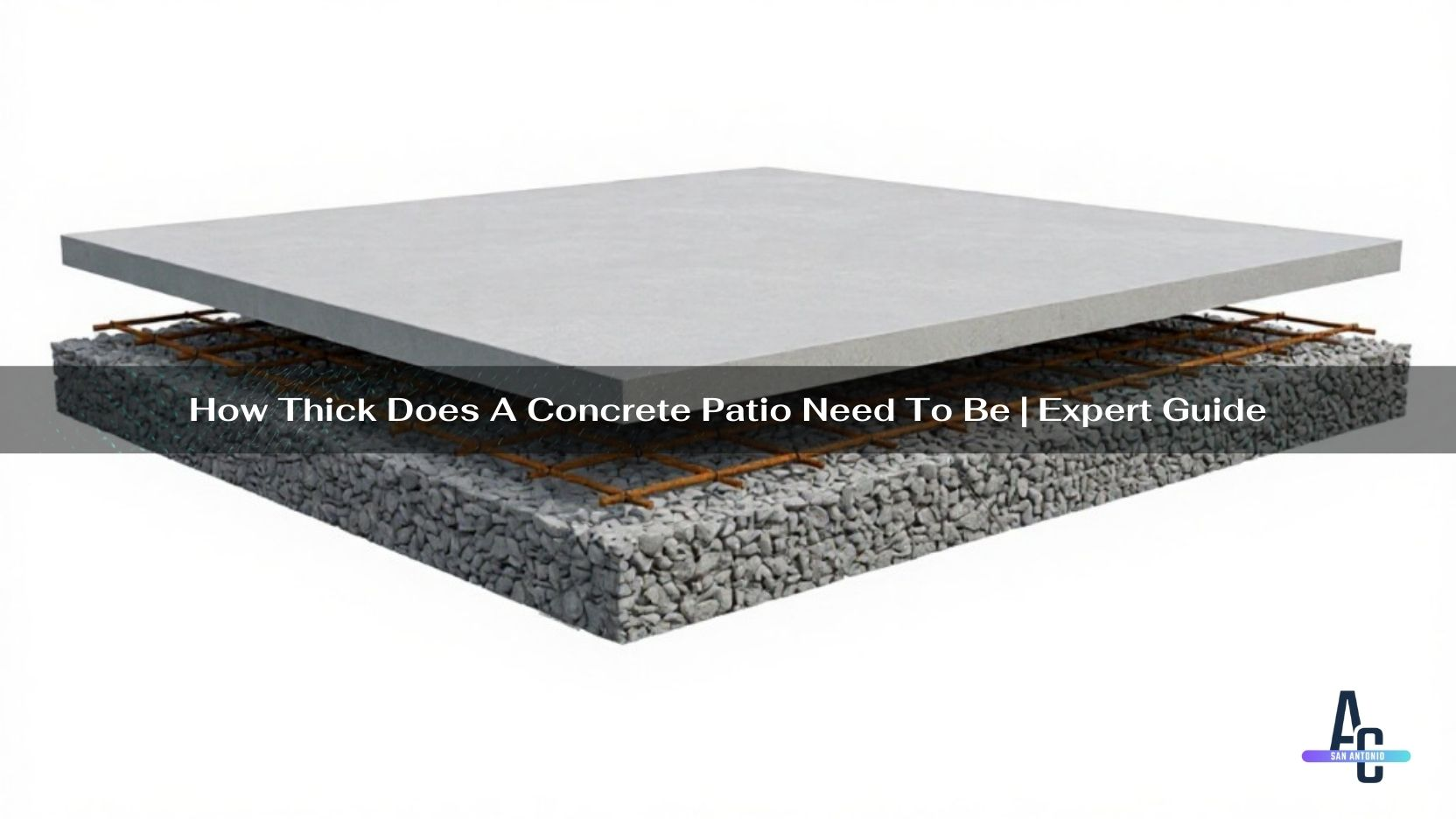
Building a concrete patio involves more than just pouring a slab. One of the most critical decisions is how thick a concrete patio needs to be. Thickness directly affects durability, load-bearing capacity, and longevity. This guide provides a comprehensive overview of patio thickness considerations, from residential use to heavier applications.
Why Concrete Patio Thickness Matters
The thickness of a concrete patio determines:
- Structural strength: Thin slabs can crack or fail under weight.
- Durability: Proper thickness resists weathering and ground movement.
- Safety: Adequate thickness ensures a stable surface for furniture, foot traffic, or vehicles.
- Cost-effectiveness: Overbuilding increases costs unnecessarily; underbuilding risks premature failure.
In short, the right thickness balances performance, safety, and cost.
Standard Concrete Patio Thickness Guidelines
Residential Patios (Foot Traffic)
For patios used primarily for walking and standard backyard furniture:
- Typical thickness: 3–4 inches (7.5–10 cm)
- Suitable for:
- Walkways
- Small seating areas
- Light outdoor furniture
- Reinforcement: Wire mesh or rebar is optional but recommended to reduce cracking.
Patios Supporting Heavy Loads
If the patio may support heavier objects (grills, planters, or small vehicles):
- Recommended thickness: 4–6 inches (10–15 cm)
- Reinforcement: Steel rebar or welded wire mesh is strongly recommended.
- Base: Compacted gravel or crushed stone improves load distribution.
Driveway-Grade Patios (Vehicle Access)
For patios designed to occasionally support vehicles:
- Minimum thickness: 6 inches (15 cm)
- Reinforcement: Full rebar grid or structural mesh.
- Base: 4–6 inches of compacted aggregate to prevent settling.
Factors Influencing Concrete Patio Thickness
Thickness is not one-size-fits-all. Key factors include:
- Soil type
- Clay soils expand and contract more than sandy soils.
- Poor soil may require thicker slabs or a reinforced base.
- Climate
- Freeze-thaw cycles increase cracking risk.
- Slabs in colder regions often need to be thicker or reinforced.
- Intended use
- Light foot traffic: 3–4 inches
- Furniture and planters: 4–5 inches
- Vehicles: 6 inches or more
- Slab shape and size
- Large slabs are more prone to cracking.
- Consider expansion joints for slabs wider than 10 feet.
Reinforcement Considerations
Concrete is strong in compression but weak in tension. Reinforcement helps prevent cracking and extends lifespan:
- Wire mesh: Reduces minor cracks; best for residential patios under 5 inches thick.
- Rebar: Provides structural support for heavier loads; placed at mid-slab height for optimal performance.
- Fiber reinforcement: Improves crack resistance; often used with other methods.
Base Preparation and Subgrade
A proper base is as important as slab thickness:
- Compacted subgrade: Remove topsoil and compact the soil to prevent settling.
- Aggregate base: 2–6 inches of gravel or crushed stone enhances drainage and load distribution.
- Sand layer: Optional 1-inch layer for leveling; prevents direct soil-slab contact.
Common Misconceptions About Patio Thickness
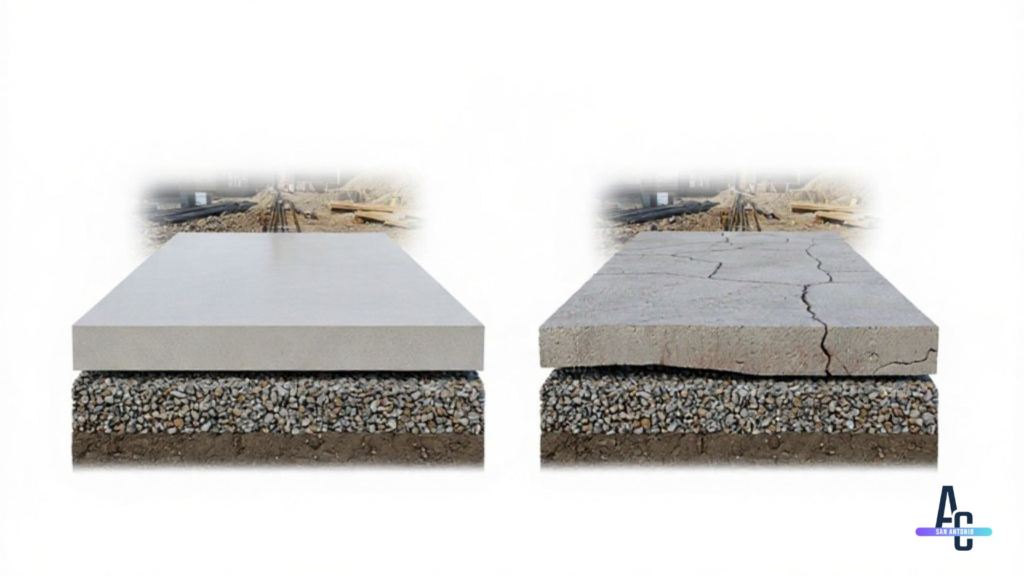
- “Thicker is always better”: Excessive thickness increases cost and may create uneven curing without improving performance.
- “Reinforcement is optional”: For most slabs over 4 inches or with heavy use, reinforcement is crucial for durability.
- “All patios require the same thickness”: Thickness depends on soil, climate, and load requirements.
Step-By-Step Thickness Planning For Your Patio
- Determine intended use – Foot traffic, furniture, or vehicles?
- Assess soil and drainage – Conduct a soil test if unsure.
- Decide slab size – Larger slabs may need thicker sections or more joints.
- Select reinforcement – Wire mesh, rebar, or fibers depending on load.
- Choose slab thickness – Match use-case with recommended guidelines.
- Prepare subgrade and base – Remove topsoil, compact soil, and lay aggregate.
- Pour and cure concrete – Maintain moisture for at least 7 days to prevent cracking.
Use Cases
- Backyard patios: 3–4 inches thick, reinforced with wire mesh.
- Outdoor dining areas: 4–5 inches thick with rebar for furniture loads.
- Driveway-adjacent patios: 6 inches thick with a full rebar grid and compacted base.
Key Takeaways
- 3–4 inches: Foot traffic, lightweight furniture
- 4–6 inches: Heavier furniture, occasional vehicles
- 6+ inches: Regular vehicle use, driveway-style patios
- Always consider soil type, climate, and reinforcement needs
- Proper base preparation is essential for long-term durability
Correct thickness, combined with proper base preparation and reinforcement, ensures a concrete patio that is safe, durable, and long-lasting.
Conclusion
Determining how thick a concrete patio needs to be is a critical step in designing a durable, safe, and long-lasting outdoor space. Thickness depends on several factors, including intended use, soil conditions, climate, slab size, and reinforcement requirements.
For light foot traffic, 3–4 inches is typically sufficient, while patios supporting furniture or occasional vehicles require 4–6 inches, and areas exposed to regular vehicle weight should be at least 6 inches thick. Proper base preparation, drainage, and reinforcement are just as important as the slab thickness itself.
By carefully considering these factors, homeowners and builders can create concrete patios that resist cracking, withstand environmental stresses, and maintain structural integrity over time. Correct planning and execution ensure that a concrete patio is not only functional but also a long-term investment in outdoor living.