
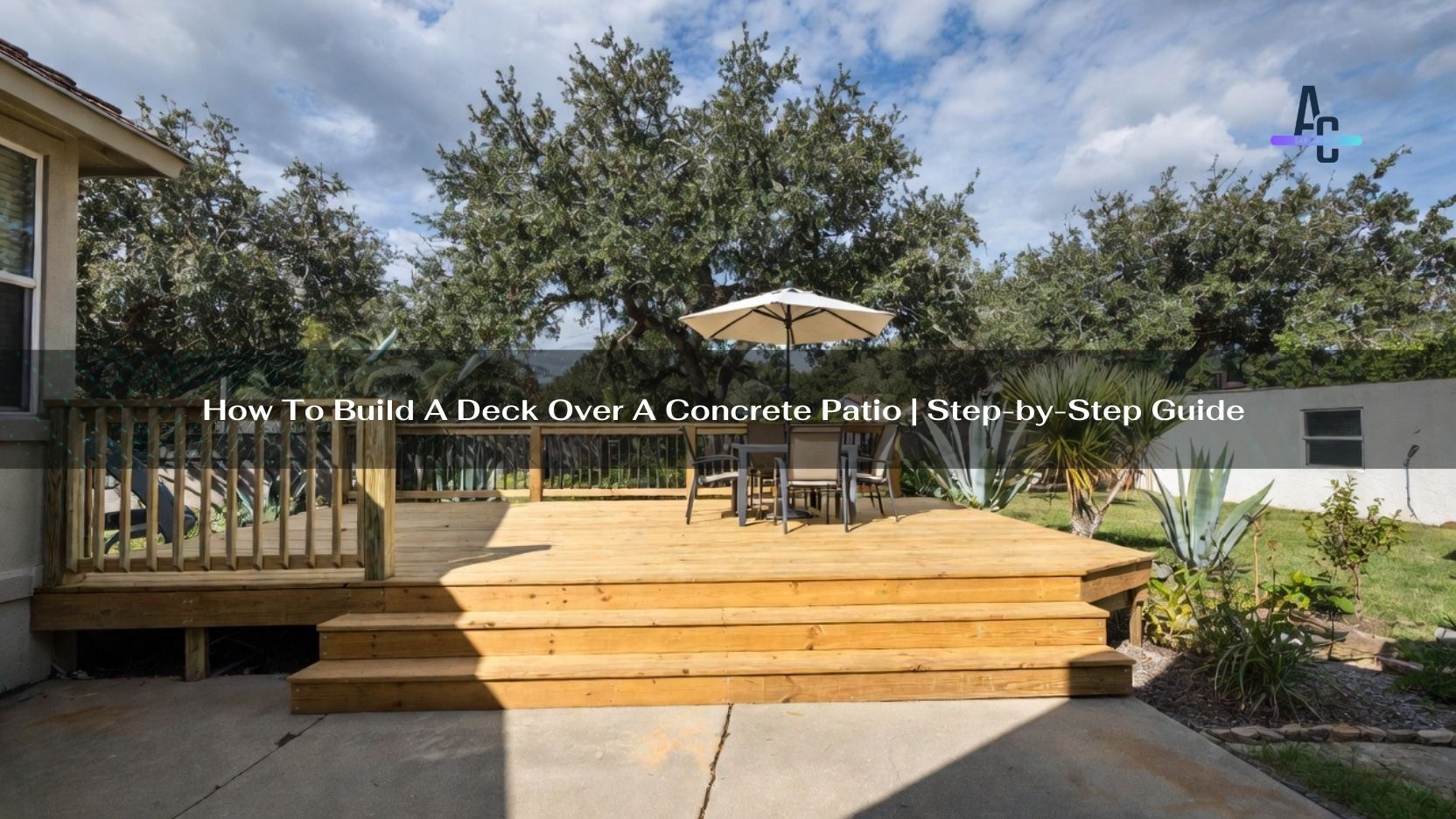
Your old patio can be the base for a new deck, but only if the slab is ready for it. This guide shows how to build a deck over a concrete patio step by step, what to check first in San Antonio clay soil, what it typically costs, and when to call a pro.
- Can you build a deck over a concrete patio?
- How do I know my patio can hold a deck?
- Why build a deck over concrete instead of tearing it out?
- What do you need to build a deck over a concrete patio?
- How do you build a deck over a concrete patio, step by step?
- Can you put a composite deck over a concrete patio?
- How much does it cost to build a deck over a concrete patio?
- Do you need a permit for a deck over a patio in San Antonio?
- What mistakes should you avoid when decking over concrete?
- Can you build a deck over a concrete porch or driveway?
- Should you build it yourself or call a pro?
- Where do we work?
- What else are homeowners asking?
Yes, you can build a deck over a concrete patio if the slab is level, drains, and is not moving. Fasten treated or composite sleepers 12 to 16 inches apart over a moisture barrier. San Antonio clay soil shifts slabs, so call a pro first if cracks are wider than 1/4 inch or sections have sunk.
Can you build a deck over a concrete patio?
Yes, in most cases. A sound concrete slab is a flat, solid base for a low deck, so you can skip digging footings and tearing out the old patio.
The catch is the word “sound.” A deck built on low-profile sleepers follows the slab under it. If the patio is level, sheds water away from the house, and is not heaving, a deck over a concrete patio can last for years. If the slab is sinking, cracked through, or trapping water, the deck inherits every one of those problems.
Updated October 7, 2026, from our original step-by-step guide. Checked against the patio deck construction and patio repair service pages the same day.
How do I know my patio can hold a deck?
Walk it, wet it, and test it. A slab that is level, drains away from the house, and stays dry under a plastic sheet for a day is usually ready for a deck.
- Cracks: Hairline cracks are normal. Cracks wider than about 1/4 inch, or cracks with one side higher than the other, point to soil movement that needs repair first.
- Level: Lay a straight 8-foot board across the slab. Small dips can be shimmed. Sections that have dropped an inch or more need repair or leveling.
- Drainage: Hose the slab or check it after rain. Water should run away from the house, not pool against the wall or under the door.
- Moisture: Tape a square of plastic to the slab for 24 hours. Fog or droplets under it mean moisture is coming up, and the sleepers need a barrier and airflow.
- Door height: Measure from the slab to the bottom of the door threshold. Sleepers plus deck boards usually add about 2.5 to 5 inches, and the finished deck has to stay below the threshold.
- Cracks wider than 1/4 inch or still growing
- One side of a crack higher than the other
- Sunken sections or a tilt toward the house
- Water standing on the slab a day after rain
Do not cover these with a deck. Call (713) 504-2341 for a free look at the slab before you buy lumber.
Why build a deck over concrete instead of tearing it out?
Because the slab is already doing the hardest job. Building a deck over a concrete patio skips demolition, hauling, and new footings, so it usually costs less and goes faster than a new raised deck.
- Lower cost: No tear-out and no footings. The money goes into framing and boards instead.
- Faster build: A crew can often frame and deck a small patio in a few days once the slab is ready.
- New look: Wood or composite boards cover stains, patches, and a dated finish.
- Softer underfoot: Decking feels better than bare concrete. In San Antonio sun, pick a lighter board color, since dark composite can get very hot.
Still deciding between a deck and a concrete upgrade? Read concrete patio vs wood deck: which lasts longer?
What do you need to build a deck over a concrete patio?
You need sleepers, concrete fasteners, a moisture barrier, shims, and decking. A hammer drill is the one tool most homeowners have to rent or buy.
| Material | What it does | Tip |
|---|---|---|
| Sleepers (2×4 or 2×6) | The framing that sits on the slab and carries the boards | Use lumber rated for ground contact, or composite or aluminum sleepers |
| Concrete screws or wedge anchors | Hold the sleepers to the slab | Screws for low decks, wedge anchors for larger frames |
| Moisture barrier | Keeps wood off the wet concrete | Membrane strips or flashing tape under every sleeper |
| Composite shims | Level the frame over dips | Composite shims will not rot like wood shims |
| Decking boards | The walking surface | Composite or treated wood, sized to your sleeper spacing |
| Exterior fasteners | Attach boards and blocking | Hot-dipped galvanized, stainless, or the board maker’s hidden clips |
Tools: tape measure, chalk line, 4-foot level, hammer drill with masonry bits, circular or miter saw, drill/driver, speed square, safety glasses, and hearing protection.
How do you build a deck over a concrete patio, step by step?
Prepare the slab, lay out sleepers over a moisture barrier, level and anchor them, then add blocking, boards, and fascia. Most of the work that decides how long the deck lasts happens before the first board goes down.
- Inspect and repair the slab: Patch cracks, fix sunken spots, and pressure wash the patio. Let it dry fully.
- Check permits and layout: Confirm the deck size, height, and door clearance against the city rules below, then snap chalk lines for each sleeper.
- Lay the moisture barrier: Put membrane or flashing tape under every sleeper line so wood never sits directly on concrete.
- Set the sleepers: Space them 12 to 16 inches on center, or whatever your decking maker requires. Run them so water can drain along them, not get trapped behind them.
- Level and anchor: Shim low spots with composite shims, then drill and fasten every 16 to 24 inches with concrete screws or wedge anchors.
- Add blocking and a perimeter frame: Block between sleepers at the edges and at mid-span on long runs so the frame does not twist.
- Install the decking: Run boards across the sleepers, leave a 1/8 to 1/4 inch gap for drainage, stagger end joints, and pre-drill near board ends.
- Finish the edges: Add fascia to hide the framing, leave gaps for airflow, and seal wood after it dries. Composite needs cleaning, not sealing.
Need the slab fixed before step 1? Our concrete patio repair in San Antonio covers cracks, sunken sections, and drainage, with a free written estimate.
Can you put a composite deck over a concrete patio?
Yes. Composite decking over a concrete patio is a popular choice in San Antonio because it does not rot, warp, or need sealing, but it has to follow the board maker’s low-profile install rules.
- Spacing: Composite boards often need tighter sleeper spacing than wood, especially on diagonal layouts. Check the install guide before you buy lumber.
- Airflow: Low decks need ventilation under the boards. Leave gaps at the edges instead of boxing the frame in tight.
- Expansion: Composite grows and shrinks with temperature. Leave the end gaps the maker lists, which matters in Texas summers.
- Heat: Lighter colors stay cooler in full sun. Ask for a sample and leave it outside for an afternoon.
How much does it cost to build a deck over a concrete patio?
A typical 200-square-foot deck over a concrete patio runs about $3,000 to $6,000 with treated wood and about $6,000 to $12,000 with composite, installed. Slab repairs, if needed, are extra.
| Job | Typical cost in San Antonio | Time on site |
|---|---|---|
| Clean slab and patch small cracks | $150 – $600 | Half a day to 1 day |
| Repair or level sunken patio sections | $600 – $2,500+ | 1 to 2 days |
| Treated wood deck over the slab, about 200 sq. ft. | $3,000 – $6,000 | 2 to 4 days |
| Composite deck over the slab, about 200 sq. ft. | $6,000 – $12,000 | 2 to 4 days |
Typical estimate ranges as of October 2026, not a quote. Your price depends on size, board brand, access, and the slab’s condition. We put every price in writing after a free site visit.
What changes the price
- Deck size and shape, including steps, borders, and diagonal patterns
- Board choice: treated pine, cedar, or a composite line
- Slab condition: crack repair, leveling, or drainage fixes first
- Permit and inspection costs if your deck triggers a permit
The slab decides how long the deck lasts
Do you need a permit for a deck over a patio in San Antonio?
Sometimes. The City of San Antonio’s Residential Improvements application says a deck needs a permit if it is more than 300 square feet, more than 30 inches above grade, attached to the house, or serves a required exit door.
A small, freestanding deck on sleepers often falls under those lines, but one that runs up to a back door may not. Homes in Alamo Heights, Helotes, Leon Valley, and other separate cities follow their own rules, and an HOA can add its own approval step. Call Development Services at 210-207-1111 with your address and deck size before you build.
More on local rules: do I need a permit for a concrete patio in San Antonio?
What mistakes should you avoid when decking over concrete?
The costly ones are trapping water and ignoring the slab. Almost every failed deck over a concrete patio traces back to moisture, drainage, or a slab that was already moving.
- Skipping the moisture barrier: Wet concrete rots sleepers from the bottom up, out of sight.
- Blocking drainage: Sleepers laid across the slope act like dams. Water sits behind them and under the deck.
- Wrong fasteners: Plain screws corrode. Use galvanized, stainless, or the maker’s clips.
- Building up to the door: A deck that reaches the threshold lets rain run inside.
- Spacing sleepers too wide: It saves lumber and leaves a bouncy deck that can void a composite warranty.
- Covering a moving slab: Clay soil keeps moving after the deck goes on, and the boards will show it.
Can you build a deck over a concrete porch or driveway?
A porch, yes, using the same sleeper method. A driveway is usually a poor fit, because it is sloped toward the street and was built for cars, not for a deck sitting on it.
On a concrete porch, door height is the tight spot. There is often little room between the slab and the threshold, so measure first and plan a low-profile frame. If you want a bigger outdoor space instead, a new or extended concrete patio in San Antonio may be the better base.
Should you build it yourself or call a pro?
A handy homeowner can frame and deck a small, level slab. Call a pro when the concrete needs work, the deck needs a permit, or it ties into the house.
| Task | Do it yourself? | Why |
|---|---|---|
| Clean and moisture-test the slab | Yes | A pressure washer and a plastic sheet are all it takes |
| Lay sleepers and boards on a level slab | Yes, with care | Spacing, fasteners, and drainage have to be right |
| Repair or level a sunken or cracked slab | No, call a pro | The base and soil have to be fixed, not just the surface |
| Deck attached to the house or over 300 sq. ft. | No, call a pro | Permit, inspection, and structural rules apply |
Our service page: patio deck construction in San Antonio, TX. We assess the slab, drainage, and base first, then put the plan and price in writing.
“I recently had some concrete work done at my home, and I’m quite pleased with the results. The team arrived on time and finished within the expected timeframe. Smooth surface, exactly what I hoped for.”
Derek M., San Antonio · Google review shown on our patio deck construction page
Want a deck over your concrete patio?
Free look at the slab, price in writing before work starts, licensed and insured crew.
Where do we work?
Affordable Concrete San Antonio works across San Antonio and nearby areas from our shop at 1247 W Thompson Pl, San Antonio, TX 78226.
The patio deck construction page lists San Antonio plus Helotes, Leon Valley, Shavano Park, Terrell Hills, Alamo Heights, Converse, Universal City, Schertz, Boerne, Cibolo, Fair Oaks Ranch, Bulverde, Spring Branch, New Braunfels, Pleasanton, Floresville, Castroville, Lytle, and Von Ormy. Not sure about your address? Call (713) 504-2341.
What else are homeowners asking?
These are the short answers people want before they book a quote.
Can you build a deck over a concrete patio?
Yes, if the slab is level, drains away from the house, and is not moving. Sleepers fastened to the slab over a moisture barrier carry the deck boards.
Do I need to remove the old concrete before building a deck?
No. A sound slab is a good base. Removal only makes sense when the patio is badly cracked, sunken, or draining toward the house.
How far apart should sleepers be on a deck over concrete?
Usually 12 to 16 inches on center. Composite boards and diagonal layouts often need the tighter spacing, so follow the board maker’s guide.
Will a deck over concrete trap moisture?
It can if the wood sits on bare concrete. A barrier under each sleeper, gaps between boards, and airflow at the edges keep it dry.
Do I need a permit for a deck over a patio in San Antonio?
The city requires one for decks over 300 square feet, over 30 inches high, attached to the house, or serving a required exit door. Call Development Services at 210-207-1111 to confirm.
How long does it take to build a deck over a concrete patio?
A small deck on a sound slab often takes 2 to 4 days for an experienced crew. Slab repairs or a permit add time.
Sources used in this article:
- City of San Antonio, Residential Improvements Permit Application (deck permit triggers), checked October 7, 2026, docsonline.sanantonio.gov
- City of San Antonio, Residential Permits, checked October 7, 2026, sa.gov
- Affordable Concrete San Antonio, patio deck construction service page, checked October 7, 2026, affordableconcretesanantonio.com/concrete-patio-san-antonio/deck-construction/
This article is general information for San Antonio homeowners. Prices are typical estimates and can change. It is not a quote and does not replace an on-site look at your patio.
What should I read next?
Start with our patio deck construction page, or keep reading if your slab needs work first.