
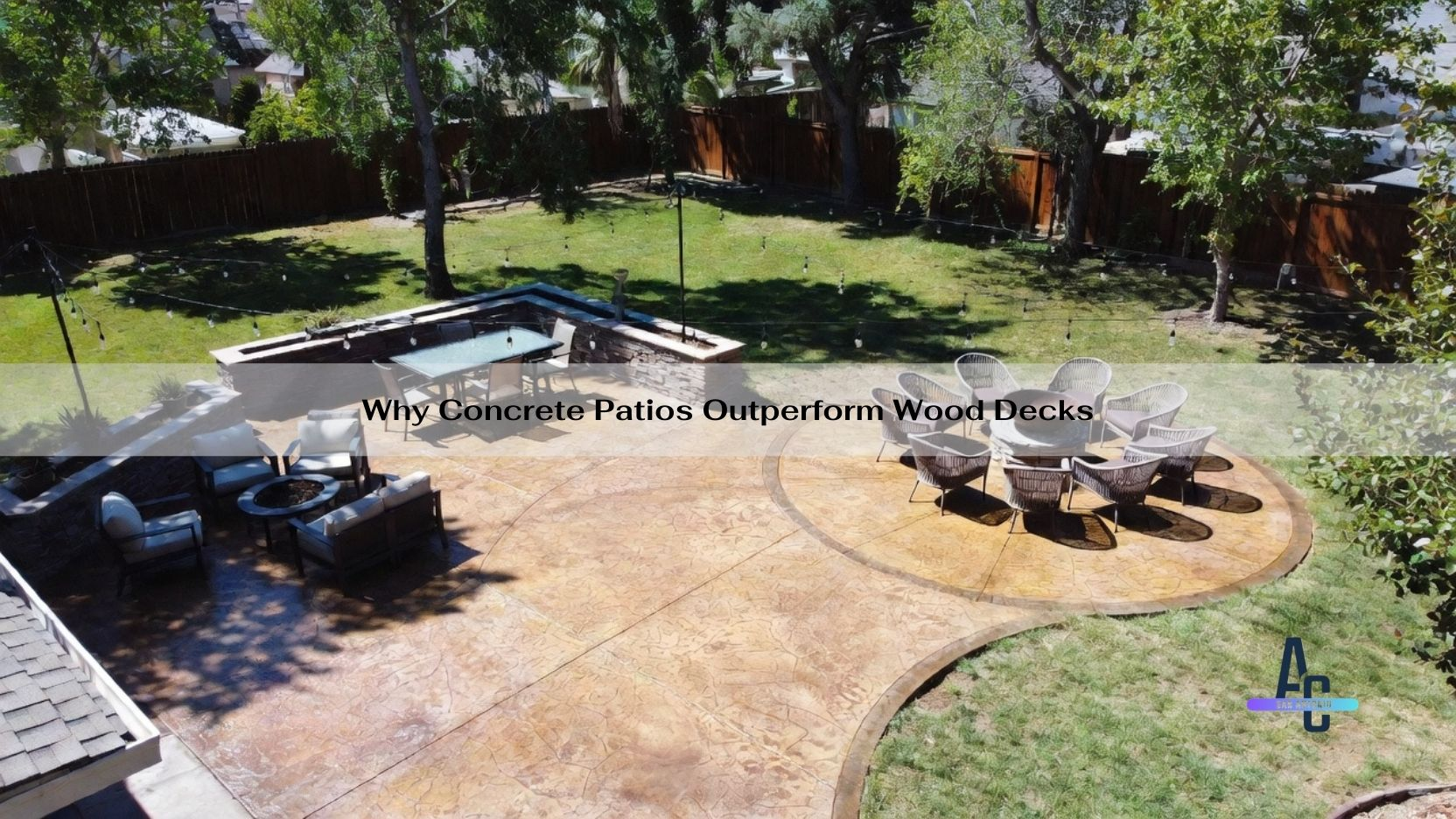
With over 10 years of hands-on experience installing and repairing outdoor living spaces across San Antonio and Houston, TX, I’ve seen how Texas heat, humidity, and soil movement impact different materials. I’ve replaced dozens of failing wood decks and far fewer properly installed concrete patios.
Concrete patios outperform wood decks because they last longer, require less maintenance, handle Texas weather better, and typically deliver stronger long-term value for homeowners.
Here’s a clear, side-by-side breakdown to help you decide.
Do Concrete Patios Last Longer Than Wood Decks?
Yes. Concrete patios typically last 25–30+ years, while most wood decks last 10–15 years in Texas.
San Antonio and Houston weather includes:
- Intense UV exposure
- Heavy rainfall
- High humidity
- Termite activity
Wood naturally expands, contracts, and absorbs moisture. Over time, this leads to:
- Warping
- Rot
- Splitting boards
- Structural weakening
Concrete, when properly reinforced and installed on a compacted base, remains structurally stable for decades.
Key takeaway: Concrete usually lasts twice as long as wood decking in South Texas climates.
Is Concrete Really Lower Maintenance Than Wood?
Yes. Concrete requires significantly less ongoing maintenance than wood decks.
Wood decks typically require:
- Annual staining or sealing
- Board replacements
- Power washing
- Termite monitoring
Concrete patios require:
- Occasional cleaning
- Optional resealing every few years (for decorative finishes)
There’s no sanding, staining, or replacing warped boards.
For homeowners upgrading outdoor spaces, low maintenance means lower long-term cost and fewer weekend projects.
How Do Concrete And Wood Handle Texas Heat And Humidity?
Concrete handles heat and humidity more consistently than wood.
In Houston’s humid climate, wood absorbs moisture and can:
- Swell and cup
- Develop mold or mildew
- Become slippery
In San Antonio’s dry heat, wood dries out and cracks.
Concrete is not affected by insects or moisture in the same way. While surface temperatures can rise in direct sun, lighter finishes help reflect heat.
Key takeaway: Concrete is more climate-stable in both humid and dry Texas environments.
Which Option Is More Cost-Effective Long Term?
Concrete is often more cost-effective over 20–30 years.
Initial costs vary, but here’s a general comparison:
| Feature | Concrete Patio | Wood Deck |
| Lifespan | 25–30+ years | 10–15 years |
| Annual Maintenance | Low | Moderate–High |
| Repair Frequency | Low | Medium–High |
| Insect Risk | None | Yes |
While some basic wood decks may cost less upfront, maintenance and repairs add up.
Replacing deck boards, resealing, and structural repairs over time often exceed the original installation cost.
Property value-focused homeowners typically see better long-term ROI with concrete.
Does Concrete Improve Curb Appeal More Than Wood?
It depends on design but modern concrete can match or exceed wood in visual appeal.
Today’s concrete options include:
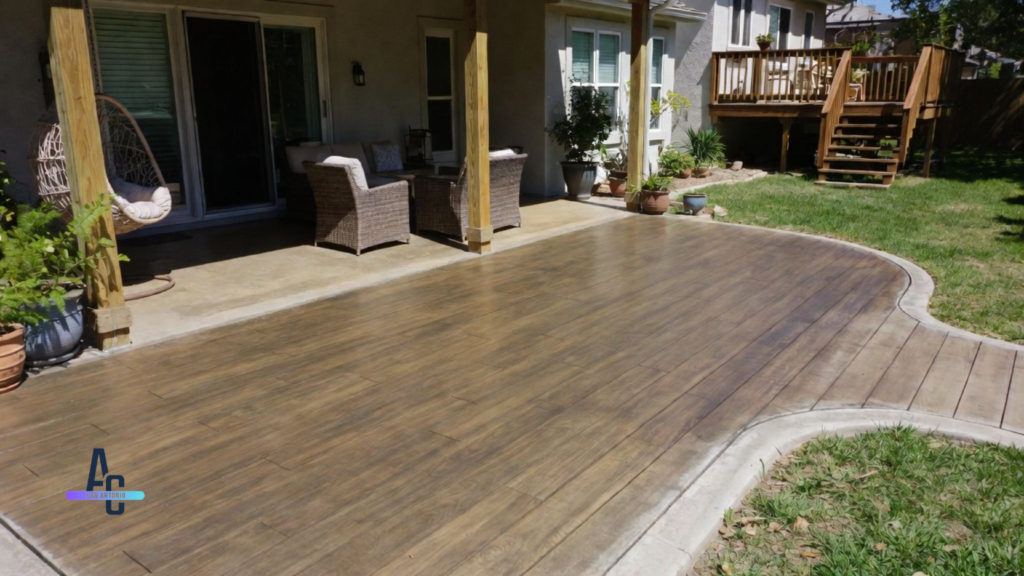
- Stamped finishes (stone, brick, wood-look textures)
- Colored concrete
- Exposed aggregate
- Clean broom finishes for contemporary homes
Wood decks have a traditional appeal, but aging wood can quickly look worn if not maintained.
Stamped concrete can replicate the warmth of wood without the upkeep.
In many San Antonio and Houston neighborhoods, decorative concrete patios are now preferred for:
- Pool areas
- Outdoor kitchens
- Covered patios
- Modern home renovations
Is Concrete Better For Pool Areas?
Yes. Concrete is generally safer and more durable around pools.
Wood near pools faces:
- Constant moisture exposure
- Rot risk
- Slippery algae growth
Concrete pool decks can be:
- Textured for slip resistance
- Designed with proper drainage
- Reinforced to prevent shifting
For pool owners, concrete offers better longevity and fewer safety concerns.
What About Repairs Are Concrete Patios Harder To Fix?
Concrete repairs are less frequent but can be more involved when needed.
Wood deck repairs are common:
- Replacing boards
- Tightening fasteners
- Addressing structural framing
Concrete may develop hairline cracks, which are often cosmetic. Larger issues typically stem from poor base preparation not the material itself.
If a slab is severely damaged, replacement may be required. However, this is far less frequent than wood deck repairs over time.
Which Is Better For Property Value In San Antonio And Houston?
Concrete patios typically offer stronger long-term value in Texas markets.
Buyers look for:
- Low-maintenance outdoor space
- Durable construction
- Usable backyard square footage
A well-designed concrete patio feels permanent and integrated into the property.
Wood decks can add value but only if well maintained. An aging deck can negatively impact buyer perception.
Key takeaway: Concrete offers durability, lower maintenance, and broader buyer appeal in Texas climates.
FAQs
Is A Concrete Patio Cheaper Than A Wood Deck?
Upfront costs can be similar, but concrete is usually cheaper long term due to lower maintenance and longer lifespan.
Does Concrete Crack More Than Wood?
Concrete can develop minor hairline cracks, which are normal. Wood, however, is more prone to structural deterioration from moisture, insects, and warping.
Which Is Better In Houston’s Humidity?
Concrete performs better in high humidity because it doesn’t absorb moisture or rot like wood.