
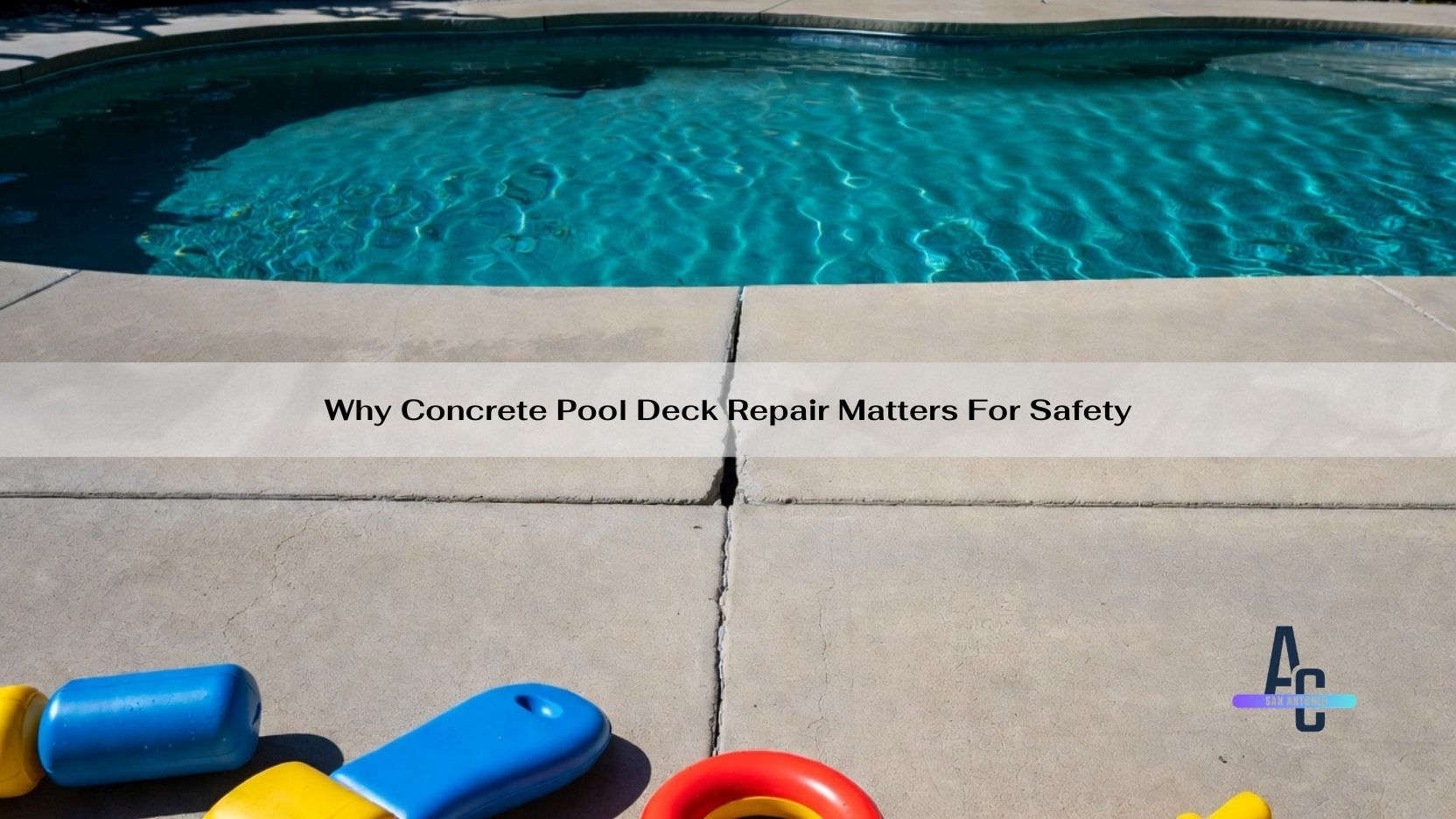
With over a decade of experience evaluating and repairing residential concrete surfaces across Texas, we’ve seen firsthand how damaged pool decks lead to preventable injuries and costly structural issues. Concrete pool deck repair matters for safety because cracks, uneven slabs, and surface deterioration create serious slip, trip, and fall hazards especially around wet areas. Addressing these problems early protects your family, reduces liability, and preserves property value.
For homeowners in San Antonio and Houston, where heat, soil movement, and heavy rains are common, pool deck damage is not just cosmetic, it’s a safety concern.
What Makes A Damaged Pool Deck Unsafe?
Cracked, uneven, or deteriorating concrete significantly increases the risk of slips and trips around a pool.
Pool decks are constantly exposed to:
- Water and pool chemicals
- Intense UV heat
- Expansive clay soils (common in Texas)
- Freeze-thaw cycles (especially in North Texas regions)
When concrete shifts or breaks down, it creates:
- Raised edges that catch bare feet
- Hairline cracks that widen over time
- Surface spalling that reduces traction
- Standing water due to poor drainage
Key takeaway: Even small cracks can become major trip hazards in high-traffic, wet areas.
How Do Cracks In A Pool Deck Increase Injury Risk?
Cracks compromise both stability and traction.
Here’s how:
1. Trip Hazards
Uneven slabs as small as ¼ inch can cause someone to stumble, especially children running around the pool.
2. Slip Hazards
As cracks widen, they trap water and algae. This creates slick surfaces that increase fall risk.
3. Barefoot Injuries
Sharp, spalled edges can cut feet. This is common when surface scaling occurs from chemical exposure.
In Texas heat, expanding concrete often worsens these issues quickly. What starts as a cosmetic crack can become a structural problem within a year.
Is Pool Deck Damage Just Cosmetic?
No. Most surface damage signals underlying movement or deterioration.
Homeowners often delay repairs because the deck “still looks usable.” However:
- Cracks often indicate soil shifting
- Settling slabs may suggest drainage issues
- Surface erosion can expose reinforcing materials
In areas like San Antonio (1247 W Thompson Pl) and Houston (6203 Lawford Ln), expansive clay soils are known to shift seasonally. That movement stresses concrete slabs and accelerates cracking.
Ignoring early warning signs can lead to:
- Complete slab replacement
- Water intrusion toward foundations
- Increased homeowner liability
When Should You Repair A Concrete Pool Deck?
You should repair your pool deck as soon as you notice uneven surfaces, widening cracks, or drainage problems.
Here’s a quick reference guide:
| Issue | Safety Risk Level | Recommended Action |
| Hairline cracks | Moderate | Monitor and seal |
| ¼–½ inch separation | High | Repair/level immediately |
| Uneven slabs | Severe | Professional leveling |
| Pooling water | High | Drainage correction |
If someone can catch their foot in it, it needs repair.
Does Pool Deck Repair Improve Property Value?
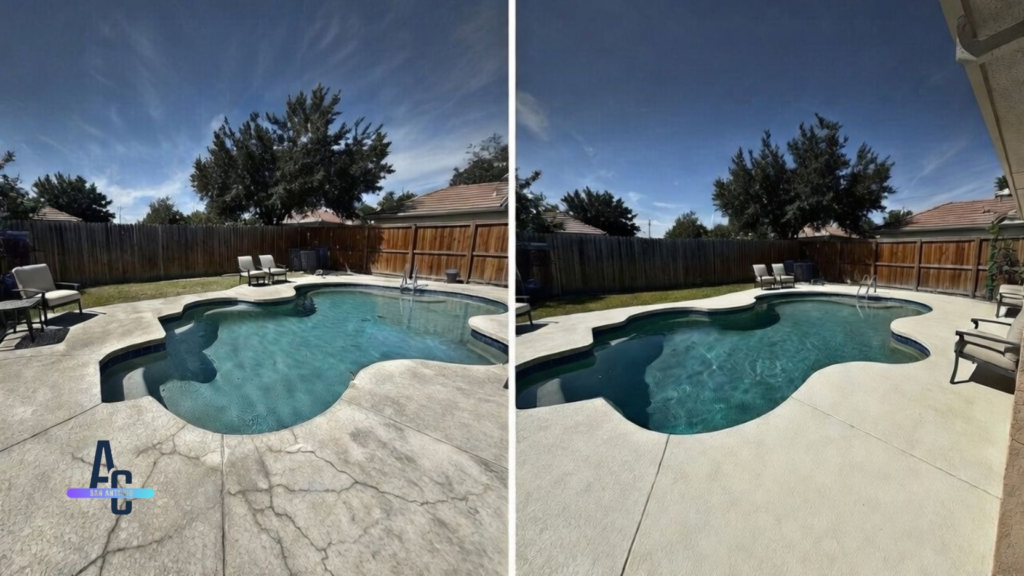
Yes. A well-maintained pool deck improves curb appeal, safety perception, and buyer confidence.
For property-value-focused homeowners, pool areas are major selling points. Buyers notice:
- Visible cracks
- Uneven transitions
- Stained or deteriorated surfaces
Safety concerns can delay sales or lower offers. On the other hand:
- Repaired and resurfaced decks look modern
- Improved traction coatings add value
- Clean lines increase visual appeal
In competitive real estate markets like Houston and San Antonio, outdoor living spaces heavily influence pricing.
What Are The Most Effective Repair Options?
The best repair method depends on the severity of damage.
Minor Cracks
- Concrete crack filler
- Professional sealing
- Surface refinishing
Uneven Slabs
- Polyurethane foam leveling
- Slab jacking
Widespread Surface Damage
- Concrete resurfacing
- Decorative overlays with slip-resistant texture
For high-traffic residential pools, many homeowners choose textured coatings for added grip.
Important: DIY patching often fails in Texas climates due to soil movement. Professional assessment ensures long-term stability.
How Texas Climate Affects Pool Deck Safety
Heat and soil movement in Texas accelerate concrete deterioration.
San Antonio and Houston share similar risk factors:
- High summer temperatures cause expansion
- Heavy rainfall leads to soil erosion
- Clay soils expand when wet and shrink when dry
This cycle leads to:
- Slab lifting
- Settlement
- Drainage shifts
Routine inspection at least once a year is strongly recommended.
What Happens If You Ignore Pool Deck Repairs?
Ignoring repairs can lead to:
- Serious slip-and-fall injuries
- Increased insurance claims
- Larger structural repairs
- Higher replacement costs
Liability is a major concern. If a guest is injured due to known deck damage, homeowners may face legal exposure.
Repairing early is significantly less expensive than full slab replacement.
FAQs
How Much Does Pool Deck Repair Typically Cost In Texas?
Costs vary based on severity. Minor crack repairs may cost a few hundred dollars, while leveling or resurfacing can range from $1,500–$5,000 depending on size and damage.
Can I Repair Pool Deck Cracks Myself?
Small hairline cracks can be sealed DIY. However, uneven slabs or structural cracks require professional evaluation to prevent recurring damage.
How Often Should A Concrete Pool Deck Be Inspected?
At least once per year, and after major weather events or noticeable soil shifts.