
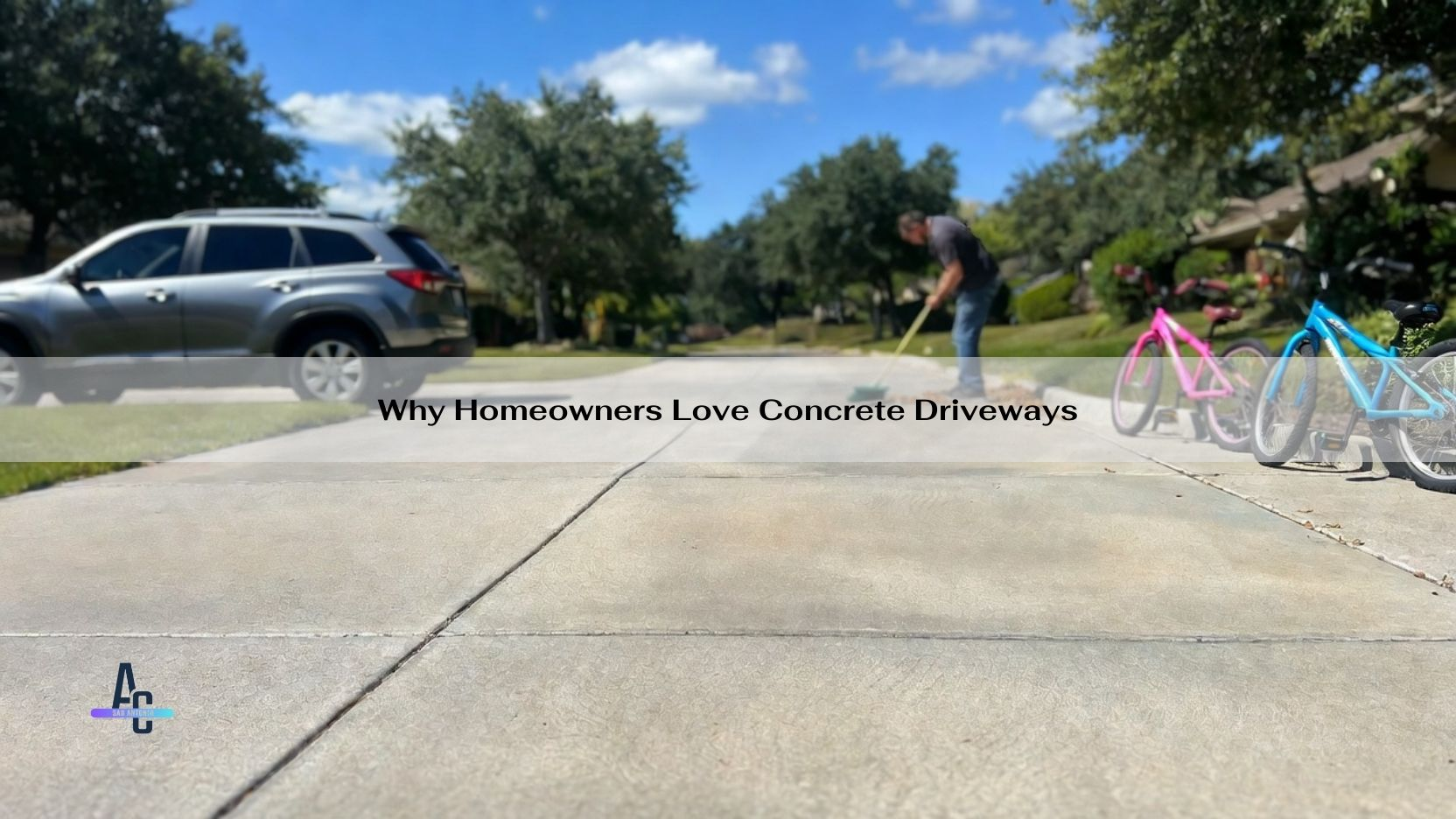
With over a decade of hands-on experience installing concrete driveways across San Antonio and Houston, we’ve seen firsthand why homeowners consistently choose concrete over other materials. Texas soil, heat, and heavy vehicles demand durable solutions.
Homeowners love concrete driveways because they last 25–30+ years, require minimal maintenance, improve curb appeal, and perform well in Texas weather conditions. When installed correctly, concrete offers long-term structural reliability and design flexibility.
Below is a detailed breakdown of why concrete remains one of the most popular driveway choices.
Why Do Homeowners Prefer Concrete Over Asphalt Or Gravel?
Concrete offers longer lifespan and greater stability.
In South Texas climates, driveway materials must handle high temperatures and expansive clay soils.
Here’s a side-by-side comparison:
| Feature | Concrete | Asphalt | Gravel |
| Lifespan | 25–30+ years | 15–20 years | 5–10 years |
| Heat Resistance | Strong | Can soften | N/A |
| Maintenance | Low | Moderate | High |
| Appearance | Customizable | Limited | Basic |
Concrete does not soften in extreme heat like asphalt can. Gravel shifts over time and requires regular leveling.
Key takeaway: Concrete delivers stronger long-term performance with less upkeep.
Does A Concrete Driveway Really Boost Curb Appeal?
Yes. Concrete provides a clean, finished look that enhances a home’s exterior.
Driveways take up a large portion of your front yard. Cracks, stains, or uneven surfaces are immediately noticeable.
Concrete improves curb appeal through:
- Smooth, uniform surfaces
- Decorative options like stamped concrete
- Exposed aggregate finishes
- Colored or stained concrete
- Crisp edges and defined layout
For property value-focused homeowners in San Antonio and Houston, upgraded driveways often complement patios, walkways, and pool decks.
Is Concrete A Good Investment For Long-Term Homeowners?
Yes. Concrete is often more cost-effective over decades of use.
While initial installation costs may be higher than gravel or asphalt, maintenance costs are typically lower.
Concrete requires:
- Occasional cleaning
- Optional sealing
- Basic joint monitoring
Asphalt requires sealing every few years and may need resurfacing sooner.
Over 25–30 years, fewer repairs often mean better long-term value.
Key takeaway: Concrete offers strong return on investment for homeowners planning to stay long term.
How Does Concrete Handle Texas Soil And Weather Conditions?
Concrete performs well when installed with proper base preparation and reinforcement.
In areas near 1247 W Thompson Pl, San Antonio, TX 78226 and 6203 Lawford Ln, Houston, TX 77040, soil expansion is a major factor.
Successful installations include:
- Compacted sub-base
- Reinforcement (rebar or mesh)
- Control joints to manage cracking
- Proper slab thickness (4–6 inches)
- Drainage planning
Concrete resists rutting under heavy trucks and SUVs and maintains structural integrity in high summer temperatures.
Most driveway problems are caused by poor installation, not the material itself.
Do Decorative Concrete Driveways Make A Difference?
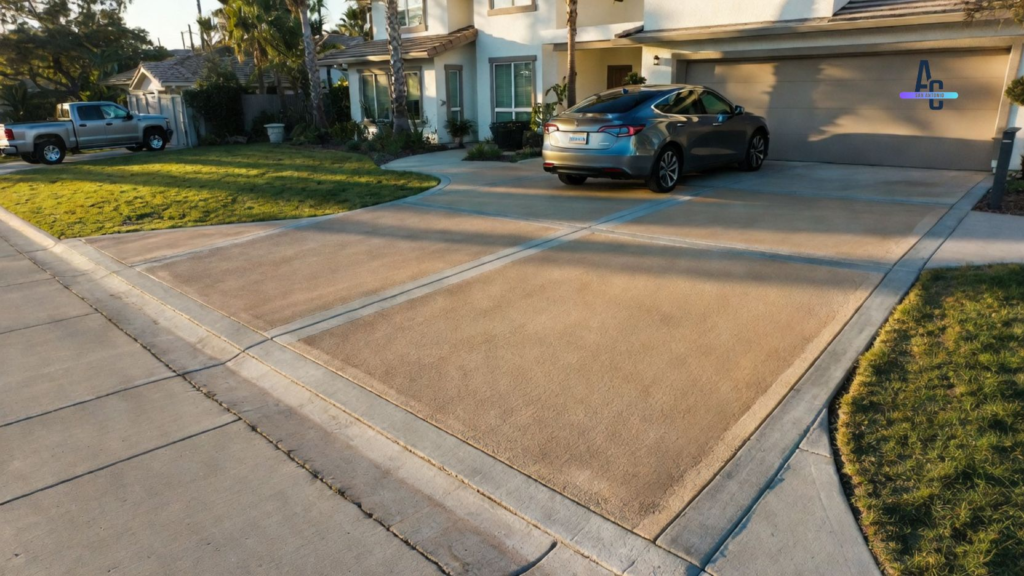
Yes. Decorative finishes allow homeowners to combine function with design.
Modern concrete driveways can include:
- Stamped patterns (stone, brick, slate look)
- Exposed aggregate textures
- Broom finish for slip resistance
- Integral color mixed into the slab
- Surface staining
These options allow homeowners upgrading outdoor spaces to create a cohesive look between driveways, patios, and pool decks.
For pool owners and curb appeal upgrades, decorative concrete adds noticeable visual value.
Can Concrete Handle Heavy Vehicles And Light Commercial Use?
Yes, when designed correctly.
Concrete has high compressive strength, making it suitable for:
- Large SUVs
- Pickup trucks
- Work vans
- Light commercial vehicles
Increasing thickness from 4 inches to 5–6 inches significantly improves load capacity.
For homeowners replacing cracked or sunken driveways, upgrading thickness during replacement can prevent recurring issues.
Why Is Concrete Considered Low Maintenance?
Concrete requires less routine upkeep than many alternatives.
Basic maintenance includes:
- Sweeping debris
- Washing stains
- Sealing every few years if desired
Unlike gravel, it does not shift. Unlike asphalt, it does not require frequent resealing for structural stability.
Key takeaway: Concrete offers a strong balance of durability and simplicity.
FAQs
How Long Does A Concrete Driveway Last?
A properly installed concrete driveway can last 25–30 years or more, depending on traffic load and maintenance.
Does Concrete Crack Over Time?
Minor cracking can occur. However, control joints are designed to guide cracks and protect structural integrity.
How Thick Should A Residential Concrete Driveway Be?
Most residential driveways are 4 inches thick. For heavier vehicles, 5–6 inches is recommended.
Final Thoughts
For homeowners in San Antonio and Houston looking to replace damaged concrete or upgrade curb appeal, it’s easy to see why homeowners love concrete driveways. They offer durability, structural strength, design flexibility, and long-term value.
When installed with proper reinforcement and drainage planning, concrete remains one of the most reliable driveway materials available.