
With over a decade of hands-on concrete installation experience in South Texas, we’ve seen what works and what fails in real driveways exposed to heat, rain, and shifting clay soils. Homeowners in San Antonio and Houston often ask the same question:
Why choose a concrete driveway for your home?
The short answer: Concrete driveways last longer, require less maintenance, handle heavy loads better, and offer more design options than most alternatives. When properly installed, they can perform well for 30 years or more.
Below is a clear breakdown to help you decide.
Are Concrete Driveways More Durable Than Asphalt Or Gravel?
Yes. Concrete is generally more durable and longer-lasting than asphalt or gravel.
Here’s how they compare:
| Feature | Concrete | Asphalt | Gravel |
| Average Lifespan | 25–30+ years | 15–20 years | 5–10 years |
| Maintenance | Low | Moderate (seal every 3–5 years) | High |
| Load Capacity | Excellent | Good | Limited |
| Heat Resistance | Strong | Softens in heat | N/A |
In Texas, where summer temperatures often exceed 95°F, asphalt can soften and rut. Gravel shifts and requires frequent leveling. Concrete holds its shape and structural strength better under heavy vehicles and heat exposure.
Key takeaway: For long-term durability, concrete outperforms most driveway materials.
Does A Concrete Driveway Increase Home Value?
Yes. A well-installed concrete driveway improves curb appeal and resale value.
Real estate professionals consistently note that first impressions matter. A cracked or uneven driveway can negatively impact buyer perception.
Benefits include:
- Clean, finished appearance
- Better drainage when properly graded
- Improved safety (fewer trip hazards)
- Long-term structural reliability
Stamped concrete, exposed aggregate, or colored finishes can also enhance the architectural style of your home.
In competitive markets like San Antonio and Houston, curb appeal directly affects buyer interest.
Is Concrete Low Maintenance?
Concrete driveways require minimal upkeep compared to other surfaces.
Basic maintenance includes:
- Occasional washing
- Sealing every few years (recommended but not always required)
- Monitoring control joints
Unlike asphalt, concrete does not require frequent resealing to maintain structural integrity.
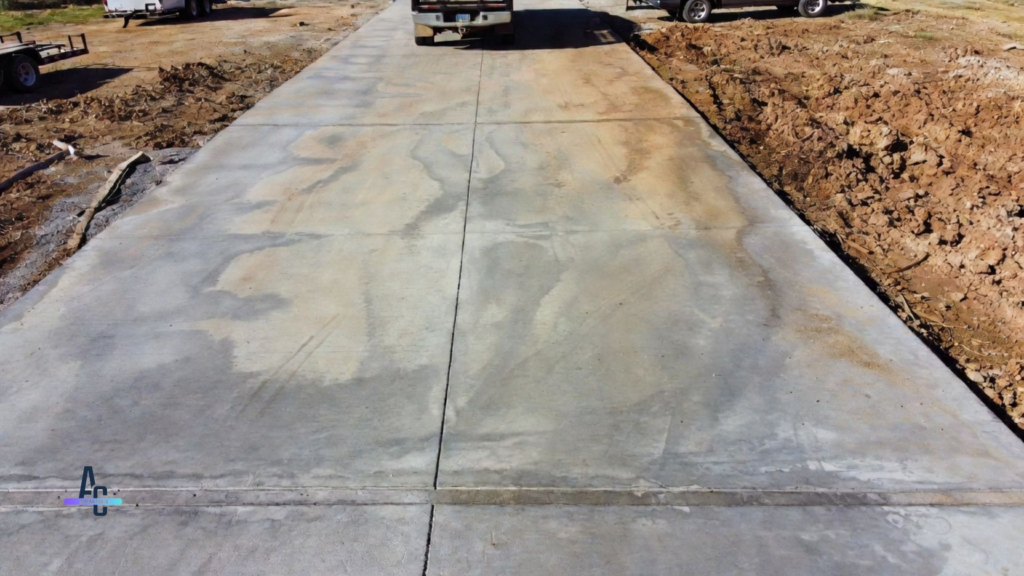
Proper installation matters. In areas like San Antonio (1247 W Thompson Pl, San Antonio, TX 78226) and Houston (6203 Lawford Ln, Houston, TX 77040), soil movement can cause cracking if the base is not prepared correctly.
Key installation factors:
- Compacted base
- Reinforcement (rebar or wire mesh)
- Control joints
- Proper curing
Most driveway failures are caused by poor base preparation, not the concrete itself.
Can Concrete Handle Texas Weather Conditions?
Yes, when installed correctly for local soil and climate conditions.
South Texas presents challenges:
- Expansive clay soil
- Heavy rainfall
- Extreme summer heat
- Occasional freeze events
Concrete performs well when:
- Drainage is properly designed
- Expansion joints allow movement
- The slab thickness supports expected vehicle weight
Light commercial vehicles and large SUVs are common in Texas. A reinforced concrete driveway is well-suited for these loads.
What Design Options Are Available For Concrete Driveways?
Concrete offers more aesthetic flexibility than many homeowners realize.
Common options include:
- Stamped concrete (stone, slate, brick look)
- Exposed aggregate (textured stone surface)
- Broom finish (classic slip-resistant texture)
- Colored concrete
- Stained concrete
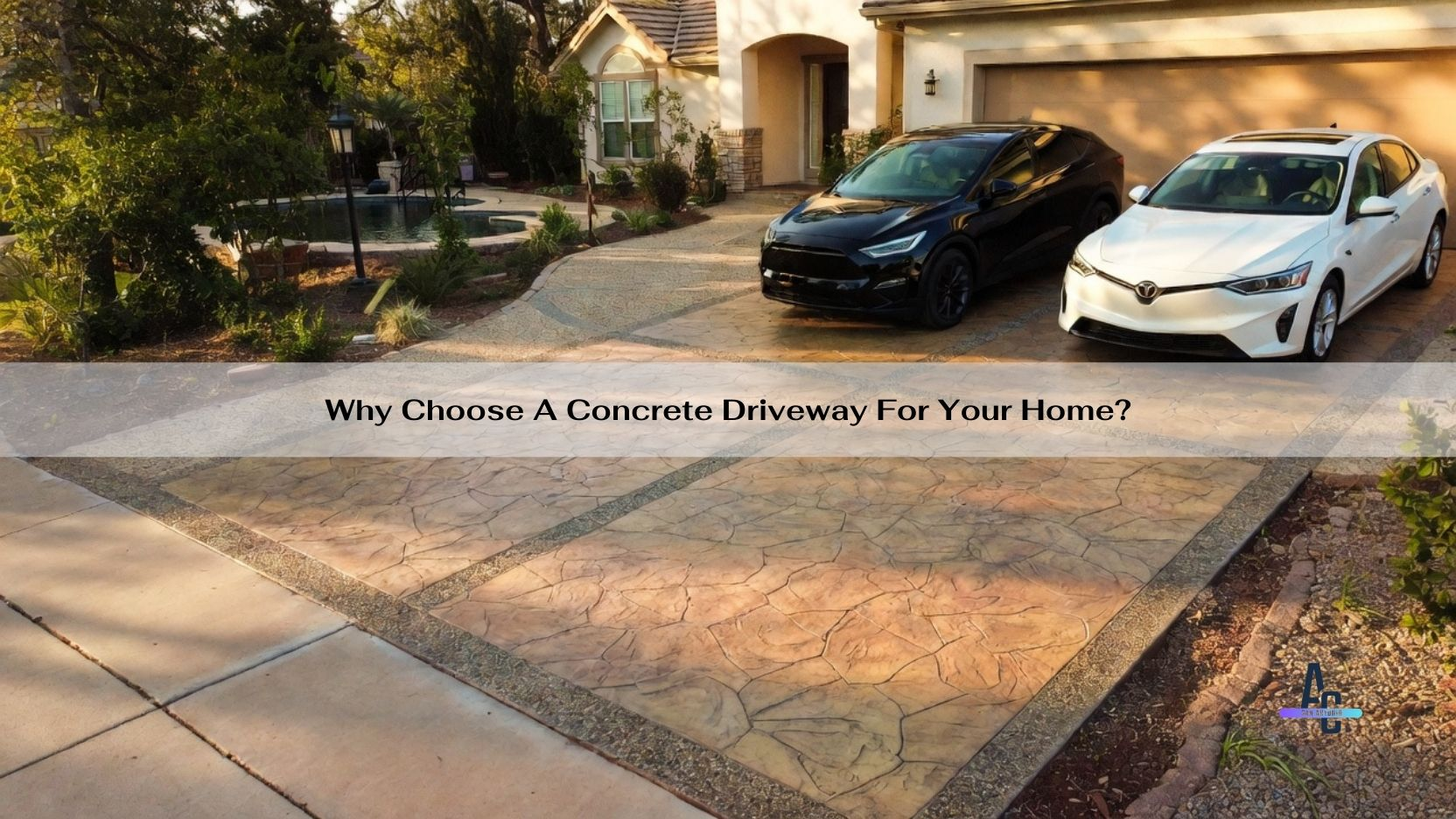
Stamped and decorative concrete driveways allow homeowners to match exterior finishes, landscaping, or pool decks.
For property owners upgrading outdoor spaces, this flexibility makes concrete both functional and visually appealing.
Is Concrete Cost-Effective Long Term?
Yes. While initial costs may be higher than gravel or asphalt, long-term ownership costs are often lower.
Because concrete:
- Lasts longer
- Requires fewer repairs
- Needs less maintenance
It typically delivers a strong return on investment over time.
Key takeaway: A concrete driveway is often the most cost-effective choice over 20–30 years.
FAQs
How Thick Should A Residential Concrete Driveway Be?
For most homes, 4 inches is standard, but 5–6 inches is recommended for heavier vehicles or light commercial use.
Does Concrete Crack Over Time?
Yes, small cracks can occur. However, control joints are installed to guide cracking and prevent structural damage. Proper base preparation significantly reduces risk.
How Long Does A New Concrete Driveway Take To Cure?
You can typically walk on it within 24–48 hours.
Vehicles should wait at least 7 days, with full curing around 28 days.
Final Thoughts
For homeowners in San Antonio and Houston upgrading cracked or damaged driveways, concrete offers durability, structural strength, low maintenance, and strong curb appeal. When installed with proper reinforcement and drainage planning, it performs well in Texas conditions.
If long-term value, performance, and design flexibility matter to you, concrete is a practical and proven choice.