
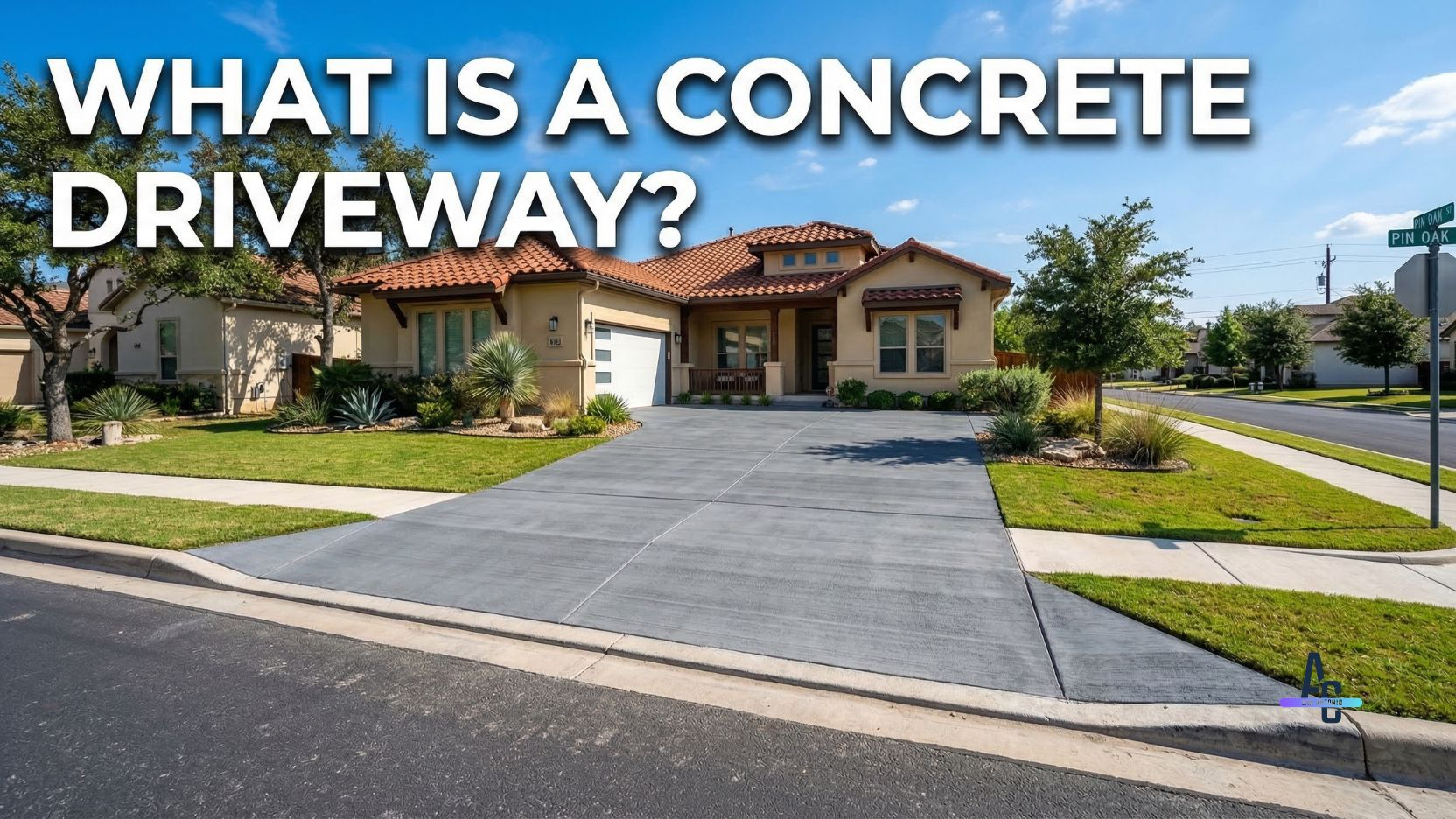
If you’re asking what a concrete driveway is, the short answer is this: a concrete driveway is a paved vehicle surface made from a poured concrete mix that hardens into a durable, low-maintenance slab for parking, driving, and curb appeal. For homeowners in San Antonio and Houston, concrete is one of the most common driveway materials because it handles daily vehicle traffic well and can be finished in several attractive styles.
From a practical property-upgrade standpoint, concrete driveways are typically chosen for strength, longevity, and a clean finished look. They can be plain, brushed, stamped, stained, or exposed aggregate, depending on the appearance and budget you want.
What Is A Concrete Driveway Made Of?
A concrete driveway is made from a mix of cement, water, sand, and aggregate such as gravel or crushed stone. Once poured, leveled, and cured, the material becomes a solid surface designed to support cars, trucks, and foot traffic.
Most residential concrete driveways also include:
- A prepared sub-base for stability
- Reinforcement, such as rebar or wire mesh, in some installations
- Control joints to help manage cracking
- Surface finishing for traction and appearance
Key takeaway: A concrete driveway is not just “poured cement.” It is a built system that depends on proper base prep, thickness, drainage, and curing.
How Does A Concrete Driveway Work On A Residential Property?
A concrete driveway creates a stable, load-bearing surface between the street and your garage, parking pad, or side yard. Its job is to distribute vehicle weight over a properly prepared base so the surface stays usable over time.
For homeowners, that means a concrete driveway can help with:
- Daily parking
- Cleaner access to the home
- Reduced mud and erosion
- Improved curb appeal
- Easier maintenance compared with loose materials like gravel
If the slab is installed correctly, it can provide a smooth, predictable surface that is easier to clean and edge than many alternative driveway materials.
Why Do Homeowners Choose Concrete Instead Of Asphalt, Gravel, Or Pavers?
Concrete is often chosen because it offers a strong balance of durability, appearance, and long-term value. It generally lasts longer than gravel, looks cleaner than basic asphalt, and often costs less than premium paver systems.
Here is a quick comparison:
| Driveway Material | Main Benefit | Main Drawback | Best For |
| Concrete | Durable, clean look, low maintenance | Can crack if poorly installed | Long-term residential use |
| Asphalt | Lower upfront cost, quick installation | Requires more maintenance over time | Budget-focused installs |
| Gravel | Lowest initial cost | Moves easily, less polished look | Rural or low-cost driveways |
| Pavers | High-end appearance, repairable by section | Higher cost | Premium outdoor upgrades |
For many Texas homeowners, concrete makes sense when they want:
- A finished appearance
- Better durability than gravel
- Less maintenance than some alternatives
- A surface that can be customized
Are Concrete Driveways Good For Homes In San Antonio And Houston?
Yes. Concrete driveways can work very well in San Antonio and Houston when they are designed for local soil movement, drainage, and heat exposure. That local factor matters more than many homeowners realize.
In these areas, driveway performance depends on:
- Soil conditions that may expand or shift
- Heavy rain events and drainage management
- High summer temperatures
- Vehicle weight and usage patterns
A concrete driveway in South Texas should not be treated as a one-size-fits-all slab. Proper grading, base preparation, joint placement, and thickness are essential. On residential properties in San Antonio and Houston, these details often determine whether the driveway performs well or develops early cracking and settlement.
Local insight: In both San Antonio and Houston, drainage planning is just as important as the concrete itself.
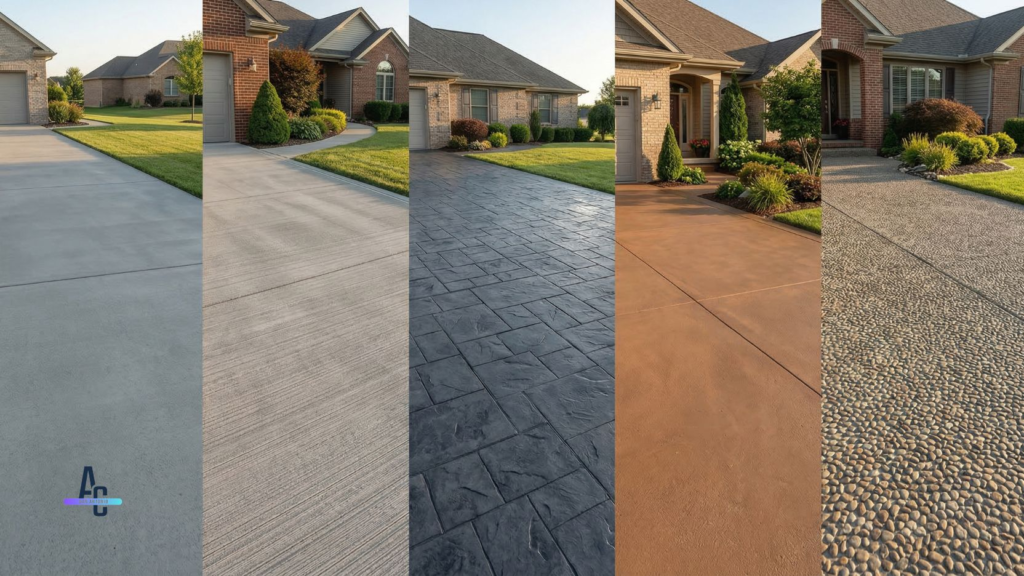
What Are The Different Types Of Concrete Driveways?
Concrete driveways come in several styles, from simple functional slabs to decorative finishes that upgrade the look of the entire front yard. The right choice depends on your budget, traction needs, and curb appeal goals.
Plain Concrete Driveway
This is the standard option. It offers a clean, practical look and is usually the most cost-effective.
Brushed Finish Concrete Driveway
A broom or brush texture is added to improve traction. This is common for residential driveways and pool-adjacent hardscapes.
Stamped Concrete Driveway
Stamped concrete is textured to mimic stone, brick, slate, or other materials. It gives a more decorative appearance but needs good installation and maintenance.
Stained Or Colored Concrete Driveway
Pigments or stains are used to change the slab’s color. This is useful when homeowners want a warmer or more customized look.
Exposed Aggregate Driveway
The top layer reveals decorative stone within the concrete. It adds texture and visual interest while helping with slip resistance.
How Long Does A Concrete Driveway Last?
A concrete driveway can last 20 to 30 years or more when it is properly installed and maintained. Lifespan depends heavily on site conditions, traffic load, climate, and artistry.
Factors that affect longevity include:
- Base preparation
- Concrete mix quality
- Thickness
- Drainage
- Reinforcement
- Joint placement
- Sealing and maintenance
- Heavy vehicle use
Key takeaway: Installation quality usually matters more than the material alone.
What Are The Pros And Cons Of A Concrete Driveway?
Concrete driveways are durable and attractive, but they are not maintenance-free, and they can crack over time. Understanding both sides helps homeowners make a better decision.
Pros
- Strong and long-lasting
- Clean, finished appearance
- Lower routine maintenance than gravel
- Can improve curb appeal
- Available in decorative finishes
- Suitable for many residential and light commercial settings
Cons
- Higher upfront cost than gravel or some asphalt projects
- Cracking can occur
- Repairs may be visible
- The surface can be stained by oil, rust, or leaves
- Decorative finishes usually increase cost
For homeowners replacing cracked or damaged concrete, the bigger question is often not just “What is a concrete driveway?” but whether the existing slab can be repaired or should be replaced entirely.
Is A Concrete Driveway Worth It For Curb Appeal And Property Value?
Yes, in many cases. A well-installed concrete driveway can enhance curb appeal and boost property value by making the home look cleaner, better-maintained, and more functional.
This matters especially for:
- Front-entry homes with visible driveways
- Properties with older, cracked pavement
- Homes undergoing exterior upgrades
- Pool owners are improving the surrounding hardscape
- Homeowners preparing to sell
A damaged driveway can make the entire property feel neglected. A fresh concrete driveway often creates a more finished first impression.
What Should Homeowners Know Before Installing A Concrete Driveway?
Before installing a concrete driveway, homeowners should focus on thickness, drainage, base prep, finish type, and expected use. These are the decisions that most affect long-term performance.
Ask about:
- Slab thickness for your vehicles
- Base preparation method
- Drainage slope
- Joint spacing and placement
- Reinforcement options
- Finish type and slip resistance
- Cure time before driving on it
- Sealing recommendations
If your property is in San Antonio or Houston, it is especially important to discuss how the driveway will be built for local site conditions rather than using a generic plan.
FAQs
What Is The Difference Between Cement And Concrete?
Cement is one ingredient in concrete. Concrete is the finished material made from cement, water, sand, and aggregate.
Does A Concrete Driveway Crack?
Yes. Most concrete can develop some cracking over time, but proper base prep, joints, reinforcement, and drainage help reduce major problems.
Is Concrete Better Than Asphalt For A Driveway?
It depends on your priorities. Concrete usually offers a cleaner look and longer lifespan, while asphalt may cost less upfront.