
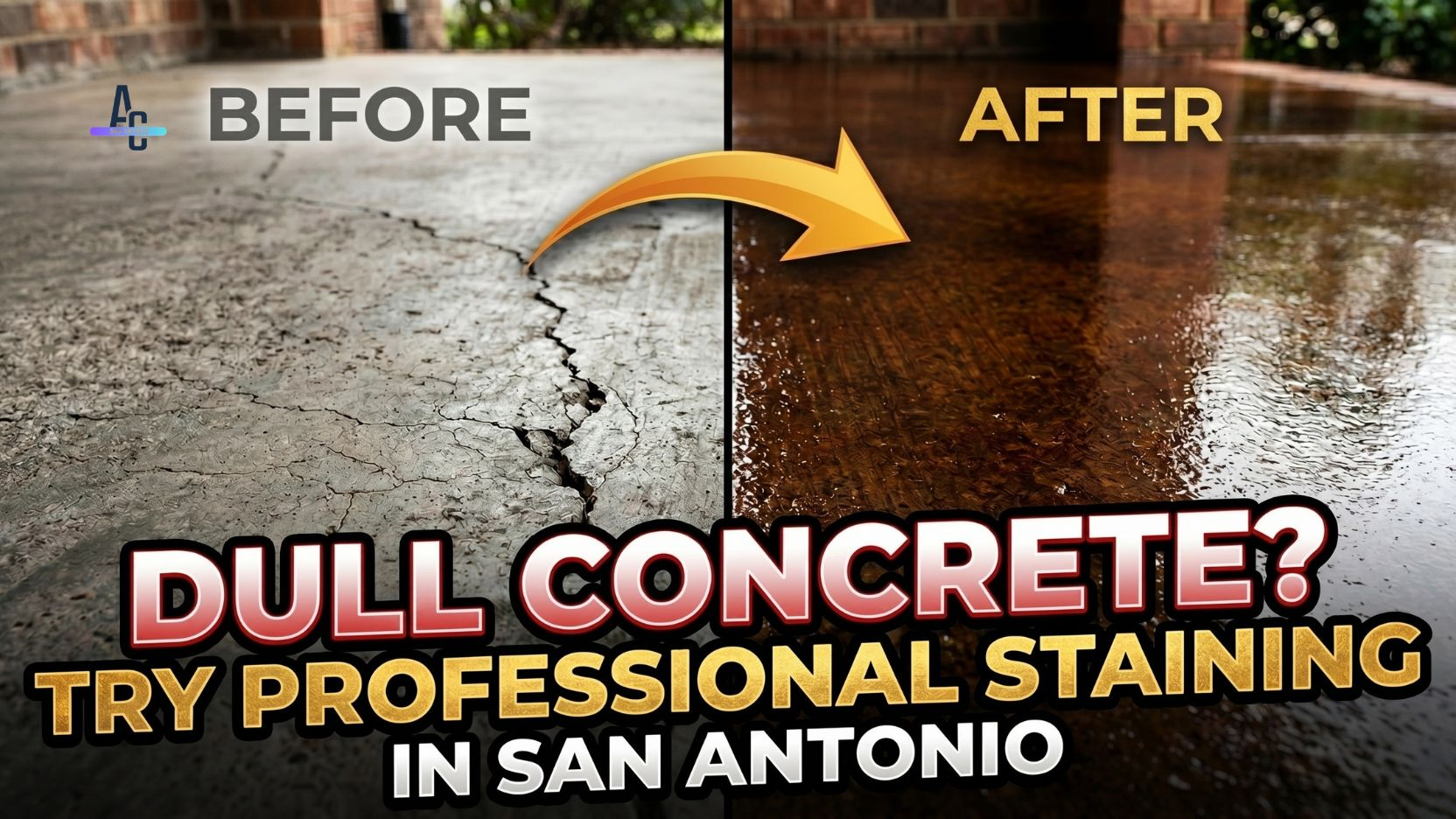
With 40 years of personal experience and more than a decade serving San Antonio, Affordable Concrete San Antonio knows how Texas heat, UV exposure, and daily traffic can make concrete look faded and tired. The fastest way to fix dull concrete is professional staining because it adds rich color, improves curb appeal, and protects the surface without the cost of a full replacement. For patios, driveways, pool decks, sidewalks, and interior concrete floors, staining is often the smartest upgrade when the slab is still structurally sound.
What Does Professional Concrete Staining Actually Do?
Professional concrete staining changes the appearance and finish of the slab, not the structural base. It penetrates or bonds with the surface to create color, depth, and character that plain gray concrete does not have.
This is why staining works so well for homeowners who want:
- A more attractive patio or pool deck
- A custom driveway finish
- A cleaner, more finished interior floor
- Better curb appeal without major demolition
Key takeaway: If the concrete is still solid, staining can make it look dramatically better at a lower cost than replacement.
Is Staining Better Than Replacing A Dull Concrete Slab?
Yes, if the slab is in good structural condition. Staining is the better choice when the concrete is faded, outdated, or lightly worn but not severely cracked or sinking.
| Option | Best for | Main advantage | Main limitation |
| Concrete staining | Sound concrete with color fade | Affordable, custom look, fast turnaround | Won’t fix major structural damage |
| Concrete resurfacing | Minor surface wear and cosmetic flaws | Refreshes the surface and improves appearance | Needs proper prep |
| Concrete replacement | Severe cracking, settling, or failure | Gives you a new base and finish | Highest cost and disruption |
If your slab has wide movement cracks, lifting, or major spalling, staining alone is not the right fix. In those cases, repair or replacement should come first.
Which Concrete Surfaces Are Best For Staining?
The best candidates are patios, driveways, pool decks, walkways, and interior concrete floors. The slab should be clean, stable, and porous enough to accept the stain properly.
Common applications include:
- Concrete patios for a warmer, more finished backyard
- Driveways for stronger curb appeal
- Pool decks with a decorative, slip-resistant finish
- Garage floors for a cleaner, more polished look
- Commercial entryways and sidewalks for a professional appearance
For San Antonio homeowners, staining is especially useful on outdoor surfaces that get hit hard by sun and foot traffic.
What Type Of Stain Should You Choose For Your Concrete?
The right stain depends on the look you want and how the surface will be used. Most projects use either acid stain or water-based stain.
Acid Stain
Acid stain reacts with the concrete to create a natural, variegated look.
Best for:
- Earth-tone colors
- Stone-like variation
- Decorative patios and floors
Water-Based Stain
Water-based stain offers more color options and a more predictable finish.
Best for:
- Brighter or more uniform color
- Custom decorative projects
- Homeowners who want more design flexibility
Sealer And Finish
A professional stain job should also include the right concrete sealer to help protect against:
- UV fading
- Moisture
- Wear from traffic
- Stains and surface dulling
For pool decks, a slip-resistant additive is especially important.

How Long Does Professionally Stained Concrete Last In Texas?
Professionally stained concrete can last for years when it is prepared and sealed correctly. In San Antonio, the bigger concern is usually sealer maintenance, not the stain itself.
Texas heat, direct sun, and heavy use can wear down the protective finish over time. To keep the surface looking good:
- Clean it regularly
- Avoid harsh chemicals
- Reseal as recommended
- Repair cracks before they spread
Key takeaway: A well-stained and properly sealed slab can stay attractive much longer than plain concrete with no finish.
What Is The Process For Staining Dull Concrete?
A professional staining project usually follows five steps. Proper prep matters as much as the stain itself.
- Inspection — Check the slab for cracks, damage, and moisture issues
- Cleaning and prep — Remove dirt, coatings, grease, and contaminants
- Repairs — Patch cracks or surface defects before staining
- Staining — Apply the selected stain evenly and with control
- Sealing — Protect the finish and improve durability
If the prep work is rushed, the final color may look uneven or fail early. That is why professional installation matters.
FAQs
Can You Stain Old Concrete?
Yes, if the concrete is structurally sound and properly prepped. Old concrete is often a great candidate for staining when the goal is to improve appearance.
Does Stained Concrete Need To Be Sealed?
Yes. Sealing helps protect the color, improves durability, and makes maintenance easier.
Will Staining Hide Cracks In Concrete?
Not completely. Small hairline cracks may become less noticeable, but larger cracks should be repaired first.