
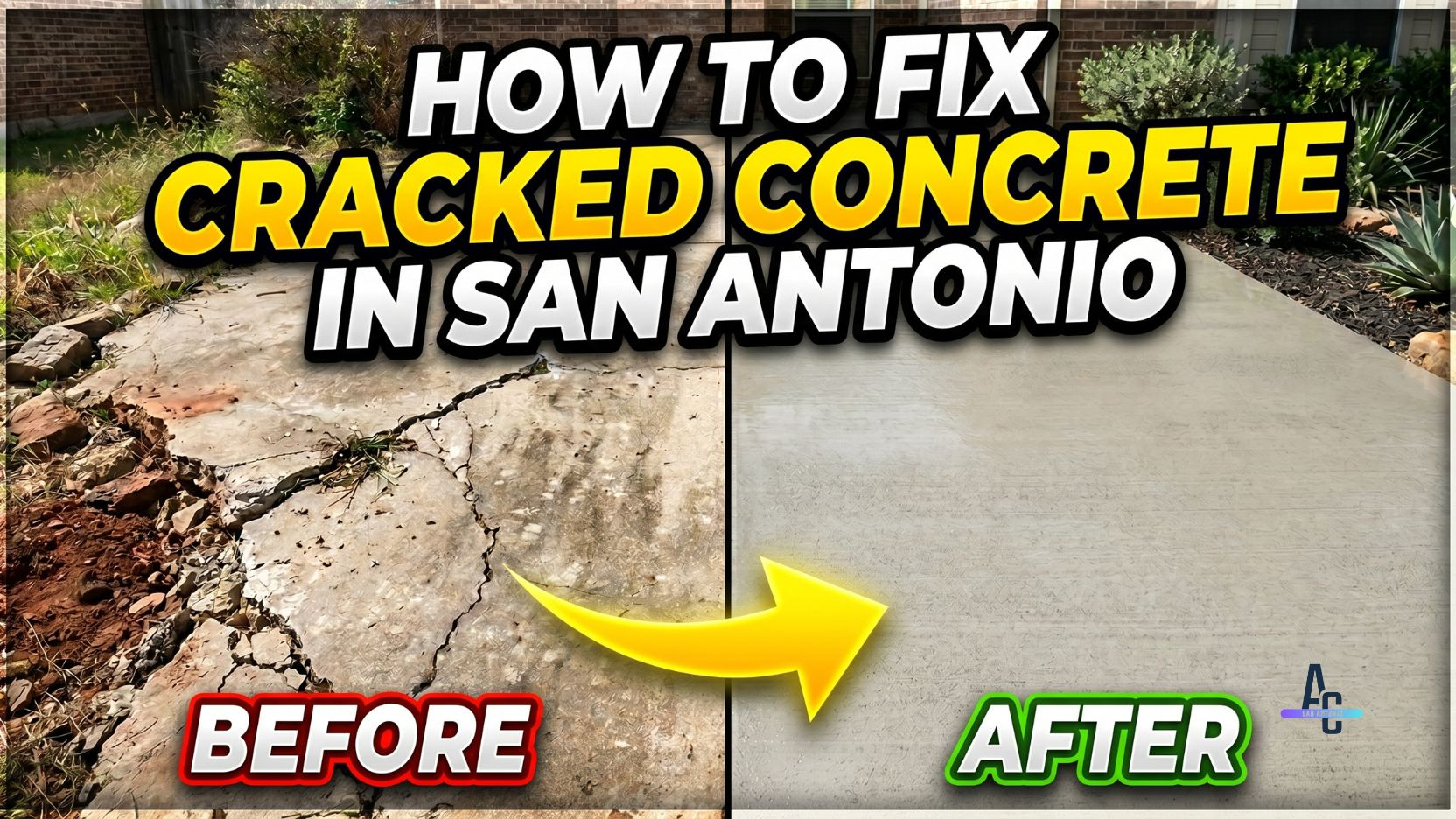
The best way to fix cracked concrete in San Antonio depends on the crack type. Hairline cracks can usually be cleaned, filled, and sealed, while wider cracks, sinking slabs, or spalling often need patching, resurfacing, or partial replacement. With 40 years of hands-on experience, Ted and the team at Affordable Concrete San Antonio have seen how local heat, clay soil, and drainage issues turn small cracks into bigger problems fast.
Key takeaway: Don’t treat every crack the same. Stable cosmetic cracks and active structural cracks need different repair methods.
What Is The Best Way To Fix Cracked Concrete In San Antonio?
The best fix starts with identifying whether the crack is surface-level, moving, or structural. In San Antonio, the right repair for a driveway may be different from the right repair for a patio, pool deck, sidewalk, or light commercial slab.
| Crack Type | Common Cause | Best Fix | Replace? |
| Hairline crack | Shrinkage, drying, minor settling | Crack filler + sealer | Usually no |
| Wide but stable crack | Age, normal movement | Epoxy or polyurethane repair | Not always |
| Uneven crack with height difference | Soil movement, settling | Slab repair or replacement | Often yes |
| Spalling or surface breakdown | Moisture, wear, poor finish | Patching or resurfacing | Sometimes |
| Multiple spreading cracks | Foundation or drainage issue | Full evaluation | Often yes |
For most homeowners, a flexible crack sealant works better on moving cracks, while rigid epoxy repairs are better for stable cracks. If the slab is shifting, patching alone will not last.
How Do You Fix Cracked Concrete Step By Step?
A good repair starts with prep. If the crack is dirty, wet, or still moving, even the best filler will fail early.
1. Inspect The Crack
Check the width, length, and depth. If one side is higher than the other, the slab has moved, and that usually means more than a simple patch is needed.
2. Clean Out The Damage
Remove dust, loose concrete, and debris. A wire brush, vacuum, or pressure cleaning helps the repair bond correctly.
3. Choose The Right Repair Material
Use the repair product that matches the problem:
- Flexible filler for minor moving cracks
- Epoxy for stable cracks that need a stronger bond
- Patch material for broken or spalled edges
- Resurfacer for larger areas with surface wear
4. Apply And Smooth The Repair
Fill the crack fully, then tool or smooth it so water cannot sit in the damaged area. This is especially important on patios, pool decks, and driveways.
5. Seal The Slab
Sealing helps protect the repaired area from moisture, UV damage, and stain penetration. In Texas weather, sealing is one of the most practical ways to extend the life of the concrete.
6. Fix The Cause, Not Just The Crack
If drainage is pooling against the slab, or the soil is moving under the concrete, the crack can come back. Correcting runoff and runoff slope matters as much as the surface repair.
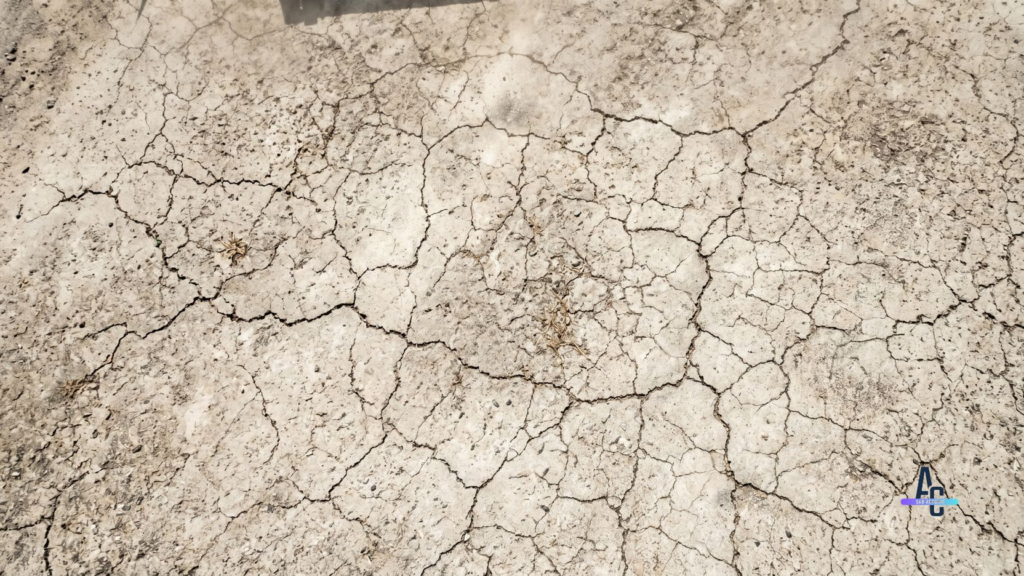
Why Does Concrete Crack So Often In San Antonio?
Concrete cracks here for a few local reasons. San Antonio’s climate and soil conditions are hard on slabs, especially driveways, patios, and pool decks.
Common causes include:
- Expansive clay soil that expands when wet and contracts when dry
- Extreme heat that speeds up drying and shrinkage
- Heavy rain and poor drainage that weaken support under the slab
- Tree roots that push concrete upward
- Vehicle loads on thin or aging driveways
- Missing or poorly placed control joints
Key takeaway: In San Antonio, cracking is often a movement problem, not just a surface problem.
Should You Repair Or Replace Cracked Concrete?
Repair is the better option when the damage is small, stable, and isolated. Replacement is usually the smarter choice when the slab is moving or breaking apart.
Repair Is Usually Enough When:
- The crack is thin and not spreading
- The surface is still level
- The concrete is otherwise solid
- The damage is limited to one section
Replacement Is Usually Better When:
- The slab is sinking or heaving
- Cracks are wide and active
- There are multiple connected cracks
- Rebar is exposed or concrete is crumbling
- The repair has failed more than once
A fast patch may look good for a while, but if the slab is still moving, the crack will likely return.
How Can You Keep Concrete From Cracking Again?
Prevention is about moisture control, support, and proper finishing. If you want a longer-lasting driveway, patio, or pool deck, these steps matter.
- Keep drainage moving away from the slab
- Seal the concrete on a regular schedule
- Use proper expansion joints
- Avoid overloading thin concrete
- Make sure new concrete is cured correctly
- Repair small cracks early before water gets in
For homeowners upgrading outdoor spaces, good preparation is just as important as the finish. That is true for decorative concrete, stamped concrete, and standard broom-finish slabs.
FAQs
Can Cracked Concrete Be Repaired Without Replacing it?
Yes. Hairline and stable cracks can often be repaired with filler, epoxy, or resurfacing. If the slab is sinking or shifting, replacement may be the better long-term fix.
What Is The Best Filler For Concrete Cracks?
It depends on movement. Flexible polyurethane sealant is usually better for active cracks, while epoxy works better for stable cracks that need a stronger structural bond.
How Much Does Concrete Crack Repair Cost In San Antonio?
Cost depends on the crack size, slab condition, and repair method. Small repairs cost less than resurfacing or replacement. A local on-site estimate is the best way to get an accurate price.