
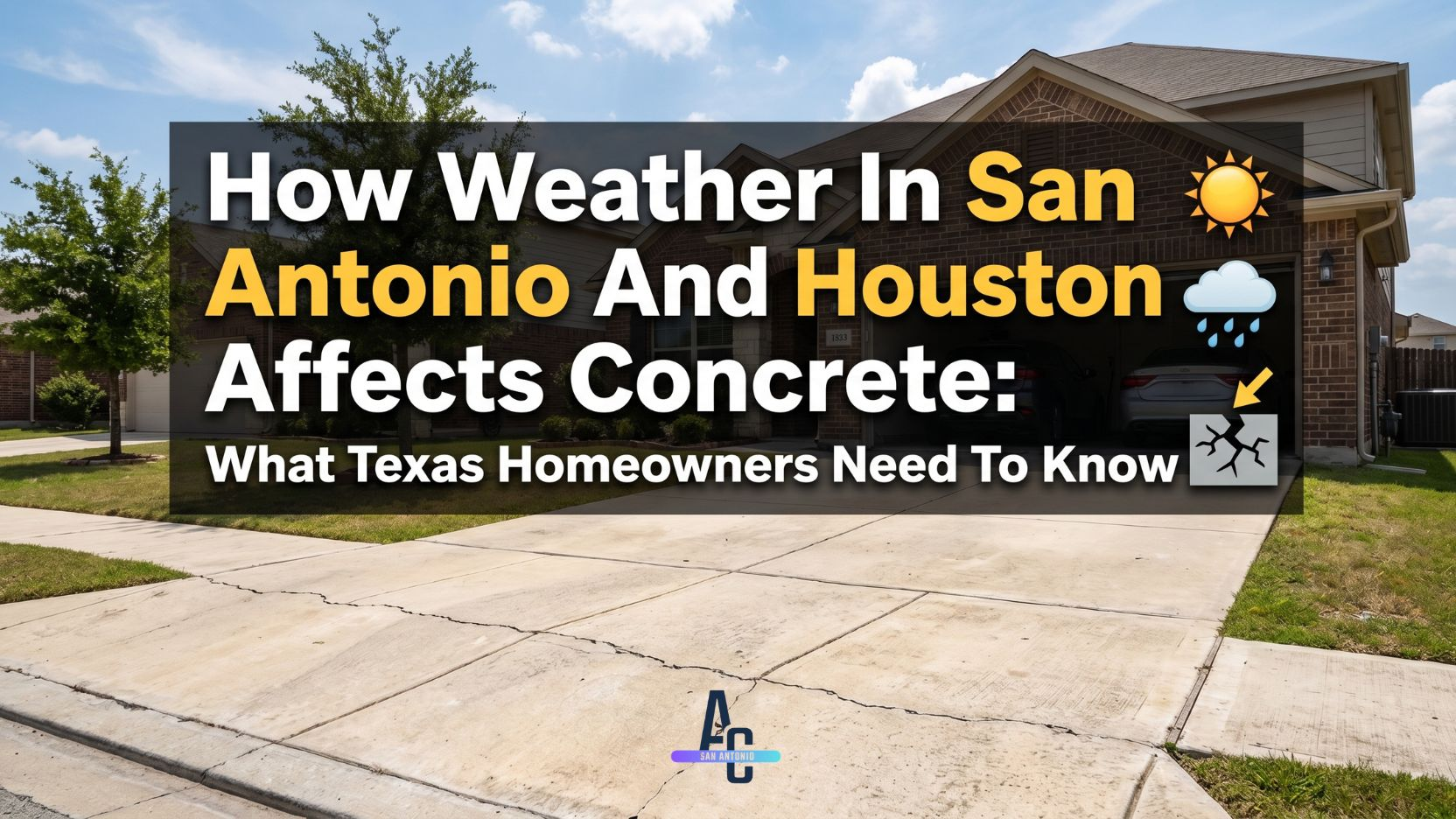
As a concrete contractor serving San Antonio and Houston for over a decade, I’ve seen firsthand how Texas weather destroys driveways, patios, and pool decks that weren’t properly installed or maintained. The extreme heat, humidity swings, and occasional freeze events in both cities create unique challenges that cause cracking, spalling, and structural failure in concrete surfaces.
Understanding how your local climate impacts concrete helps you make smarter decisions about installation timing, mix design, and long-term maintenance potentially saving thousands in premature replacement costs.
Why Does San Antonio’s Heat Create Concrete Problems?
San Antonio’s intense summer heat regularly exceeding 100°F causes rapid moisture evaporation during concrete curing, which is the most critical vulnerability for new installations.
When concrete loses water too quickly, it develops surface cracks called plastic shrinkage cracks within hours of pouring. This happens because San Antonio’s low humidity (often 30-40% in summer) pulls moisture from the surface faster than it can be replaced from below.
The heat also causes thermal expansion. Concrete expands in high temperatures and contracts when cooler, creating stress at joints and edges. Without proper control joints every 8-10 feet, this movement leads to random cracking patterns across driveways and patios.
Key takeaway: San Antonio concrete pours scheduled during summer require aggressive curing methods water misting, curing compounds, or wet burlap for at least 7 days to prevent premature failure.
How Does Houston’s Humidity Affect Concrete Differently?
Houston’s high humidity (60-90% year-round) creates the opposite problem: slower evaporation rates that extend finishing time and increase the risk of surface defects like blistering and delamination.
When concrete can’t release moisture properly, water gets trapped beneath the surface during finishing. This creates weak layers that eventually peel or flake off a condition called spalling that’s especially common on driveways and garage floors.
Houston’s clay-rich soil adds another layer of complexity. Expansive clay soils swell when wet and shrink when dry, creating constant movement beneath concrete slabs. Without proper soil stabilization and adequate base material (typically 4-6 inches of compacted crushed stone), concrete will crack as the soil moves beneath it.
The coastal proximity also means salt air exposure, which accelerates rebar corrosion in reinforced concrete structures.
What About Freeze-Thaw Cycles In Both Cities?
While neither city experiences harsh winters, both San Antonio and Houston average 1-3 freeze events annually and that’s enough to cause serious damage to saturated concrete.
When water trapped in concrete pores freezes, it expands by approximately 9%, creating internal pressure. Repeated freeze-thaw cycles gradually break down the concrete matrix, leading to surface scaling and deeper structural cracks.
This is particularly problematic for:
- Pool decks that stay wet
- Driveways with poor drainage
- Patios without proper slope (minimum 2% grade away from structures)
Air-entrained concrete which contains microscopic air bubbles that give water room to expand is essential for any outdoor concrete in Texas, even though contractors sometimes skip this step assuming our winters are mild enough.
When Is The Best Time To Pour Concrete In San Antonio And Houston?
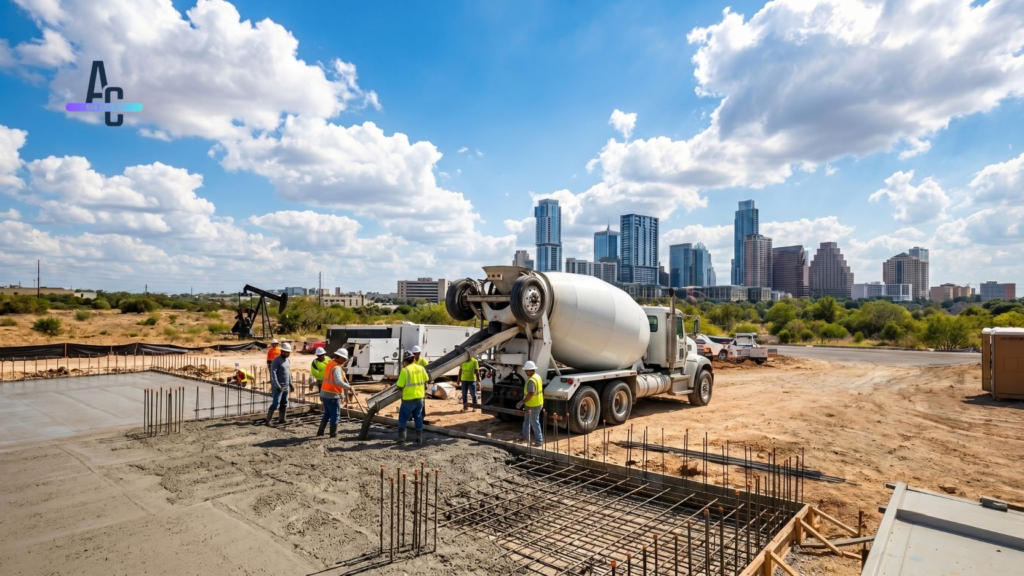
The ideal window for concrete installation in both cities is October through April, when temperatures range between 50-85°F and humidity is moderate.
Spring (March-May) offers optimal conditions:
- Moderate temperatures allow proper hydration
- Lower evaporation rates
- Adequate time for curing before summer heat
Avoid June through September unless the contractor implements strict hot-weather protocols: early morning pours (starting before 7 AM), chilled mixing water, sunshades, and extended curing periods.
Winter pours (December-February) are generally safe but require monitoring for freeze warnings. If temperatures below 40°F are forecast within 72 hours of pouring, delay the project or use insulated blankets and heated enclosures.
What Concrete Mix Designs Work Best For Texas Weather?
Not all concrete is created equal. Texas weather demands specific mix adjustments that many contractors overlook.
For San Antonio’s heat:
- Lower slump (4-5 inches maximum) to reduce water content
- Retarding admixtures to slow setting time
- Fly ash or slag cement replacements to reduce heat generation
- Minimum 4,000 PSI compressive strength for driveways
For Houston’s humidity and soil conditions:
- Air entrainment (4-7% air content)
- Water-reducing admixtures for workability without excess water
- Fiber reinforcement to control plastic shrinkage
- Minimum 6-inch thickness for slabs on grade due to soil movement
Affordable Concrete San Antonio uses weather-appropriate mix designs for every project, adjusting based on forecast conditions and specific application requirements.
How Can You Protect Existing Concrete From Weather Damage?
Prevention costs far less than replacement. These maintenance steps significantly extend concrete lifespan in Texas climates:
Seal your concrete every 2-3 years with a penetrating silane/siloxane sealer. This prevents water infiltration while allowing vapor to escape critical for both freeze-thaw protection and reducing efflorescence (white mineral deposits).
Maintain proper drainage around all concrete surfaces. Water pooling against or under concrete accelerates deterioration. Ensure downspouts direct water at least 6 feet away from slabs.
Fill cracks immediately when they appear. Even hairline cracks allow water penetration that leads to bigger problems. Use flexible polyurethane or epoxy crack fillers rated for outdoor use.
Clean regularly to prevent organic growth. Algae and mold hold moisture against the surface, creating conditions for spalling and staining.
What Are The Warning Signs Of Weather-Related Concrete Damage?
Catching problems early prevents minor issues from becoming expensive replacements. Watch for these red flags:
- Surface scaling or flaking: Usually indicates freeze-thaw damage or poor finishing
- Spiderweb cracks (pattern cracking): Often from rapid drying or inadequate curing
- Vertical displacement at joints: Suggests soil movement or inadequate base preparation
- Rust stains: Indicates rebar corrosion from water penetration
- Hollow sounds when tapped: Signals delamination between concrete layers
Any of these conditions warrant professional assessment. What starts as surface damage often indicates deeper structural issues that worsen rapidly under continued weather exposure.
FAQs
Does Concrete Cure Differently In San Antonio VS. Houston?
Yes. Houston’s higher humidity slows the curing process, requiring longer finish wait times but providing more consistent moisture for strength development. San Antonio’s dry heat speeds surface drying, requiring aggressive water retention methods to achieve proper cure.
Can I Pour Concrete During A Texas Summer If I Have No Choice?
Yes, but only with proper hot-weather protocols: early morning pours, chilled water, sunshades, evaporation retarders, and extended wet curing. Professional contractors like Affordable Concrete San Antonio can successfully pour year-round with these precautions, but costs may increase due to additional labor and materials.
How Long Does Concrete Last In Texas Weather Conditions?
Properly installed and maintained concrete should last 30-50 years in Texas climates. However, concrete installed without weather-appropriate mix design, adequate curing, or proper drainage often fails within 10-15 years, requiring costly replacement.