You do not have to choose between a driveway that looks great and one that fits your budget. This guide shows San Antonio homeowners exactly where the cost savings come from on stamped driveways, which choices drive the price up without adding value, and how to find a local crew that delivers quality work at a fair price in Bexar County.
When San Antonio homeowners search for an "affordable stamped concrete driveway near me," they are usually looking for one of two things: either a way to get the stamped look at the lowest possible cost, or a way to understand which cost-saving choices are smart and which ones will cost them more in repairs five years from now. This guide addresses both.
The good news is that a properly built stamped concrete driveway in San Antonio is already more affordable than most homeowners expect when compared with pavers, natural stone, or brick. The 2026 market price for a single-pattern stamped driveway starts around $18 per square foot installed. The bad news is that the cheapest quotes in the market usually skip the base preparation and reinforcement details that make the difference between a 25-year driveway and one that starts cracking by year four in Bexar County's expansive clay soil.
This guide gives you the specific decisions where real savings exist, the ones where you should never cut cost, and how to find a legitimate local contractor who can deliver both.
Affordable does not mean cheap. It means paying the right price for the right scope. A $12-per-square-foot stamped driveway quote in San Antonio in 2026 is not a deal it is a sign that something significant is missing from the scope. The cost of a proper stamped driveway is driven by base excavation, crushed limestone base material, rebar, concrete mix quality, pigment systems, and skilled stamping labor. None of those can be meaningfully compressed without reducing the life of the slab. The savings available to you are in design choices, project timing, and square footage optimization not in cutting structural corners.
Stamped concrete pricing is driven heavily by labor time. A crew that is stamping a single repeating pattern across a flat driveway works significantly faster than one producing a multi-zone design with a decorative border inset, a field pattern, and a contrasting accent band. That labor time difference translates directly into your invoice.
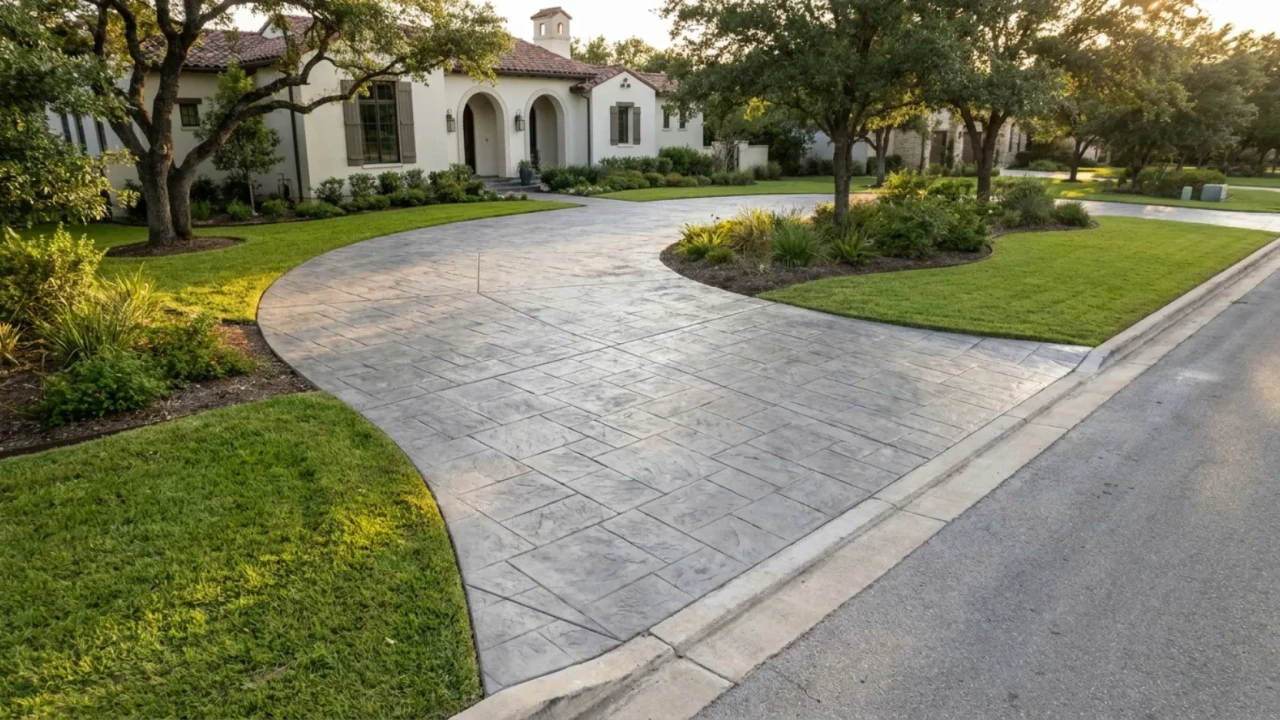
The most cost-effective stamped driveways in San Antonio use one of three patterns that stamp efficiently across a large surface: ashlar slate (large irregular blocks), running bond brick, or random stone. Each of these covers ground quickly and consistently without requiring the crew to slow down for corner transitions or scale changes.
Color simplicity provides similar savings. A single integral base color (pigment mixed into the concrete) plus one contrasting release agent applied uniformly across the surface is the most budget-efficient color approach. Multi-color systems, hand-applied antiquing releases, or field-plus-border color contrasts each add labor hours and dollars.
- Pattern selected from efficient single-stamp options: ashlar slate, running bond brick, or random stone
- Color system confirmed as single integral base color plus one uniform release agent
- Decorative border added only if budget allows not required for a quality result
- Color confirmed as integral (mixed into concrete), not surface-applied color hardener only
- Pattern and color confirmed in writing before the pour no changes are possible after the slab sets
Every square foot of stamped concrete you pour costs money for materials, base prep, labor, and sealing now and every time the surface is resealed. Before committing to a specific footprint, consider whether the full planned area will be used and whether sections of the driveway could use a more economical finish.
-optimized.webp)
A common approach used by cost-conscious San Antonio homeowners is the "showcase zone" design: the highly visible portion of the driveway near the street and the entry apron at the garage receive the stamped finish, while a rear extension, side pad, or turnaround area behind the gate uses a standard broom-finish concrete. This hybrid approach can cut the stamped square footage by 30 to 40 percent while maintaining the visual impact that stamped concrete provides from the street.
For longer driveways common in Helotes, Boerne, and rural Bexar County properties, this strategy produces particularly significant savings. A 1,000-square-foot driveway where 400 square feet is stamped and 600 square feet is broom-finish can easily come in $8,000 to $12,000 less than a fully stamped surface at the same structural spec.
The transition detail matters: When combining stamped and broom-finish sections, the transition line between finishes needs to be planned as a design element, not just a place where the pattern stops. A control joint placed at the transition, or a decorative border band that frames the stamped zone, makes the finish change look intentional. A raw edge where stamped concrete ends abruptly at plain concrete looks unfinished. Ask your contractor to sketch the transition detail before the pour.
- High-visibility zone identified: the area visible from the street that justifies the stamped premium
- Low-visibility zones evaluated: side pads, rear sections, and parking areas considered for broom finish
- Hybrid layout discussed with contractor and sketched on a site plan before quoting
- Transition line between stamped and broom-finish sections designed as a deliberate detail
- Savings from footprint optimization compared against full-stamped quote
Concrete contractor demand in San Antonio follows a predictable seasonal pattern. The spring season from March through May is the busiest period of the year, when homeowners are eager to have projects done before summer heat peaks and when contractor schedules fill quickly. That high demand typically means less negotiating room on price and longer wait times for reputable crews.

The fall season from October through December and the winter months of January and February are when San Antonio concrete contractors have more availability and, in many cases, more willingness to compete on price to keep crews working. Winter pours in San Antonio are entirely practical the mild Texas winters (with the exception of rare freeze events) are actually excellent conditions for concrete curing, avoiding the heat-related curing challenges of summer work.
Homeowners who can time their project to the October-to-February window often secure 10 to 15 percent better pricing on the same scope of work compared with peak spring and fall shoulder season rates. On a $15,000 stamped driveway project, that is a $1,500 to $2,250 difference for the same finished product.
| Season | Demand level | Pricing climate | Pour conditions |
|---|---|---|---|
| March to May (spring) | Very high peak season | Full market rate; less flexibility | Excellent mild temps and low humidity ideal for stamping |
| June to August (summer) | High | Full market rate | Challenging early morning pours required; retarder admixtures needed to extend stamping window |
| September to October (fall shoulder) | Moderate to high | Moderate flexibility | Good to excellent cooling temperatures extend working time |
| November to February (off-peak) | Low to moderate | Best pricing flexibility; contractors more motivated to compete | Good mild San Antonio winters are rarely problematic for concrete work |
- Project timeline evaluated off-peak scheduling (November to February) requested if budget is a priority
- Multiple quotes collected in the same season for apples-to-apples price comparison
- Off-peak discount discussed with contractor even a 5 to 10 percent reduction on a $15,000 project is significant
- Pour conditions appropriate for the season confirmed: retarder admixtures for summer, curing blanket availability for winter
There is a meaningful difference between smart cost savings and false economies. The items below are the most commonly skipped specifications in low-price stamped driveway quotes in San Antonio. Skipping any of them does not produce an "affordable" driveway it produces one that fails early on Bexar County's challenging Vertisol clay soil, and that replacement or repair will cost far more than the savings achieved at the quote stage.
San Antonio's Blackland Prairie Vertisol clay is one of the most expansive soil types in the entire United States. Clay that swells when wet and shrinks when dry creates persistent ground movement beneath any slab. Without proper base excavation and replacement, that movement translates directly into cracks first hairline, then structural, typically within three to five years on a thin or under-reinforced slab.
This is not a hypothetical risk. It is the most common cause of early driveway failure across Bexar County neighborhoods, from Converse and Universal City to the Westside and Southside corridors. No design choice, no color selection, and no contractor reputation can compensate for a thin slab poured on a compressed clay base.
| Structural item | Correct specification | What skipping it costs you |
|---|---|---|
| Base excavation and replacement | 4 to 6 inches of compacted crushed limestone base after excavating unstable clay | Clay movement cracks the slab from below, typically within 3 to 5 years |
| Slab thickness | 5 inches minimum for a vehicle driveway; 4 inches is driveway minimums for light traffic only | Thin slabs flex under vehicle loads and crack at control joints prematurely |
| Rebar reinforcement | #3 or #4 rebar at 18-inch centers wire mesh is not adequate for vehicle driveways on clay | Uncontrolled cracking when soil moves; wire mesh separates, rebar holds cracks tight |
| Control and expansion joints | Placed every 8 to 10 feet in the field; aligned with stamped pattern seams where possible | Random cracking across the face of a stamped pattern is visually irreparable |
| Integral color (not surface-applied) | Pigment mixed into the concrete batch, not color hardener broadcast on top of a gray slab | Surface-applied color delamination within 2 to 4 years in Texas UV conditions |
| Two-coat sealer at 28 days | Penetrating or film-forming sealer applied after full cure at 28 days, two coats | Unsealed stamped concrete fades and chalks within 18 months in San Antonio's UV intensity |
- Base excavation to unstable clay specified in the written quote not just grading the surface
- 4 to 6 inches of compacted crushed limestone base specified by depth and material
- Slab thickness confirmed at 5 inches minimum for a vehicle driveway
- Rebar grid specified by bar size and spacing not wire mesh substituted for driveways
- Control joint spacing confirmed at 8 to 10 feet, integrated with the stamped pattern layout
- Integral color confirmed pigment in the concrete mix, not surface color hardener only
- Two-coat sealer application included in the scope at the 28-day cure mark
Searching "affordable stamped concrete driveway near me" in San Antonio returns a mix of legitimate local contractors, regional aggregators, and the kind of low-overhead operations that produce the failed driveways described in the previous section. The search process matters as much as the search result.
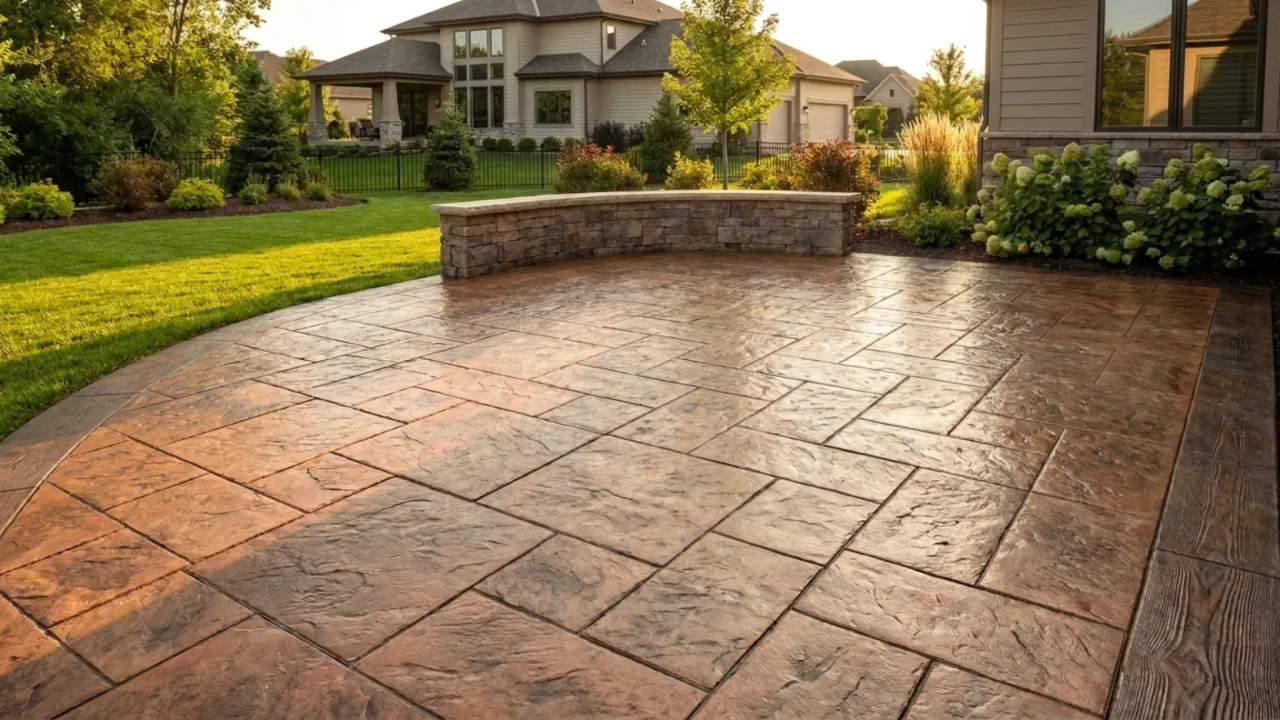
The most reliable starting point is neighborhood referrals. A neighbor in Cibolo, Schertz, Leon Valley, or Stone Oak who can show you their finished stamped driveway and give you a contractor name is worth more than any online review. You are seeing the actual finished product in real San Antonio conditions, not a filtered photo taken the week after the sealer was applied.
When you move to an online search, look for contractors who have a consistent presence in San Antonio specifically Google reviews that mention neighborhood names, project photos that show local architectural styles (limestone, stucco, brick exteriors), and a business listing with a verifiable Bexar County address. A contractor based in another Texas city who shows up for San Antonio work may be fine, but they are less likely to have the local soil knowledge and supply relationships that affect both quality and price.
San Antonio neighborhoods where stamped driveway referrals travel well: The established residential neighborhoods in Stone Oak, Alamo Ranch, Helotes, Timberwood Park, and Fair Oaks Ranch have a high density of stamped concrete driveways installed over the past decade. Nextdoor communities in these areas frequently include contractor recommendations with photos and equally important, warnings about specific contractors to avoid. If you live in or near these neighborhoods, those community boards are worth 20 minutes of reading before you start collecting quotes.
- Neighborhood referrals requested from Nextdoor or HOA community boards
- Google Business reviews filtered for stamped driveway mentions and recent patterns
- Minimum three written quotes collected from separate contractors
- Quotes compared line by line on structural spec not just total price
- Certificate of insurance requested and received from each contractor before site visit
- Physical San Antonio or Bexar County business address verified for each contractor
A quote that looks affordable at first comparison often becomes significantly less affordable once excluded scope items are added back in. The most common exclusions in low-price stamped driveway quotes in San Antonio are demolition and removal of the existing driveway, haul-away of debris, and sealing. Each of these can add $1,000 to $3,000 to a project depending on the size of the existing slab and the sealer product specified.
- Demo and haul-away of existing concrete included in the total price or separately itemized
- Two-coat sealer at 28 days included in the scope not a separate return visit with a separate invoice
- City of San Antonio ROW permit responsibility confirmed: contractor or homeowner
- Texas 811 utility locate compliance confirmed as part of the contractor's pre-excavation process
- Site cleanup and concrete waste removal included in the scope
- All quotes restated as fully loaded totals before final price comparison
Pricing for stamped concrete driveways in San Antonio does not vary dramatically by neighborhood the material and labor costs are largely consistent across Bexar County. What does vary is typical driveway size, which affects total project cost, and local HOA requirements in some communities that specify approved patterns or finishes.
| San Antonio area | Typical driveway size | Estimated total range (standard stamped) | Notes |
|---|---|---|---|
| Stone Oak / Shavano Park | 600 to 800 sq ft | $10,800 to $17,600 | Larger lots common; curved or two-car wide driveways standard |
| Alamo Heights / Terrell Hills | 400 to 600 sq ft | $7,200 to $13,200 | Older lots with shorter driveway runs; demo of existing concrete often required |
| Helotes / Leon Valley | 500 to 700 sq ft | $9,000 to $15,400 | Hill Country edge mix of clay and limestone substrate; base prep varies by lot |
| Converse / Universal City / Schertz | 400 to 600 sq ft | $7,200 to $13,200 | Heavy Vertisol clay base excavation especially important in this submarket |
| Alamo Ranch / Westover Hills | 600 to 900 sq ft | $10,800 to $19,800 | Newer construction; larger lots with longer driveway runs |
| Southside / Eastside corridors | 350 to 500 sq ft | $6,300 to $11,000 | Smaller urban lots with shorter driveways; good market for hybrid stamped-plus-broom approach |
| Boerne / Fair Oaks Ranch | 700 to 1,200 sq ft | $12,600 to $26,400 | Rural and semi-rural lots with longer driveway runs; limestone substrate in some areas reduces base prep cost |
- Pattern selected from efficient single-stamp options: ashlar slate, running bond brick, or random stone
- Color system limited to one integral base color plus one uniform release agent to minimize labor
- Decorative border and multi-color systems deferred or evaluated as optional upgrades only
- Hybrid footprint (stamped showcase zone plus broom-finish extension) evaluated if budget is constrained
- Off-peak scheduling (November to February) requested if timeline is flexible
- Minimum three written quotes collected from San Antonio-based contractors
- Neighborhood referrals and Nextdoor recommendations reviewed before quote solicitation
- Certificate of insurance received from each contractor: $1M+ general liability, workers compensation confirmed
- Base excavation and 4 to 6 inch compacted crushed limestone base confirmed in every quote
- Slab thickness confirmed at 5 inches minimum for a vehicle driveway
- Rebar grid specified: #3 or #4 bar at 18-inch centers, not wire mesh
- Control joints at 8 to 10 foot spacing, aligned with pattern seams
- Integral color confirmed: pigment in the mix, not surface-applied color hardener only
- Two-coat sealer at 28 days included in scope
- Demo and haul-away of existing concrete included or separately itemized in every quote
- Sealing included in the project scope, not a separate future invoice
- ROW permit responsibility confirmed: contractor or homeowner
- Texas 811 utility locate compliance confirmed as part of pre-excavation process
- All quotes converted to fully loaded totals before final price comparison
Get a free stamped driveway quote in San Antonio
Tell us your driveway size, your pattern ideas, and your budget. We will visit your property, assess the soil and site conditions, and give you a detailed written quote that includes every line item no hidden add-ons.