Pool deck repairs in San Antonio do not have to cost a fortune. Most cracked, spalled, and worn concrete surfaces around pools can be brought back to safe, attractive condition for a fraction of replacement cost. This guide shows you exactly what fair prices look like, where the savings actually come from, and how to avoid the cheap repairs that cost you more in the long run.
The word "affordable" gets thrown around a lot in the San Antonio concrete market. Some contractors use it to mean "cheap materials and fast labor." That is not what it means here. An affordable pool deck repair is one where you pay a fair price for the right repair, get quality materials and skilled installation, and avoid the unnecessary upsells and scope inflation that drive up cost on jobs that should be straightforward.
Pool deck repair is genuinely one of the most cost-effective home improvement investments a San Antonio property owner can make. Concrete surfaces that look damaged and worn often need targeted repair, not replacement. The difference in cost between those two paths is significant. This guide walks through real San Antonio pricing, the repairs that give you the best value, and the factors that push costs higher than they need to be.
A $400 repair that uses low-grade patch compound and skips surface preparation will delaminate within 12 to 18 months in San Antonio's heat. You then pay for another repair on top of the first one. A $700 repair that uses professional-grade polymer-modified mortar, proper bonding agent, and mechanical surface prep will hold for 8 to 12 years. The second repair costs more upfront and far less over time. Affordable repair is about paying the right price for the right work, not the lowest price for any work.
Full pool deck replacement in San Antonio runs $14 to $22 per square foot for a new concrete slab, including demolition, base preparation, pour, and finish. A 500 square foot pool deck costs $7,000 to $11,000 to replace. Most pool decks that look bad do not need replacement. They need targeted repair or resurfacing, which costs a fraction of that.
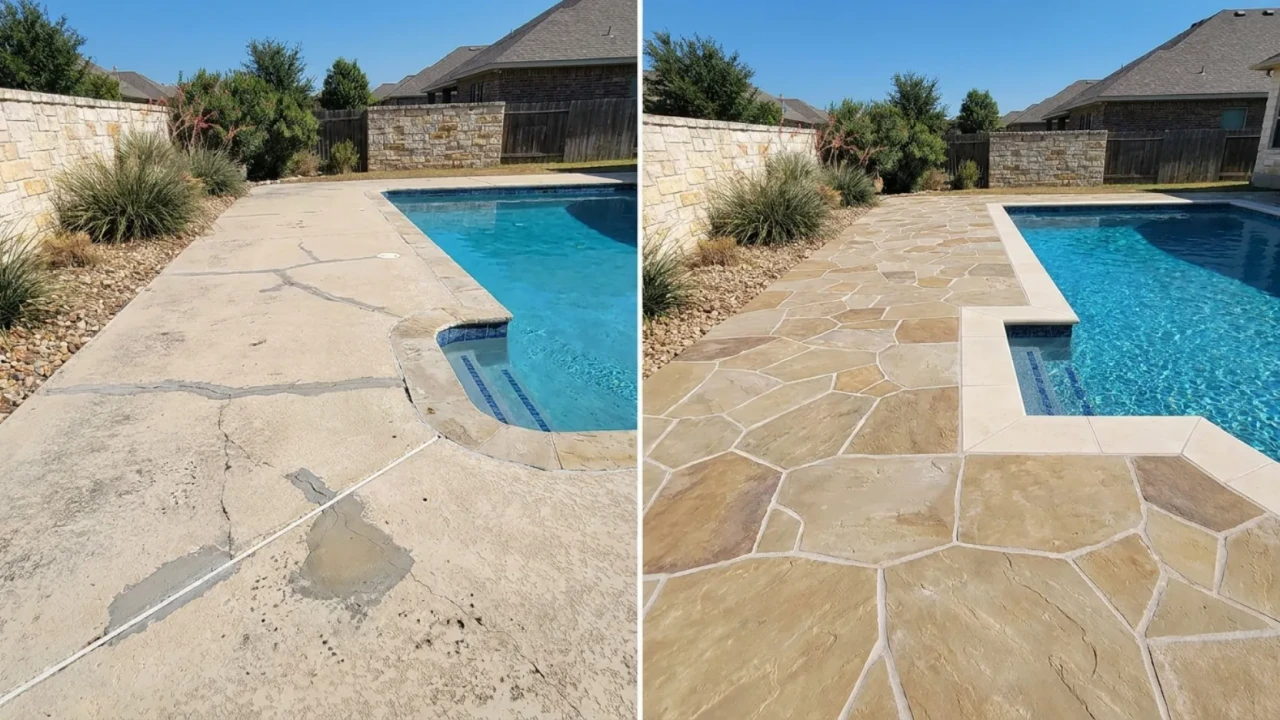
The decision comes down to one question: is the base structure still solid? If the concrete is not heaving, if there is no major vertical displacement between sections, and if cracks are surface-level rather than structural, repair is the right and affordable path. A legitimate contractor will tell you this plainly after a hands-on inspection.
The repairs that deliver the most value relative to their cost are crack routing and sealing, spall patching in isolated areas, and full resurfacing when the surface is deteriorated but the slab is still structurally intact. None of these require demolition. All of them can be completed in one to two days.
- Walk the entire deck before calling anyone and note sections with visible heaving or displacement
- Measure crack widths: under 1/4 inch with no heaving is a repair candidate, not a replacement
- Any contractor recommending full replacement should point to specific evidence of base failure
- Ask for both a repair quote and a replacement quote side by side to compare options honestly
- Widespread surface deterioration without structural failure is a resurfacing job, not a replacement
Understanding what repairs actually cost in the San Antonio market is the most practical tool you have for evaluating quotes. The ranges below are real 2026 market prices for Bexar County. A quote significantly below these ranges is a signal that something in the scope is being skipped. A quote significantly above them should prompt questions about what is driving the premium.
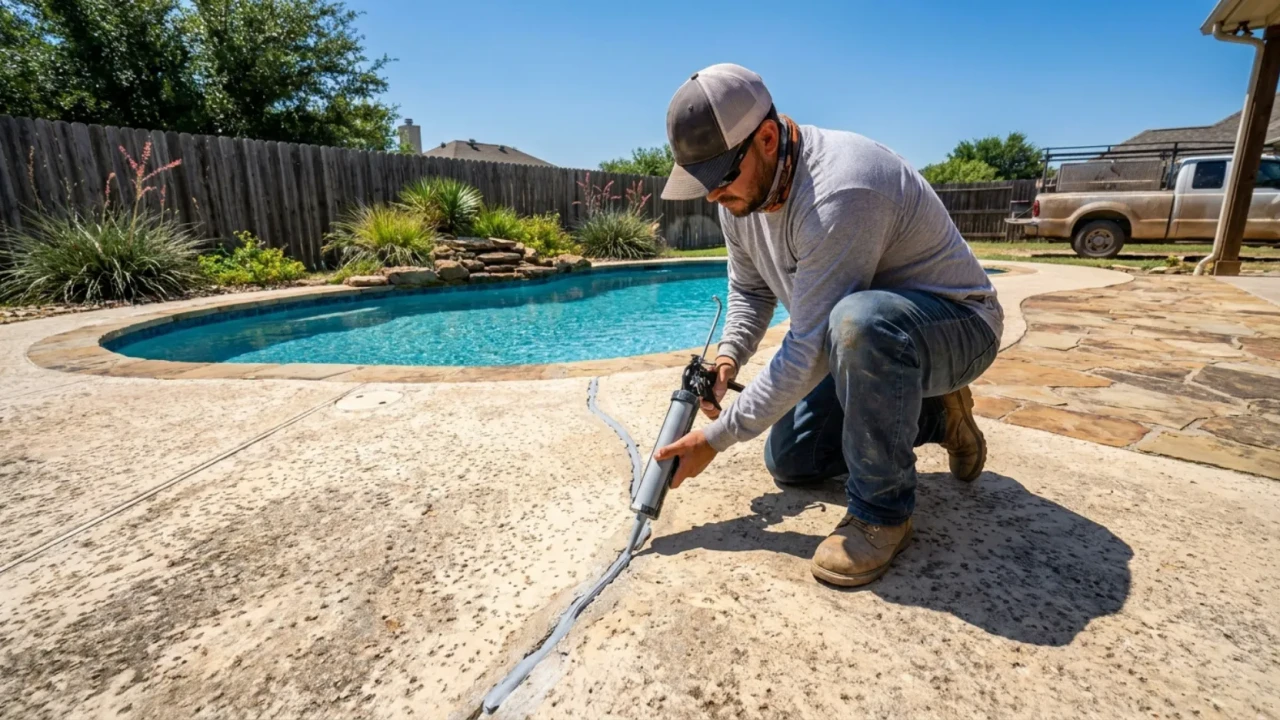
The biggest variable in pool deck repair pricing is surface preparation. This is the step that determines how long the repair holds. A contractor who skips mechanical prep (grinding or shot blasting for overlay work) or skips the bonding agent on spall patches is cutting the most important cost in the job, not offering a bargain. It will show within the first year.
Labor rates in San Antonio for skilled concrete repair crews run $60 to $90 per hour in 2026. Most residential crack repairs take two to four hours on-site. Material costs for professional-grade polymer-modified patch compounds run $40 to $80 per bag, with most residential jobs requiring one to three bags. These numbers give you a simple sanity check on any quote you receive.
The most affordable time to get pool deck repair done in San Antonio is October through February. Contractor demand drops significantly after Labor Day, and crews that are fully booked in June and July are actively looking for work in the fall and winter. You are in a better negotiating position, scheduling is faster, and some contractors will sharpen their pricing to fill slower weeks. Concrete also cures better in cooler temperatures, which is a quality benefit on top of the cost one.
- Quote for crack repair below $150 is likely missing surface preparation or using retail-grade materials
- Quote for spall patching that does not mention bonding agent is skipping the step that makes patches hold
- Full resurfacing quotes below $1,500 for a typical 400 to 500 sqft deck should be questioned
- All quotes should break out labor and materials separately so you can compare scope, not just totals
- A written warranty of at least one year is standard on professional-grade pool deck repair work
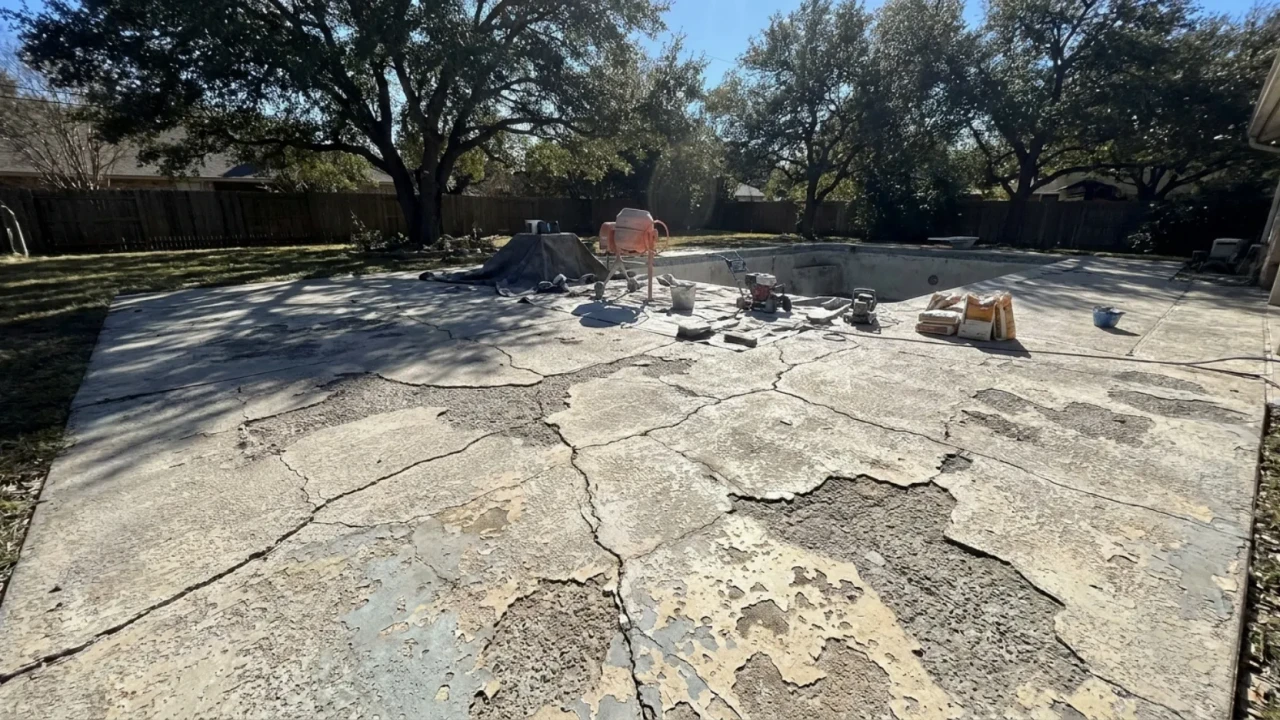
Pool deck repair costs more than it should when homeowners do not know what to expect. Knowing the factors that push prices up gives you the tools to ask the right questions before you sign anything. Some of these are legitimate cost drivers. Others are scope inflation that you can push back on.
| Cost factor | Legitimate or avoidable? | How to manage it |
|---|---|---|
| Access difficulty | Legitimate affects labor time | Ensure contractor sees the access constraints before quoting. Do not accept a phone quote. |
| Peak season scheduling | Market-driven avoidable with timing | Schedule in fall or winter if the repair is not urgent. October to February saves 10 to 20% in some cases. |
| Decorative finish upsell | Optional your choice | A plain texture match is always available. Decorative coatings cost more and are worth it only if you want the aesthetic upgrade. |
| Failed previous repairs | Legitimate adds prep work | Previous patch material that has delaminated must be fully removed before a new repair will bond. This is real work, not padding. |
| Full resurface instead of spot repair | Often avoidable get a second opinion | If a contractor recommends full resurface on a deck with only isolated damage, ask them to explain specifically why spot repair would not hold. |
| Emergency or same-day scheduling | Legitimate premium | If the repair can wait a week, plan ahead. Emergency mobilization fees are real and fair, but avoidable with planning. |
The gap between a repair that lasts eight years and one that fails in eight months is almost always material quality. Professional-grade polymer-modified concrete repair products cost more than the big-box store alternatives, but they bond to existing concrete at 1,200 to 3,000 psi rather than 400 to 600 psi, resist thermal expansion far better in Texas heat, and maintain flexibility to move with the slab instead of cracking away from it.
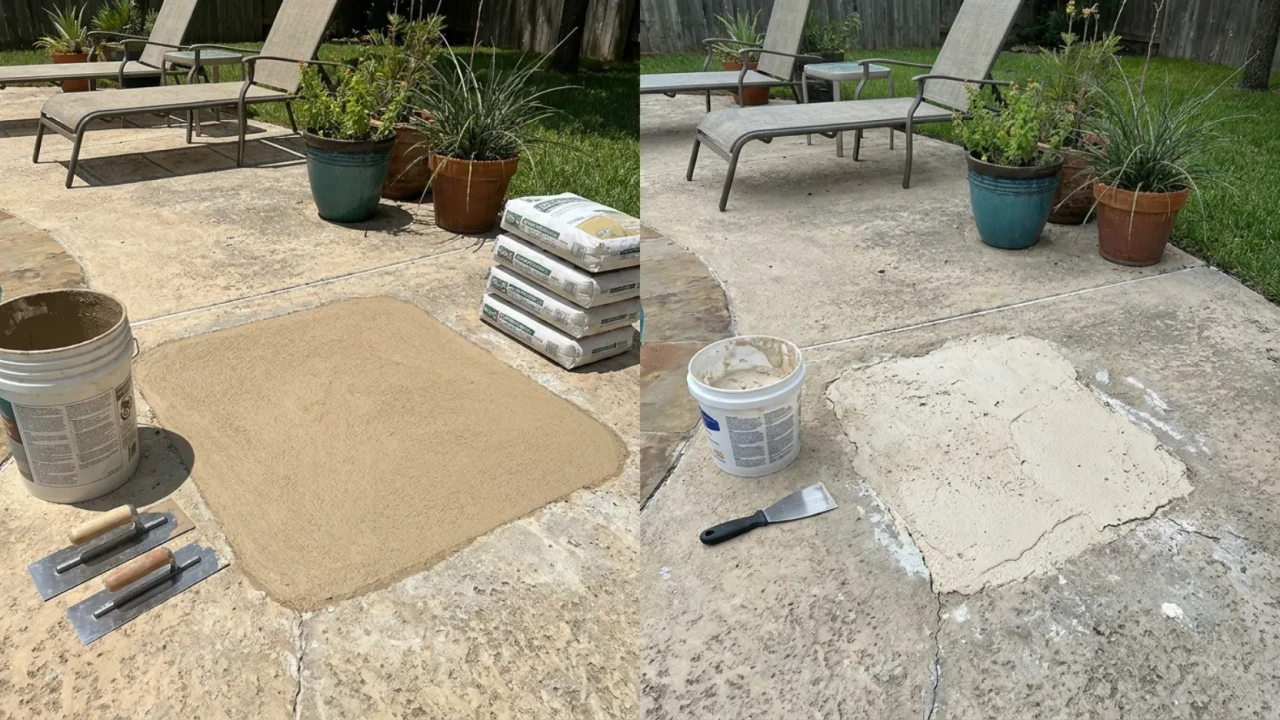
For crack repairs around pools: The correct filler is a flexible polyurethane or hybrid polyurethane-epoxy sealant rather than a rigid epoxy. Pool decks flex with temperature changes and soil movement. A rigid filler cracks out within one to two seasons. A flexible filler accommodates that movement and stays sealed for years. Within 12 inches of the pool coping, the product must also be waterproof to prevent water from working behind the pool shell.
For spall patches: Professional-grade polymer-modified repair mortars set in 30 to 60 minutes and reach full strength in 24 to 48 hours. They are compatible with a wide range of concrete mix designs, which matters on older San Antonio slabs from the 1980s and 1990s that have nonstandard aggregate and water-cement ratios.
Ask every contractor to name the specific product they will use for each part of the repair. A contractor who cannot name their materials or says they use "whatever works best" is telling you they are making material decisions based on what is cheapest on the day of the job, not what is best for your deck. Professional crews use the same products consistently because they know the performance characteristics and have seen the results over time.
Any sealer or coating applied to a pool deck in San Antonio needs a UV-resistant formulation. Standard concrete sealers rated for general outdoor use in northern climates degrade significantly faster here. Bexar County receives intense UV radiation year-round, and the combination of that UV exposure and 100-degree summer temperatures breaks down acrylic and polyurethane-based sealers in 12 to 18 months instead of the three to five year recoat interval those products are rated for in milder climates. A silane or siloxane penetrating sealer is a better long-term investment for San Antonio pool decks than a surface-film sealer.
- Contractor names the specific product used for crack fill, patch mortar, and sealer in the written quote
- Crack filler confirmed as flexible (polyurethane or hybrid) rather than rigid epoxy
- Bonding agent included in any spall patch scope
- Overlay or resurfacing product confirmed as rated for pool deck and outdoor Texas conditions
- Sealer specified as UV-resistant and appropriate for San Antonio's climate
- Any previous failed repair material confirmed as fully removed before new material is applied
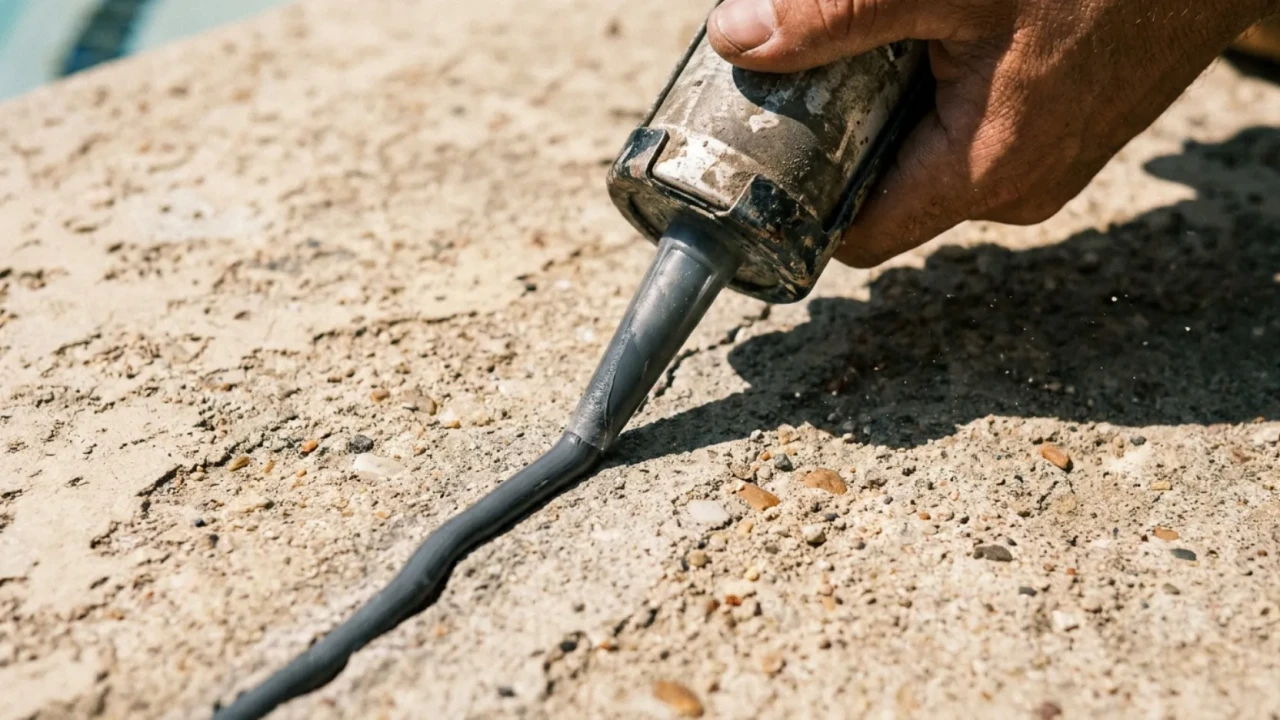
The least expensive pool deck repair is the one done early. A hairline crack sealed this spring at a cost of $150 to $250 prevents that crack from admitting water, widening through the freeze-thaw cycles of a Texas winter, and becoming a $600 structural repair by next summer. The progression from hairline crack to spall to structural damage is faster in San Antonio than most homeowners expect, because the Blackland Prairie clay soil underneath most Bexar County properties moves with moisture changes and puts continuous stress on pool deck slabs.
Beyond timely crack repair, sealing is the single highest-value maintenance action available for pool deck concrete. A penetrating silane or siloxane sealer applied 28 to 30 days after any repair work, and reapplied every two to three years, blocks water and pool chemical absorption that drives spalling. The sealing cost for a 500 square foot pool deck runs $200 to $400 as a professional service, or $80 to $150 as a DIY project with the correct product.
- Pool deck inspected every spring before pool season for new cracking or surface changes
- Any crack under 1/4 inch sealed within one season of discovery, before it widens
- Expansion joints checked annually and refilled if the filler is cracked, missing, or compressed
- Deck resealed every 2 to 3 years or when water stops beading on the surface
- Drainage confirmed: water should flow away from coping and pool shell after rain
- No trees planted within 10 feet of the pool deck: root movement accelerates base failure
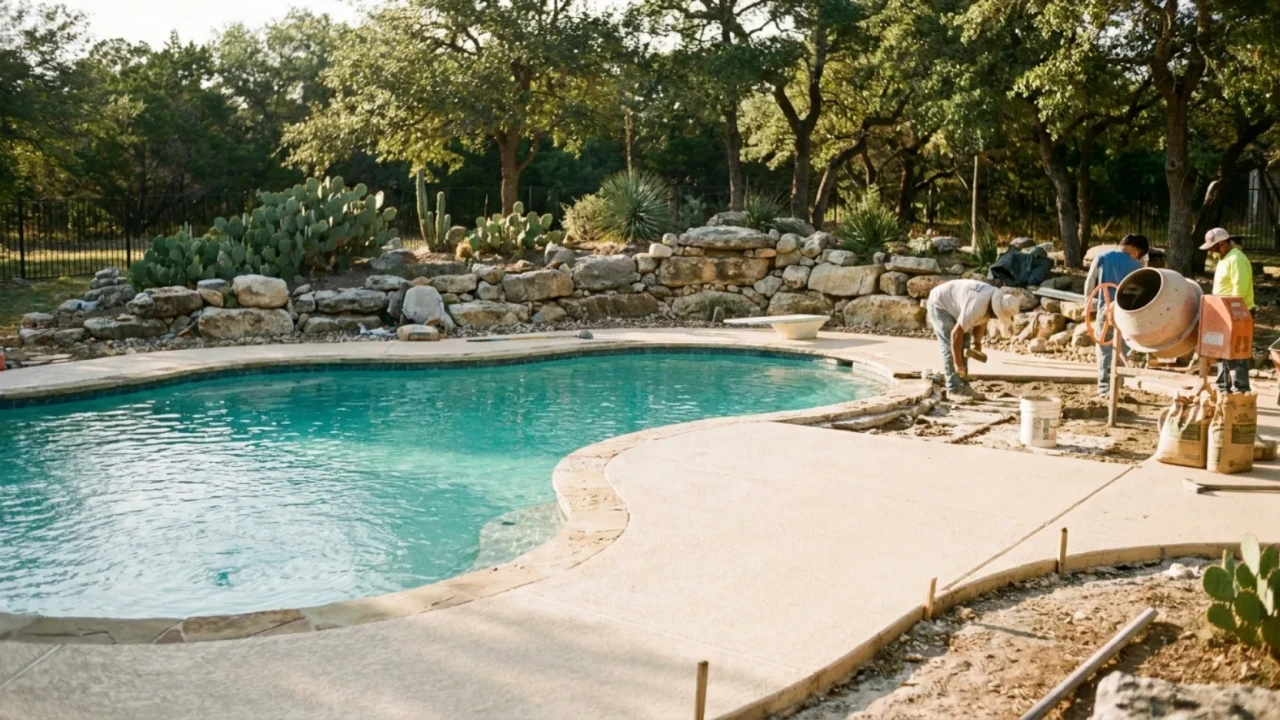
Use this table as your benchmark when evaluating quotes. These are real Bexar County market prices for professional-grade work with proper materials. Quotes more than 20 percent below the lower end of these ranges should be questioned for scope completeness.
| Repair type | Cost range (San Antonio 2026) | Typical duration |
|---|---|---|
| Single hairline crack seal | $150 to $250 | 2 hours |
| Multiple cracks (up to 10 lin ft) | $250 to $450 | 2 to 4 hours |
| Isolated spall patch (under 15 sqft) | $350 to $700 | Half day |
| Combination crack and spall repair | $500 to $1,400 | 1 day |
| Coping joint resealing | $200 to $500 | 2 to 4 hours |
| Decorative coating application | $500 to $1,200 | 1 day |
| Full deck resurfacing (400 to 600 sqft) | $2,000 to $5,500 | 1 to 2 days |
| Full slab replacement (per sqft) | $14 to $22/sqft | 2 to 3 days |
- Walk the entire pool deck and note crack locations, widths, and any vertical displacement
- Photograph each damaged area with a coin or ruler for scale before anyone arrives
- Check whether cracks have grown since last season by marking end points with chalk or tape
- Confirm access route to the pool deck: gate width, fence clearance, distance from street
- Decide on your finish preference: plain texture match vs. decorative coating or overlay
- Minimum three written quotes collected and compared line by line before signing anything
- Each quote names the specific products used for crack fill, patch mortar, and sealer
- Surface preparation scope described in each quote: mechanical prep required for overlay work
- Payment terms confirmed as deposit at signing, balance at walkthrough completion
- Written warranty of at least one year included for workmanship
- Schedule timing considered: fall and winter quotes are often more competitive
- Contractor physically inspected the deck in person before quoting, not by phone or photo
- Any failed previous repair material fully removed before new material is applied
- Bonding agent applied before any patch mortar goes down
- Flexible sealant confirmed for all joints within 12 inches of pool coping
- Cure time instructions given in writing before the crew leaves
- Walkthrough completed with contractor before final payment is released
- All contract scope items confirmed complete or flagged for correction
- First sealer application scheduled for 28 to 30 days after repair completion
- Resealing calendar reminder set for two to three years from today
- Annual spring inspection added to home maintenance schedule
Get a free, honest pool deck repair quote in San Antonio
No inflated scopes. No unnecessary upsells. We inspect your pool deck in person, tell you exactly what it needs, and give you a written quote with fair 2026 pricing.