
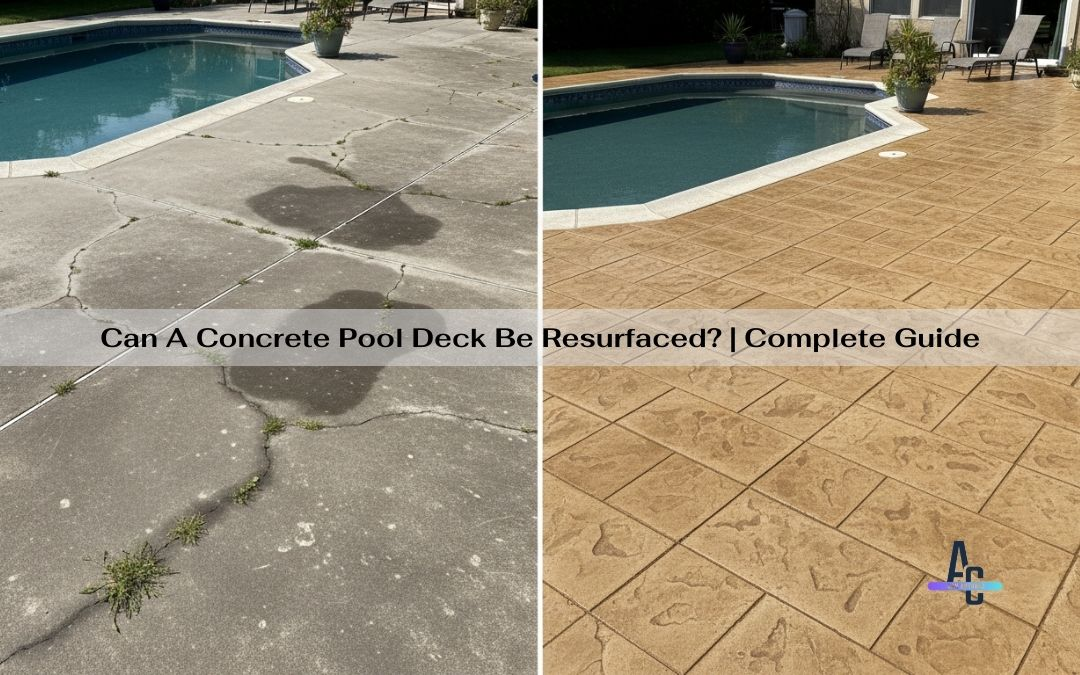
If you’ve noticed cracks, stains, or surface deterioration on your concrete pool deck, you’re probably wondering whether resurfacing is a viable solution. The short answer is yes a concrete pool deck can absolutely be resurfaced, and in many cases, it’s the most cost-effective way to restore both the safety and aesthetics of your outdoor space.
Resurfacing involves applying a new layer of material over your existing concrete surface, addressing damage while giving you the opportunity to update the appearance with modern finishes, textures, and colors. This process can extend your pool deck’s lifespan by 10 to 15 years when done correctly, making it a smart investment for homeowners looking to avoid the expense of complete replacement.
In this comprehensive guide, we’ll explore everything you need to know about concrete pool deck resurfacing, including the signs your deck needs attention, the various resurfacing methods available, cost considerations, and how to choose the right contractor for the job.
What Is Concrete Pool Deck Resurfacing?
Concrete pool deck resurfacing is a restoration technique that involves applying a new surface layer over your existing concrete deck. Rather than removing and replacing the entire structure, resurfacing covers up damage, improves aesthetics, and adds protective properties to extend the deck’s functional life.
The process typically involves thorough cleaning, repairing structural issues like cracks or spalling, applying a bonding agent, and then installing the chosen resurfacing material. According to HomeAdvisor’s pool deck cost data, resurfacing can cost 50 to 70 percent less than complete replacement while still delivering professional results.
Resurfacing materials range from thin overlay systems and stamped concrete to specialized coatings like Kool Deck, acrylic textures, or epoxy finishes. Each option offers different aesthetic qualities, slip resistance, and durability characteristics.
When Resurfacing Makes Sense
Resurfacing is ideal when:
- The underlying concrete structure is sound
- Surface damage is primarily cosmetic (cracks, stains, fading)
- You want to update the appearance without major construction
- Your budget doesn’t allow for complete replacement
- The deck has minor settling but no significant structural failure
However, if your pool deck has severe foundation issues, extensive deep cracking, or major settling problems, replacement may be the more appropriate solution.
Signs Your Pool Deck Needs Resurfacing
Knowing when to resurface your pool deck can prevent minor issues from becoming major safety hazards or expensive repairs. Watch for these telltale signs:
Surface Cracking
Small hairline cracks are common in concrete and don’t always warrant immediate action. However, when cracks widen beyond a quarter inch, multiply across the surface, or begin to create tripping hazards, resurfacing becomes necessary. These cracks allow water infiltration, which can lead to further deterioration through freeze-thaw cycles and erosion of the subsurface.
Staining And Discoloration
Pool decks endure constant exposure to chlorinated water, pool chemicals, sunscreen, and environmental elements. Over time, this leads to stubborn staining that regular cleaning can’t remove. Persistent discoloration not only affects curb appeal but may indicate chemical damage to the concrete’s surface layer.
Spalling And Surface Deterioration
Spalling occurs when the concrete surface begins to flake, pit, or chip away, exposing the aggregate underneath. This happens when water penetrates the concrete, causing the surface to delaminate. Left untreated, spalling compromises the structural integrity of the deck and creates rough, uncomfortable surfaces.
Fading And Wear
UV exposure and foot traffic gradually wear down decorative finishes, causing colors to fade and textures to smooth out. If your once-vibrant stamped concrete or colored surface now looks dull and weathered, resurfacing can restore its original beauty.
Loss Of Slip Resistance
Safety should be your top priority around pool areas. If your deck surface has become smooth and slippery when wet, it poses a significant safety risk. Resurfacing with slip-resistant materials like textured overlays or Kool Deck can dramatically improve traction.
Pooling Water
Poor drainage indicated by standing water after rain or pool use suggests surface irregularities or settling. While some drainage issues require structural intervention, many can be addressed during resurfacing by adjusting the surface profile and incorporating proper slope.
Benefits Of Resurfacing VS. Replacement
Understanding the advantages of resurfacing helps you make an informed decision about your pool deck project.
Cost Savings
According to Angi’s pool deck pricing guide, complete concrete deck replacement typically costs between $4,000 and $16,000 depending on size and complexity, while resurfacing generally ranges from $1,500 to $7,000 for the same area. This substantial cost difference makes resurfacing attractive for budget-conscious homeowners.
Faster Completion
Demolition and replacement projects can take two to four weeks, disrupting your pool season and outdoor activities. Resurfacing typically requires only three to seven days from start to finish, with many methods allowing foot traffic within 24 to 48 hours.
Environmental Considerations
Resurfacing is the more sustainable choice, eliminating the need to haul away tons of concrete debris to landfills. You’re preserving the embodied energy in the existing structure while still achieving a refreshed appearance.
Minimal Disruption
Unlike full replacement, which involves heavy equipment, noise, and significant site disturbance, resurfacing is relatively quiet and contained. You won’t need to worry about damage to landscaping or adjacent structures.
Design Flexibility
Modern resurfacing techniques offer virtually unlimited design possibilities. You can completely transform your pool deck’s appearance with stamped patterns, custom colors, decorative textures, or contemporary finishes that weren’t available when your original deck was installed.
Structural Preservation
When the underlying concrete is fundamentally sound, removing and replacing it makes little sense. Resurfacing allows you to address surface-level issues while preserving the structural investment you’ve already made.
Popular Pool Deck Resurfacing Options
Selecting the right resurfacing material depends on your aesthetic preferences, budget, climate considerations, and functional requirements. Here are the most popular options:
Concrete Overlay Systems
Overlay systems involve applying a thin layer of modified concrete (typically one-quarter to three-eighths inch thick) over the existing surface. These systems bond directly to the old concrete and can be stamped, stained, or textured during installation.
Advantages: Highly versatile, available in numerous colors and patterns, excellent durability, can mimic expensive materials like stone or tile.
Best for: Homeowners seeking custom designs on a moderate budget.
Stamped Concrete Resurfacing
Stamped concrete allows you to replicate the appearance of natural stone, slate, brick, or other premium materials at a fraction of the cost. Patterns are pressed into the overlay material while it’s still workable, creating realistic textures and designs.
Advantages: High-end appearance, excellent value, wide variety of patterns and colors, long-lasting with proper sealing.
Best for: Those wanting a luxury look without luxury prices.
Kool Deck And Cool Decking Systems
Kool Deck is a textured concrete topping specifically designed to reduce surface temperatures, making it comfortable to walk on barefoot even in intense heat. The material remains up to 30 degrees cooler than standard concrete under the same conditions.
Advantages: Heat-reflective properties, slip-resistant texture, available in earth-tone colors, proven durability over decades of use.
Best for: Hot climates where surface temperature is a primary concern.
Acrylic Coatings And Texture Systems
Acrylic-based systems create decorative, textured surfaces with excellent slip resistance and UV protection. These coatings come in various patterns, including knock-down textures, orange peel finishes, and lace patterns.
Advantages: Fast installation, excellent adhesion, waterproof properties, good UV resistance, cost-effective.
Best for: Budget-conscious projects requiring quick turnaround.
Epoxy And Polyurethane Coatings
High-performance coatings provide a seamless, glossy finish with exceptional chemical resistance and durability. While more common for indoor applications, UV-stable formulations work well for pool decks.
Advantages: Extremely durable, chemical resistant, easy to clean, available in solid colors or decorative flake systems.
Best for: Modern, contemporary designs prioritizing easy maintenance.
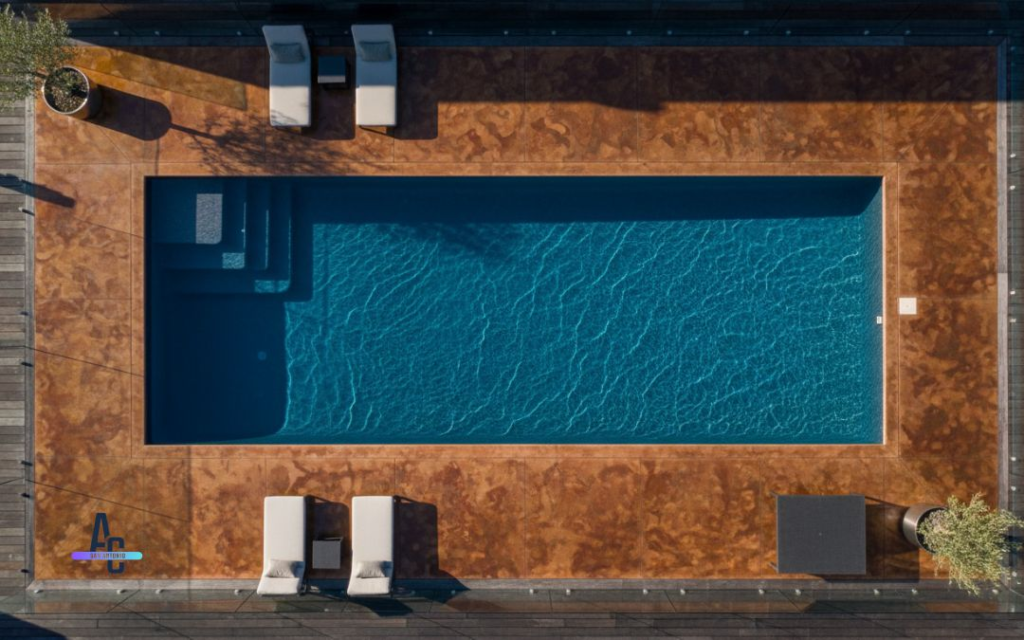
Stained Concrete
Acid stains or water-based stains can revitalize plain concrete with translucent color that enhances the natural variations in the surface. This option works when the existing concrete is in good condition but lacks visual appeal.
Advantages: Cost-effective, natural appearance, color variety, can be combined with other treatments.
Best for: Minimalist aesthetics or budgets limited to cosmetic improvements.
Spray Texture Systems
Spray-applied textures create uniform, slip-resistant surfaces quickly and economically. The material is sprayed onto the prepared surface and can be customized with different aggregate sizes for varying texture levels.
Advantages: Fast application, consistent results, excellent slip resistance, economical.
Best for: Large areas where speed and budget are priorities.
Decorative Concrete Overlays with Embedded Stone
Some systems incorporate decorative stones, glass, or other aggregates into the overlay material, creating unique, custom appearances with excellent durability and slip resistance.
Advantages: Unique aesthetic, high-end appearance, excellent traction, very durable.
Best for: Custom projects where uniqueness is valued.
The Resurfacing Process: Step By Step
Understanding the resurfacing process helps you know what to expect and ensures your contractor follows proper procedures.
1. Surface Inspection And Assessment
A qualified contractor begins with a thorough inspection of your existing pool deck, identifying cracks, spalling, drainage issues, and structural concerns. They’ll test for proper adhesion potential and determine if any underlying repairs are necessary before resurfacing.
2. Preparation And Cleaning
Proper surface preparation is critical for successful resurfacing. The deck must be thoroughly cleaned using pressure washing, chemical cleaners, or mechanical grinding to remove dirt, oils, sealers, and contaminants that could prevent proper bonding. Any loose or deteriorating concrete is removed during this phase.
3. Crack And Damage Repair
Cracks wider than hairline thickness are filled with flexible crack fillers or polyurethane sealants that accommodate movement. Spalled areas are patched with repair mortar. Expansion joints are cleaned and replaced if necessary to allow for thermal expansion.
4. Bonding Agent Application
A bonding agent or primer is applied to ensure the new surface adheres properly to the existing concrete. This step is crucial for preventing delamination and ensuring long-term performance.
5. Resurfacing Material Application
The chosen resurfacing material is mixed according to manufacturer specifications and applied using trowels, squeegees, or spray equipment depending on the product type. Thickness varies by system but typically ranges from one-eighth to three-eighths inch.
6. Texturing And Finishing
While the material is still workable, textures are applied, stamps are impressed, or decorative techniques are executed. Timing is critical during this phase, as the material must be manipulated within a specific window for optimal results.
7. Coloring (If Applicable)
Color can be integral (mixed throughout the material), dry-shake (broadcasted onto the surface), or applied as a stain or dye after curing. Each method produces different aesthetic effects.
8. Sealing
After appropriate curing time (typically 24 to 72 hours depending on the product), a protective sealer is applied. Sealers enhance color, provide stain resistance, and protect against UV damage and moisture intrusion. High-traffic pool decks typically require penetrating or topical sealers specifically formulated for exterior concrete.
9. Final Inspection And Curing
The completed surface requires full curing before normal use. Most systems allow light foot traffic within 24 to 48 hours but require 7 to 14 days for complete curing before moving furniture or exposing to pool chemicals.
How Much Does Pool Deck Resurfacing Cost?
Pool deck resurfacing costs vary significantly based on several factors, including the size of your deck, current condition, chosen materials, labor rates in your area, and design complexity.
National Average Cost Ranges
According to industry data from multiple sources, homeowners can expect to pay:
- Basic resurfacing (spray texture or simple overlay): $3 to $8 per square foot
- Mid-range resurfacing (stamped concrete, Kool Deck): $8 to $15 per square foot
- High-end resurfacing (decorative overlays, custom designs): $15 to $25+ per square foot
For a typical 500-square-foot pool deck, this translates to:
- Basic: $1,500 to $4,000
- Mid-range: $4,000 to $7,500
- High-end: $7,500 to $12,500+
Factors Affecting Cost
Deck Size: Larger projects benefit from economies of scale, often resulting in lower per-square-foot pricing.
Current Condition: Extensive crack repair, leveling, or structural work increases costs. Heavily damaged decks require more preparation labor and materials.
Material Selection: Premium materials like decorative overlays with custom patterns cost more than basic spray textures or single-color coatings.
Design Complexity: Custom patterns, multiple colors, borders, and intricate designs require additional labor and expertise, increasing costs.
Site Access: Difficult access requiring manual material transport rather than equipment increases labor costs.
Regional Labor Rates: Contractors in metropolitan areas or regions with high costs of living typically charge more than those in rural locations.
Additional Features: Sealing, expansion joint replacement, drainage improvements, or adding non-slip additives represent additional costs.
DIY VS. Professional Installation Cost Comparison
DIY resurfacing materials cost $200 to $800 for a 500-square-foot deck, but this approach carries significant risks. Professional installation ensures proper preparation, correct material application, and warranty coverage. Most homeowners find that professional results justify the investment.
How Long Does Resurfaced Pool Deck Last?
The lifespan of a resurfaced pool deck depends on multiple variables, including material quality, installation expertise, climate conditions, maintenance practices, and usage patterns.
Expected Lifespan By Material Type
Concrete overlays: 10 to 15 years with proper maintenance
Stamped concrete resurfacing: 10 to 20 years when sealed every 2 to 3 years
Kool Deck and cool systems: 10 to 15 years with appropriate maintenance
Acrylic coatings: 5 to 10 years depending on traffic and maintenance
Epoxy coatings: 10 to 15 years with UV-stable formulations
Stained concrete: 10 to 15 years for the color, though sealing maintenance is ongoing
Factors Influencing Longevity
Climate: Regions with freeze-thaw cycles, intense UV exposure, or high humidity challenge resurfaced decks more than temperate climates.
Maintenance: Regular cleaning, periodic sealing, and prompt crack repair significantly extend lifespan. Neglected decks deteriorate much faster.
Quality of Installation: Proper surface preparation, correct material mixing, and professional application techniques are critical for longevity. Shortcuts during installation lead to premature failure.
Foot Traffic: Heavy use accelerates wear on any surface. Commercial pool decks or those serving large families require more frequent resealing.
Pool Chemistry: Improperly balanced pool water that splashes onto the deck can cause chemical damage over time. Maintaining proper pH and chlorine levels protects your deck.
Drainage: Standing water accelerates deterioration. Proper drainage prevents water-related damage and extends surface life.
Maintenance Requirements
To maximize your resurfaced pool deck’s lifespan:
- Clean regularly with mild detergent and water
- Reseal every 2 to 4 years depending on the product and wear
- Address cracks or damage promptly
- Maintain proper drainage
- Avoid harsh chemicals or de-icing salts
- Use furniture pads to prevent scratching
DIY VS. Professional Resurfacing
The temptation to tackle pool deck resurfacing as a DIY project is understandable given potential cost savings, but this decision requires careful consideration.
DIY Resurfacing: Pros And Cons
Advantages:
- Significant cost savings on labor (50 to 70 percent of total project cost)
- Complete control over scheduling
- Personal satisfaction from completing the project
- Suitable for small areas or simple overlays
Disadvantages:
- Steep learning curve with no room for error
- Risk of poor adhesion, improper thickness, or application mistakes
- Physical demands of surface preparation and material application
- Need for specialized equipment (pressure washer, concrete mixer, trowels)
- No warranty protection for materials or workmanship
- Potential for having to redo work, negating initial savings
- Safety concerns when working with chemicals and heavy materials
When DIY Makes Sense
DIY resurfacing may be appropriate if:
- You have concrete finishing experience
- The deck is small (under 200 square feet)
- You’re choosing simple coating systems rather than stamped or decorative overlays
- The existing surface requires minimal repair
- You have the necessary equipment or can rent it economically
Why Professional Installation Usually Wins
Professional contractors bring:
Expertise: Years of experience producing consistent, high-quality results
Efficiency: Completed projects in days rather than weeks
Proper Equipment: Professional-grade tools and materials
Warranty Protection: Guarantees on both materials and workmanship
Problem-Solving Ability: Experience handling unexpected issues during installation
Knowledge of Local Codes: Compliance with building regulations and best practices
Insurance Coverage: Protection against accidents or damage
For most homeowners, professional installation provides peace of mind and results that justify the additional investment.
Maintenance Tips For Resurfaced Pool Decks
Proper maintenance preserves your resurfaced pool deck’s appearance and extends its functional life.
Regular Cleaning
Clean your pool deck weekly during swimming season using a soft-bristle broom and mild detergent. Avoid harsh chemicals, acids, or abrasive scrubbers that can damage the surface or sealer. For stubborn stains, use concrete-specific cleaners recommended by your contractor.
Periodic Sealing
Sealer protection deteriorates over time due to UV exposure, foot traffic, and pool chemicals. Most resurfaced decks require resealing every 2 to 4 years. Test sealer effectiveness by splashing water on the surface; if it beads up, protection is adequate. If water soaks in, resealing is due.
Prompt Repair
Address cracks, chips, or damage immediately to prevent water infiltration and expansion of the problem area. Small repairs are simple and inexpensive; delayed repairs lead to costly damage.
Drainage Maintenance
Keep drainage systems clear of debris. Ensure water flows away from the pool deck rather than pooling on the surface. Standing water causes staining, deterioration, and safety hazards.
Furniture Protection
Use protective pads under furniture legs to prevent scratching or abrading the surface. Avoid dragging heavy items across the deck.
Winter Preparation
In regions with freezing temperatures, remove standing water before winter. Avoid using de-icing salts, which can damage concrete surfaces. Sand provides traction without chemical damage.
Pool Chemistry Management
Maintain proper pool water balance to minimize chemical damage to your deck. Test and adjust pH, alkalinity, and chlorine levels regularly.
Professional Inspection
Have your pool deck professionally inspected every 3 to 5 years to identify potential issues before they become serious problems.
Choosing The Right Pool Deck Contractor
Selecting a qualified contractor is crucial for successful resurfacing results.
Essential Qualifications
Licensing and Insurance: Verify that contractors hold appropriate licenses for your area and carry liability insurance plus workers’ compensation coverage. Request certificates of insurance and verify them directly with insurance companies.
Experience: Look for contractors specializing in decorative concrete and pool deck work, not general concrete contractors. Ask how many pool deck resurfacing projects they complete annually.
Portfolio: Review photos of completed projects similar to what you envision. Visit actual job sites if possible to assess quality firsthand.
References: Contact recent clients to ask about their experience, the quality of work, adherence to timeline and budget, and post-project support.
Warranty: Reputable contractors offer warranties covering both materials and workmanship. Understand what’s covered, for how long, and under what conditions.
Red Flags To Avoid
- Requiring large deposits or full payment upfront
- Lack of physical business address
- Unwillingness to provide references or proof of insurance
- Pressure tactics or “limited time offers”
- Significantly lower pricing than other bids (often indicates cutting corners)
- Vague contracts without specific details about materials and processes
Questions To Ask Potential Contractors
- How long have you been in business?
- Are you licensed and insured? Can I verify this?
- Do you specialize in decorative concrete and pool deck work?
- Can you provide references from recent projects?
- What warranty do you offer?
- What is the detailed project timeline?
- What specific products and materials will you use?
- What preparation work is included?
- How do you handle unexpected issues or changes?
- What post-installation care instructions will you provide?
Getting Accurate Quotes
Obtain at least three detailed written estimates that specify:
- Square footage being resurfaced
- Specific materials and products by brand/model
- Preparation work included
- Number of coats or layers
- Sealing details
- Timeline with start and completion dates
- Payment schedule
- Warranty terms
Comparing apples-to-apples ensures you understand what you’re paying for and helps identify unusually high or low bids.
FAQs
Can All Concrete Pool Decks Be Resurfaced?
Most concrete pool decks can be successfully resurfaced if the underlying structure is sound. However, decks with severe foundation problems, extensive deep cracking, or significant settling may require complete replacement rather than resurfacing. A professional assessment determines whether your specific deck is a good candidate.
How Long Does Pool Deck Resurfacing Take?
Typical resurfacing projects take 3 to 7 days from start to finish, including preparation, application, and initial curing. Light foot traffic is usually possible after 24 to 48 hours, but full curing and normal use require 7 to 14 days depending on the material used.
Can I Resurface My Pool Deck Myself?
While DIY resurfacing is possible, it’s challenging for homeowners without concrete finishing experience. Surface preparation is critical, material application requires skill and timing, and mistakes can be costly to correct. Most homeowners achieve better results by hiring professional contractors.
How Much Does It Cost To Resurface A 500 SQ FT Pool Deck?
Resurfacing a 500-square-foot pool deck typically costs between $1,500 and $12,500 depending on material selection and design complexity. Basic spray textures or simple overlays run $1,500 to $4,000, mid-range options like stamped concrete cost $4,000 to $7,500, and high-end decorative systems can reach $7,500 to $12,500 or more.
What’s The Difference Between Resurfacing And Repairing?
Repair addresses specific damaged areas like cracks or spalling without changing the overall surface. Resurfacing involves applying a new surface layer over the entire deck, covering up existing damage while updating appearance and improving functionality. Resurfacing typically includes necessary repairs as part of the process.
Will Resurfacing Make My Pool Deck Less Slippery?
Yes, most resurfacing options significantly improve slip resistance compared to smooth concrete. Textured overlays, Kool Deck, and spray textures all provide excellent traction when wet. Discuss slip resistance as a priority with your contractor to ensure appropriate material selection.
How Often Should A Resurfaced Pool Deck Be Resealed?
Resurfaced pool decks should be resealed every 2 to 4 years depending on foot traffic, climate conditions, and the type of sealer used. High-traffic areas may require more frequent sealing. Test sealer effectiveness by observing how water beads on the surface.
Can I Change The Color Or Pattern When Resurfacing?
Absolutely. Resurfacing provides an excellent opportunity to completely transform your pool deck’s appearance. You can change colors, add patterns, incorporate decorative elements, or switch from plain concrete to stamped designs. This flexibility is one of resurfacing’s key advantages.
What Happens If The Resurfacing Fails Or Peels?
Quality resurfacing with proper surface preparation and professional installation rarely fails. If delamination or peeling occurs, it’s typically due to inadequate preparation, contaminated surfaces, or improper material application. Reputable contractors warranty their work and will address legitimate failures.
Is Resurfacing Better For The Environment Than Replacement?
Yes, resurfacing is significantly more environmentally friendly than replacement. It eliminates the need to dispose of tons of concrete debris in landfills, reduces the demand for new raw materials, and preserves the embodied energy in your existing structure while still delivering aesthetic and functional improvements.
Conclusion
A concrete pool deck can absolutely be resurfaced, and for most homeowners with surface damage or outdated aesthetics, resurfacing represents the smartest investment. This restoration technique costs 50 to 70 percent less than complete replacement while delivering professional results that enhance both safety and appearance.
Whether you choose stamped concrete overlays for a high-end look, Kool Deck for superior heat resistance, or simple textured coatings for budget-friendly improvements, modern resurfacing options offer versatility to match any style and functional requirement.
Success depends on proper surface preparation, quality materials, and skilled installation. While DIY approaches may seem tempting, professional contractors bring expertise, efficiency, and warranty protection that typically justify the investment. A well-executed resurfacing project extends your pool deck’s life by 10 to 15 years while transforming your outdoor space into an attractive, safe environment for family enjoyment.
If your concrete pool deck shows signs of wear, cracking, staining, or loss of slip resistance, don’t wait for minor issues to become major problems. Contact qualified contractors in your area to assess your deck’s condition and explore resurfacing options that fit your budget and design preferences.
Ready to restore your San Antonio pool deck? Contact Affordable Concrete San Antonio at 713-504-2341 for a free estimate on professional pool deck resurfacing services that combine quality craftsmanship with competitive pricing.