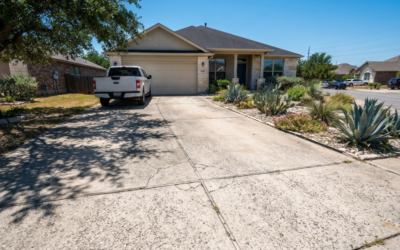

With over two decades serving San Antonio and Houston homeowners, we’ve completed thousands of residential concrete installations across Texas. A professionally installed concrete driveway typically costs $4–$15 per square foot and lasts 30–40 years with proper installation and maintenance making it one of the most cost-effective long-term solutions for your property.
This guide covers everything from site preparation to final finishing, helping you make informed decisions about your driveway project.
What Makes Concrete The Best Choice For Driveways?
Concrete outperforms asphalt and gravel in durability, maintenance requirements, and total lifecycle cost.
Concrete driveways withstand Texas heat without softening or rutting. Unlike asphalt that requires resealing every 2–3 years, concrete needs minimal maintenance beyond occasional cleaning and resealing every 5–7 years.
Key benefits include:
- 30–40 year lifespan (double that of asphalt)
- Reflects heat rather than absorbing it
- Increases property value by 5–10%
- Supports heavy vehicles without deformation
- Resistant to oil stains when properly sealed
The upfront cost is higher than asphalt, but the extended lifespan and reduced maintenance make concrete 25–40% more economical over its lifetime.
How Thick Should A Residential Driveway Be?
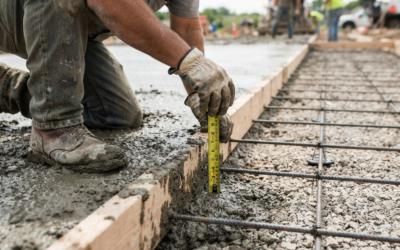
Most residential driveways require 4 inches of concrete thickness, while driveways supporting heavy trucks or RVs need 5–6 inches.
Standard passenger vehicles create approximately 3,000–4,000 PSI of pressure. A 4-inch concrete slab with 3,000 PSI strength easily handles this load when poured over properly compacted base material.
Thickness requirements by use:
| Vehicle Type | Recommended Thickness | PSI Rating |
| Standard cars | 4 inches | 3,000 PSI |
| Trucks/SUVs | 4–5 inches | 3,500 PSI |
| RVs/Heavy equipment | 5–6 inches | 4,000 PSI |
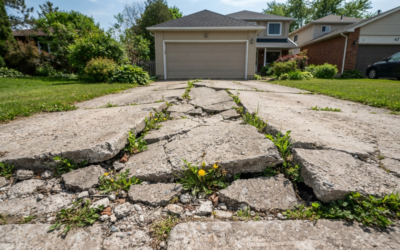
Cutting corners on thickness leads to cracking within 5–10 years. The cost difference between 4-inch and 5-inch concrete is only $1–$2 per square foot, a worthwhile investment for longevity.
What Site Preparation Steps Are Critical?
Proper excavation and base preparation determine whether your driveway lasts 10 years or 40 years.
The installation process at Affordable Concrete San Antonio follows these essential steps:
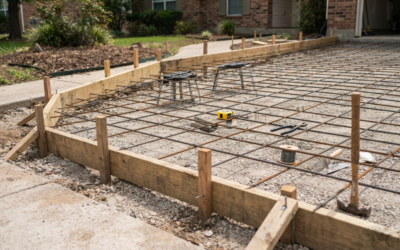
1. Excavation and grading: Remove 8–10 inches of soil, sloping 1/4 inch per foot for drainage away from structures.
2. Base layer: Install 4–6 inches of compacted crushed limestone or gravel. This prevents settling and provides drainage.
3. Rebar or wire mesh: Position reinforcement 2 inches from the bottom of the slab to prevent cracking.
4. Edge forms: Set straight, level forms that define driveway edges and control concrete thickness.
Key takeaway: Skipping base compaction is the #1 cause of premature driveway failure. The base must be compacted to 95% density.
How Long Does Concrete Take To Cure?
You can walk on concrete after 24–48 hours, but wait 7 days before driving on it.
Concrete reaches approximately 70% of its final strength within 7 days. Full curing takes 28 days, though normal vehicle traffic is safe after one week.
Curing timeline:
- 24 hours: Safe for foot traffic
- 7 days: Light vehicle use permitted
- 28 days: Full strength achieved
- 30 days: Ready for sealing
During the first week, keep the concrete moist by misting 2–3 times daily. This prevents surface cracking and ensures proper strength development.
When Should You Seal A New Driveway?
Wait 28–30 days after installation before applying sealer to allow complete curing and moisture evaporation.
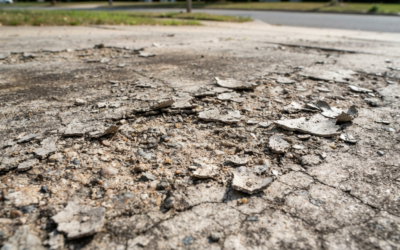
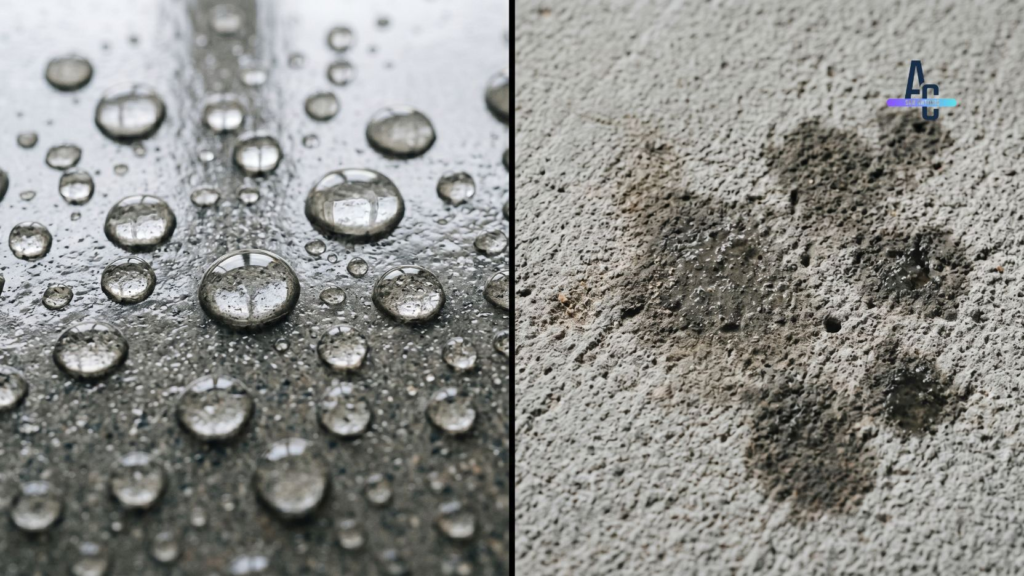
Sealing too early traps moisture inside the concrete, causing discoloration, efflorescence, and potential delamination. High-quality acrylic or penetrating sealers protect against freeze-thaw damage, oil stains, and surface erosion.
In San Antonio and Houston’s climate, reapply sealer every 3–5 years. The investment of $0.15–$0.25 per square foot extends your driveway’s lifespan by preventing water infiltration and surface degradation.
What Design Options Increase Curb Appeal?
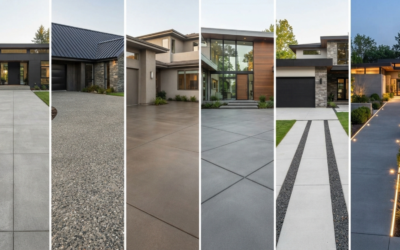
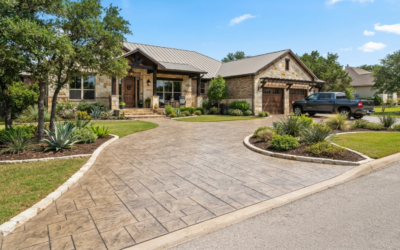
Stamped patterns, decorative borders, and integral color transform standard gray concrete into custom architectural features.
Popular options for Texas homeowners include:
- Stamped concrete: Mimics stone, brick, or slate ($8–$18/sq ft)
- Exposed aggregate: Reveals decorative stones in the mix ($12–$18/sq ft)
- Integral color: Permanent color throughout the slab ($1–$2/sq ft added)
- Decorative borders: Contrasting colors or patterns ($15–$25/linear ft)
These upgrades cost 30–100% more than standard concrete but deliver significantly higher ROI when selling your home.
How Much Does Professional Installation Cost?
Expect to pay $4–$8 per square foot for standard installation in San Antonio and Houston, with decorative finishes adding $4–$10 per square foot.
A typical 600-square-foot two-car driveway costs $2,400–$4,800 for basic installation. Decorative options increase this to $4,800–$10,800.
Cost factors include:
- Site accessibility and slope
- Required excavation depth
- Base material quality
- Concrete thickness
- Reinforcement type
- Decorative finishes
- Local material costs
Get three written quotes specifying concrete PSI rating, thickness, base preparation methods, and reinforcement details. The lowest bid often means shortcuts that cost thousands in premature replacement.
FAQs
Do I Need Permits For Driveway Installation?
Most cities in San Antonio and Houston require permits for new driveways or significant replacements. Your contractor should handle permit applications, which typically cost $50–$200 depending on project scope.
Can Concrete Driveways Crack In Texas Heat?
Properly installed concrete with expansion joints every 10–15 feet accommodates thermal expansion and contraction, preventing heat-related cracking. Control joints should be cut to 1/4 the slab depth within 24 hours of pouring.
Is Concrete Or Pavers Better For Driveways?
Concrete costs 40–60% less than pavers and requires less maintenance. Pavers offer easier repair of isolated areas but shift over time without proper edge restraint. For most homeowners, concrete provides better value and longevity.