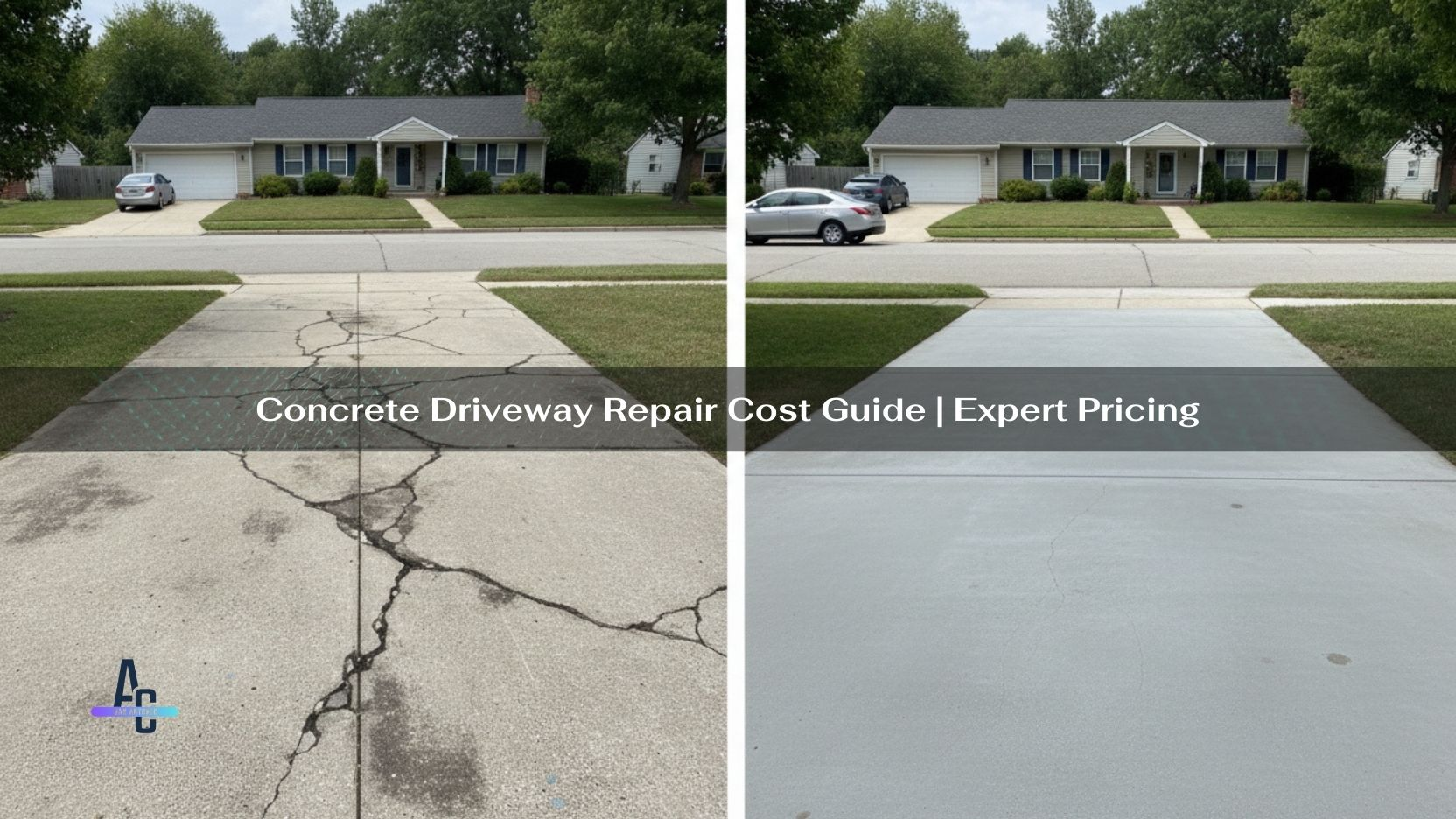
A cracked, settling, or stained concrete driveway doesn’t just hurt curb appeal it can damage your vehicle’s suspension and pose safety hazards. If you’re wondering how much does it cost to repair a concrete driveway, the answer depends on the type and extent of damage, ranging from $300 for minor crack filling to $8,000+ for complete resurfacing or replacement.
Understanding concrete driveway repair costs helps you budget appropriately and make informed decisions about whether to repair or replace. This comprehensive guide breaks down pricing by repair type, examines cost factors, and provides actionable strategies to extend your driveway’s lifespan while maximizing your investment.
Average Concrete Driveway Repair Costs Overview
The national average cost to repair a concrete driveway falls between $1,000 and $3,000 for most homeowners, with typical projects addressing multiple cracks, minor settling, or surface deterioration. However, costs vary significantly based on damage severity and repair method.
Here’s a quick breakdown of common repair scenarios:
| Repair Type | Average Cost Range | Best For |
| Minor crack filling | $300–$600 | Hairline to 1/4-inch cracks |
| Major crack repair | $600–$1,500 | Cracks wider than 1/4 inch |
| Slab leveling/mudjacking | $500–$1,800 | Uneven, settled sections |
| Resurfacing (overlay) | $3–$10 per sq ft | Widespread surface damage |
| Full replacement | $8–$18 per sq ft | Structural failure, severe damage |
Most homeowners with standard two-car driveways (approximately 640 square feet) can expect to pay between $1,200 and $2,500 for repairs addressing multiple issues. According to HomeAdvisor’s concrete repair cost data, the complexity of access, regional labor rates, and material selection drive the final price more than square footage alone.
Cost By Repair Type
Understanding specific repair methods and their associated costs helps you identify the most cost-effective solution for your driveway’s condition.
Crack Filling And Sealing
Cost Range: $300–$1,500
Crack repair is the most common and cost-effective concrete driveway fix. The price depends on crack width, depth, and total linear footage.
- Hairline cracks (less than 1/8 inch): $300–$500 for a standard driveway
- Small to medium cracks (1/8 to 1/2 inch): $500–$900
- Large cracks (over 1/2 inch): $900–$1,500
Professional contractors typically charge $1–$3 per linear foot for crack filling, though minimum service fees often apply. The process involves cleaning the crack, applying flexible polyurethane or epoxy filler, and sealing to prevent water infiltration.
Addressing cracks promptly and water penetration during freeze-thaw cycles can expand minor cracks into major structural problems, potentially tripling repair costs within a single winter season.
Concrete Slab Leveling (Mudjacking Or Polyurethane Foam Injection)
Cost Range: $500–$2,500
When sections of your driveway settle and create uneven surfaces or trip hazards, slab leveling offers a cost-effective alternative to replacement.
Mudjacking (Slabjacking):
- Average cost: $3–$6 per square foot
- Process: Pumping a cement-based slurry beneath settled slabs to lift them
- Ideal for: Moderate settling (up to 4 inches)
- Typical project: $500–$1,800 for standard driveway sections
Polyurethane Foam Injection:
- Average cost: $5–$25 per square foot
- Process: Injecting expanding polyurethane foam under the slab
- Advantages: Lighter weight, faster curing, more precise lifting
- Typical project: $1,200–$2,500
Polyurethane foam costs more but provides superior long-term stability and doesn’t add significant weight to underlying soil. According to concrete lifting specialists on Angi, foam injection has gained popularity for its durability and minimal invasiveness.
Concrete Resurfacing (Overlay)
Cost Range: $3–$10 per square foot
Resurfacing applies a new layer of concrete or polymer-modified overlay to restore appearance and structural integrity without full replacement.
- Standard resurfacing: $3–$5 per square foot
- Decorative resurfacing (stamped or stained): $6–$10 per square foot
- Typical 640 sq ft driveway: $1,920–$6,400
This method works best when the underlying concrete remains structurally sound but suffers from surface deterioration, minor scaling, or cosmetic damage. The new layer typically ranges from 1/4 inch to 1 inch thick and can be colored, stamped, or textured for enhanced aesthetics.
Resurfacing extends driveway life by 8–15 years when properly maintained, making it an excellent mid-range investment between basic repairs and full replacement.
Spalling And Scaling Repair
Cost Range: $500–$2,000
Spalling when concrete surfaces flake, chip, or peel occurs from freeze-thaw damage, deicing salt exposure, or poor initial installation.
Repair costs depend on affected area:
- Minor surface spalling (under 50 sq ft): $500–$800
- Moderate damage (50–150 sq ft): $800–$1,500
- Extensive damage (over 150 sq ft): $1,500–$2,000+
Contractors remove deteriorated concrete, apply bonding agents, and patch with polymer-modified repair compounds that resist future deterioration. Severe spalling affecting more than 30% of total driveway area typically warrants resurfacing or replacement instead.
Stain And Discoloration Treatment
Cost Range: $250–$1,200
While purely cosmetic, stains from oil, rust, or organic matter detract from property value and can indicate deeper issues.
- Pressure washing and chemical treatment: $250–$500
- Acid staining to blend discoloration: $500–$800
- Sealing after treatment: $400–$1,200 (for full driveway)
Professional-grade sealers not only improve appearance but protect against future staining, moisture penetration, and surface damage. Quality concrete sealers should be reapplied every 2–3 years for optimal protection.
Joint And Edge Repair
Cost Range: $300–$1,000
Control joints and expansion joints prevent random cracking, but these intentional separations can deteriorate over time.
- Joint resealing: $300–$600 for a standard driveway
- Edge repair and reinforcement: $500–$1,000
- New control joint installation: $2–$4 per linear foot
Maintaining functional joints prevents water infiltration that can undermine the driveway base and cause premature failure.
Factors That Affect Concrete Driveway Repair Costs
Multiple variables influence final repair pricing beyond the repair type itself.
Extent And Severity Of Damage
The relationship between damage severity and cost isn’t linear; a driveway with 40% surface damage may cost nearly as much to repair as complete replacement, making replacement the smarter investment.
Minor isolated issues cost less per repair but may signal impending widespread problems. Comprehensive professional inspection helps determine whether targeted repairs or full replacement offers better long-term value.
Driveway Size And Accessibility
- Standard two-car driveway (640 sq ft): Baseline pricing
- Oversized or multi-vehicle driveways: Economies of scale may reduce per-square-foot costs
- Difficult access: Limited equipment access can increase labor costs by 20–40%
- Obstacles: Working around landscaping, vehicles, or structures adds complexity
Contractors may charge minimum service fees ($300–$500) that make small repair projects cost-proportionally more than larger ones.
Geographic Location And Regional Pricing
Labor and material costs vary significantly by region:
- High-cost metropolitan areas (San Francisco, New York, Boston): 25–50% above national average
- Moderate-cost regions (San Antonio, Dallas, Phoenix): Near national average
- Lower-cost rural areas: 15–25% below national average
Local climate also impacts repair needs. According to regional concrete repair specialists, areas experiencing harsh freeze-thaw cycles require more frequent maintenance and may face higher long-term costs.
Contractor Experience And Reputation
Pricing reflects contractor expertise and business overhead:
- Established contractors with 10+ years experience: Higher hourly rates but superior quality and warranties
- Newer or smaller operators: Lower prices but potentially inconsistent results
- Specialty decorative concrete contractors: Premium pricing for stamped, stained, or custom finishes
The cheapest bid rarely delivers the best value. Experienced contractors identify underlying issues that less-skilled workers might miss, preventing costly repeat repairs.
Material Quality And Selection
Material choices significantly impact both upfront costs and long-term performance:
- Standard concrete mix: Baseline pricing
- High-performance concrete with additives: 15–30% premium but superior durability
- Polymer-modified overlays: Higher cost but enhanced flexibility and bonding
- Decorative finishes: Premium pricing for stamped patterns, acid staining, or exposed aggregate
Investing in quality materials during repairs extends time between future interventions, often saving money over the driveway’s lifetime.
Timing And Seasonality
Concrete work requires specific temperature and weather conditions:
- Peak season (late spring through early fall): Higher demand, premium pricing, longer scheduling waits
- Off-season (late fall through winter in mild climates): Potential 10–20% discounts, faster scheduling
- Emergency repairs: 25–50% premium for immediate response
Plan non-urgent repairs during contractor slow seasons to maximize budget efficiency.
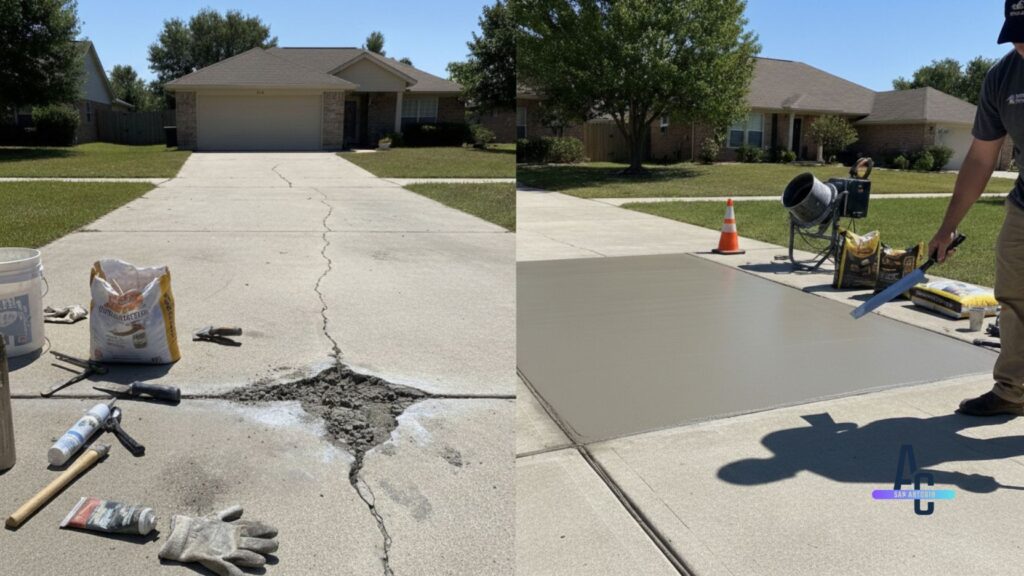
DIY VS. Professional Repair: Cost Comparison
Homeowners with basic skills can tackle minor repairs, but understanding limitations prevents costly mistakes.
DIY Repair Costs And Feasibility
Minor Crack Filling:
- Materials: $50–$150 (crack filler, sealant, basic tools)
- Time investment: 2–4 hours
- Skill level: Beginner to intermediate
- Savings vs. professional: $250–$450
Concrete Patching:
- Materials: $75–$200 (patching compound, bonding agent, tools)
- Time investment: 4–8 hours
- Skill level: Intermediate
- Savings vs. professional: $300–$600
Surface Cleaning And Sealing:
- Materials: $100–$300 (pressure washer rental, cleaner, sealer)
- Time investment: 6–10 hours
- Skill level: Beginner to intermediate
- Savings vs. professional: $200–$700
DIY approaches work best for cosmetic issues and minor maintenance. Home improvement forums on Reddit frequently discuss successful DIY crack filling, though users consistently warn against attempting structural repairs without professional expertise.
When To Hire Professionals
Professional intervention becomes essential for:
- Structural repairs: Slab leveling, major crack repair, foundation issues
- Widespread damage: Affecting more than 20% of surface area
- Underlying base problems: Soil settlement, poor drainage, inadequate sub-base
- Decorative finishes: Stamping, staining, or resurfacing requiring specialized equipment
- Warranty protection: Many materials require professional installation for warranties
Professional repairs include proper diagnosis, appropriate material selection, correct application techniques, and workmanship guarantees. The 10–15% of DIY attempts that fail often cost more to fix than hiring professionals initially.
Signs Your Concrete Driveway Needs Repair
Early intervention prevents minor issues from becoming expensive problems.
Immediate Attention Required
Address these issues promptly to avoid escalating damage:
- Cracks wider than 1/4 inch: Water infiltration risk increases exponentially
- Settling or sinking sections: Creates drainage problems and vehicle damage risk
- Spalling or flaking surfaces: Progressive deterioration accelerates without intervention
- Standing water or drainage issues: Indicates base problems requiring investigation
- Heaving or buckling: Suggests underlying soil or root issues
Monitor And Plan Repairs
These conditions warrant monitoring and planned repair within 6–12 months:
- Hairline cracks (under 1/8 inch): Common in concrete but monitor for expansion
- Minor surface staining: Cosmetic but may indicate sealer failure
- Faded or worn sealer: Leaves concrete vulnerable to damage
- Small edge chips: Can expand with traffic and weather exposure
Regular inspection particularly after harsh weather helps catch problems early when repairs cost less.
How To Reduce Concrete Driveway Repair Costs
Strategic planning and preventive maintenance minimize long-term expenses.
Preventive Maintenance Strategies
Proactive care extends driveway life and reduces repair frequency:
- Apply quality sealer every 2–3 years ($400–$800): Prevents water penetration, staining, and surface deterioration
- Address cracks immediately ($50–$200 DIY): Prevents minor cracks from expanding
- Maintain proper drainage ($200–$1,000 depending on solution): Redirects water away from driveway edges
- Avoid deicing salt (free): Use sand or calcium magnesium acetate instead
- Clean oil spills promptly ($10–$30 for cleaner): Prevents staining and concrete softening
According to concrete maintenance experts, homeowners who invest in preventive maintenance spend 40–60% less on repairs over a 20-year period compared to those practicing reactive maintenance only.
Getting Competitive Quotes
Maximize value through strategic quote gathering:
- Obtain 3–5 detailed estimates: Compare scope, materials, and warranties
- Request itemized pricing: Understand exactly what you’re paying for
- Verify contractor credentials: License, insurance, references, online reviews
- Ask about package pricing: Combining multiple repairs may reduce per-item costs
- Negotiate timing flexibility: Off-season scheduling may yield discounts
Avoid choosing based solely on price reputation, warranty terms, and proven expertise deliver better long-term value.
Bundling Multiple Repairs
Contractors often discount when addressing multiple issues simultaneously:
- Crack filling + sealing entire driveway: Save $200–$400 vs. separate visits
- Leveling + resurfacing: Reduce mobilization and setup costs
- Repair + decorative upgrade: Coordinate work to minimize disruption
Single-visit efficiency reduces labor costs and project timeline.
Repair VS. Replace: When To Choose Each Option
Sometimes replacement offers better value than extensive repairs.
When Repair Makes Sense
Repair remains the cost-effective choice when:
- Damage affects less than 30% of surface area
- Underlying base and substrate remain sound
- Concrete age is under 15 years
- Budget constraints preclude replacement
- Damage is cosmetic or localized
Targeted repairs can extend driveway life by 5–10 years at a fraction of replacement cost.
When Replacement Is Better
Consider full replacement when:
- More than 40% of surface shows damage
- Multiple previous repairs have failed
- Age exceeds 25–30 years
- Significant settling or drainage issues exist
- Structural problems affect the base or sub-base
- Desire to upgrade to decorative concrete
Full replacement for a standard 640 sq ft driveway costs $5,120–$11,520 ($8–$18 per square foot), while extensive repairs might run $3,000–$6,000. The modest price difference often makes replacement the smarter long-term investment.
Companies like Affordable Concrete San Antonio offer modern options including stamped concrete, exposed aggregate, and colored finishes that enhance property value while providing superior durability.
Finding The Right Concrete Contractor
Contractor selection dramatically impacts repair quality and long-term satisfaction.
Essential Contractor Qualifications
Verify before hiring:
- Valid state contractor license: Ensures regulatory compliance
- Comprehensive insurance: General liability and workers’ compensation
- Physical business address: Avoid fly-by-night operators
- Established local presence: 5+ years serving the area
- Portfolio of completed projects: Visual evidence of quality work
- Customer references: Recent clients willing to discuss their experience
Evaluation Criteria
Assess potential contractors on:
Reviews And Reputation:
- Check Yelp, Google Reviews, and Better Business Bureau ratings
- Look for consistent quality across multiple platforms
- Note how contractors respond to negative reviews
Detailed Written Estimates:
- Should include scope of work, materials specified, timeline, payment schedule
- Vague estimates suggest unprofessional operations
Warranty Offerings:
- Minimum 1-year workmanship warranty
- Material warranties as applicable
- Get warranty terms in writing
Communication And Professionalism:
- Prompt response to inquiries
- Clear explanations of recommended work
- Professional appearance and demeanor
Red Flags To Avoid
Watch for warning signs:
- Requiring full payment upfront
- Lacking proper licensing or insurance
- Pressure tactics or limited-time offers
- No physical business address
- Unwilling to provide references
- Significantly lower quotes without explanation
- Poor communication or vague answers
Take time to find qualified contractors rushed decisions often lead to subpar results and additional expenses.
FAQs
How Long Do Concrete Driveway Repairs Last?
Repair longevity depends on damage type, repair quality, and maintenance. Professionally filled cracks typically last 3–7 years, while resurfacing can extend driveway life 8–15 years. Slab leveling generally provides 5–10 years of stability when underlying soil issues are addressed. Regular sealing and maintenance significantly extends all repair types.
Can I Repair My Concrete Driveway Myself?
Homeowners can successfully tackle minor crack filling, surface cleaning, and sealing with proper materials and techniques. However, structural repairs like slab leveling, extensive crack repair, or resurfacing require professional equipment and expertise. DIY attempts at complex repairs often cost more to fix later than hiring professionals initially.
How Do I Know If My Driveway Needs Repair Or Replacement?
Generally, repair makes sense when damage affects less than 30% of the surface and the underlying base remains sound. Replace when more than 40% shows damage, multiple repairs have failed, the driveway exceeds 25–30 years old, or significant settling and drainage issues exist. A professional inspection provides the most accurate assessment.
What Time Of Year Is Best For Concrete Driveway Repair?
Ideal conditions include temperatures between 50–85°F and low humidity. Spring and fall typically offer optimal weather in most climates. Avoid repairs during freezing temperatures or rainy periods. Many contractors offer off-season discounts during slower periods, though mild-climate regions like San Antonio allow year-round work with minimal seasonal variation.
Does Homeowners Insurance Cover Concrete Driveway Repair?
Standard homeowners policies rarely cover driveway damage from normal wear, settling, or weather exposure. Insurance may cover damage from covered events like vehicle accidents, falling trees, or vandalism. Review your specific policy and consult your insurance agent to understand coverage limitations.
How Can I Prevent Future Concrete Driveway Damage?
Preventive measures include sealing every 2–3 years, promptly filling small cracks, maintaining proper drainage, avoiding deicing salt, cleaning oil spills immediately, and keeping heavy vehicles on designated areas. Regular inspection catches problems early when repairs cost less.
Conclusion
Understanding how much it costs to repair a concrete driveway empowers you to make informed decisions about maintaining this crucial property feature. With costs ranging from $300 for minor crack filling to $8,000+ for complete resurfacing or replacement, matching repair type to damage severity maximizes value.
Early intervention through preventive maintenance and prompt attention to minor issues prevents costly extensive repairs later. While DIY approaches work for cosmetic concerns, structural issues require professional expertise to ensure lasting results.
Whether you need minor crack repair or complete driveway restoration, working with established contractors who offer detailed estimates, proper credentials, and workmanship warranties protects your investment. Companies like Affordable Concrete San Antonio combine 14+ years of local expertise with comprehensive services from basic repairs to custom stamped concrete installations.
Regular maintenance including sealing, crack monitoring, and drainage management extends driveway life and minimizes long-term costs. When repairs become too extensive or the driveway reaches the end of its service life, modern replacement options offer enhanced durability and aesthetic appeal that increase property value.
Take action on driveway issues before minor problems become major expenses. Schedule professional inspection to assess your driveway’s condition and develop a cost-effective repair or replacement strategy tailored to your property’s specific needs.
Ready to restore your concrete driveway? Contact Affordable Concrete San Antonio at 713-504-2341 for a free estimate and expert guidance on the most cost-effective solution for your driveway repair needs.