
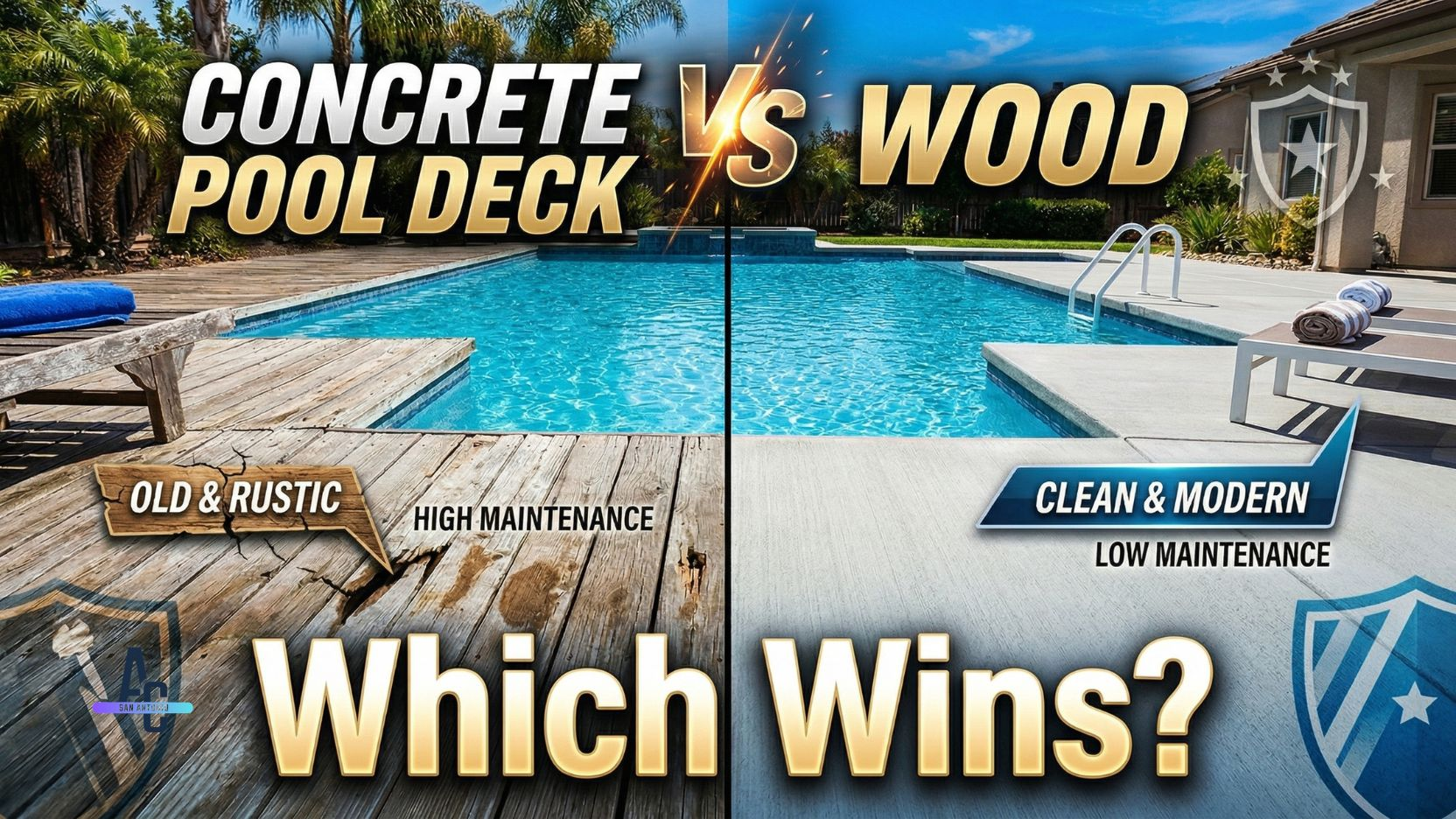
With years of hands-on concrete work for residential and commercial outdoor surfaces in the San Antonio area, we’ve seen how pool deck materials perform in real heat, rain, and heavy foot traffic. For most homeowners, a concrete pool deck beats wood because it lasts longer, needs less upkeep, handles water better, and offers better long-term value in Texas weather.
If you’re deciding between the two, the short answer is simple: concrete wins for durability, maintenance, safety, and cost over time, while wood mainly wins for its natural look and softer feel at the start.
Is A Concrete Pool Deck Better Than A Wood Pool Deck?
Yes, in most cases, a concrete pool deck is the better choice than wood. It holds up better around water, sun, and frequent use, especially in hot climates like San Antonio and Houston.
Wood decks can look attractive, but they often require more maintenance and may develop problems faster in outdoor pool areas.
Concrete is usually better for:
- Long-term durability
- Lower maintenance
- Moisture resistance
- Slip-resistant finishes
- Custom design options
- Better value over time
Wood is usually chosen for:
- Natural appearance
- Warmer visual style
- Softer surface feel in some cases
Key takeaway: If your goal is a pool deck that is practical, durable, and easier to maintain, concrete is usually the better choice.
Which Lasts Longer Around A Pool: Concrete Or Wood?
Concrete usually lasts longer than wood around a pool. A properly installed concrete pool deck can perform well for decades, while wood is more vulnerable to moisture damage, warping, and surface wear.
Pool decks face constant stress from:
- Water exposure
- UV rays
- Chlorine or saltwater splash
- Barefoot traffic
- Outdoor furniture
- Temperature swings
Concrete handles these conditions well when it includes:
- Proper site prep
- Control and expansion joints
- Correct drainage slope
- Sealer protection
- Slip-resistant finish
Wood can break down faster because it may:
- Absorb moisture
- Expand and contract
- Splinter
- Rot
- Fade
- Need board replacement
Quick Comparison
| Feature | Concrete Pool Deck | Wood Pool Deck |
| Lifespan | Long-lasting with proper install | Shorter in wet outdoor settings |
| Water resistance | Strong | Lower |
| Maintenance | Lower | Higher |
| Repair needs | Occasional crack or surface care | Frequent sealing, staining, board repair |
| Slip resistance | Good with texture | Can become slick when wet |
| Design flexibility | High | Moderate |
Is Concrete Cheaper Than Wood For A Pool Deck?
Concrete often costs less over time, even if initial pricing can vary by design and site conditions. Wood may look like a simpler install, but its ongoing maintenance usually adds more cost.
With concrete, common costs include:
- Installation
- Sealing
- Occasional cleaning or resurfacing
With wood, common long-term costs include:
- Staining
- Sealing
- Sanding
- Fastener replacement
- Board replacement
- Structural repairs if moisture damage develops
That long-term upkeep is why many homeowners choose concrete when they want a better return on their outdoor investment.
Key takeaway: Wood may not stay “affordable” once maintenance and repair costs are added over several years.
Is Concrete Safer Than Wood Around A Swimming Pool?
Concrete can be the safer pool deck option when finished correctly. Safety depends on surface texture, drainage, and maintenance, but concrete gives you more control over slip resistance.
Concrete safety upgrades can include:
- Broom finish
- Textured overlay
- Kool Deck topping
- Non-slip sealer additive
- Proper slope for drainage
Wood can create safety concerns because it may:
- Become slippery when wet
- Splinter
- Warp or cup
- Develop raised edges or loose boards
For pool areas, drainage matters just as much as material. A deck should be sloped properly so water does not sit on the surface.
Does Wood Stay Cooler Than Concrete In The Sun?
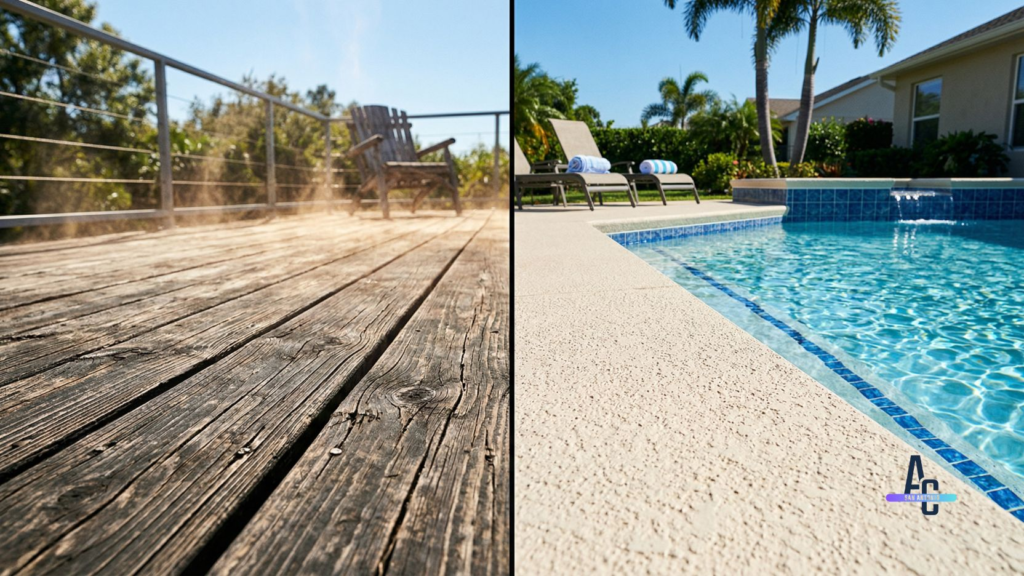
Sometimes wood can feel cooler at first, but concrete can be improved with coatings, lighter colors, and specialty finishes to reduce heat buildup.
This is an important point for Texas homeowners. Bare feet and hot deck surfaces matter around a pool.
Concrete temperature can be improved with:
- Lighter color choices
- Reflective coatings
- Kool Deck-style systems
- Textured surfaces that reduce direct heat feel
Wood can still heat up in full sun, especially darker stains. It also may become rougher over time as the surface ages.
Key takeaway: If heat is your concern, concrete does not have to be a hot surface when it is designed correctly.
Which Looks Better For A Backyard Pool: Concrete Or Wood?
That depends on your style, but decorative concrete gives more design flexibility than most homeowners expect.
Concrete can be finished in ways that match many backyard styles, including:
- Stamped concrete
- Stained concrete
- Colored concrete
- Exposed aggregate
- Modern smooth finishes
- Natural stone-look textures
Wood offers a classic appearance, but it has a more limited visual range. If you want a custom pool deck that matches your patio, walkway, or outdoor kitchen, concrete often gives you more options.
What Is The Best Pool Deck Choice For San Antonio Homeowners?
For most homeowners in San Antonio, concrete is the better pool deck material. It performs well in heat, handles water exposure better than wood, and usually requires less upkeep in the long run.
This matters in South Texas, where outdoor materials face:
- Strong sun
- Seasonal storms
- High surface temperatures
- Heavy backyard use
- Soil movement and drainage issues
A well-built concrete pool deck can be designed for:
- Comfort
- Traction
- Durability
- Appearance
- Long-term value
Final Verdict: Does Concrete Or Wood Win For Pool Decks?
Concrete wins for most pool deck projects. It usually lasts longer, costs less to maintain, resists moisture better, and offers more finish options for homeowners who want both performance and curb appeal.
Wood may still appeal to homeowners who prefer a natural look, but for most residential pool areas, concrete is the stronger all-around choice.
FAQs
Does A Wood Pool Deck Require More Maintenance Than Concrete?
Yes. Wood usually needs regular sealing, staining, cleaning, and board repair, while concrete typically needs less frequent maintenance.
Can Concrete Pool Decks Be Made Slip-Resistant?
Yes. Textured finishes, broom finishes, and non-slip additives can improve traction on concrete pool decks.
Is Decorative Concrete A Good Alternative To Wood Decking?
Yes. Decorative concrete can mimic higher-end materials while offering better durability and lower upkeep around pools.