
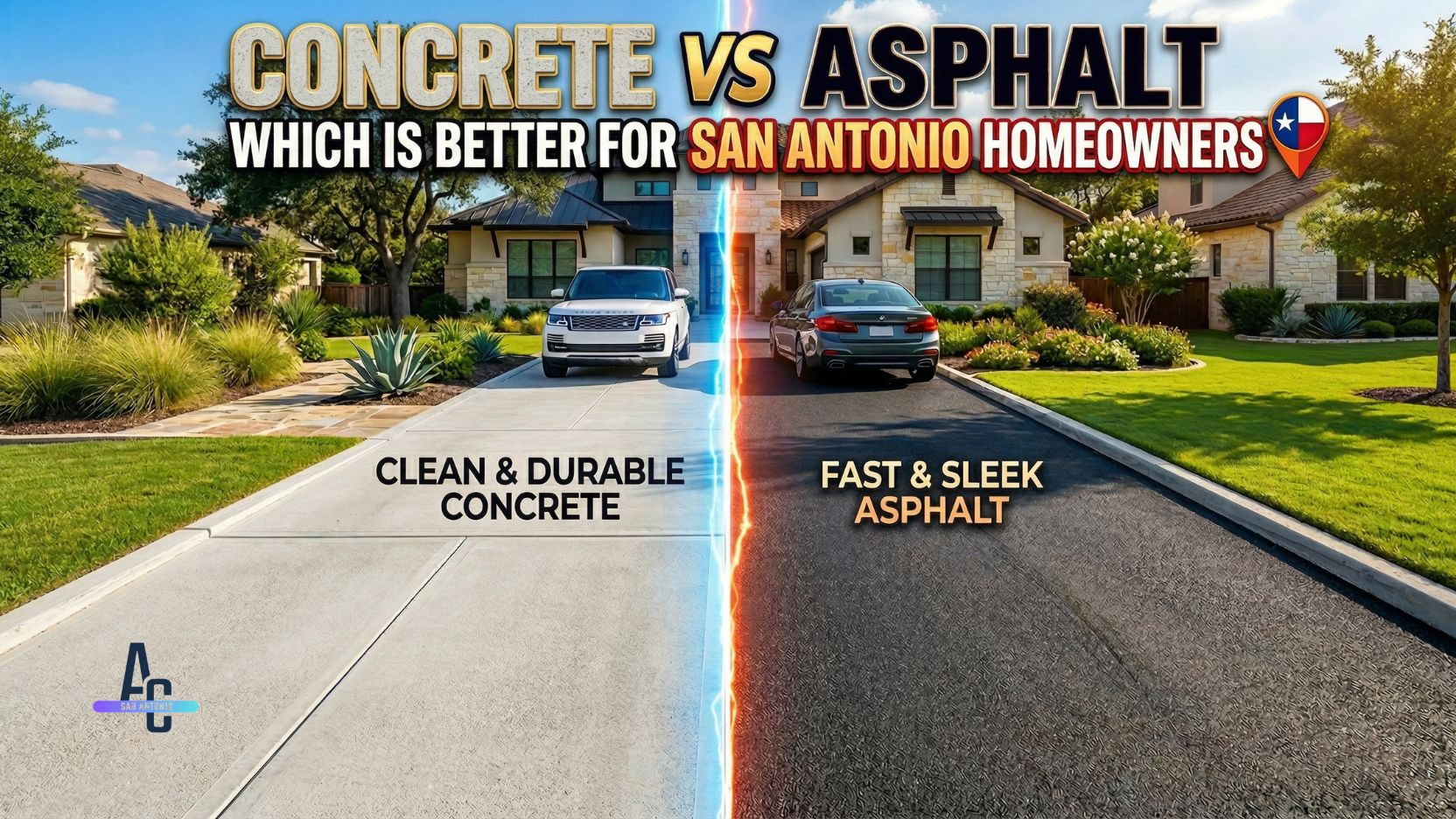
At Affordable Concrete San Antonio, we work with homeowners in San Antonio and nearby areas who need durable driveway solutions that hold up in Texas heat. Based on real-world driveway performance in South Texas, concrete is usually the better long-term choice than asphalt for residential driveways in San Antonio, especially for curb appeal, lifespan, and heat resistance.
The short answer is this: concrete driveways cost more upfront, but they usually last longer, need less maintenance, and offer more design options than asphalt driveways. Asphalt can cost less at the start, but it often needs more frequent sealing and repair in hot climates like San Antonio and Houston.
What Is The Main Difference Between Concrete And Asphalt Driveways?
Concrete is a rigid surface made from cement, sand, stone, and water, while asphalt is a flexible surface made from aggregate and bitumen. That material difference affects cost, maintenance, appearance, and lifespan.
Concrete Driveway Basics
Concrete is known for:
- Long service life
- Light color that reflects more heat
- Decorative finish options
- Strong performance under daily residential traffic
Asphalt Driveway Basics
Asphalt is known for:
- Lower initial cost
- Faster installation in some cases
- Dark surface color
- Easier patching, but more regular upkeep
Key takeaway: Concrete is usually better for homeowners who want a low-maintenance, long-lasting driveway. Asphalt is often chosen when lower upfront cost is the main priority.
Which Lasts Longer In San Antonio Weather?
Concrete usually lasts longer than asphalt in San Antonio. In many residential settings, a properly installed concrete driveway can last 30 years or more, while asphalt often has a shorter service life and may need more frequent resurfacing.
That matters in South Texas because local driveways deal with:
- High summer heat
- UV exposure
- Heavy rain events
- Expanding and shifting soil
- Daily vehicle traffic
Concrete performs well when it has:
- Proper subgrade preparation
- Reinforcement where needed
- Correct joint placement
- Good drainage
- Sealing when appropriate
Asphalt can soften in extreme heat and may show wear faster in hot climates, especially if maintenance is delayed.
Is Concrete Or Asphalt Cheaper?
Asphalt is usually cheaper upfront, but concrete often costs less over the full life of the driveway.
Here is a simple side-by-side comparison:
| Feature | Concrete Driveway | Asphalt Driveway |
| Upfront cost | Higher | Lower |
| Lifespan | Longer | Shorter |
| Maintenance | Lower | Higher |
| Heat resistance | Better | Can soften in heat |
| Appearance | More design options | Basic black finish |
| Resale appeal | Stronger | More limited |
Asphalt may look like the better deal at first. But once you include periodic sealing, patching, resurfacing, and earlier replacement, the long-term value often shifts toward concrete.
Key takeaway: If your budget is tight right now, asphalt may seem attractive. If you want better long-term value, concrete usually wins.
Which Driveway Handles Texas Heat Better?
Concrete handles Texas heat better than asphalt in most residential applications.
This is one of the biggest reasons many San Antonio homeowners choose concrete. Asphalt absorbs more heat because of its dark color. During very hot weather, it can become softer and more prone to surface wear.
Concrete typically stays more stable in high temperatures and reflects more sunlight, especially lighter finishes.
That said, concrete is not maintenance-free. It still needs:
- Expansion joints
- Crack control
- Proper curing
- Good drainage design
If the base is poor or water collects under the slab, even a concrete driveway can crack or shift.
Which Looks Better For Curb Appeal?
Concrete offers more curb appeal options than asphalt.
If appearance matters, concrete gives homeowners more flexibility. Popular concrete driveway finishes include:
- Broom finish
- Stained concrete
- Stamped concrete
- Exposed aggregate
- Colored concrete borders
Asphalt has a clean, uniform look, but design options are limited. It is usually black or dark gray and works best when function matters more than style.
For homeowners upgrading older homes or improving resale appearance, decorative concrete often provides a better visual return.
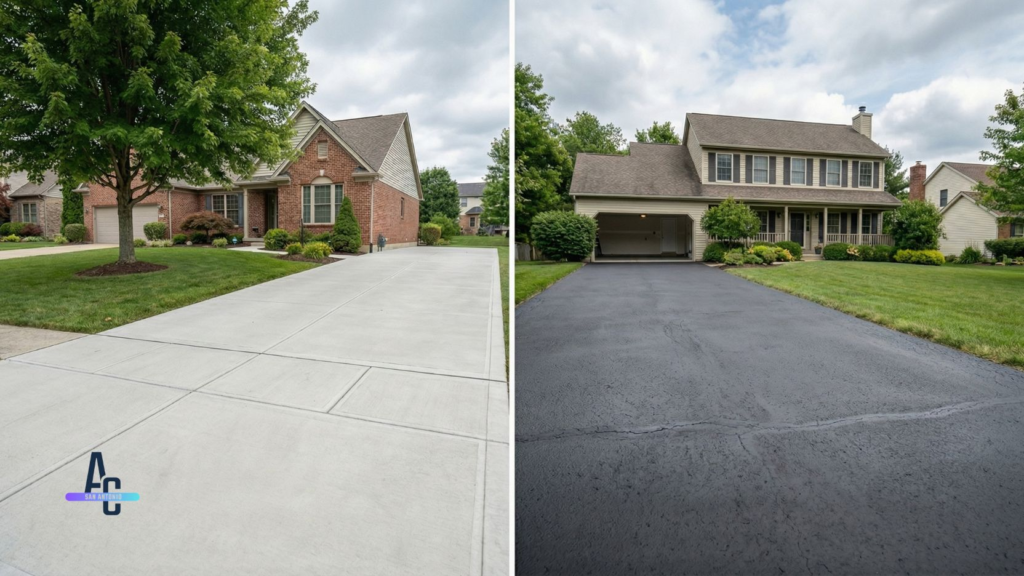
Which Driveway Is Easier To Maintain?
Concrete is usually easier to maintain over time than asphalt.
A concrete driveway typically needs:
- Routine cleaning
- Occasional sealing depending on finish
- Minor crack repair if needed
An asphalt driveway often needs:
- Sealing every few years
- Edge repairs
- Crack filling
- More regular surface maintenance
In practical terms, many homeowners prefer concrete because it demands less routine attention once installed correctly.
Is Asphalt Ever The Better Choice?
Yes, asphalt can make sense when upfront cost is the top concern or when a quick, basic driveway solution is needed.
Asphalt may be the right fit if:
- You need a lower initial investment
- Decorative appearance is not important
- You are planning a shorter-term property hold
- You understand and accept higher maintenance over time
Still, in hot areas like San Antonio and Houston, many property owners find that concrete performs better over the long run.
What Is The Best Driveway Choice For San Antonio Homeowners?
For most San Antonio homeowners, concrete is the better choice because it lasts longer, handles heat better, needs less maintenance, and offers stronger curb appeal.
Asphalt still has a place in some projects, especially where budget is the main factor. But if you are comparing total value, durability, and appearance, concrete is usually the stronger investment.
The most important factor is not just the material. It is the quality of installation. A driveway needs the right base prep, slope, drainage, and finish to perform well in Texas conditions.
FAQs
Does Concrete Crack More Than Asphalt?
Concrete can crack, but so can asphalt. In both cases, proper installation, base preparation, drainage, and maintenance matter more than the material alone.
Is Asphalt Better For Colder Climates?
Yes, asphalt is often favored in colder climates because its flexibility can help during freeze-thaw cycles. That is less relevant in San Antonio.
Can A Concrete Driveway Improve Home Value?
It can help curb appeal and marketability, especially if the driveway is in poor condition now and the new surface matches the home well.