Most San Antonio homeowners expect a concrete driveway to last decades. The honest answer: 30 to 50 years is entirely achievable, but only when the slab is built right, sealed on schedule, and given basic maintenance. Skip any one of those steps and you are looking at repairs or full replacement inside 10 to 15 years. This guide tells you exactly what drives driveway lifespan and what you can control.
A concrete driveway is one of the highest-value improvements you can make to a San Antonio home. Compared to asphalt, it lasts longer, requires less frequent resealing, and holds up better under Texas heat. But the gap between a driveway that lasts 15 years and one that lasts 45 years is not luck. It comes down to five variables: installation quality, slab thickness, reinforcement, sealing schedule, and how early you address minor damage before it becomes structural.
This guide breaks down each of those variables in concrete terms (no pun intended), gives you the realistic lifespan numbers for each scenario, and tells you what signs to watch for that indicate your driveway is approaching end-of-life versus simply needing routine maintenance.
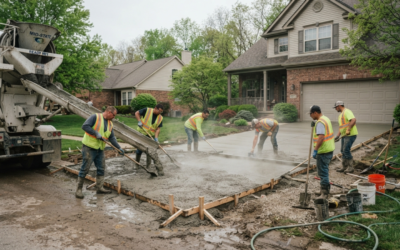
Homeowners often ask about concrete mix brands or PSI ratings. Those matter, but they are secondary to the decisions made before the truck arrives: base preparation depth, slab thickness, reinforcement placement, and expansion joint spacing. A 4,000 PSI mix poured over an uncompacted base with no rebar will fail faster than a standard 3,500 PSI mix installed correctly over a 4-inch compacted crushed limestone base. Get the structural spec right, and the concrete will do its job for decades.
No other factor has a greater impact on concrete driveway lifespan than what happens before the pour. The base preparation, compaction, reinforcement placement, and slab thickness are all locked in once the concrete sets. If any of these are wrong, no amount of sealing or maintenance can compensate.
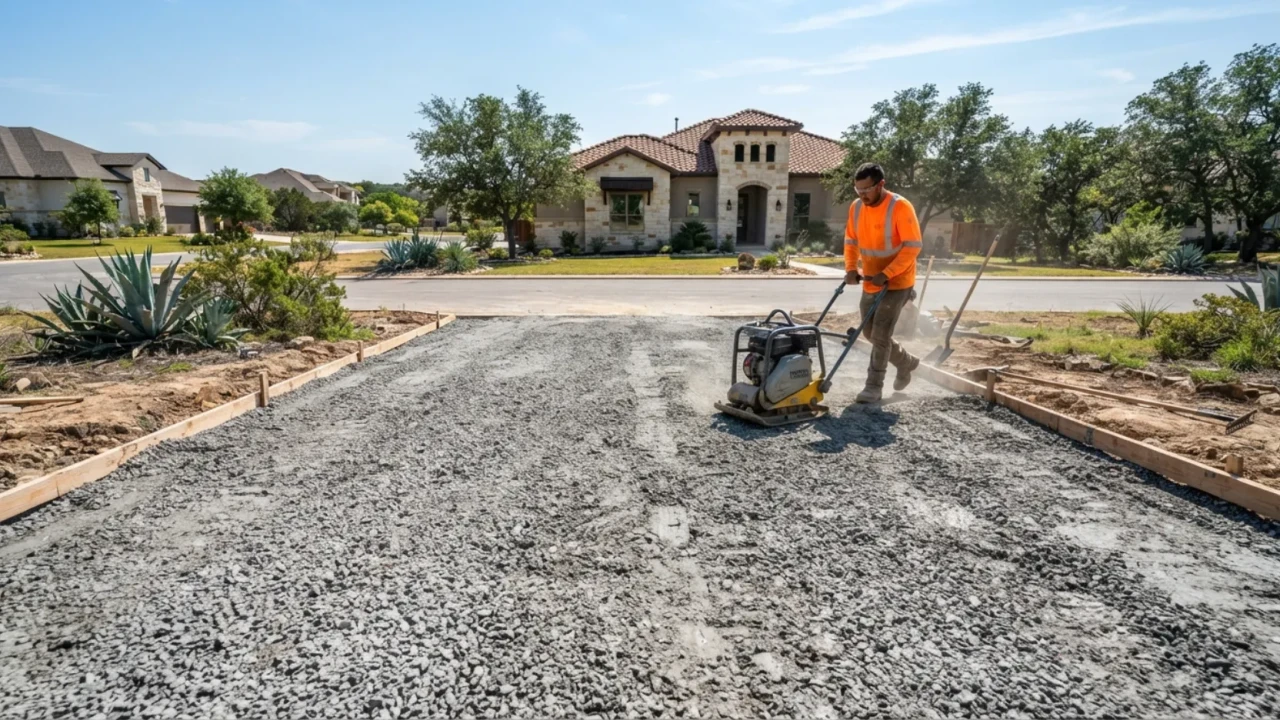
In San Antonio, the soil type makes base preparation especially critical. Bexar County sits primarily on expansive clay (Vertisol) soils that swell when wet and shrink during drought. This constant movement places significant stress on any concrete surface above it. A properly prepared base with a minimum of 4 inches of compacted crushed limestone absorbs and distributes that movement. Without it, the slab moves with the soil, and cracks develop within just a few years.
- Base material specified: minimum 4" compacted crushed limestone in San Antonio
- Slab thickness specified in writing: 4" minimum for standard residential, 5" if trucks or heavy vehicles use the driveway
- Reinforcement type confirmed: rebar grid preferred over wire mesh for driveways on clay soils
- Expansion joints planned at 8–10 foot intervals to control where cracking occurs
- Contractor has local experience with Bexar County soil conditions
San Antonio sits in a climate zone that is harder on concrete than most homeowners realize. The combination of intense UV exposure, summer heat that routinely exceeds 100 degrees, heavy rain events followed by dry spells, and occasional winter freeze cycles creates a demanding environment for any concrete surface.
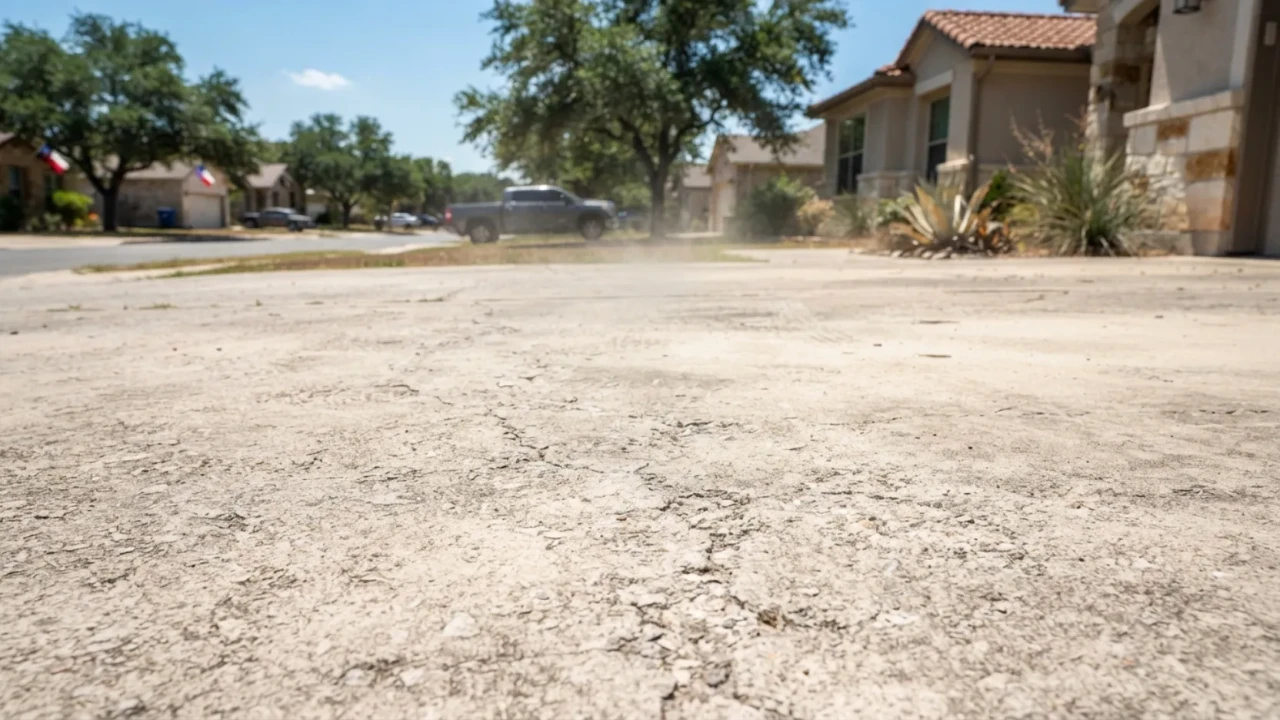
The biggest climate threat to San Antonio driveways is not the freeze-thaw damage common in northern states. It is the combination of thermal expansion from extreme heat and the soil movement caused by alternating wet and dry seasons. When clay soils absorb heavy rain after a long dry stretch, they expand rapidly. This puts upward pressure on the slab from below, and if expansion joints are absent or poorly placed, cracking is the result.
The drought-to-rain cycle is the biggest threat to San Antonio driveways: After a long dry stretch, San Antonio clay soils lose significant moisture and compress. When heavy rains arrive, the soil rehydrates and expands rapidly. Slabs that sit over this kind of soil without adequate expansion joints absorb that upward pressure directly. The fix is simple at installation time: proper joint placement every 8 to 10 feet. After the pour, that option is gone. If your existing driveway has no saw-cut control joints and you are in a San Antonio neighborhood with mature trees and clay soil, monitor closely for edge lifting and interior heave.
| Climate factor | Effect on concrete | How to mitigate |
|---|---|---|
| Intense summer UV | Breaks down surface sealers faster; bleaches and oxidizes unsealed concrete | Reseal every 2 years instead of every 3 due to UV intensity |
| Extreme heat (100°F+) | Thermal expansion increases stress at joint lines and edges | Ensure expansion joints are present and properly filled |
| Heavy rain events | Rapid soil rehydration causes upward pressure from below | Proper base prep and control joints at installation |
| Extended drought | Soil shrinkage creates voids under the slab; slab edges may settle | Maintain consistent soil moisture near slab edges during drought |
| Winter freeze events | Water in surface pores expands; spalling occurs on unsealed concrete | Keep slab sealed; fill any surface cracks before freeze season |
- Expansion joints present and filled with flexible sealant inspect annually before summer
- Sealing schedule tightened to every 2 years given San Antonio UV intensity
- Surface cracks filled before winter freeze season each year
- Soil moisture maintained near slab edges during extended drought periods
- Drainage confirmed: water should sheet away from the slab, not pool at edges
The difference between a concrete driveway that starts showing serious deterioration at 12 years and one that looks good at 30 years is, in most cases, sealing. A penetrating concrete sealer fills the microscopic pores in the surface, preventing water infiltration, UV damage, oil staining, and the freeze-thaw spalling that begins once water gets inside the slab. In San Antonio's climate, this protection is not optional maintenance.
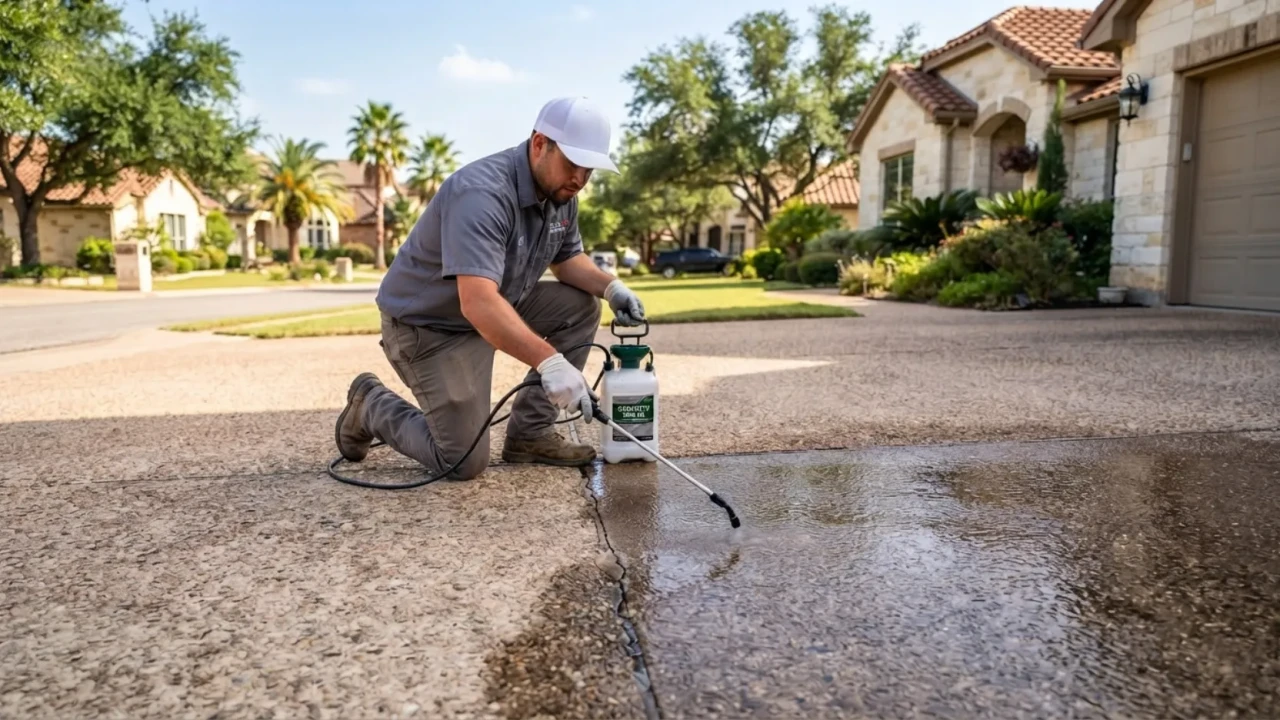
The first sealing application should happen 28 to 30 days after the pour, once the concrete has reached full cure. Sealing before full cure traps moisture inside the slab and can cause surface delamination. After the initial seal, a resealing schedule of every 2 to 3 years is the standard for San Antonio driveways. In high-traffic areas or driveways exposed to south-facing direct sunlight all day, every 2 years is the more appropriate interval.
- First sealer applied at 28–30 days post-pour: use a penetrating silane-siloxane sealer for driveways
- Resealing every 2 years for south-facing or high-traffic driveways in San Antonio
- Annual pressure washing in fall to clear algae, staining, and debris before resealing
- Degrease oil and fuel stains immediately they penetrate unsealed concrete within hours
- Expansion joint sealant inspected and refilled every 2–3 years as it ages and cracks
Not every crack in a concrete driveway means replacement is coming. But not every crack is cosmetic either. The ability to distinguish between normal shrinkage cracking, surface wear, and genuine structural failure is what separates homeowners who manage their driveway proactively from those who get surprised by a full replacement quote.
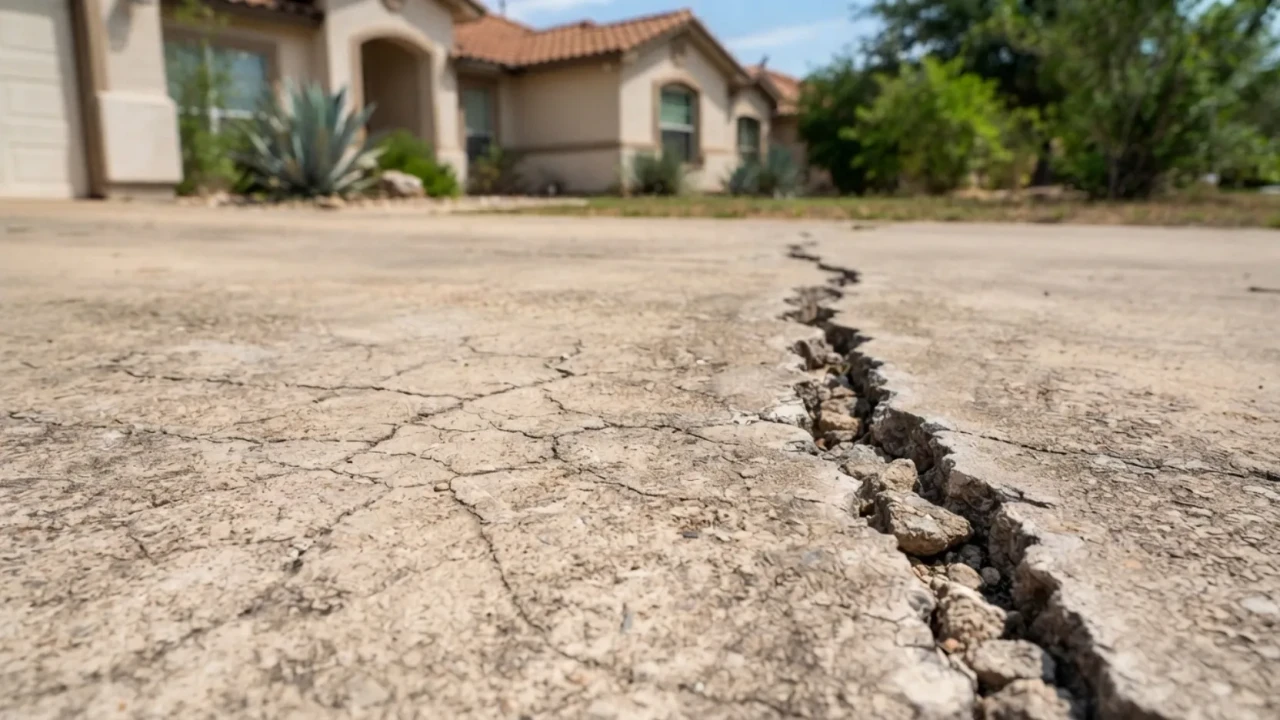
Hairline cracks under 1/4 inch wide that appear in the first 12 to 24 months are almost always normal shrinkage cracks from the concrete losing moisture during curing. They are cosmetic and can be filled with a flexible concrete crack filler. Cracks wider than 1/4 inch, cracks with vertical displacement where one side is higher than the other, and cracks that grow visibly over a season are structural concerns that require professional assessment.
| What you see | What it means | Recommended action |
|---|---|---|
| Hairline cracks, uniform width | Normal shrinkage from curing cosmetic only | Fill with flexible crack filler; monitor annually |
| Surface scaling or flaking | Freeze-thaw damage or deicing salt exposure on unsealed slab | Seal surface; apply resurfacer if shallow; replace if deep |
| Cracks with vertical offset | Base failure or tree root intrusion structural issue | Professional assessment required; may need section replacement |
| Edge sinking or corner settling | Base washout or soil compression under slab | Mudjacking or slab leveling can sometimes repair; assess first |
| Widespread surface pitting | Long-term UV exposure on never-sealed slab; carbonation | Resurfacer application can buy time; full replacement within 5–10 years |
| Slab heaving in the middle | Tree root growth or extreme soil expansion below the slab | Root removal plus slab section replacement; roots will return if tree remains |
The 10-year inspection rule for San Antonio driveways: At the 10-year mark, walk the entire driveway with a metal rod and tap the surface in a grid pattern. A hollow sound indicates delamination or a void beneath the slab. Solid, consistent sound means the base is intact. This test takes 15 minutes and tells you more about your driveway's remaining life than any visual inspection. Hollow sections near the edges, near tree root lines, or in the center of the slab are the early warning signs that targeted repair now prevents full replacement in 5 years.
- Walk the full surface and note any new cracks since the last inspection
- Measure crack width: under 1/4" is cosmetic; over 1/4" or growing requires attention
- Check for vertical displacement at every crack line: any offset indicates base movement
- Tap surface with a metal rod in a grid to check for delamination or voids
- Inspect edges and joints: water pooling at edges accelerates base erosion
- Note any surface pitting, scaling, or color change that signals seal wear
The most common mistake San Antonio homeowners make with aging driveways is waiting too long to repair minor damage and then being told the whole slab needs replacing. Conversely, some homeowners invest in cosmetic repairs on a driveway with a failed base, which only delays a replacement they will still need within a few years. Knowing where your driveway falls on that spectrum saves significant money either way.
As a general rule, repair is the right call when damage is limited to less than 25 percent of the surface area, the base beneath the slab is still intact (confirmed by the tap test), cracks do not have vertical displacement, and the slab is under 25 years old with any maintenance history at all. Replacement makes more sense when base failure is confirmed across multiple sections, when heaving or sinking affects more than a third of the driveway, when the slab is more than 30 years old with no maintenance record, or when repair costs would exceed 50 percent of full replacement cost.
- Damage confined to less than 25% of total surface area: repair candidate
- Tap test confirms base is intact under damaged sections: repair candidate
- No vertical displacement at cracks and no slab heaving: repair candidate
- Slab is over 30 years old with no maintenance history: lean toward replace
- Repair quote exceeds 50% of full replacement cost: replace is the better value
- Tree root intrusion confirmed as cause: address tree first, then evaluate slab
Use this table to get a realistic lifespan estimate based on your installation quality and maintenance history. These are conservative field-based estimates for Bexar County conditions.
| Scenario | Realistic lifespan | Key risk factors |
|---|---|---|
| Proper install + rebar + 5" slab + sealed on schedule | 40–50 years | Tree root intrusion; extreme drought-rehydration cycles |
| Standard install + wire mesh + 4" slab + sealed occasionally | 25–35 years | Minor cracking after year 15; reseal gaps accelerate surface wear |
| Standard install + 4" slab + never sealed | 15–20 years | Surface carbonation, oil staining, and edge spalling by year 10 |
| Thin slab (3") + no reinforcement + minimal base | 8–12 years | Cracking within 3–5 years; full base failure likely before year 10 |
| Existing driveway, resurfaced over sound base | 15–20 years post-resurface | Resurfacer lifespan depends on original slab integrity and sealing after |
| Section-replaced panels on otherwise sound slab | Remaining life of original slab | New sections must match original thickness and base spec to blend properly |
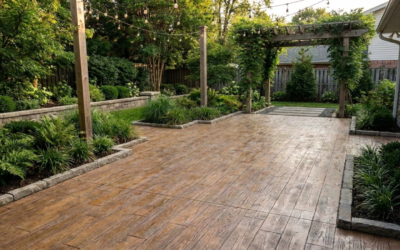
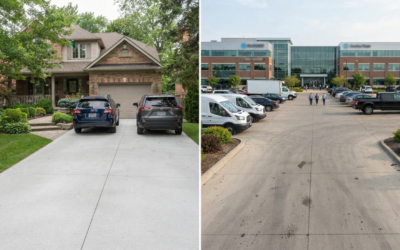
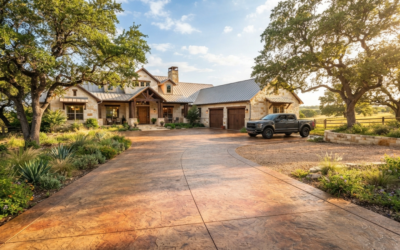
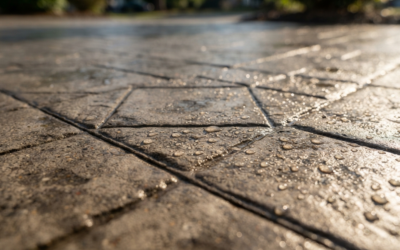
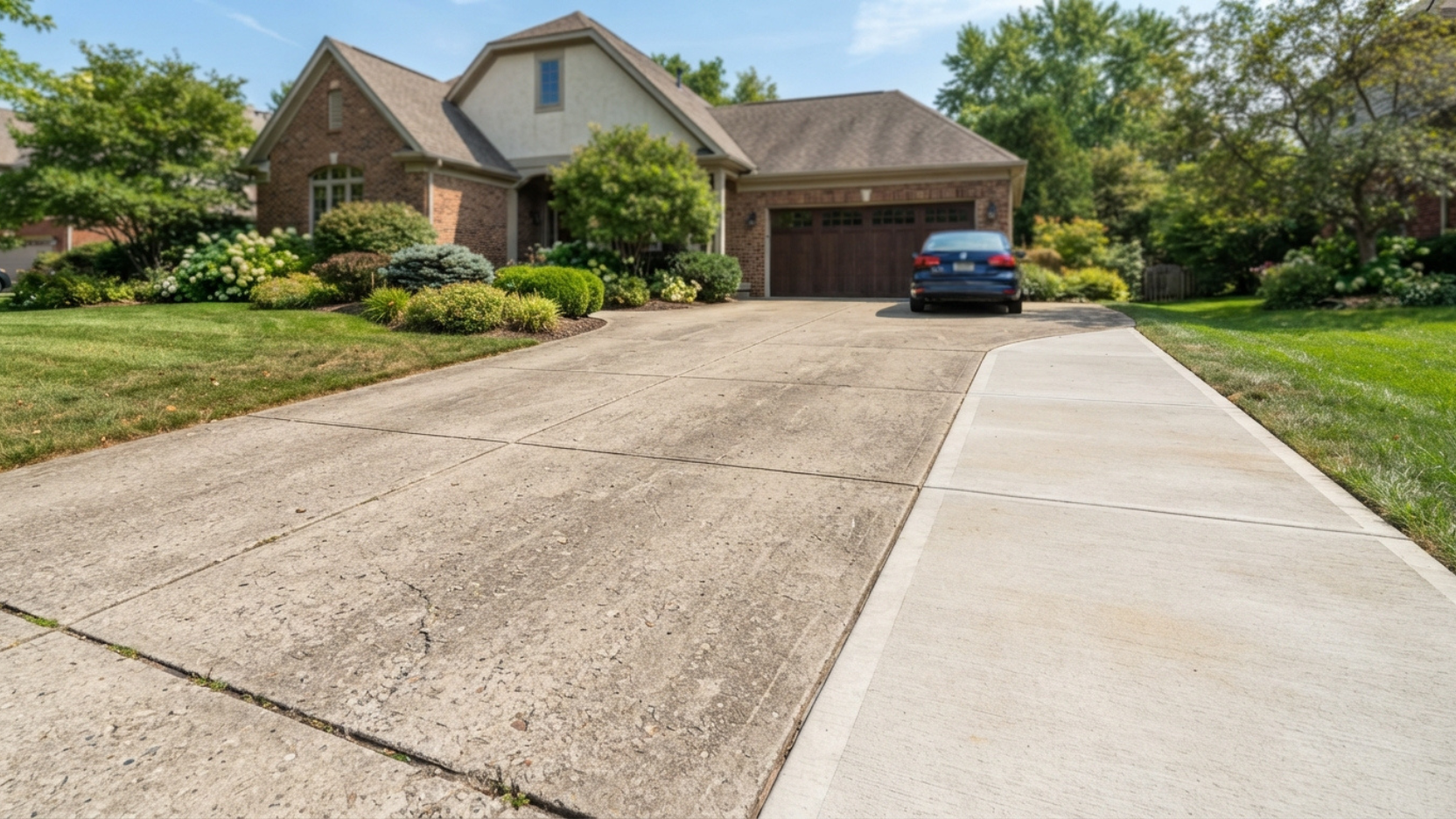
Understanding what you are looking at when you inspect your driveway is half the battle. A concrete surface that has been sealed regularly and given basic maintenance will show gradual, uniform surface aging without structural compromise. The images below illustrate the contrast.
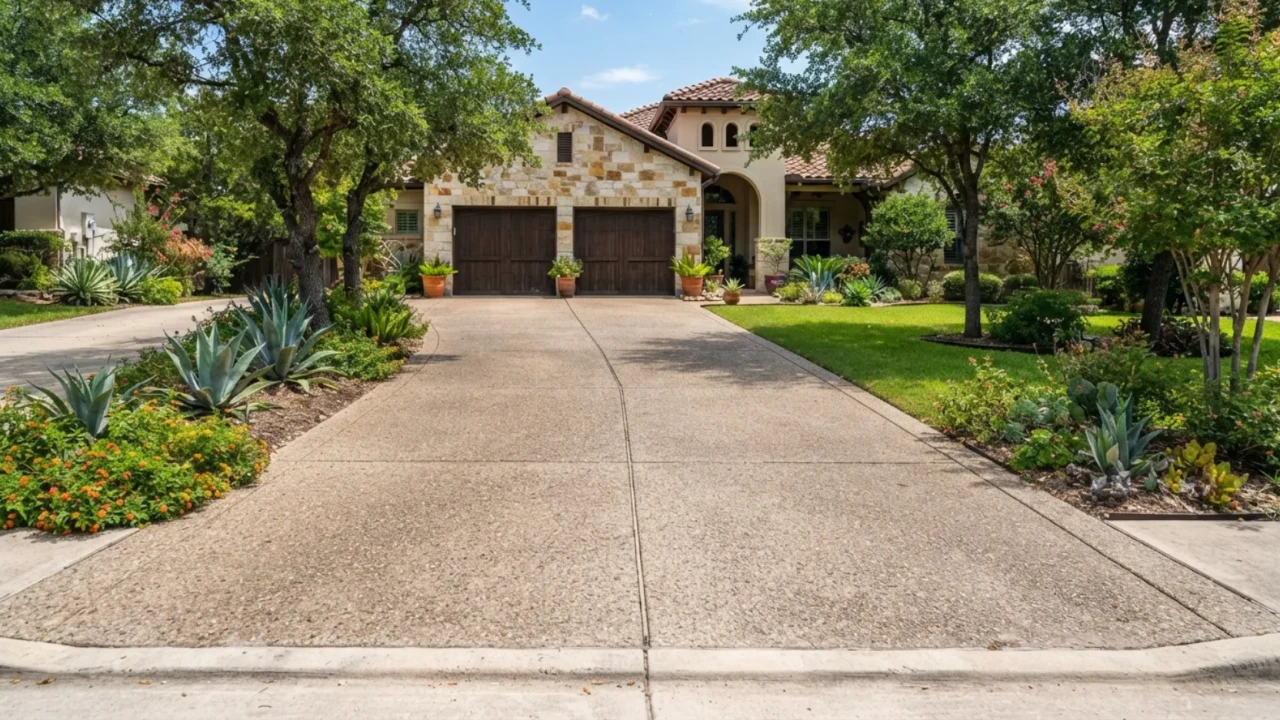
Good aging (15 to 25 years, maintained): Uniform surface color with slight lightening from UV exposure. Control joints clean and filled with intact sealant. No vertical displacement at any joint line. Surface texture still visible with no significant scaling or pitting. Edges are flush with surrounding grade with no sinking or lifting.
This is a driveway that has years of life remaining with continued basic maintenance. A fresh seal application and joint inspection are the only investments needed at this stage.
- Minimum 4" compacted crushed limestone base 6" on heavy clay soil areas
- Slab thickness 4–5" for standard residential; 5–6" for driveways used by trucks or large vehicles
- Rebar (#3 or #4) at 18" centers do not accept wire mesh only for driveways on San Antonio clay soils
- Control joints planned at 8–10 foot intervals before the pour begins
- Curing process agreed: wet curing or liquid compound for minimum 3 days after pour
- No vehicle traffic for 7 days post-pour; foot traffic restricted for 48 hours
- No deicing salts used during the first winter use sand for traction instead
- First sealer applied at 28–30 days: penetrating silane-siloxane sealer
- Hairline shrinkage cracks noted and filled with flexible crack filler within the first 12 months
- Annual pressure washing in fall before resealing season
- Reseal every 2 years for south-facing driveways; every 3 years for shaded or lower-traffic slabs
- Joint sealant inspected and replaced as needed cracked or missing sealant allows water infiltration
- Oil and fuel stains cleaned immediately degrease before they penetrate the surface
- Annual tap test to check for voids or delamination developing under the slab
- Professional inspection of full driveway surface for base integrity and crack mapping
- Repair isolated damage before it spreads: the 50% rule determines repair vs. replace
- Trees within 10 feet of the slab inspected for root encroachment
- Grade around edges confirmed: water should drain away from slab, not collect at borders
Get a free concrete driveway quote in San Antonio
Ready to install a new driveway or repair an existing one? Our team will visit your property, assess the site, and give you a detailed written quote at no cost.