
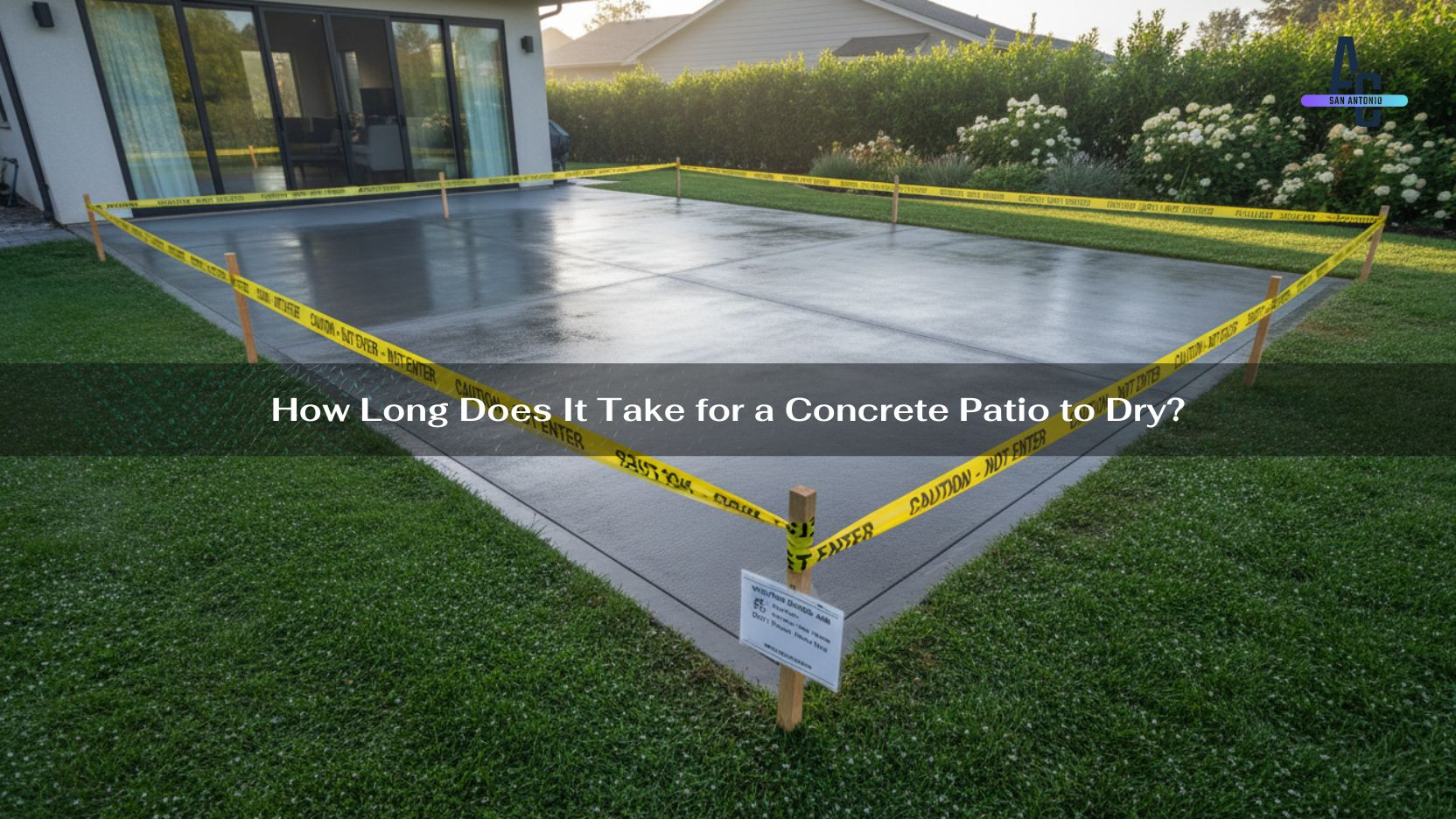
You’ve just had a concrete patio poured. It looks solid, smooth, and ready to use but is it?
This is where many homeowners make costly mistakes. Misunderstanding how long does it take for concrete patio to dry can lead to cracks, surface damage, or a patio that never reaches its full strength.
In this guide, I’ll walk you through what actually happens after concrete is poured, what timelines really matter, and how to protect your patio so it performs the way it should for decades.
What “Dry” Really Means for Concrete
Concrete doesn’t dry the way paint or wood does.
Yes, the surface loses moisture and feels hard fairly quickly. But underneath, concrete is curing, not just drying. Curing is a chemical process where cement reacts with water and gains strength over time.
This is the most common misconception I see on job sites:
Hard does not mean cured.
A concrete patio can feel dry within hours, be walkable in a day, and still be weeks away from full strength.
How Long Does It Take for a Concrete Patio to Dry?
In practical terms, here’s what most homeowners need to know:
- 24–48 hours: Safe for light foot traffic
- 7 days: Gained most of its usable strength
- 28 days: Fully cured and at design strength
So when someone asks how long does it take for concrete patio to dry, the honest answer is:
It depends on what you plan to do with it.
Walking, placing furniture, driving equipment, or sealing all require different waiting periods.
Key Factors That Affect Drying and Curing Time
Weather Conditions
Temperature, humidity, and wind matter more than most people realize.
Hot, dry weather makes the surface dry fast but can weaken the concrete if moisture escapes too quickly. Cold weather slows curing and can delay strength gain.
From experience, mild temperatures with controlled moisture produce the best results.
Concrete Mix Design
Not all concrete is the same.
High-strength mixes, additives, or fast-setting concrete can change timelines. Some mixes gain early strength quickly, but that doesn’t eliminate proper curing time.
This is why two patios poured on the same day can behave very differently.
Thickness of the Slab
A 4-inch residential patio cures differently than a thicker slab.
Thicker concrete holds moisture longer, which can actually help curing but it also means longer wait times before heavy use.
Rushing this stage is a common cause of surface cracking.
Finishing and Curing Methods
Professional curing makes a big difference.
Covering the slab, misting with water, or using curing compounds helps concrete reach full strength. Skipping curing entirely is one of the fastest ways to shorten the life of a patio.
What You Should and Shouldn’t Do
Do:
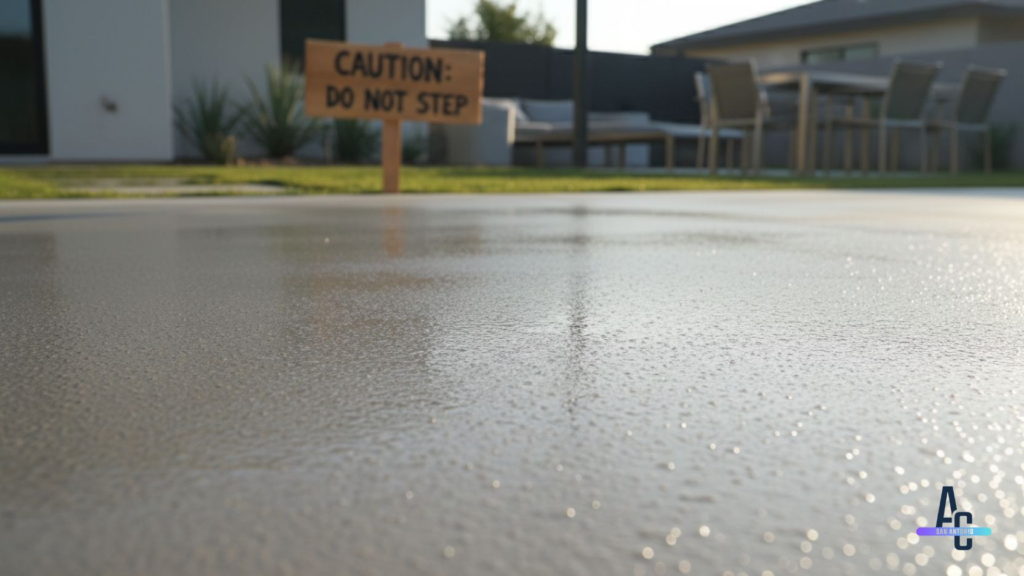
- Keep foot traffic off for at least 24 hours
- Wait a full week before placing furniture
- Keep the surface moist during the first few days if possible
Don’t:
- Assume “dry to the touch” means ready for use
- Seal the concrete too early
- Drag furniture or heavy items across fresh concrete
Concrete rewards patience. Shortcuts almost always show up later as cracks, dusting, or discoloration.
Realistic Timelines You Can Trust
Here’s a clear breakdown based on real-world performance:
- Day 1: Walkable with care
- Days 2–7: Strength building rapidly
- After 7 days: Light use is generally safe
- After 28 days: Full strength achieved
If sealing or staining is planned, waiting until the concrete has fully cured is critical for proper bonding and long-term appearance.
Common Mistakes to Avoid
The most frequent problems I see all come from rushing:
- Using the patio too soon
- Sealing before moisture has escaped
- Letting hot weather dry the surface too fast
- Ignoring curing altogether
These mistakes don’t always fail immediately but they almost always shorten the patio’s lifespan.
Conclusion
So, how long does it take for concrete patio to dry?
Long enough that patience matters.
Concrete may look finished in a day, but its real strength develops over weeks. Respecting that process protects your investment, improves durability, and prevents problems that are expensive to fix later.
Done right, a concrete patio should last decades. The difference between success and regret often comes down to simply letting the concrete do its job.