How Thick Is a Concrete Patio? The Complete Guide to Getting It Right
If you’ve ever Googled “how thick is a concrete patio” before starting a backyard project, you’re asking exactly the right question and the answer matters more than most homeowners realize.
Get the thickness wrong, and you’re looking at premature cracking, surface heaving, and a patio that won’t last a Texas summer, let alone a decade. Get it right, and you have a surface that handles furniture, foot traffic, grills, and hot tubs without flinching.
This guide breaks down everything you need to know about concrete patio thickness from industry standards to soil conditions to what happens when you cut corners.
The Standard Concrete Patio Thickness
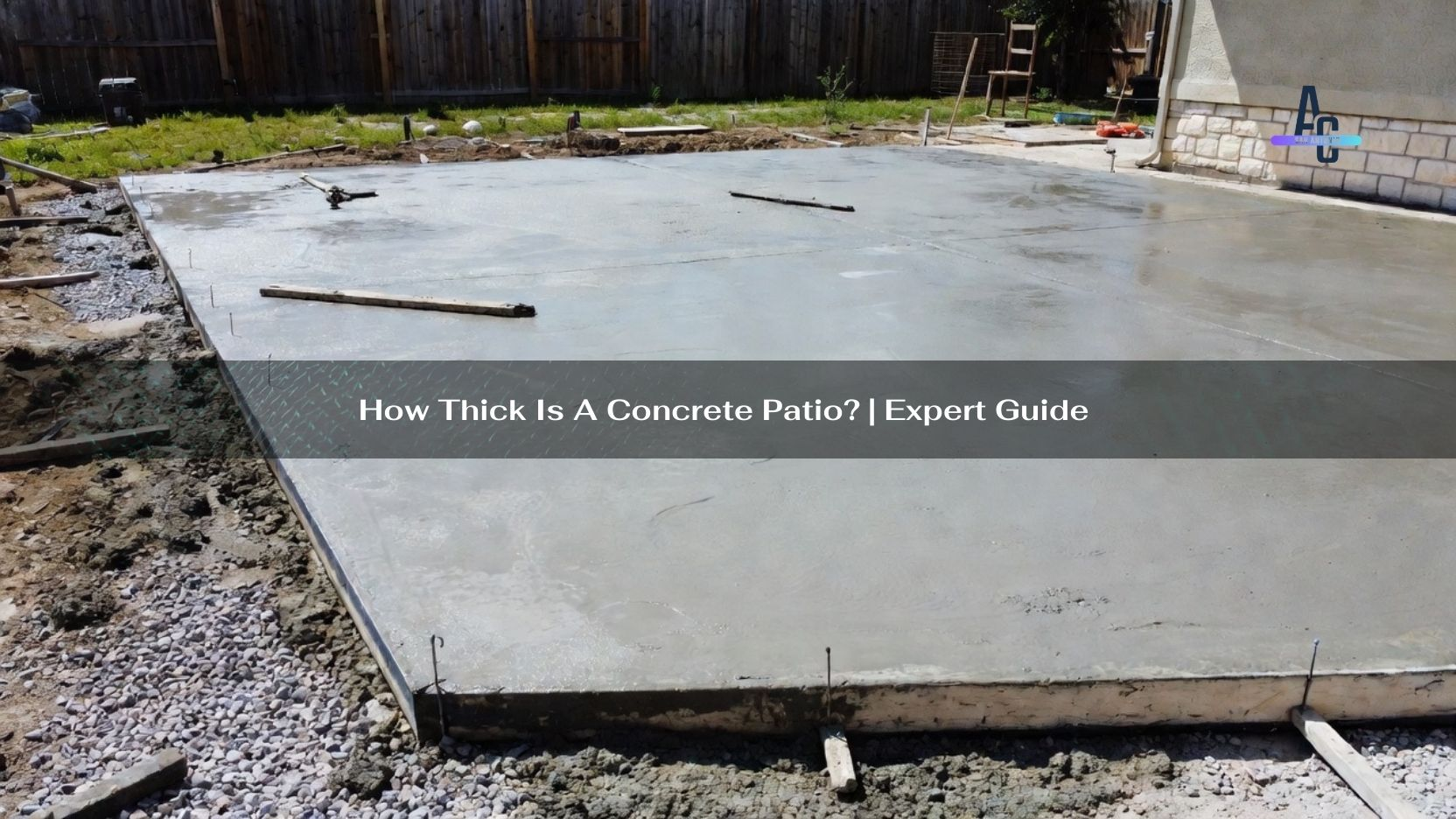
For a residential concrete patio used exclusively for foot traffic, outdoor furniture, and standard backyard activities, 4 inches is the industry-standard thickness. This measurement refers to the depth of poured concrete, not including the gravel subbase beneath it.
The 4-inch benchmark is endorsed by the Portland Cement Association as the minimum practical thickness for residential flatwork, and it’s what most experienced contractors default to for straightforward patio installations.
Here’s a quick reference for common residential applications:
| Application | Recommended Thickness |
| Standard patio (foot traffic only) | 4 inches |
| Patio with hot tub or heavy furniture | 5–6 inches |
| Patio with vehicle access | 6 inches |
| Pool decks | 4–5 inches |
| Decorative/stamped concrete | 4–5 inches |
Four inches provides sufficient structural integrity under normal loads, resists surface cracking when properly cured, and gives you enough depth for control joints to function correctly.
When You Need To Go Thicker
The 4-inch standard is a floor, not a ceiling. Several real-world factors push that number higher and skimping to save on concrete cost almost always costs more in repairs later.
Increase to 5–6 inches if:
- You plan to park vehicles on it. Even a car, at 3,000–4,500 lbs, concentrates enormous point pressure on a patio slab. The American Concrete Institute recommends a minimum of 6 inches for any surface that will bear vehicle loads.
- You’re installing a hot tub. A filled hot tub can weigh 3,000–6,000 lbs depending on size. That weight sitting on a 4-inch slab especially over poorly compacted soil is a recipe for cracking.
- Your soil has poor bearing capacity. Expansive clay, sandy, or loose fill soil reduces the effective support beneath a slab. Greater concrete thickness compensates for an unstable subgrade.
- You’re in a high-moisture environment. Water infiltration, freeze-thaw cycles, and hydrostatic pressure all stress thin slabs disproportionately.
- You’re pouring stamped or decorative concrete. These finishes involve surface cutting and detailing that can compromise a minimum-thickness pour. A 4.5–5-inch pour gives decorative work a stronger foundation.
The Role Of the Subbase
Concrete thickness alone doesn’t determine patio performance. What’s underneath it matters just as much.
A properly prepared subbase typically includes:
- 4–6 inches of compacted gravel (crushed stone or road base)
- A vapor barrier in moisture-prone areas
- Properly graded soil sloping away from the home’s foundation
The subbase distributes load, promotes drainage, and prevents the soil movement that leads to cracking. According to Angi’s concrete patio installation guide, skipping or rushing subbase preparation is one of the most common reasons residential patios fail within 5–10 years.
In San Antonio, where clay-heavy soils expand and contract seasonally, subbase preparation is non-negotiable. Experienced local contractors treat the subbase with the same attention as the pour itself.
Reinforcement: Rebar VS. Wire Mesh
Even at the correct thickness, concrete is brittle under tension. Reinforcement keeps cracked sections from separating and shifting.
Wire Mesh (Welded Wire Fabric)
- Common in residential patios
- Sits mid-slab, adds tensile strength
- Effective for standard residential loads
- Must be properly elevated during pour (not left on the ground)
Rebar (Steel Reinforcing Bar)
- Preferred for heavier loads, thicker slabs, or challenging soil conditions
- Typically #3 or #4 rebar on 18–24 inch grids
- Adds significant structural integrity
- Required for vehicle-rated slabs
For a standard 4-inch residential patio, wire mesh is generally sufficient. For anything 5 inches or thicker or any patio expected to bear heavy point loads, rebar is the professional choice.
Fiber reinforcement (polypropylene or steel fibers mixed into the concrete) is increasingly common as a supplement to traditional reinforcement, reducing surface cracking during curing.
How San Antonio’s Climate Affects Thickness Decisions
San Antonio’s climate presents specific challenges that influence patio design more than homeowners often anticipate.
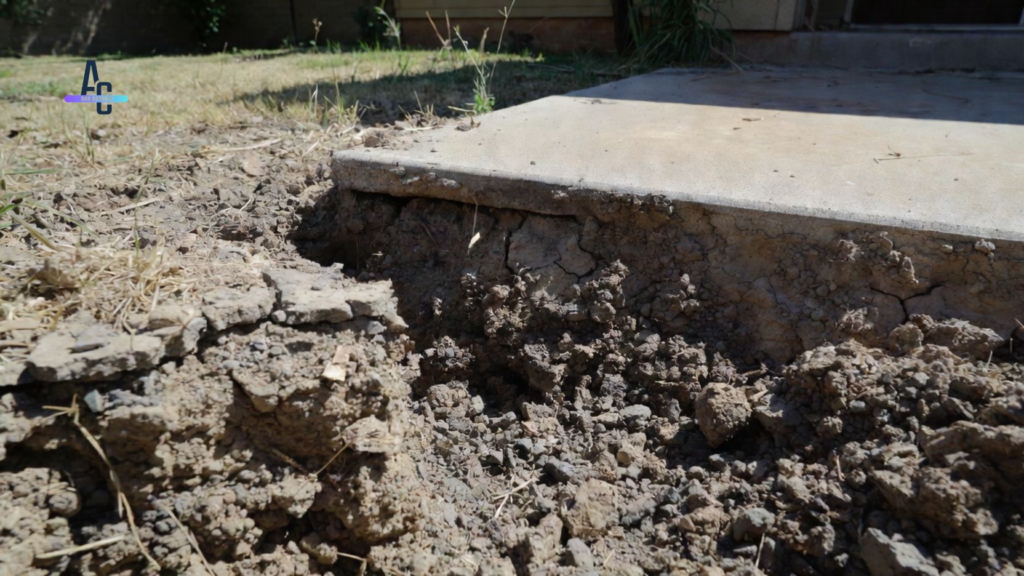
The region’s expansive black clay soils (Vertisols) shrink and swell significantly with moisture fluctuation. During dry summers, clay contracts and pulls away from the slab edge. After rain, it expands and pushes up. This movement stresses thin slabs repeatedly over time.
The heat matters too. Concrete in direct Texas sun can reach surface temperatures of 140°F+, which accelerates moisture evaporation during curing. Rapid moisture loss leads to plastic shrinkage cracks before the concrete even gains strength, a risk that increases with thinner pours that dry faster.
San Antonio contractors who understand the local geology typically:
- Pour at 4 inches minimum, often recommending 4.5–5 inches
- Use 3/4-inch aggregate for better internal structure
- Add control joints every 8–10 feet
- Seal the finished surface to limit moisture infiltration
Common Mistakes That Lead To Cracking
Understanding thickness is important. Understanding why patios fail helps you ask better questions before the pour begins.
Pouring too thin. Anything under 4 inches is underpowered for residential use. Some contractors cut to 3.5 inches to reduce material cost. Don’t accept it.
Inadequate subbase compaction. Even a 6-inch slab will crack if it bridges over a void created by poorly compacted fill. Soil should be mechanically compacted, not just raked level.
Wrong water-to-cement ratio. Excess water weakens concrete significantly. A mix ratio that’s too wet produces a workable slurry but a weaker finished product with increased shrinkage cracking.
Missing control joints. Control joints (saw cuts or formed grooves) create intentional weak points where concrete can crack without damaging the visible surface. Without them, cracks appear randomly and structurally.
Curing shortcuts. Concrete needs to retain moisture for 5–7 days to reach design strength. Covering with plastic sheeting or applying a curing compound is not optional in hot, dry climates.
How A Professional Contractor Determines Thickness
A qualified contractor doesn’t guess at thickness. They evaluate:
- Intended use foot traffic only vs. vehicle access, hot tub, or heavy outdoor kitchen
- Soil type and condition expansive clay requires a different approach than sandy loam
- Drainage patterns areas with standing water need elevated grades and modified thickness
- Load calculations point loads from posts, equipment, or structures are factored in
- Local code requirements some municipalities specify minimum slab thickness in permits
This is why the “just pour 4 inches” shortcut that some crews take doesn’t serve every situation. A patio behind a house with a heavy pergola, built-in kitchen, and outdoor speakers deserves a different specification than a simple square of concrete off the back door.
Cost Implications Of Thickness Choices
Concrete is priced by the cubic yard. Adding an inch of thickness to a 400 sq ft patio adds roughly 1.2 cubic yards of concrete typically $150–$200 in material cost at current market prices.
That incremental cost is almost always worth it. A patio repair, partial replacement, or resurfacing project that results from an undersized pour costs significantly more. According to homeowner data aggregated by HomeAdvisor, concrete patio repairs average $800–$3,000 depending on extent, often 30–50% of the original installation cost.
The economics are straightforward: spend $150–$300 more at installation for the right thickness, or spend $1,000–$3,000 on repairs in 5 years.
FAQs
How Thick Is A Standard Concrete Patio?
Four inches is the industry standard for residential patios with foot traffic and standard outdoor furniture loads.
Is 3.5 Inches Thick Enough For A Concrete Patio?
Technically possible, but not recommended. At 3.5 inches, you have minimal margin for subbase irregularities, and the slab is more prone to cracking under normal residential use.
Do I Need Rebar In A 4-Inch Patio Slab?
Wire mesh is generally sufficient for a standard 4-inch residential patio. Rebar is recommended for 5+ inch slabs or areas with heavy loads.
How Thick Should A Concrete Patio Be For A Hot Tub?
A minimum of 5–6 inches, reinforced with rebar, and poured over a well-compacted gravel subbase of at least 4 inches.
What Happens If Concrete Is Poured Too Thin?
Thin slabs crack earlier, crack more extensively, and are more susceptible to heaving and shifting from soil movement. They’re also harder to repair structurally.
Understanding concrete patio thickness is the foundation of any successful outdoor project literally. The difference between a patio that looks great for 20 years and one that’s cracked and crumbling in five often comes down to decisions made before the first truck arrives.
At Affordable Concrete San Antonio, we’ve been designing and installing concrete patios across San Antonio for nearly 14 years. Every project starts with a proper site evaluation, soil assessment, load requirements, drainage review before we ever talk about aesthetics. Because a beautiful patio that fails structurally isn’t a patio; it’s an expensive problem.
Whether you’re planning a standard brushed concrete patio, a stamped decorative design, or a full outdoor living space with hardscaping, our team brings the experience and precision your project deserves.
Ready to get started? Request your free concrete patio estimatetoday.
San Antonio: 1247 W Thompson Pl, San Antonio, TX 78226 , Houston: 6203 Lawford Ln, Houston, TX 77040 , 713-504-2341