
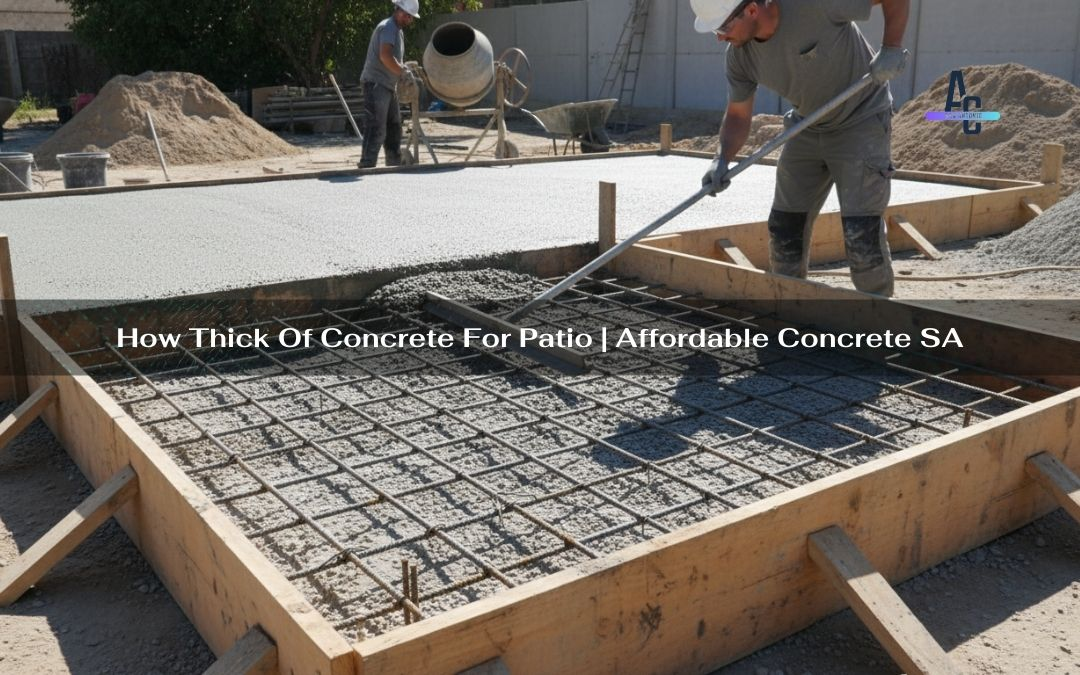
Creating the perfect concrete patio requires more than just pouring cement. One of the most critical decisions homeowners face is how thick the concrete should be. Selecting the right thickness ensures your patio withstands the elements, heavy furniture, and even occasional vehicles without cracking or settling.
In this comprehensive guide, we’ll explore the optimal concrete thickness for patios, factors that influence it, installation best practices, and design considerations, backed by the expertise of Affordable Concrete San Antonio. Whether you’re planning a standard concrete patio, stamped decorative concrete, or concrete pavers, this article provides actionable insights for a durable, visually appealing outdoor space.
Why Concrete Thickness Matters
Concrete thickness isn’t just a number, it’s the backbone of a patio’s durability and longevity. Too thin, and your patio may crack under furniture, foot traffic, or thermal expansion. Too thick, and you could unnecessarily increase costs without meaningful structural benefits.
Proper thickness ensures your patio:
- Resists cracking and settling over time
- Supports intended load, including grills, seating, and light vehicles
- Withstands freeze-thaw cycles and extreme weather conditions
- Maintains aesthetic integrity with minimal maintenance
According to HomeAdvisor, the durability of outdoor concrete is directly influenced by both slab thickness and reinforcement.
Standard Patio Concrete Thickness
For most residential patios, 4 inches (10 cm) of concrete is the industry standard. This thickness is sufficient for typical foot traffic, outdoor furniture, and occasional lightweight vehicles like golf carts.
Key benchmarks:
| Patio Type | Recommended Concrete Thickness |
| Standard residential patio | 4 inches |
| Patios with heavier loads | 5–6 inches |
| Driveway-adjacent or vehicle use | 6–8 inches |
| Stamped or decorative concrete | 4–5 inches |
Note: These recommendations assume proper base preparation and reinforcement are implemented.
Factors Influencing Concrete Thickness
Soil Type And Compaction
A solid, well-compacted base reduces the risk of cracking and settling. Sandy soils drain better but may require thicker slabs for support, while clay soils can expand and contract, necessitating reinforcement and careful thickness planning.
Pro Tip: Ensure a minimum 4-inch layer of compacted gravel under your slab to promote drainage and stability.
Patio Use And Load Requirements
The intended use significantly impacts the required thickness:
- Light use: Foot traffic, lounge furniture – 4 inches is sufficient
- Medium use: Firepits, grills, planters – 4–5 inches recommended
- Heavy use: Vehicles, hot tubs, or large pavers – 6–8 inches
Climate And Weather Considerations
In areas with freeze-thaw cycles or high rainfall, thicker slabs with proper reinforcement prevent cracking caused by thermal expansion and water infiltration. San Antonio’s climate is generally hot with occasional heavy rains, so reinforced 4–5 inch slabs are ideal for most patios.
Recommended Thickness For Various Patio Types
Residential Patios
For typical backyard patios, a 4-inch concrete slab reinforced with wire mesh or rebar ensures durability without overspending. Most outdoor furniture, grills, and even small fire pits are well-supported at this thickness.
Commercial Patios
Commercial patios or spaces subject to frequent heavy traffic should consider 6–8 inch slabs with rebar. This ensures structural integrity under heavier loads and long-term durability.
Stamped And Decorative Concrete
Decorative concrete patios often mimic stone or wood textures. While the aesthetic is key, structural thickness cannot be compromised. A minimum 4-inch slab with reinforcement is recommended to maintain both appearance and longevity.
Recommended Concrete Thickness By Load Type And Soil
| Load Type / Use | Soil Type | Recommended Concrete Thickness | Reinforcement | Notes |
| Light Foot Traffic | Sandy / Well-Drained | 4 inches (10 cm) | Wire mesh or fiber reinforcement | Ideal for standard residential patios with furniture and grills |
| Medium Load (Firepit, Grill) | Clay / Loamy | 4–5 inches (10–13 cm) | Wire mesh + light rebar | Extra thickness compensates for soil expansion and moderate loads |
| Heavy Load (Vehicles, Hot Tub) | Poor/Expansive Soil | 6–8 inches (15–20 cm) | Rebar grid or full rebar cage | Supports driveways or patios adjacent to garages; critical in clay soils |
| Decorative / Stamped | Sandy / Loamy | 4–5 inches (10–13 cm) | Wire mesh + fiber reinforcement | Maintains aesthetic integrity while preventing cracks |
| Commercial / High Traffic | Mixed / Variable | 6–8 inches (15–20 cm) | Full rebar grid | Ensures long-term durability for restaurants, public patios, or walkways |
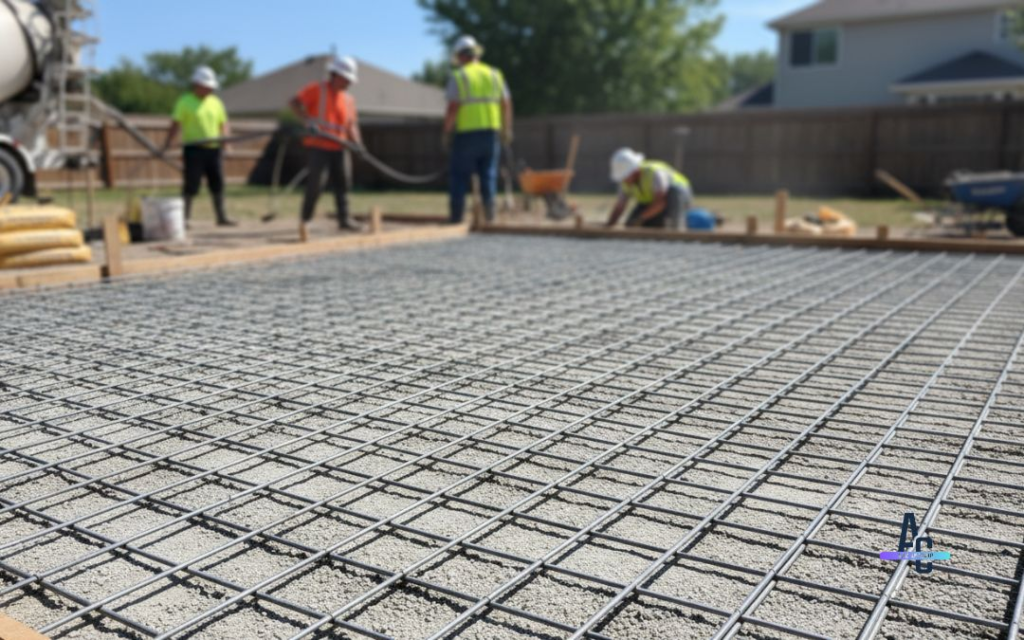
Concrete Reinforcement: Slabs, Wire Mesh, And Rebar
Reinforcement is crucial for durability and crack prevention. Options include:
- Wire mesh: Best for standard residential slabs; prevents minor cracking
- Rebar (steel reinforcement): Essential for heavy-load patios; improves tensile strength
- Fiber-reinforced concrete: Adds micro-reinforcement; ideal for decorative patios
According to Angi’s Guide on Concrete Patios, proper reinforcement can extend a patio’s lifespan by decades.
Patio Installation Best Practices
- Site Preparation: Excavate to the required depth, remove debris, and compact the soil
- Base Layer: Add a 4-inch layer of crushed stone or gravel
- Formwork: Set wooden forms to contain the concrete
- Reinforcement Placement: Install wire mesh or rebar before pouring
- Pouring Concrete: Pour and level using a screed; avoid overworking
- Finishing: Apply broom finish, stamping, or decorative textures as desired
- Curing: Keep slab moist for at least 7 days to maximize strength
- Sealing: Apply a high-quality sealant to prevent staining and water damage
Signs Your Patio Needs Repairs Or Resurfacing
Even well-installed patios may eventually require attention. Common signs include:
- Hairline or large cracks
- Uneven surfaces
- Spalling or surface flaking
- Stains or discoloration
Affordable Concrete San Antonio provides resurfacing services that restore old patios without complete replacement, saving time and cost.
Affordable Concrete San Antonio: Expert Patio Solutions
At Affordable Concrete San Antonio, we specialize in designing, installing, and maintaining custom concrete patios tailored to your lifestyle. Our services include:
- Standard concrete patios: Durable, practical, and budget-friendly
- Stamped & decorative concrete: Unique textures and patterns
- Concrete pavers & slabs: Flexible design options with easy repairs
- Concrete resurfacing & repairs: Restore patios to like-new condition
- Hardscaping integration: Firepits, retaining walls, seating, and walkways
With over 14 years of combined experience, our team ensures every patio is built for structural integrity, aesthetic appeal, and long-term value.
Request a free estimate today: 713-504-2341, Email: info@affordableconcretesanantonio.com
FAQs
1. What Is The Minimum Thickness For A Concrete Patio?
For standard residential use, 4 inches is sufficient when properly reinforced.
2. Can I Use A Thinner Slab For Decorative Concrete?
Thinner slabs are prone to cracking; 4 inches with reinforcement is recommended even for decorative applications.
3. How Long Does It Take For Concrete To Cure?
Concrete achieves full strength in 28 days, but light use is possible after 7 days with proper curing.
4. Should I Reinforce My Patio?
Yes, reinforcement like wire mesh or rebar prevents cracking and ensures long-term durability.
5. Does Climate Affect Slab Thickness?
Absolutely. Hot, rainy, or freeze-prone areas may require thicker slabs with proper drainage and reinforcement.
Conclusion
Choosing the right concrete thickness for your patio is essential for durability, safety, and long-term enjoyment. For most residential patios, a 4-inch reinforced slab provides a strong, low-maintenance foundation, while heavier loads or commercial applications may require 6–8 inches.
By considering soil type, climate, intended use, and proper reinforcement, you can ensure your patio remains a beautiful, functional outdoor space for years to come. Partnering with experienced professionals like Affordable Concrete San Antonio guarantees precision, quality materials, and expert installation tailored to your vision.