
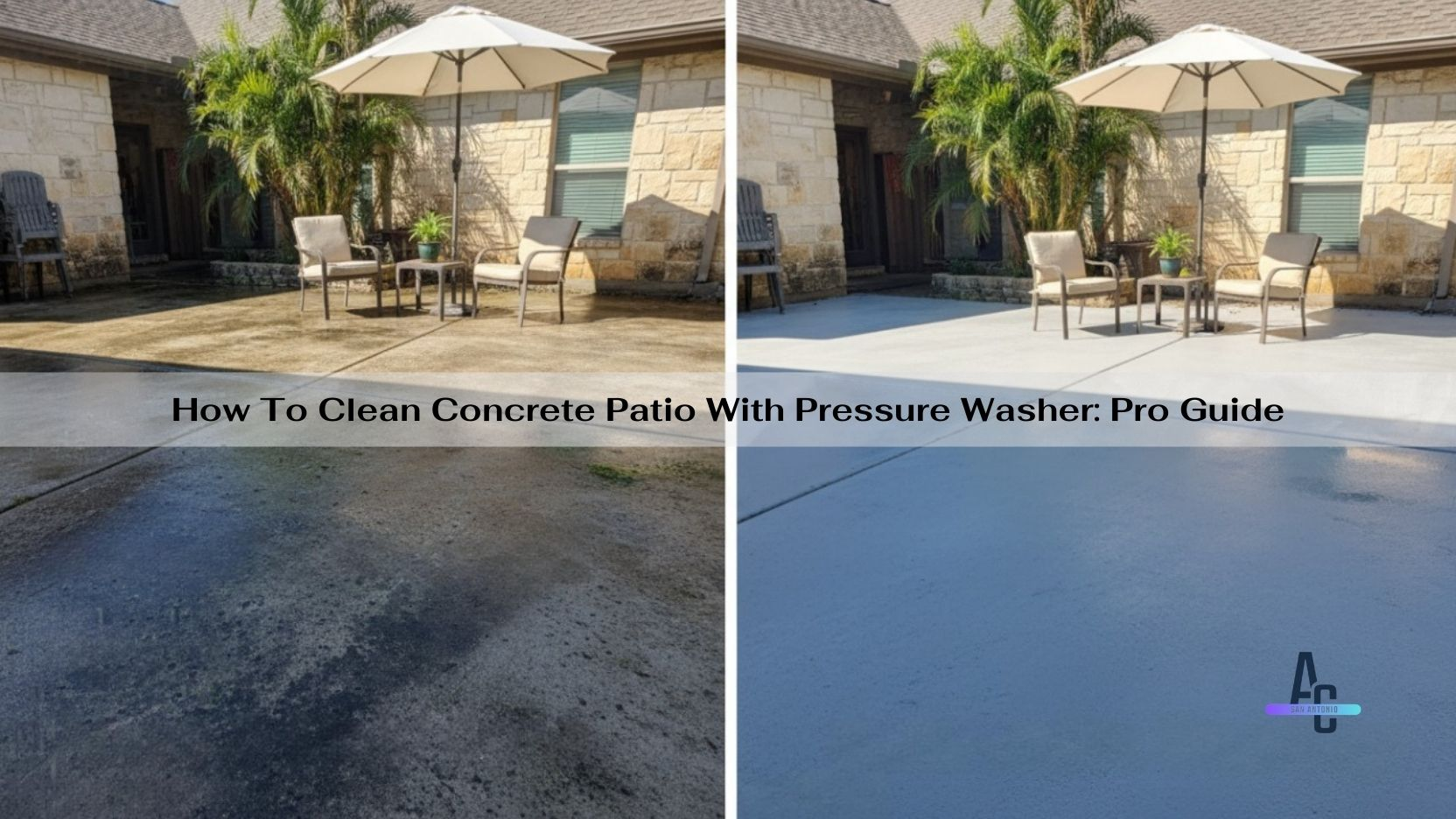
Knowing how to clean concrete patio with pressure washer properly can transform a dull, stained outdoor surface into a bright, refreshed space without damaging the concrete or shortening its lifespan.
Concrete patios are designed for durability, but exposure to dirt, mildew, algae, grease, and weather will inevitably dull their appearance over time. Pressure washing is one of the most effective and efficient ways to restore concrete when done correctly.
This guide walks you through the exact process professionals use, combining safety, surface protection, cleaning performance, and long-term patio care.
Why Pressure Washing Is Ideal For Concrete Patios
Concrete is porous by nature, meaning it absorbs dirt, moisture, algae, and oil over time. A pressure washer uses high-velocity water to penetrate those pores and lift contaminants that scrubbing alone can’t remove.
According to HomeAdvisor’s concrete maintenance experts, pressure washing not only improves appearance but also prevents long-term structural deterioration caused by moisture retention and organic growth.
Benefits Of Pressure Washing Concrete
- Removes deep-set dirt and stains
- Prevents mold and algae buildup
- Restores slip resistance
- Extends patio lifespan
- Prepares surfaces for sealing or resurfacing
When You Should Pressure Wash Your Concrete Patio
Timing matters as much as technique.
Best Times To Pressure Wash
- Early spring (post-winter grime)
- Late summer (after pollen season)
- Before sealing or resurfacing
- Prior to selling or hosting outdoor events
Avoid pressure washing:
- During freezing temperatures
- On freshly poured concrete (wait at least 30 days)
- In extreme heat where water evaporates too quickly
What You Need Before You Start
Equipment Checklist
- Pressure washer (2,000–3,000 PSI recommended)
- 25° or 40° spray nozzle
- Concrete-safe detergent or degreaser
- Stiff-bristle broom
- Protective eyewear and gloves
- Surface cleaner attachment (optional but recommended)
According to Angi’s pressure washing safety guide, using the correct nozzle and pressure prevents etching and surface damage.
Step-By-Step: How To Clean Concrete Patio With Pressure Washer
This is the professional-grade method for safe, effective results.
1. Clear The Area
Remove furniture, grills, planters, and debris. Sweep loose dirt to prevent it from turning into muddy slurry.
2. Pre-Treat Stains
Apply a concrete-safe cleaner or degreaser to visible stains such as:
- Oil
- Grease
- Mold
- Rust
Let the solution dwell for 5–10 minutes do not let it dry.
3. Set The Right Pressure
Use 2,000–3,000 PSI for concrete patios. Lower pressure won’t clean effectively; higher pressure can etch or pit the surface.
4. Choose The Proper Nozzle
| Nozzle | Use |
| 40° | General cleaning |
| 25° | Tough dirt & stains |
| 15° | Spot cleaning only |
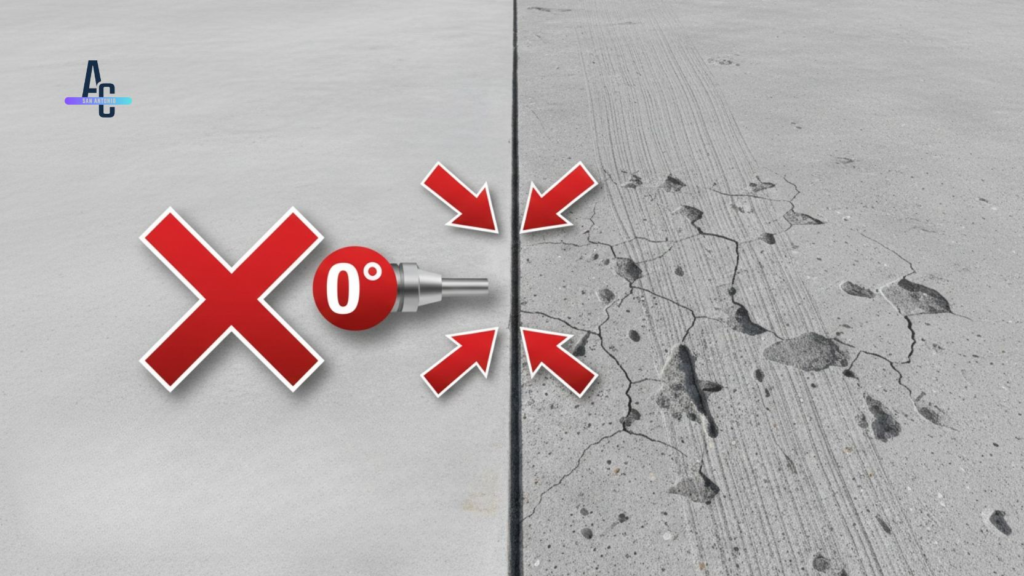
| 0° | Never use on concrete |
5. Wash In Controlled Sections
Work in 3×3 foot sections:
- Keep nozzle 12–18 inches from surface
- Move in overlapping strokes
- Never hold the spray in one place
6. Rinse Thoroughly
Remove all detergent residue to prevent streaking and surface film.
Pressure Settings and Nozzle Selection Explained
Many homeowners damage concrete simply by using too much pressure or the wrong nozzle.
Safe Pressure Guidelines
| Surface | PSI Range |
| Concrete patio | 2,000–3,000 |
| Stamped concrete | 1,500–2,000 |
| Decorative concrete | Under 2,000 |
The Concrete Network’s cleaning guidelines emphasize that decorative and stamped concrete require gentler pressure to preserve patterns and finishes:
Removing Tough Stains From Concrete Patios
Oil & Grease
Use a concrete degreaser and hot water pressure wash. Repeat if necessary.
Mold & Algae
Apply diluted bleach or specialized mold remover, then rinse thoroughly.
Rust Stains
Use oxalic acid-based rust removers designed for concrete.
Paint & Sealers
Avoid pressure alone chemical stripping may be required.
Common Mistakes That Damage Concrete
Avoid these costly errors:
- Using a 0° nozzle
- Holding spray too close
- Washing freshly poured concrete
- Ignoring drainage patterns
- Skipping post-clean sealing
These mistakes can permanently scar the surface or weaken the slab.
How Often Should You Pressure Wash A Concrete Patio?
For most homeowners:
- Once per year: Standard maintenance
- Twice per year: High-traffic or shaded patios
- Before sealing or resurfacing: Always
In humid climates like San Antonio, algae buildup often requires more frequent cleaning.
DIY VS Professional Patio Cleaning
| Factor | DIY | Professional |
| Cost | Lower | Higher |
| Equipment | Rental | Commercial-grade |
| Risk of damage | Moderate | Low |
| Stain removal | Limited | Advanced |
| Time | Higher | Minimal |
For deeply stained, decorative, or resurfaced patios, professional cleaning prevents surface damage and uneven results.
How Cleaning Impacts Concrete Patio Longevity
Regular pressure washing:
- Reduces micro-cracking
- Prevents moisture penetration
- Delays resurfacing needs
- Maintains property value
According to The Concrete Network, properly cleaned and sealed patios last significantly longer than neglected surfaces:
Concrete Patio Services In San Antonio
If your patio is cracked, faded, or worn beyond cleaning, Affordable Concrete San Antonio offers full-service solutions.
Why Homeowners Choose Affordable Concrete San Antonio
Concrete Patio Installation San Antonio & Concrete Patios San Antonio
- Over 14 years of combined expertise
- Custom concrete patio designs
- Standard, stamped & decorative patios
- Concrete resurfacing & repairs
- Concrete patio pavers
- Poured concrete patios
- Concrete deck construction
- Cement patios
- Concrete patio slabs
- Patio paving & hardscaping
- Free concrete patio estimates
From sleek modern patios to decorative stamped concrete, our team delivers durable, climate-ready outdoor surfaces designed for San Antonio’s environment.
Call: 713-504-2341 Request a free estimate today
When Cleaning Isn’t Enough: Signs You Need Resurfacing
Pressure washing won’t fix:
- Structural cracks
- Sunken slabs
- Severe spalling
- Drainage issues
In these cases, concrete resurfacing or replacement becomes the safer and more cost-effective option.
Final Thoughts: Clean Concrete Is Protected Concrete
Learning how to clean concrete patio with pressure washer correctly isn’t just about aesthetics, it’s about protecting your investment.
A properly cleaned patio:
- Lasts longer
- Looks better
- Resists weather damage
- Enhances outdoor living
And when cleaning is paired with sealing or resurfacing, your patio can serve beautifully for decades.
If your patio needs more than cleaning, Affordable Concrete San Antonio is ready to transform your outdoor space one slab at a time.