
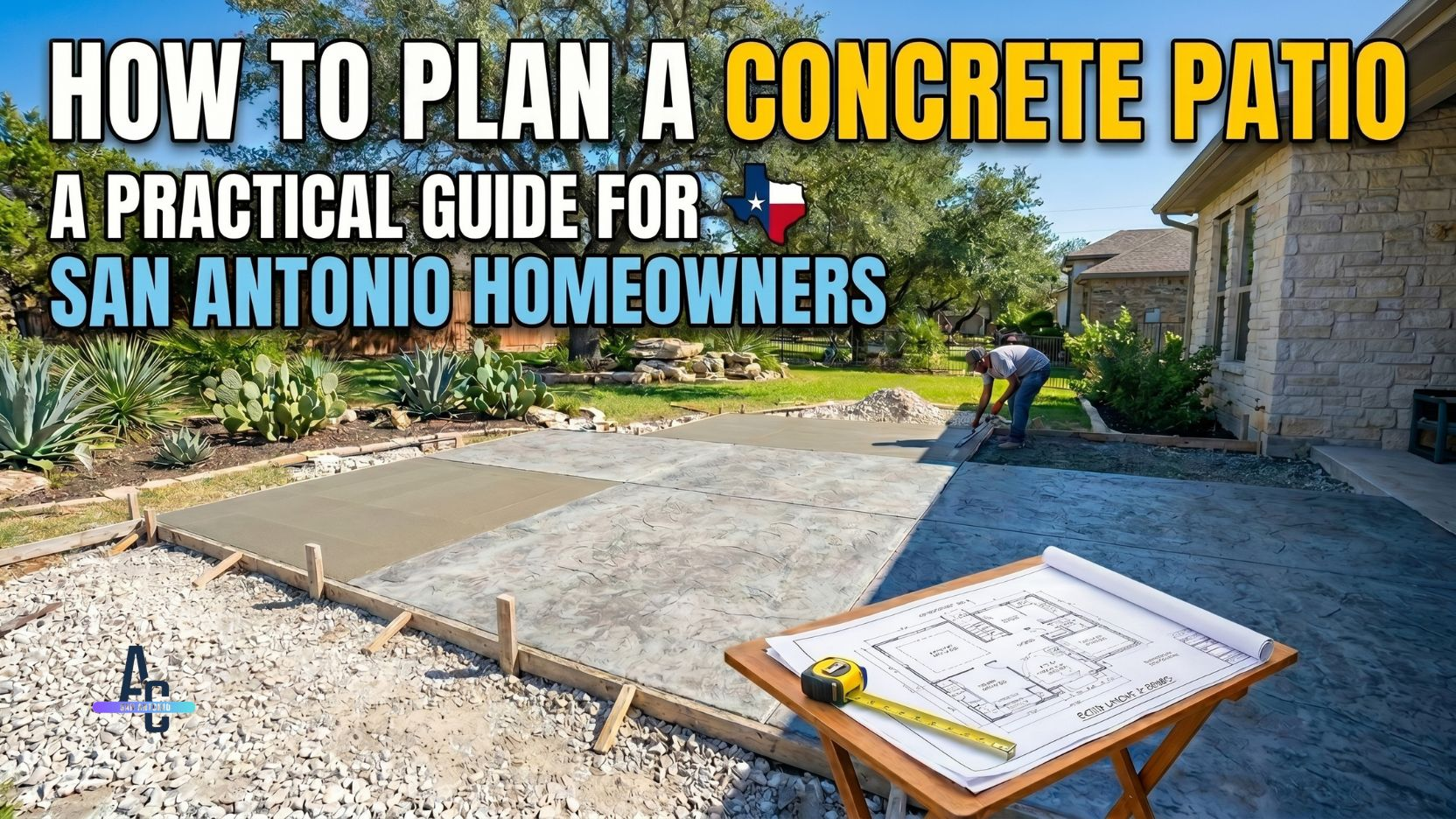
If you’re planning a concrete patio, start by deciding how you’ll use the space, measuring the layout, choosing the right finish, and planning for drainage before any concrete is poured. With over a decade of hands-on residential and commercial concrete experience in the San Antonio area, we know the best patios are the ones designed for real-life use, Texas heat, and long-term durability.
A well-planned concrete patio improves outdoor living, boosts curb appeal, and helps prevent costly repairs later.
What Should You Decide Before You Build A Concrete Patio?
The first step is to define the patio’s purpose. A patio built for family cookouts will look different from one meant for poolside lounging or quiet outdoor seating.
Key takeaway: The best concrete patio design starts with function, not finish.
Ask yourself:
- Will this be for dining, relaxing, grilling, or entertaining?
- Do you want a simple slab, stamped concrete, or decorative concrete?
- Will the patio connect to a pool, driveway, walkway, or backyard steps?
- How much maintenance are you willing to do?
Knowing the use case helps determine size, shape, finish, and even the best location in your yard.
How Do You Choose The Right Size And Layout?
The right patio size depends on how many people you want to seat and how you plan to move around the space. A patio that is too small feels cramped, while one that is too large can overwhelm the backyard.
A simple planning guide:
| Patio Use | Planning Tip |
| Small seating area | Leave room for chairs and walking space |
| Dining area | Allow space for table clearance and traffic flow |
| Outdoor entertaining | Plan zones for seating, grilling, and movement |
| Pool deck extension | Prioritize slip resistance and drainage |
A good layout should also account for:
- Doors and entry points
- Yard slope
- Trees, fences, or landscaping
- Future additions like a firepit or outdoor kitchen
Which Concrete Finish Works Best In Texas Heat?
For San Antonio homeowners, the best finish is usually one that balances durability, comfort, and slip resistance. Since patios in Texas deal with strong sun and hot surfaces, finish choice matters more than many people realize.
Popular options include:
- Broom-finished concrete for a clean, budget-friendly surface
- Stamped concrete for a decorative stone, slate, or brick look
- Stained concrete for custom color and visual appeal
- Decorative overlays to refresh existing concrete
For poolside or family-friendly spaces, a textured or slip-resistant finish is often the smartest choice.
How Much Should You Budget For A Concrete Patio?
Your budget should be based on size, finish, site prep, and any extra features such as steps, borders, or drainage work. Basic patios are typically more affordable than decorative or stamped designs.
Common cost factors include:
- Square footage
- Concrete thickness
- Site grading and excavation
- Reinforcement and expansion joints
- Finish type
- Removal of old concrete
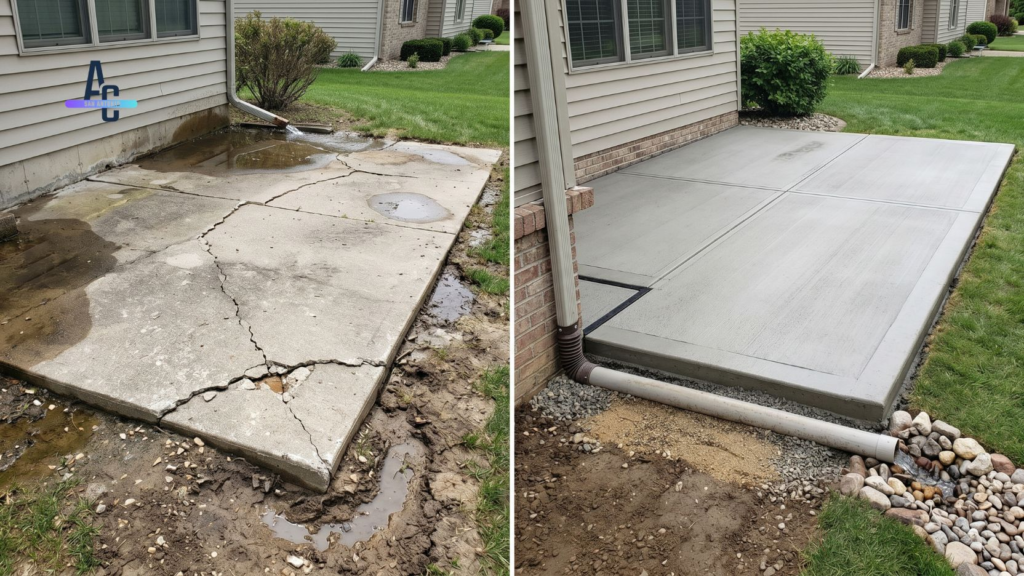
Tip: If your current concrete is cracked or uneven, resurfacing may be worth considering before a full replacement.
How Do You Prevent Cracking And Drainage Problems?
This is one of the most important parts of patio planning. A patio can look great on day one but fail early if drainage and soil movement are ignored.
To reduce problems:
- Make sure the patio is sloped slightly for drainage
- Use proper base preparation and compaction
- Add control joints and expansion joints
- Choose the right thickness for the use
- Plan around water runoff from the house and yard
In San Antonio’s climate, hot weather and sudden rain can make poor drainage a fast track to staining, cracking, and settling. A patio should move water away from your home, not toward it.
When Should You Hire A Concrete Patio Contractor?
You should bring in a contractor before you finalize the layout, especially if the patio connects to a pool, walkway, or existing slab. A contractor can identify issues with slope, soil, access, and finish choices before they become expensive mistakes.
A professional can help you:
- Confirm patio size and placement
- Recommend the best finish for your goals
- Handle prep, grading, and reinforcement
- Make sure the project is built for long-term performance
If you want a patio that looks good and holds up in the Texas climate, professional planning makes a big difference.
FAQs
How Long Does It Take To Plan And Install A Concrete Patio?
Planning can take a few days to a few weeks depending on design decisions, site conditions, and scheduling. Installation itself is often completed quickly once prep is finished.
Is Stamped Concrete A Good Choice For A Patio?
Yes. Stamped concrete is a strong choice if you want the look of stone, brick, or tile with the durability of concrete.
Should A Concrete Patio Be Level?
No. A patio should have a slight slope for drainage so water does not pool on the surface or near the home.