
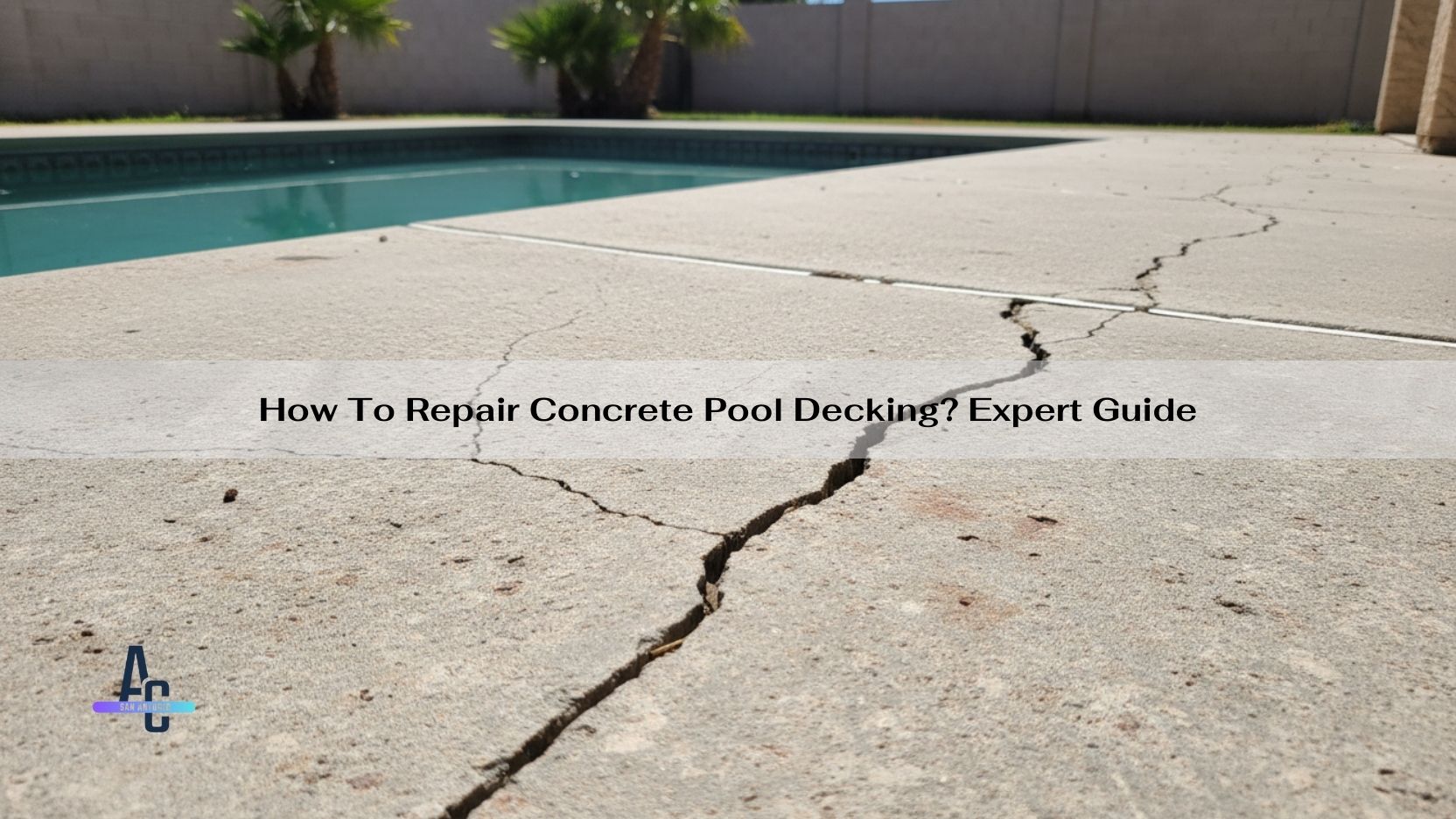
How to Repair Concrete Pool Decking: Complete Expert Guide for San Antonio Homeowners
A cracked, chipped, or settling pool deck isn’t just an eyesore it’s a safety hazard waiting to happen. If you’ve noticed your concrete pool decking showing signs of wear, you’re facing a critical decision: repair it now or risk costlier problems later.
The good news? Most pool deck damage is repairable without complete replacement. Whether you’re dealing with hairline cracks, surface spalling, or uneven settling, understanding how to repair concrete pool decking properly can save you thousands of dollars while restoring your outdoor oasis to its former glory.
This comprehensive guide walks you through every repair method available, from simple DIY crack fills to professional resurfacing solutions. You’ll learn when to tackle repairs yourself, when to call professionals, and how to choose the right repair technique for your specific situation in San Antonio’s challenging climate.
Understanding Pool Deck Damage: Signs And Causes
Before diving into repair methods, you need to understand what’s happening to your pool deck and why. Concrete pool decking faces unique challenges that ordinary patios don’t encounter: constant moisture exposure, pool chemical splashing, temperature extremes, and heavy foot traffic all accelerate deterioration.
Common Types Of Pool Deck Damage
Hairline Cracks: These thin surface cracks (less than 1/8 inch wide) typically result from concrete shrinkage during curing or minor temperature fluctuations. While mostly cosmetic, they allow water penetration that can worsen over time.
Structural Cracks: Wider cracks (over 1/4 inch) often indicate more serious problems like soil settlement, inadequate reinforcement, or foundation movement. According to professional concrete repair specialists, these require immediate attention to prevent further damage.
Spalling: This surface deterioration appears as flaking, chipping, or pitting of the concrete surface. Spalling occurs when moisture penetrates the concrete, freezes, and causes the surface layer to break away. San Antonio’s occasional winter freezes combined with summer heat make this a common issue.
Settling and Sinking: When the soil beneath your pool deck compacts or erodes, sections of the deck can sink, creating trip hazards and drainage problems. This often occurs near the pool where water constantly seeps into the ground.
Discoloration and Staining: While not structural damage, mineral deposits from pool water, rust stains, or chemical discoloration can significantly impact your deck’s appearance.
Primary Causes Of Pool Deck Deterioration
Understanding why damage occurs helps you prevent recurrence after repairs. The main culprits include:
Soil Movement and Settlement: San Antonio’s expansive clay soils absorb water and swell during wet periods, then shrink during droughts. This constant movement stresses concrete slabs, causing cracks and uneven settling. Poor initial compaction compounds this problem.
Water Infiltration: Pool decks battle constant moisture from splash-out, rain, and humidity. When water penetrates concrete through cracks or porous surfaces, it erodes the base material, causes freeze-thaw damage, and leads to interior deterioration.
Temperature Extremes: San Antonio summers regularly exceed 95°F, causing concrete to expand. Occasional winter freezes create contraction. This thermal cycling generates internal stress that manifests as surface cracks.
Pool Chemical Exposure: Chlorine, salt, and other pool chemicals are harsh on concrete surfaces. They can etch the surface, accelerate deterioration of sealers, and weaken the concrete matrix over time.
Poor Initial Installation: Inadequate base preparation, insufficient thickness, missing reinforcement, or improperly placed control joints create inherent weaknesses that manifest as premature damage.
Age and Wear: Even properly installed pool decks gradually deteriorate from constant use. Most concrete pool decks have a lifespan of 10-15 years before requiring significant repair or resurfacing, though quality installations can last 25+ years.
When To Repair VS Replace Your Pool Deck
Not every damaged pool deck requires complete replacement. Understanding when repair makes sense versus when replacement is the better investment saves you money and frustration.
Situations Where Repair Is Appropriate
Repair works well when:
- Damage is localized: A few isolated cracks or small spalled areas can be effectively repaired without full resurfacing.
- The deck is structurally sound: If the concrete isn’t severely compromised and remains level, repair addresses cosmetic and minor functional issues.
- Budget constraints exist: Repairs cost significantly less than replacement typically $3-12 per square foot versus $8-21+ for removal and replacement.
- Quick turnaround needed: Most repairs complete in 1-3 days, while replacement takes 2-4 weeks from demolition to final cure.
- The deck is relatively young: If your pool deck is under 10 years old and showing minor issues, repair extends its life economically.
When Replacement Makes More Sense
Consider full replacement when:
- Extensive cracking covers the surface: If cracks appear in a spider-web pattern across most of the deck, repair won’t address the underlying problem.
- Significant settling has occurred: Large sections sitting 2+ inches below original grade indicate serious foundation problems that repair can’t fix.
- Multiple previous repairs have failed: If you’ve repeatedly patched the same areas, underlying issues require a fresh start.
- The deck is 15+ years old: At this age, even if current damage seems minor, extensive problems likely loom on the horizon.
- You want to change the layout: Replacement lets you resize, reshape, or relocate sections to improve functionality.
- Drainage problems persist: Chronic water pooling usually stems from improper slope that repair can’t correct.
The Middle Ground: Full Resurfacing
Pool deck resurfacing offers a compromise between simple repairs and complete replacement. Resurfacing costs typically range from $3-12 per square foot and involves applying a new concrete layer (1/4 to 1/2 inch thick) over the existing deck.
Resurfacing makes sense when your deck has:
- Surface-level damage across most of the area
- Multiple small cracks and cosmetic issues
- Faded or stained appearance you want to update
- Structural soundness underneath cosmetic problems
The resurfacing process includes repairing underlying cracks, applying a bonding agent, and pouring a new decorative surface. This gives you a fresh appearance with options for stamped patterns, colors, or textured finishes all while preserving the structural foundation.
Essential Tools And Materials For Pool Deck Repair
Successful pool deck repair requires proper preparation and the right supplies. Here’s what you’ll need for various repair scenarios.
Basic Repair Tools
- Pressure washer or garden hose with spray attachment: For thorough cleaning
- Wire brush and scrub brush: Removing loose debris from cracks
- Cold chisel and hammer: Widening cracks to create proper repair edges
- Margin trowel and finishing trowel: Applying and smoothing repair materials
- Wood float: Texturing repaired surfaces to match surrounding concrete
- Mixing buckets and drill with paddle attachment: Preparing repair compounds
- Protective equipment: Safety glasses, gloves, dust mask
Materials For Crack Repair
For Small Cracks (Under 1/4 inch):
- Concrete crack filler or polymer-modified caulk
- Concrete bonding adhesive
- Concrete sealer
For Large Cracks (Over 1/4 inch):
- Concrete patching compound
- Epoxy crack filler or polyurethane crack sealer
- Concrete bonding adhesive
- Portland cement mixed with bonding agent
- Sand (for texture matching)
Resurfacing And Overlay Materials
- Concrete resurfacer or micro-topping product
- Bonding primer
- Integral color additives (if desired)
- Concrete sealer
- Texture stamps or rollers (for decorative finishes)
Advanced Repair Equipment
For professional-grade repairs, you might need:
- Concrete grinder (for surface preparation)
- Slab jacking equipment (for leveling settled sections)
- Polyurethane foam injection system (for filling voids)
- Spray application equipment (for acrylic coatings)
Step-By-Step Guide To Repairing Small Cracks
Small hairline cracks and minor fissures (under 1/4 inch wide) represent the most common pool deck damage and the easiest to repair. Addressed promptly, these repairs prevent water infiltration and expanding damage.
Step 1: Clean The Crack Thoroughly
Begin by power washing or hosing down the entire repair area. Use a wire brush to scrub inside the crack, removing all loose concrete, dirt, debris, and vegetation. For stubborn deposits, use a pressure washer with a narrow nozzle, directing the stream into the crack.
After cleaning, allow the surface to dry completely typically 24 hours. Repairs applied to damp concrete often fail prematurely due to poor adhesion.
Step 2: Prepare The Crack Edges
For cracks to accept filler properly, they need clean, sound edges. Use a cold chisel and hammer to gently remove any loose or crumbling concrete along the crack edges. Create a slight V-shape or undercut profile if possible this helps lock the filler in place.
Blow out or vacuum all dust and debris created during this preparation. Even small amounts of dust compromise the bond between filler and original concrete.
Step 3: Apply Bonding Agent
Brush concrete bonding adhesive into the crack using a disposable brush. This liquid primer improves adhesion between old concrete and new repair material. Follow manufacturer instructions for application, some products work better on slightly damp surfaces, while others require completely dry concrete.
Step 4: Fill The Crack
For hairline cracks, use a polymer-modified concrete crack filler or flexible polyurethane sealant. These products come ready-to-use in caulking tubes for easy application.
Cut the tube nozzle at an angle to match the crack width. Insert the nozzle into the crack and squeeze steadily while moving along its length, slightly overfilling to account for settling.
For slightly wider cracks (1/8 to 1/4 inch), mix a small batch of concrete patching compound according to package directions. Use a margin trowel to force the material deep into the crack, ensuring no air pockets remain.
Step 5: Finish And Texture
While the filler remains workable, use a trowel to smooth the surface level with surrounding concrete. For textured pool decks like broom finish or exposed aggregate, match the texture by:
- Broom finish: Lightly drag a soft brush across the repair
- Smooth finish: Use a steel trowel for a polished appearance
- Textured finish: Dab with a sponge or use a texture roller
Step 6: Cure And Seal
Allow repairs to cure according to product instructions typically 24-48 hours. Keep the area moist during initial curing by misting with water or covering with damp burlap.
Once fully cured, apply concrete sealer to the entire deck surface. Sealing protects repairs and helps blend the patched area with surrounding concrete.
Pro Tips For Small Crack Repair
- Work during moderate temperatures (50-80°F) for best results
- Repair multiple small cracks in a single session to maintain consistency
- Color-matched repair compounds minimize visible patches
- Don’t skip the bonding agent it’s crucial for lasting repairs
- Consider having the entire deck professionally sealed after spot repairs
Fixing Large Cracks And Structural Damage
Cracks wider than 1/4 inch or those showing signs of movement require more substantial repair techniques. These repairs demand more skill and often benefit from professional evaluation to ensure underlying problems are addressed.
Assessing Structural Cracks
Before repairing large cracks, determine if they’re active (continuing to grow) or dormant (stable). Monitor suspect cracks by marking their ends with permanent marker and dating the marks. If the crack extends past your marks over several weeks, it’s active and requires professional assessment.
Active cracks often indicate ongoing foundation settlement, soil movement, or structural problems that simple filling won’t fix. You may need soil stabilization, underpinning, or other foundation repairs before addressing surface cracks.
Repair Method For Large Dormant Cracks
For stable cracks over 1/4 inch wide, follow this professional repair process:
Step 1: Widen and Clean the Crack
Use an angle grinder with a diamond blade or a cold chisel to widen the crack to approximately 1/2 inch. Create an inverted V-shape (wider at the bottom than the top) to lock the repair material in place. This process, called “routing,” creates proper edges for lasting repairs.
Remove all debris and dust with a shop vacuum or compressed air. Pressure wash if necessary and allow complete drying.
Step 2: Evaluate Crack Depth
For deep cracks (over 2 inches), use backer rod foam rope that fills the lower portion of the crack. Push backer rod into the crack until it sits about 1/4 inch below the surface. This prevents wasting expensive repair material in unnecessary depth and provides proper support for the surface repair.
Step 3: Apply Epoxy or Polyurethane Filler
For structural cracks, epoxy-based fillers provide superior strength and bonding. Mix two-part epoxy according to manufacturer instructions precise ratios are critical for proper curing.
Pour or trowel the epoxy into the prepared crack, slightly overfilling. For long cracks, work in 3-4 foot sections to ensure material doesn’t cure before finishing.
Alternative option: Polyurethane crack sealers offer flexibility that accommodates minor movement, useful in areas subject to temperature cycling.
Step 4: Finish and Texture Match
While epoxy remains workable (working time varies by product, typically 20-45 minutes), use a margin trowel to level the surface. Match surrounding texture using appropriate tools.
Some epoxies cure rock-hard and can be difficult to texture. In these cases, apply a thin skim coat of polymer-modified concrete over the cured epoxy to achieve proper texture.
Step 5: Protect the Repair
Keep foot traffic off repairs for minimum 24 hours, longer for epoxy products. Apply concrete sealer once fully cured.
Advanced Technique: Stitching Large Cracks
For long, significant cracks, professionals use a technique called “stitching” that dramatically increases repair strength. This involves:
- Cutting perpendicular slots across the crack every 12-18 inches
- Epoxying steel staples or rebar into these slots to bridge the crack
- Filling the crack with epoxy or high-strength mortar
- Applying a surface overlay to complete the repair
While complex for DIYers, stitching provides the most durable repair for severe cracking.
Repairing Spalling And Surface Deterioration
Spalling when the concrete surface flakes, chips, or pits away creates both aesthetic and functional problems. Left unaddressed, spalling progressively worsens as more surface area becomes exposed to moisture and freeze-thaw cycles.
Understanding Spalling Causes
Spalling typically results from:
- Water penetrating the surface and freezing
- Delamination of the surface layer from base concrete
- Improper finishing during original installation
- Corrosion of reinforcement steel near the surface
- Salt exposure or chemical damage
Minor Spalling Repair (Small Lsolated Areas)
For small spalled spots (under 6 inches across):
Step 1: Remove Loose Material
Use a cold chisel and hammer to carefully remove all loose, flaking concrete. Create clean, sound edges around the damaged area. The repair edges should extend to solid concrete better to remove too much than leave loose material that will cause repair failure.
Step 2: Clean and Profile
Thoroughly clean the repair area with a wire brush, then pressure wash to remove all dust and debris. The surface should be clean, sound, and slightly rough to ensure good bonding.
Step 3: Apply Patching Compound
Dampen the repair area (but no standing water). Apply concrete bonding adhesive per product instructions.
Mix concrete patching compound to a thick consistency it should hold its shape without slumping. Press the material firmly into the damaged area using a margin trowel, compacting to eliminate air pockets.
Build the patch slightly higher than surrounding concrete to account for settling during finishing.
Step 4: Finish to Match
Use a finishing trowel or wood float to level and texture the repair to match the surrounding deck. Take time to blend edges smoothly abrupt transitions remain visible even after sealing.
Extensive Spalling Repair (Multiple Areas Or Large Sections)
When spalling affects more than 25% of the deck surface, spot repairs become impractical. Instead, consider full deck resurfacing with a concrete overlay.
This process involves:
- Grinding off the damaged surface layer
- Repairing underlying cracks and damage
- Applying bonding primer
- Installing a new surface layer (1/4 to 1/2 inch thick)
- Adding texture and sealing
Professional resurfacing transforms a damaged deck for a fraction of replacement cost typically $3-7 per square foot for standard overlays.
Leveling Sunken Or Settled Pool Decks
Uneven pool decks create dangerous trip hazards and poor drainage. When sections of your deck sink below grade, you have several leveling options depending on severity and budget.
Slabjacking (Mudjacking)
Traditional slabjacking pumps a cement-based slurry under sunken concrete slabs to lift them back to proper grade. This economical option costs $3-6 per square foot.
The process:
- Contractors drill 2-inch diameter holes through the sunken slab
- A cement-sand-water mixture is pumped under pressure through these holes
- The slurry fills voids and builds up, gradually lifting the slab
- Once level, holes are patched and the repair is complete
Mudjacking works well for moderate settling (up to 3-4 inches) but adds significant weight to the soil, potentially causing future settling if underlying problems aren’t addressed.
Polyurethane Foam Injection (PolyLevel)
Modern foam leveling provides superior results to traditional mudjacking. Polyurethane foam costs more ($5-25 per square foot) but offers several advantages:
Lightweight: The foam weighs just 2-4 pounds per cubic foot versus 100+ pounds for mudjacking slurry, eliminating additional soil loading.
Fast Cure: Polyurethane foam expands and hardens in minutes, allowing immediate use. Mudjacking requires 24-48 hours cure time.
Precision: Contractors can lift slabs in 1/8-inch increments for precise leveling.
Waterproof and Permanent: Once cured, polyurethane foam is impervious to water and won’t wash out or degrade.
The process mirrors mudjacking but uses much smaller injection ports (penny-sized holes) and takes less time. Most pool deck leveling projects complete in a single day.
When Leveling Isn’t Enough
If your pool deck continues settling after leveling, or if large voids exist beneath the slab, you may need soil stabilization or foundation underpinning before leveling. Persistent settling often indicates:
- Active soil erosion from poor drainage
- Expansive clay soils requiring moisture management
- Undermining from plumbing leaks
- Inadequate soil compaction during original construction
Professional geotechnical evaluation identifies these issues and recommends appropriate solutions before investing in cosmetic repairs that won’t last.
Pool Deck Resurfacing: Complete Makeover Solutions
When your pool deck suffers from multiple problems: cracks, discoloration, surface damage, and general wear, resurfacing offers a comprehensive solution that transforms appearance and extends service life.
Understanding Resurfacing Options
Pool deck resurfacing isn’t a one-size-fits-all process. Several distinct methods exist, each with specific applications and benefits.
Concrete Overlays: The most common resurfacing method applies a 1/4 to 1/2 inch layer of polymer-modified concrete over the existing surface. This creates a fresh, new surface while maintaining the deck’s structural foundation. Overlays accept various finishes, colors, and textures, allowing complete customization.
Acrylic Coatings: These thin, spray-applied coatings (typically 1/8 inch or less) provide decorative finishes with slip-resistant textures. Acrylic resurfacing works best for decks in good structural condition needing primarily cosmetic renewal. Multiple colors and patterns (lace textures, knockdown finishes) are available.
Epoxy Coatings: Epoxy provides extremely durable, chemical-resistant surfaces ideal for commercial pools or residential decks receiving heavy use. The glossy finish is attractive but can become slippery when wet unless textured aggregates are added.
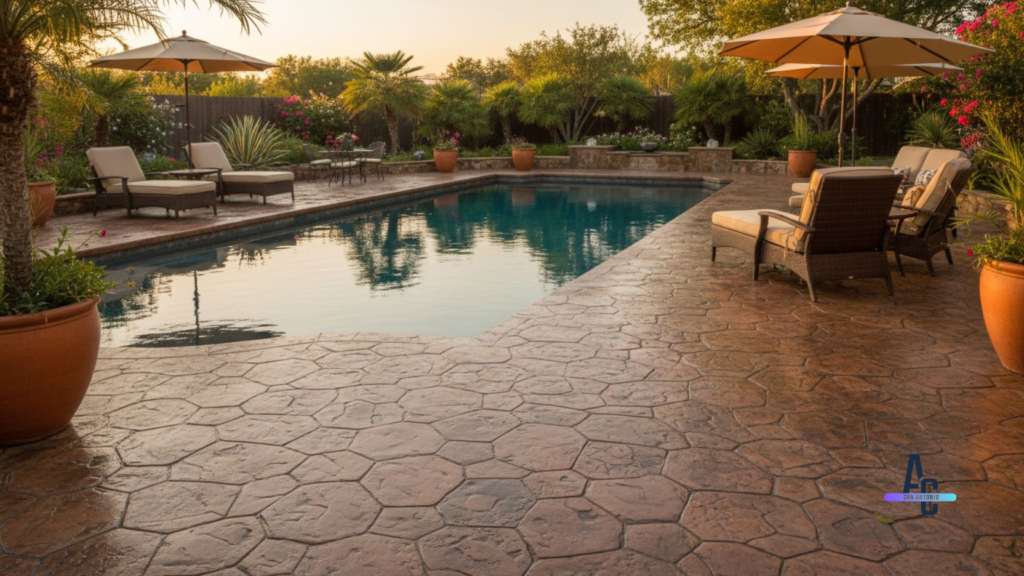
Stamped Overlays: For homeowners wanting premium aesthetics, stamped concrete overlays mimic natural stone, slate, brick, or wood at a fraction of the cost. The overlay material is applied, then stamped with texture mats before curing, creating realistic natural material appearances.
Kool Deck Coating: This specialized topping significantly reduces surface temperatures, a major benefit in San Antonio’s hot climate. Kool Deck creates a textured, slip-resistant surface that stays up to 20°F cooler than standard concrete, making barefoot summer use comfortable.
The Professional Resurfacing Process
Understanding the resurfacing process helps you evaluate contractor bids and ensure proper installation:
Phase 1: Surface Preparation (Most Critical Step)
Proper preparation determines resurfacing success or failure. Professional contractors:
- Pressure wash the entire deck to remove all dirt, sealers, coatings, and debris
- Grind or acid-etch the surface to create proper profile for bonding
- Repair all cracks and structural damage
- Fill low spots and level uneven areas
- Clean again to remove all dust and residue
Shortcuts during preparation cause most resurfacing failures. The new surface delaminates from the base, cracking and peeling prematurely.
Phase 2: Bonding and Priming
A specialized bonding agent is applied to the prepared surface. This primer creates chemical and mechanical bonds between old concrete and new overlay, preventing delamination. Some systems use integral bonding additives mixed into the overlay material itself.
Phase 3: Overlay Application
The resurfacing material is mixed according to manufacturer specifications and applied via:
- Troweling for traditional overlays
- Spraying for acrylic coatings
- Pouring and spreading for thicker stamped applications
For stamped finishes, color hardeners are broadcast onto the fresh surface, then texture mats are pressed into the material before it hardens.
Phase 4: Finishing and Detailing
Edges are carefully detailed, control joints are cut or formed, and final textures are applied. For textured finishes, contractors use specialty tools like texture rollers, stamps, or spray knockdown techniques.
Phase 5: Sealing
After proper curing (typically 24-72 hours depending on product and weather), professional-grade sealer is applied. Quality sealers protect against moisture penetration, staining, UV damage, and chemical exposure while enhancing color depth.
Resurfacing Cost Expectations
According to 2025 industry data, pool deck resurfacing costs vary significantly based on materials and finish:
- Basic concrete overlay: $3-7 per square foot
- Decorative acrylic coating: $4-10 per square foot
- Stamped overlay: $8-15 per square foot
- Kool Deck application: $4-6 per square foot
- Premium finishes: $12-25+ per square foot
For a typical 500-square-foot pool deck, expect total costs ranging from $1,500 for basic resurfacing to $7,500+ for premium stamped finishes.
DIY VS Professional Resurfacing
While some homeowners successfully resurface small pool decks, professional installation provides significant advantages:
Expertise: Contractors understand material chemistry, proper mixing, application techniques, and how climate affects installation.
Equipment: Commercial-grade mixers, sprayers, grinders, and finishing tools produce superior results.
Speed: What might take a DIYer a full weekend, professionals complete in 1-2 days.
Warranty: Reputable contractors guarantee their work, providing recourse if problems develop.
Appearance: Professional finishing creates uniform color, consistent texture, and proper detailing that DIY projects rarely match.
For decks under 200 square feet in simple configurations, DIY resurfacing is feasible for experienced homeowners. Larger or more complex projects justify professional installation.
Restoration Techniques For Specific Finishes
Different pool deck finishes require specialized repair and restoration approaches. Understanding your existing finish helps you choose appropriate repair methods.
Repairing Stamped Concrete Pool Decks
Stamped concrete damage presents unique challenges since repairs must match both texture and color.
For Small Damage: Use stamped concrete repair mortars specifically formulated for this application. After filling and leveling, press the original stamp pattern into the fresh repair material. Color matching typically requires integral color in the repair mortar plus surface-applied stains.
For Extensive Damage: Consider re-stamping the entire affected section or having the full deck restamped with a fresh overlay. Attempting to match complex patterns in multiple small repairs often produces a patchwork appearance.
Restoring Kool Deck And Cool Deck Surfaces
These textured, heat-reflective surfaces can be restored without complete replacement when damage is moderate.
Minor Repairs: Kool Deck repair kits from manufacturers like Mortex provide color-matched materials formulated specifically for patching this unique finish. The repair compound is applied and textured to match the surrounding knockdown pattern.
Full Restoration: For extensively damaged Kool Deck, apply a fresh coat over the existing surface. This 1/4-inch application refreshes appearance and restores heat-reflective properties, typically costing $4-6 per square foot.
Repairing Exposed Aggregate Finishes
Exposed aggregate where smooth stones are revealed in the surface presents specific repair challenges.
Small Repairs: After filling damaged areas with appropriate patching compound, broadcast matching aggregate into the fresh surface. Once cured, wash and acid-etch to expose the stones to match the surrounding finish.
Large Repairs: Extensive exposed aggregate damage typically requires professional resurfacing with a seeded aggregate overlay. Matching stone size, color, and distribution demands expertise.
Brick Pavers And Natural Stone Repairs
For pool decks built with pavers or natural stone, repair focuses on individual unit replacement and joint maintenance.
Replacing Damaged Pavers:
- Remove the damaged paver carefully to avoid adjacent unit damage
- Prepare the base, ensuring proper compaction and sand leveling
- Install the replacement unit at proper grade
- Re-sand joints and seal
Releveling Settled Pavers: For pavers that have sunk, remove them, add base material as needed, recompact, and reinstall at proper grade.
Cost Breakdown: DIY VS Professional Repair
Understanding cost expectations helps you budget appropriately and decide between DIY repairs and professional services.
DIY Repair Costs
Small Crack Repair (under 20 linear feet):
- Crack filler/caulk: $10-25
- Bonding adhesive: $15-30
- Sealer (1 gallon): $30-50
- Total: $55-105 plus tools if not owned
Multiple Crack Repairs or Moderate Spalling:
- Concrete patching compound: $25-50
- Bonding adhesive: $15-30
- Epoxy filler: $40-80
- Sealer: $30-50
- Total: $110-210 plus 8-12 hours labor
Small Section Resurfacing (under 200 sq ft):
- Resurfacing product: $75-150
- Bonding primer: $25-40
- Sealer: $40-60
- Texture tools: $20-40
- Total: $160-290 plus 12-16 hours labor
Professional Repair Costs
Crack Repair Service:
- $200-500 for evaluation and repair of multiple cracks
- $3-8 per linear foot for extensive crack repair
Spalling Repair:
- $150-400 for small areas (under 50 sq ft of damage)
- $300-800 for moderate damage (50-150 sq ft)
Slab Leveling:
- Mudjacking: $3-6 per square foot ($600-1,200 for 200 sq ft section)
- Foam injection: $5-25 per square foot ($1,000-5,000 for 200 sq ft section)
Professional Resurfacing:
- Basic overlay: $3-7 per square foot
- Decorative finish: $8-15 per square foot
- Premium stamped: $12-25+ per square foot
For a 500-square-foot pool deck:
- Basic resurfacing: $1,500-3,500
- Mid-range decorative: $4,000-7,500
- Premium finish: $6,000-12,500+
Value Proposition: DIY VS Professional
DIY Makes Sense When:
- Damage is minor and isolated
- You have relevant experience and proper tools
- Budget is extremely tight
- The deck is small and simple
Professional Services Provide Better Value When:
- Damage is extensive or structural
- You lack experience with concrete work
- Time is limited (professionals work faster)
- You want guaranteed results with warranty protection
- The repair requires specialized equipment
Remember that failed DIY repairs often cost more ultimately since you’ll pay professionals to fix both the original problem and the botched repair attempt.
Preventive Maintenance To Avoid Future Damage
The best repair is the one you never need to make. Implementing proper maintenance protocols significantly extends pool deck life and minimizes repair requirements.
Regular Cleaning And Sealing
Immediate Spill Management: Clean pool chemical spills, food stains, and other contaminants immediately. Many substances etch or stain concrete if left to sit.
Routine Cleaning: Sweep your pool deck weekly to remove debris that can scratch the surface or hold moisture against the concrete. Monthly pressure washing removes ingrained dirt and prevents buildup that accelerates deterioration.
Sealer Application: Concrete sealer is your pool deck’s primary defense against water penetration, staining, and chemical damage. Reapply quality sealer every 2-3 years, or annually in harsh climates or for heavily used decks.
Signs your sealer needs renewal:
- Water no longer beads on the surface
- Colors appear faded
- Surface feels rough or chalky
- Stains penetrate easily
Crack Monitoring And Early Intervention
Inspect your pool deck monthly for new cracks or expansion of existing ones. Mark crack ends with permanent marker and dates to track growth. Small cracks filled promptly rarely become major problems; ignored cracks expand exponentially.
Proper Drainage Management
Water is concrete’s enemy. Ensure your pool deck maintains proper slope (minimum 1/4 inch per foot) away from structures and the pool. Poor drainage causes:
- Accelerated surface deterioration
- Soil erosion beneath the slab
- Freeze-thaw damage
- Base material washout
Address drainage problems immediately. Install or repair deck drains, adjust slope where possible, or add drainage channels to prevent standing water.
Control Pool Chemistry
Maintain proper pool chemical balance to minimize aggressive water conditions. High chlorine levels and imbalanced pH accelerate concrete deterioration when splashed onto deck surfaces. Test pool water weekly and adjust as needed.
Winter Preparation (If Applicable)
While San Antonio rarely faces hard freezes, occasional winter cold snaps can damage wet concrete surfaces. Before predicted freezes:
- Remove standing water from the deck
- Clear drain channels and ensure proper flow
- Avoid applying deicers, which damage concrete
Furniture And Equipment Care
Use furniture pads under chairs, tables, and loungers to prevent scratching and concentrate weight distribution. Avoid dragging heavy items across the deck lift and carry instead.
Professional Inspections
Have your pool deck professionally inspected every 3-5 years, even if no obvious problems exist. Experienced contractors spot early warning signs that homeowners often miss, allowing proactive repairs before major damage develops.
Professional Repair Services In San Antonio
When DIY repairs aren’t appropriate or you prefer professional results with warranty backing, choosing the right contractor ensures quality outcomes.
What To Look For In A Pool Deck Repair Contractor
Specialization and Experience: Seek contractors specializing in decorative concrete and pool deck work specifically. General concrete companies may lack experience with the unique requirements of pool deck repair and resurfacing.
At Affordable Concrete San Antonio, we’ve specialized in pool deck services for over 14 years, developing expertise specifically in San Antonio’s climate challenges and soil conditions.
Comprehensive Services: The best contractors offer full-service solutions including:
- Damage assessment and repair recommendations
- Crack repair and structural corrections
- Slab leveling and foundation work
- Complete resurfacing with various finish options
- Sealing and protective coatings
- Drainage solutions
Quality Materials and Methods: Ask about products and techniques contractors use. Reputable companies use manufacturer-certified installation methods and commercial-grade materials that outperform consumer products available at retail stores.
Transparent Pricing and Written Estimates: Professional contractors provide detailed written estimates specifying:
- Scope of work in clear language
- Materials to be used (brands and product lines)
- Project timeline with key milestones
- Total cost with payment terms
- Warranty coverage
Avoid contractors who provide verbal-only estimates or resist putting agreements in writing.
Proper Licensing and Insurance: Verify contractors carry:
- Current business licenses for San Antonio
- General liability insurance
- Workers’ compensation coverage
- Bonding (for larger projects)
Don’t rely on contractor assurances to request certificates of insurance directly from their insurance agent.
Portfolio and References: Review photos of previous work, particularly projects similar to yours. Request references and actually contact them to ask about:
- Work quality
- Professionalism and communication
- Staying on schedule and budget
- Post-project support and warranty fulfillment
Our Comprehensive Pool Deck Services
At Affordable Concrete San Antonio, we provide expert pool deck repair and restoration throughout the San Antonio metro area. Our services include:
Pool Deck Repair: We address all types of concrete damage from minor cracks to significant structural issues. Our repair techniques restore both function and appearance, using materials engineered for pool deck environments.
Pool Deck Resurfacing: Transform your worn deck with our resurfacing services. Choose from multiple finish options:
- Standard concrete overlays
- Stamped patterns mimicking natural stone
- Kool Deck cool-surface coatings
- Acrylic decorative finishes
- Epoxy systems for maximum durability
Slab Leveling and Stabilization: We use modern polyurethane foam injection to lift and stabilize settled concrete, eliminating trip hazards while addressing underlying soil problems.
Custom Design and Installation: For pool decks beyond economical repair, we provide complete replacement with custom design services. Our team creates pool decks that enhance your outdoor space while providing lasting durability.
Drainage Solutions: Proper drainage protects your pool deck investment. We install:
- Trench drains and drain channels
- Pool drains with quality covers
- Expansion joints and control joints
- Proper slope corrections
Protective Coatings and Sealers: We use commercial-grade sealers that provide superior protection against San Antonio’s challenging climate, pool chemicals, and daily use.
Why San Antonio Homeowners Choose Affordable Concrete San Antonio
Local Expertise: With nearly 14 years serving San Antonio, we understand the specific challenges our climate and soils present. Our repair methods address local conditions, ensuring lasting results.
Comprehensive Solutions: From minor crack repair to complete resurfacing or replacement, we handle all pool deck needs under one roof. No need to coordinate multiple contractors.
Quality Materials: We use only premium products from trusted manufacturers, applied according to certified installation procedures.
Transparent Pricing: Our detailed estimates provide clear cost breakdowns with no hidden fees. You’ll know exactly what to expect before work begins.
Warranty Protection: We stand behind our work with comprehensive warranties covering both materials and labor.
Customer Satisfaction Focus: Our reputation depends on your satisfaction. We’re not done until you’re thrilled with your refreshed pool deck.
Conclusion
A damaged pool deck doesn’t have to mean expensive replacement or living with an eyesore. Armed with knowledge about repair methods, costs, and when to tackle repairs yourself versus calling professionals, you can make informed decisions that restore your outdoor oasis cost-effectively.
Key takeaways for successful pool deck repair:
Act Quickly: Small problems become major expenses when ignored. Address cracks, spalling, and settling promptly to prevent escalation.
Choose Appropriate Methods: Match repair techniques to damage severity. Simple cracks need simple fixes; structural problems demand professional solutions.
Don’t Skimp on Preparation: Whether DIY or professional, proper surface preparation determines repair longevity. Clean, sound, properly primed surfaces ensure lasting repairs.
Consider Resurfacing for Comprehensive Solutions: When damage is widespread, resurfacing provides fresh appearance and extended life for less than replacement costs.
Implement Preventive Maintenance: Regular sealing, crack monitoring, proper drainage, and routine cleaning dramatically extend pool deck life and minimize future repair needs.
Know Your Limits: Some repairs require professional expertise, specialized equipment, or engineering assessment. Recognize when DIY approaches won’t produce lasting results.
Most importantly, remember that pool deck repair is an investment in safety, property value, and outdoor enjoyment. A properly maintained and repaired pool deck provides decades of service, creating the perfect stage for summer memories with family and friends.
Transform Your Pool Deck Today
Don’t let a damaged pool deck detract from your outdoor living space or pose safety risks to your family. Whether you need minor crack repairs, extensive resurfacing, or complete pool deck replacement, Affordable Concrete San Antonio delivers expert solutions tailored to your specific needs.
Our Pool Deck Expertise Includes:
- Crack repair and structural corrections using proven methods and commercial-grade materials
- Professional resurfacing with options from basic overlays to premium stamped finishes
- Kool Deck applications that keep your deck comfortable even in San Antonio’s summer heat
- Slab leveling using modern polyurethane foam injection technology
- Custom drainage solutions to protect your investment
- Complete design and installation for pool decks beyond economical repair
With over 14 years serving San Antonio homeowners, our team combines expertise, quality materials, and meticulous attention to detail on every project. We understand the unique challenges our climate presents and engineer solutions that last.
Our process is straightforward:
- Free Consultation and Estimate: We assess your pool deck condition and provide detailed recommendations with transparent pricing
- Professional Installation: Our experienced crew completes work efficiently, typically within 1-5 days depending on project scope
- Quality Guarantee: We stand behind every project with comprehensive warranty coverage
Your pool deck is more than just concrete; it’s where summer memories are made, where families gather, and where you invest your valuable leisure time. You deserve a safe, attractive surface that enhances your outdoor experience rather than detracting from it.
Contact Affordable Concrete San Antonio today at 713-504-2341 for your free pool deck repair estimate. Let us show you how we can transform your damaged, worn pool deck into a beautiful, safe outdoor space you’ll enjoy for years to come.