
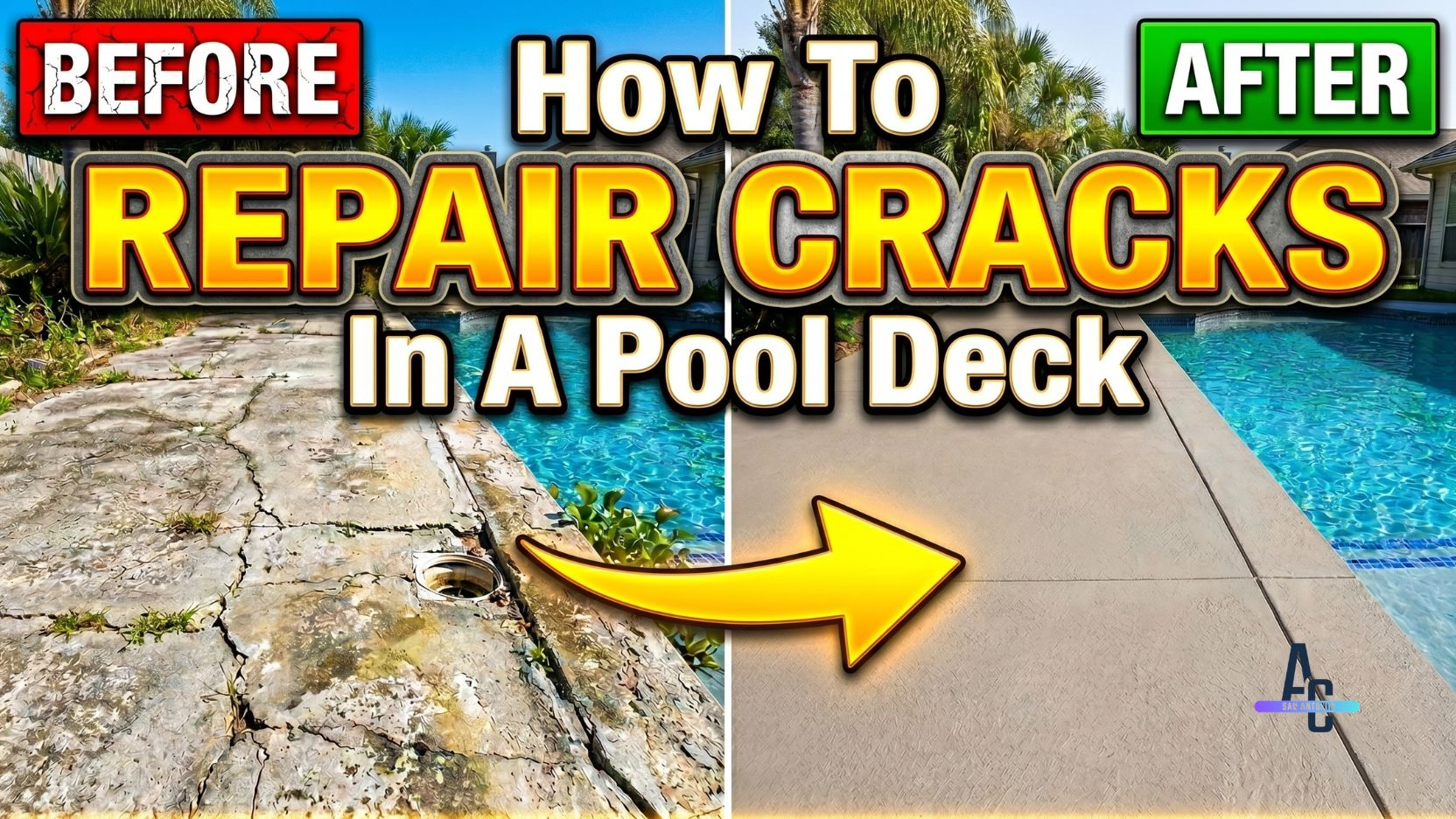
At Affordable Concrete San Antonio, we’ve seen how Texas heat, shifting soils, and years of pool exposure can turn a small crack into a bigger concrete problem. The best way to repair cracks in a pool deck depends on the crack type: hairline cracks can often be cleaned, filled, and sealed, while wider or moving cracks usually need flexible repair materials, joint work, resurfacing, or partial replacement.
Key takeaway: do not just patch over a crack and hope for the best. The repair has to stop water intrusion and address the cause of the damage.
What Causes Cracks In A Pool Deck?
Most pool deck cracks happen because the concrete is moving, drying, or wearing down over time. In San Antonio and Houston, the most common causes are:
- Soil movement underneath the slab
- Poor drainage around the pool area
- Expansion and contraction from heat
- Missing or damaged expansion joints
- Aging concrete and surface wear
- Improper installation or thin concrete sections
- Water intrusion followed by repeated drying
If the crack keeps coming back, the issue is usually deeper than the surface.
Which Pool Deck Cracks Can Usually Be Repaired?
Some cracks are cosmetic. Others point to a structural problem. Knowing the difference helps you choose the right fix.
| Crack Type | What It Usually Means | Best Repair |
| Hairline crack | Minor shrinkage or surface wear | Clean, fill, and seal |
| Narrow stable crack | Light surface movement | Flexible crack filler and sealer |
| Wide but non-moving crack | Aging concrete or surface fatigue | Route, patch, and resurface if needed |
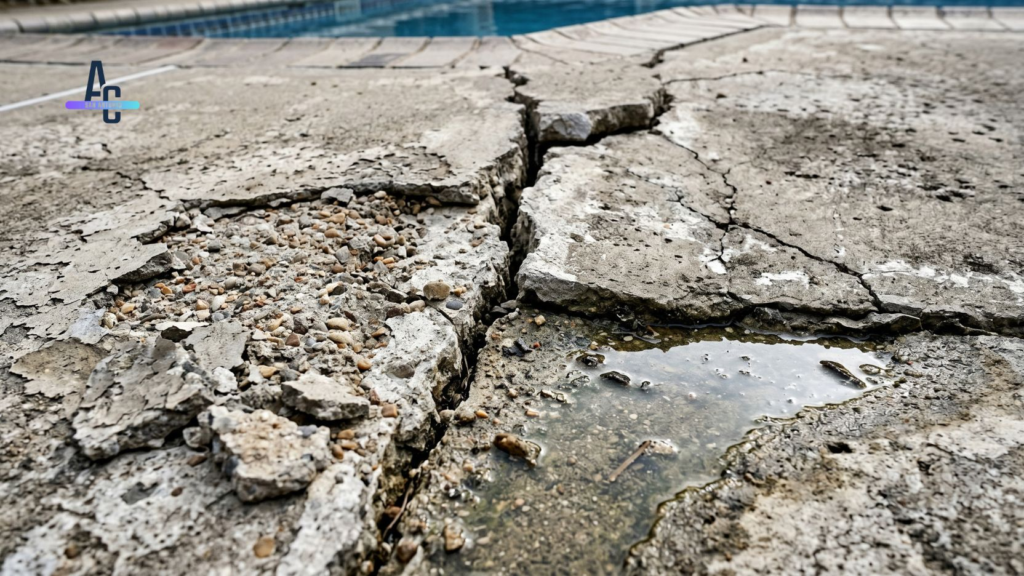
| Moving or uneven crack | Settlement or slab movement | Professional evaluation, joint repair, or replacement |
| Spalling near cracks | Water damage or surface failure | Patching, resurfacing, and sealing |
Key takeaway: If the crack is widening, uneven, or recurring, a simple patch is usually not enough.
How Do Professionals Repair Cracks In A Pool Deck?
The right repair process starts with diagnosis, not products. A good concrete repair plan should match the condition of the slab.
1. Inspect The Crack Carefully
A contractor looks at:
- crack width
- whether the crack is active or stable
- height differences between slab edges
- drainage patterns
- joint condition
- nearby spalling or surface damage
If the slab is moving, the repair strategy changes.
2. Clean And Prepare The Crack
Before any repair, the damaged area has to be cleaned thoroughly. Loose debris, dirt, old sealer, and weak concrete must be removed so the repair material bonds properly.
This step matters because a patch over dirty concrete will fail early.
3. Use The Right Repair Material
Different cracks need different materials:
- Epoxy for stable cracks that need strength
- Polyurethane filler for cracks that may move slightly
- Patch compounds for chipped or spalled areas
- Overlay systems when the surface has multiple cracks or visible wear
Using a rigid material on a moving crack often leads to repeat failure.
4. Restore The Surface Finish
After the repair, the area may need to be blended into the surrounding deck with:
- a broom finish
- a textured overlay
- a decorative coating
- a slip-resistant resurfacing system
This is especially important for pool decks, where safety and traction matter.
5. Seal The Deck
A high-quality sealer helps protect the repaired area from:
- pool water
- UV exposure
- stains
- future moisture intrusion
For pool areas, a slip-resistant finish is strongly recommended.
When Is Resurfacing Or Replacement The Better Option?
Repair works best when the slab is still structurally sound. But in some cases, resurfacing or replacement is the better long-term solution.
You should consider a larger repair if:
- cracks are spread across multiple sections
- the deck has several patched areas already
- the surface is spalling badly
- water pools near the cracks
- the slab has shifted or settled
- the deck is rough, faded, or unsafe
A thin patch on a failing slab is usually only a short-term fix.
How Can Homeowners In San Antonio And Houston Prevent New Cracks?
You cannot eliminate every crack, but you can reduce the risk.
- Keep the deck properly sealed
- Make sure water drains away from the pool area
- Do not ignore damaged joints
- Repair small cracks early
- Avoid heavy impacts on weak sections
- Watch for soil movement after long dry periods or heavy rain
In hot Texas climates, prevention matters as much as repair.
FAQs
Can I Repair A Pool Deck Crack Myself?
Yes, if it is a small, stable hairline crack. If the crack is wide, uneven, or keeps returning, a professional inspection is the safer choice.
Should A Cracked Pool Deck Be Sealed After Repair?
Yes. Sealing helps protect the repair from water, sun, and chemical exposure. It also improves the finish and durability.
How Long Does Pool Deck Crack Repair Last?
It depends on the crack type and the underlying cause. A proper repair can last for years, but active movement or drainage problems may cause cracks to return if not addressed.