
Transforming dull, gray concrete into a stunning, colorful surface doesn’t require professional help if you know how to stain concrete yourself. This DIY-friendly process can revitalize patios, garage floors, driveways, and interior floors at a fraction of professional installation costs, typically saving homeowners $3–$6 per square foot in labor expenses.
Concrete staining offers remarkable versatility, creating everything from subtle earth tones to vibrant, variegated patterns that mimic natural stone or marble. Whether you’re working with new concrete or rejuvenating a decades-old surface, understanding proper preparation, application techniques, and finishing methods determines the difference between amateur results and professional-quality outcomes.
This comprehensive guide walks you through every step of the concrete staining process, from surface preparation and material selection to application techniques and long-term maintenance, equipping you with the knowledge to achieve exceptional results on your first attempt.
Understanding Concrete Staining Basics
Concrete staining fundamentally differs from painting or coating because stains penetrate the concrete surface rather than sitting on top. This penetration creates permanent color that won’t chip, peel, or flake like traditional concrete paint.
How Concrete Staining Works
The staining process involves chemical or physical reactions that bond color molecules to the concrete’s porous structure. Acid-based stains create color through a chemical reaction with the concrete’s lime content, producing unique, variegated patterns. Water-based stains work by penetrating pores and depositing pigment particles, offering more predictable and uniform color coverage.
Both methods yield translucent finishes that allow concrete’s natural texture and character to show through, creating depth and visual interest impossible to achieve with opaque coatings.
Ideal Applications For DIY Concrete Staining
You can successfully stain nearly any concrete surface, though some applications present fewer challenges for beginners:
Best For DIY Beginners:
- Interior basement floors
- Garage floors
- Patios and walkways
- Concrete countertops (small-scale projects)
Moderate Difficulty:
- Driveways
- Large commercial spaces
- Decorative interior floors
Advanced Projects:
- Multi-color designs
- Intricate patterns or borders
- Vertical surfaces (walls, fireplace surrounds)
According to concrete finishing discussions on Reddit, first-time DIYers achieve the best results starting with smaller, less visible areas before tackling high-traffic or prominent surfaces.
Expected Results And Realistic Outcomes
Manage expectations appropriately concrete staining creates beautifully organic, often unpredictable results. Every concrete slab responds differently based on:
- Age and curing history
- Porosity variations
- Previous treatments or sealers
- Aggregate composition
- Application technique
These variables create unique finishes where no two projects look identical. Embrace this natural variation as the hallmark of authentic stained concrete rather than viewing inconsistencies as flaws.
Types Of Concrete Stains: Acid-Based VS. Water-Based
Selecting the right stain type fundamentally impacts your project’s appearance, application difficulty, and longevity.
Acid-Based Concrete Stains
How they work: Acid stains contain metallic salts dissolved in an acidic solution (typically hydrochloric acid). When applied, the acid reacts with calcium hydroxide in the concrete, creating permanent color through a chemical reaction called etching.
Advantages:
- Creates rich, variegated, translucent colors resembling natural stone or marble
- Extremely durable and permanent color cannot wear off
- Unique, one-of-a-kind appearance on every application
- Limited color palette (earth tones: browns, tans, terra cottas, blues, greens)
- Particularly effective on older, well-cured concrete
Disadvantages:
- Requires careful safety precautions due to acidic nature
- Unpredictable results difficult to achieve uniform color
- More complex application process with neutralization requirements
- Strong fumes during application (adequate ventilation essential)
- Cannot lighten existing concrete only darken or add color
Best for: Homeowners seeking authentic, high-end appearances with organic variation and willing to embrace unpredictable artistic results.
Water-Based Concrete Stains
How they work: Water-based stains use acrylic polymers and pigments suspended in water. Rather than chemically reacting, these stains penetrate pores and deposit colored pigment particles.
Advantages:
- Wider color palette including bright, vivid hues
- More predictable, uniform results
- Safer application with minimal fumes
- Easier cleanup and lower environmental impact
- Works on previously sealed concrete (after proper prep)
- Can be layered for custom colors
Disadvantages:
- Less durable than acid stains may require more frequent resealing
- Can appear less natural or organic than acid-stained surfaces
- May show wear patterns in high-traffic areas over time
- Requires pristine surface preparation for even absorption
Best for: DIYers wanting specific colors, more control over final appearance, and simpler, safer application processes.
Comparison
| Factor | Acid-Based Stain | Water-Based Stain |
| Color Range | Earth tones only | Full spectrum |
| Appearance | Variegated, mottled | Uniform or semi-transparent |
| Durability | Permanent | Very good with sealer |
| Application Difficulty | Moderate to difficult | Easy to moderate |
| Safety Concerns | High (corrosive) | Low |
| Cost per gallon | $40–$80 | $30–$60 |
| Coverage | 200–400 sq ft/gallon | 200–400 sq ft/gallon |
| Drying time | 4–24 hours | 1–4 hours |
Tools And Materials You’ll Need
Proper equipment ensures efficient application and professional-quality results.
Essential Materials
For Acid-Based Staining:
- Acid-based concrete stain (quantity based on square footage)
- Neutralizing solution (baking soda and water or commercial neutralizer)
- Concrete cleaner/degreaser
- Concrete sealer (penetrating or topical)
- Painter’s tape and plastic sheeting
For Water-Based Staining:
- Water-based concrete stain
- Concrete cleaner/degreaser
- Concrete etcher or muriatic acid solution (if needed)
- Concrete sealer
- Painter’s tape and plastic sheeting
Required Tools
- Acid-resistant pump sprayer or paint sprayer
- Stiff-bristled scrub brushes
- Push broom
- Wet/dry vacuum or mop
- Paint rollers with extension poles
- Paint trays
- Measuring cups and mixing containers
- Garden hose with spray nozzle
- Floor buffer or burnisher (for sealer application, optional)
Safety Equipment (Non-Negotiable)
- Chemical-resistant gloves (nitrile or neoprene)
- Safety goggles or face shield
- Respirator mask (rated for acid vapors if using acid stain)
- Protective clothing covering arms and legs
- Rubber boots
- Knee pads
According to DIY safety guidelines, proper protective equipment prevents chemical burns and respiratory irritation that can occur even with brief exposure to concrete staining products.
Pre-Project Planning And Safety Considerations
Thorough planning prevents costly mistakes and ensures safe execution.
Assessing Your Concrete Surface
Evaluate concrete condition before beginning:
Good Candidates For Staining:
- Clean, structurally sound concrete
- Free of previous coatings or sealers (or properly stripped)
- At least 28 days old (fully cured)
- Relatively smooth without excessive damage
Poor Candidates Requiring Additional Prep:
- Concrete with thick existing sealers or coatings
- Surfaces with extensive cracks or damage
- Newly poured concrete under 28 days old
- Previously painted concrete (requires complete paint removal)
Test for existing sealers by sprinkling water on the surface if water beads rather than absorbing, a sealer or coating exists requiring removal.
Weather And Timing Considerations
Environmental conditions significantly impact results:
Ideal Conditions:
- Temperature: 50–90°F
- Humidity: 40–70%
- No rain forecast for 24–48 hours
- Adequate shade (avoid direct sun on stain during application)
Avoid Staining When:
- Temperatures fall below 50°F or exceed 90°F
- Rain or high humidity (over 80%) expected within 24 hours
- Direct sunlight hits the surface (causes uneven drying)
Plan projects during mild weather seasons spring and fall typically offer optimal conditions in most climates.
Workspace Preparation
Protect surrounding areas from stain overspray and chemical exposure:
- Remove all furniture, vehicles, and movable items
- Cover adjacent surfaces, walls, and landscaping with plastic sheeting
- Tape plastic securely to prevent wind displacement
- Ensure adequate ventilation for indoor projects (open windows, use fans)
- Have water source readily accessible for neutralization and cleanup
- Establish proper drainage plan for waste water disposal
Safety Protocol Setup
Before starting:
- Read all product safety data sheets (SDS)
- Have emergency water source available for immediate chemical exposure rinsing
- Keep baking soda on hand for acid neutralization emergencies
- Establish phone access for emergency calls
- Never work alone when using acid-based stains
- Ensure children and pets remain away from work area
Step 1: Surface Preparation And Cleaning
Proper surface preparation determines 80% of your final results skip or rush this stage at your project’s peril.
Deep Cleaning The Concrete
Process:
- Remove surface debris: Sweep thoroughly to eliminate loose dirt, dust, and debris
- Degrease the surface: Apply concrete degreaser according to manufacturer instructions
- Mix with water as directed
- Apply generously to entire surface
- Scrub aggressively with stiff-bristled brush
- Allow to dwell 10–15 minutes
- Rinse thoroughly with garden hose
- Address stubborn stains:
- Oil stains: Apply degreaser, cover with absorbent material, let sit overnight
- Rust stains: Use oxalic acid-based rust remover
- Paint spatters: Scrape or grind off before staining
- Etch the surface (if necessary):
- New or very smooth concrete benefits from light etching
- Mix etching solution according to directions (typically muriatic acid diluted 1:10)
- Apply evenly with acid-resistant sprayer or brush
- Scrub surface while etching solution works
- Rinse extremely thoroughly residual etching solution interferes with stain
- Final rinse and dry:
- Rinse surface multiple times until water runs completely clear
- Remove standing water with wet/dry vacuum
- Allow concrete to dry completely (24–48 hours minimum)
Repairing Surface Defects
Address significant damage before staining:
- Cracks: Fill with concrete patching compound, feather edges smooth
- Holes or divots: Use repair mortar, level with surrounding surface
- Flaking or spalling: Remove loose material, patch and level
Important: Patched areas often absorb stain differently than surrounding concrete, creating visible repairs. Test stain on patches to evaluate final appearance.
Stripping Old Sealers Or Coatings
Previous sealers prevent stain penetration, requiring complete removal:
- Apply chemical stripper formulated for concrete sealers
- Allow adequate dwell time (follow product instructions)
- Scrub aggressively with stiff brushes
- Rinse thoroughly and repeat if necessary
- Verify complete removal by water absorption test
This process can consume more time than actual staining budget accordingly.
Step 2: Testing And Color Selection
Never skip test applications concrete’s variable nature makes results impossible to predict from color charts alone.
Creating Test Samples
Recommended Approach:
- Identify test areas:
- Choose inconspicuous spots on actual project surface
- Create multiple 2′ x 2′ test sections
- Select areas representing different concrete conditions (if variable)
- Apply test stains:
- Follow complete application process on test areas
- Test different dilution ratios if using acid stain
- Allow full curing and sealing before evaluating
- Evaluate results:
- View at different times of day (lighting affects appearance)
- Consider how color interacts with surroundings
- Assess whether variations meet expectations
Understanding Color Development
Acid Stain Color Development:
- Initial application shows immediate color
- Continues developing for 4–24 hours as chemical reaction proceeds
- Final color appears after neutralization and sealing
- Always darker and richer than initial appearance suggests
Water-Based Stain Color Development:
- What you see during application approximates final color
- Dries lighter than wet appearance
- Multiple coats deepen color intensity
- Sealer adds depth and richness
Adjusting For Desired Effects
Manipulate application variables to achieve specific results:
- Lighter colors: Dilute stain with water (test ratios)
- Deeper colors: Apply additional coats (water-based) or stronger concentration (acid)
- Variegated effects: Apply unevenly, allow pooling, or use multiple colors
- Uniform appearance: Apply consistently with steady, even pressure
Step 3: Applying Acid-Based Stain
Acid stain application requires meticulous attention to safety and technique.
Safety Reminders
Before Beginning:
- Wear complete protective equipment (gloves, goggles, respirator, boots, protective clothing)
- Ensure excellent ventilation
- Keep neutralizing materials readily accessible
- Have helper present for safety monitoring
Application Process
Step-By-Step:
- Prepare stain:
- Shake or stir thoroughly to suspend metallic salts
- Pour into acid-resistant pump sprayer
- Work in sections for large areas
- Apply first coat:
- Hold sprayer 12–18 inches from surface
- Apply in sweeping, overlapping patterns
- Work from back to front (avoid walking on wet stain)
- Maintain consistent coverage pooling creates darker areas
- Allow natural variation for organic appearance
- Monitor reaction:
- Chemical reaction begins immediately
- Fizzing and bubbling indicate active reaction
- Color develops and intensifies over several hours
- Avoid disturbing surface during reaction period
- Apply additional coats (if desired):
- Wait 4–6 hours between coats
- Subsequent coats deepen and enrich color
- Most projects need only single coat
- Allow full cure:
- Let stain react for 4–24 hours (follow manufacturer specifications)
- Keep area protected from foot traffic
- Avoid water exposure during curing
Technique Tips For Professional Results
- Create movement: Use irregular spray patterns for organic appearance
- Blend sections: Overlap section edges while stain remains wet
- Embrace variability: Don’t attempt uniform coverage variation adds character
- Work quickly: Maintain wet edge to prevent visible lap marks
Step 4: Applying Water-Based Stain
Water-based stains offer more straightforward application with predictable results.
Application Methods
Choose application method based on desired finish:
Spray Application:
- Most common for large areas
- Provides even, consistent coverage
- Use HVLP sprayer or pump sprayer
- Ideal for uniform color
Roller Application:
- Good for moderately sized projects
- Creates slightly textured appearance
- Use high-quality roller cover
- Work in overlapping W-patterns
Brush Application:
- Best for small areas or touch-ups
- Allows maximum control
- Can create visible brush marks
- Work stain into surface thoroughly
Step-By-Step Application
- Prepare Stain:
- Stir thoroughly pigments settle
- Pour into appropriate applicator
- Test spray pattern on cardboard
- Apply Base Coat:
- Work in manageable sections (4′ x 4′ for spraying)
- Maintain consistent distance and speed
- Overlap each pass by 50%
- Back-roll sprayed areas for deeper penetration (optional)
- Evaluate Coverage:
- Allow 1–2 hours drying time
- Assess color intensity and uniformity
- Identify areas needing additional coverage
- Apply Subsequent Coats:
- Most projects require 2–3 coats for optimal color depth
- Wait recommended drying time between coats (typically 1–4 hours)
- Apply perpendicular to previous coat direction for uniform coverage
- Final Cure:
- Allow 24 hours drying before sealing
- Protect from foot traffic during cure period
Creating Custom Effects
Water-based stains enable creative techniques:
- Layering colors: Apply different colors in successive coats
- Antiquing: Apply darker color, then lightly remove from high spots
- Color washing: Highly diluted stain creates subtle tinting
- Stenciling: Use tape or stencils for patterns and borders
Step 5: Neutralizing And Cleaning (Acid Stain Only)
Neutralization removes residual acid and stops the chemical reaction skipping this step causes ongoing surface damage.
Neutralization Process
Required Materials:
- Baking soda (sodium bicarbonate)
- Water
- Push broom or deck brush
- Wet/dry vacuum or mop
- Garden hose
Steps:
- Prepare neutralizing solution:
- Mix 1 pound baking soda per 5 gallons water
- Stir until dissolved
- Prepare sufficient quantity for entire surface
- Apply neutralizer:
- Pour solution generously over stained surface
- Scrub thoroughly with push broom
- Look for fizzing/foaming (indicates active neutralization)
- Allow to dwell 5–10 minutes
- Rinse thoroughly:
- Use garden hose to flood surface with clean water
- Remove standing water with wet/dry vacuum
- Repeat rinse 2–3 times until water runs clear
- Test pH (optional but recommended):
- Use pH test strips on rinse water
- Continue rinsing until pH reaches 7–8 (neutral)
- Residual acid causes sealer adhesion problems
- Final dry:
- Remove all standing water
- Allow surface to dry completely (24–48 hours)
- Verify dryness before sealing
Residue Removal
White, powdery residue (unreacted metallic salts) may appear after neutralization:
- Scrub residue with clean water and stiff brush
- Rinse thoroughly
- Vacuum or squeegee away water
- Repeat if necessary until surface feels clean
Step 6: Sealing Your Stained Concrete
Sealer protects your stained surface from wear, staining, and moisture damage while enhancing color depth.
Choosing The Right Sealer
Penetrating Sealers:
- Absorb into concrete, providing invisible protection
- Maintain natural, matte appearance
- Excellent for exterior applications (breathable)
- More durable, less frequent reapplication needed
- Cost: $40–$80 per gallon
Topical Sealers:
- Form protective film on surface
- Available in matte, satin, or high-gloss finishes
- Enhance color depth and richness
- Show wear patterns more readily
- Cost: $30–$60 per gallon
Recommendation: For most DIY projects, solvent-based acrylic sealers offer excellent balance of protection, appearance enhancement, and ease of application.
Sealer Application Process
- Verify Surface Readiness:
- Completely dry (moisture causes hazing)
- Free of dust, debris, and residue
- Temperature above 50°F
- Prepare Sealer:
- Stir gently (avoid creating bubbles)
- Pour into paint tray or sprayer
- Have sufficient sealer for complete project
- Apply First Coat:
- Use lamb’s wool applicator, roller, or sprayer
- Apply thin, even coat
- Avoid puddles or thick applications
- Work systematically to prevent missing spots
- Maintain wet edge to prevent lap marks
- Drying Time:
- Allow 2–4 hours between coats (check product specifications)
- Ensure adequate ventilation
- Protect from dust during drying
- Apply Second Coat:
- Apply perpendicular to first coat direction
- Maintain consistent coverage
- Most projects benefit from 2–3 coats
- Final Cure:
- Allow 24 hours before light foot traffic
- Wait 72 hours before heavy use or vehicle traffic
- Avoid water exposure for 48 hours
Application Tips
- Temperature matters: Apply sealer when surface temperature is between 50–90°F
- Thin coats work best: Multiple thin coats outperform single thick coat
- Watch for bubbles: Work carefully to avoid trapping air bubbles in sealer
- Test first: Apply sealer to inconspicuous area to verify compatibility and appearance
Common Mistakes And How To Avoid Them
Learn from common pitfalls that compromise DIY concrete staining projects.
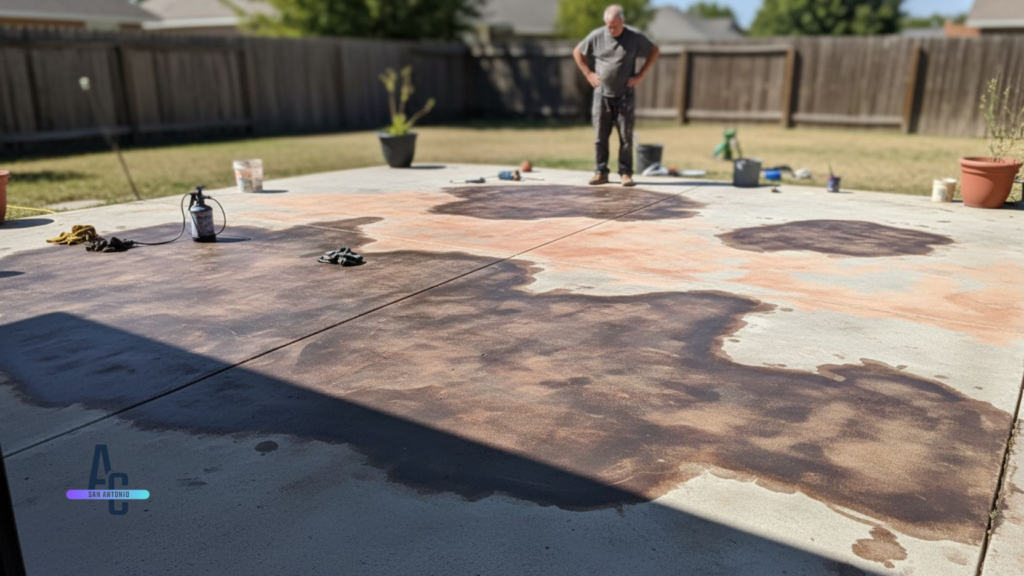
Inadequate Surface Preparation
Mistake: Rushing or skipping thorough cleaning, assuming “looks clean” means “ready for staining.”
Consequence: Stain absorption becomes inconsistent, creating blotchy or uneven color. Grease, oils, or residual sealers prevent proper stain penetration.
Solution: Invest time in meticulous preparation, degrease, etch if necessary, and verify complete dryness before staining. When in doubt, clean again.
Skipping Test Applications
Mistake: Applying stain directly to entire surface based on color chart samples.
Consequence: Final color differs significantly from expectations due to concrete age, porosity, and composition variables.
Solution: Always test stain on actual project surface or representative samples. Create multiple test areas representing different surface conditions.
Improper Safety Precautions
Mistake: Working with acid stains without adequate protective equipment or ventilation.
Consequence: Chemical burns, respiratory irritation, or eye damage from acid exposure.
Solution: Never compromise on safety equipment. Wear full protection, ensure excellent ventilation, and have emergency response materials accessible.
Uneven Application Technique
Mistake: Inconsistent spray pressure, distance, or speed creating visible application patterns.
Consequence: Striping, lap marks, or color intensity variations that appear intentional rather than organic.
Solution: Practice application technique before starting. Maintain consistent distance, pressure, and overlapping patterns. For acid stains, embrace natural variation rather than fighting it.
Insufficient Drying Time Between Steps
Mistake: Proceeding to next step before adequate drying or curing.
Consequence: Sealer hazing, color distortion, adhesion failure, or trapped moisture causing long-term damage.
Solution: Follow manufacturer timing recommendations religiously. When weather conditions are less than ideal, extend drying times beyond minimums.
Poor Sealer Application
Mistake: Applying sealer too thick, creating puddles, or working in direct sunlight.
Consequence: Cloudy appearance, tackiness, uneven sheen, or premature sealer failure.
Solution: Apply multiple thin coats rather than attempting single thick application. Work during optimal temperature conditions and maintain consistent coverage.
Neglecting Edge Protection
Mistake: Failing to properly mask and protect adjacent surfaces from overspray.
Consequence: Permanent staining on walls, landscaping, or adjacent concrete you didn’t intend to color.
Solution: Over-protect rather than under-protect. Use quality painter’s tape and plastic sheeting, securing edges thoroughly against wind displacement.
Cost Breakdown: DIY VS. Professional Staining
Understanding complete project costs helps evaluate whether DIY makes financial sense for your situation.
DIY Cost Breakdown
For A Typical 400 Square Foot Garage Floor:
Materials:
- Concrete cleaner/degreaser: $25–$40
- Acid or water-based stain (2 gallons): $80–$160
- Neutralizer (if using acid stain): $15–$25
- Concrete sealer (2 gallons): $60–$160
- Painter’s tape and plastic sheeting: $30–$50
- Brushes, rollers, and application tools: $40–$80
Equipment (if not owned):
- Pump sprayer: $30–$80
- Wet/dry vacuum (rental): $35–$50
- Safety equipment: $40–$70
Total DIY Cost: $355–$715 ($0.89–$1.79 per square foot)
Professional Installation Costs
Same 400 Square Foot Garage Floor:
- Basic water-based staining: $1,200–$2,000 ($3–$5 per sq ft)
- Acid staining with decorative effects: $2,000–$3,200 ($5–$8 per sq ft)
- Premium multi-color designs: $3,200–$5,200 ($8–$13 per sq ft)
Potential DIY savings: $845–$4,485
Hidden Costs To Consider
DIY Approach:
- Learning curve and potential mistakes
- Time investment (15–30 hours for complete project)
- Equipment you may need to purchase or rent
- Potential need to redo sections if results disappoint
Professional Approach:
- Convenience and time savings
- Guaranteed results with warranty coverage
- No equipment investment required
- Expertise prevents costly mistakes
According to concrete staining cost discussions, homeowners who value their time at standard rates often find professional installation worthwhile for larger or more complex projects, while DIY makes excellent financial sense for smaller, straightforward applications.
Maintenance Tips For Long-Lasting Results
Proper maintenance preserves your stained concrete’s beauty for 10–20 years with minimal effort.
Regular Cleaning Routine
Daily/weekly maintenance:
- Sweep or dust mop to remove abrasive dirt and debris
- Spot-clean spills immediately before staining occurs
- Use pH-neutral cleaners only avoid acidic or alkaline products
Monthly deep cleaning:
- Mop with mild detergent solution
- Rinse thoroughly with clean water
- Dry surface to prevent water spots
What to avoid:
- Harsh chemicals (bleach, ammonia, acids)
- Abrasive scrubbers that scratch sealer
- Excessive water (especially for interior applications)
Resealing Schedule
Sealer protection degrades over time based on traffic and exposure:
Interior applications:
- High-traffic areas: Reseal every 1–2 years
- Low-traffic areas: Reseal every 2–3 years
Exterior applications:
- Reseal every 1–2 years (UV exposure accelerates degradation)
- Inspect annually for sealer wear
Signs requiring resealing:
- Water no longer beads on surface
- Surface appears dull or faded
- Stains absorb readily rather than sitting on surface
- Visible wear patterns in high-traffic zones
Protection Strategies
Extend your stained concrete’s lifespan through preventive measures:
- Use furniture pads: Prevent scratching from chairs, tables, and heavy objects
- Deploy entry mats: Capture abrasive dirt before it reaches stained surface
- Address spills promptly: Oils, acids, and chemicals can damage or stain
- Avoid deicing salt: Use sand or pet-safe alternatives on exterior concrete
- Control moisture: Ensure proper drainage prevents standing water
Addressing Minor Damage
Small issues often require minimal intervention:
Light scratches:
- Buff with fine steel wool
- Apply thin sealer coat to affected area
Stains:
- Clean with appropriate stain remover for stain type
- Reseal if cleaning removes sealer layer
Worn areas:
- Lightly abrade surface
- Reapply stain if color has faded
- Reseal after stain dries
When To Call A Professional
While concrete staining ranks among the most DIY-friendly home improvement projects, certain situations warrant professional expertise.
Scenarios Requiring Professional Help
Large-scale projects:
- Areas exceeding 1,000 square feet
- Multiple rooms or continuous spaces requiring color consistency
- Time constraints preventing adequate DIY execution
Complex designs:
- Multi-color patterns or intricate borders
- Medallions, logos, or custom artwork
- Sawcut designs requiring precision
- Stenciled patterns with tight registration
Challenging conditions:
- Previously failed DIY attempts requiring correction
- Severe concrete damage needing extensive repair
- Surfaces with significant porosity variations
- Vertical applications (walls, fireplaces)
Commercial applications:
- Retail spaces requiring professional appearance
- High-traffic areas demanding maximum durability
- Projects needing completion certificates for insurance
Benefits Of Professional Services
Experienced contractors bring value beyond labor:
- Expertise: Identify and address potential problems before they occur
- Efficiency: Complete projects in days rather than weeks
- Equipment: Professional-grade tools produce superior results
- Warranty: Coverage provides peace of mind and protection
- Problem-solving: Experience handling challenging conditions
Companies like Affordable Concrete San Antonio offer comprehensive staining services with 14+ years of experience, ensuring exceptional results backed by professional guarantees.
Cost-Benefit Analysis
Consider professional services when:
- Project complexity exceeds your skill level
- Your time value makes DIY economically unfavorable
- Mistakes would cost more to correct than professional installation
- Result quality significantly impacts property value
- You lack confidence in achieving desired outcomes
FAQs
Can I Stain Old Concrete That’s Been There For Years?
Absolutely older concrete often produces superior staining results compared to new concrete. Age allows complete curing and creates surface patina that enhances stain character. The key is thorough surface preparation, including complete removal of any existing sealers, oil stains, or surface contaminants. Concrete of any age works well for staining provided it remains structurally sound.
How Long Does DIY Concrete Staining Take?
Complete project duration spans 4–7 days from start to finish, though active work time totals approximately 15–25 hours. Timeline breakdown: surface preparation (1–2 days), drying time (1 day), stain application (4–8 hours), curing (1 day), sealing (4–6 hours), and final cure (2–3 days). Weather conditions, surface condition, and project size significantly impact duration.
Can I Stain Concrete In Cold Weather?
Cold temperatures complicate concrete staining significantly. Both stains and sealers require temperatures above 50°F for proper application and curing. Below this threshold, chemical reactions slow or stop, sealers may not cure properly, and results become unpredictable. If you must work during cold weather, choose water-based products with lower temperature thresholds and ensure surface temperature, not just air temperature, meets minimum requirements.
Will Stained Concrete Fade Over Time?
Properly applied and sealed concrete stains remain remarkably permanent. Acid-based stains create color through chemical reaction and virtually never fade since color becomes part of the concrete itself. Water-based stains can experience slight fading in direct sun exposure over many years but remain vibrant with proper sealing and maintenance. Interior stained concrete shows minimal fading regardless of stain type. Regular sealer maintenance protects against UV damage and preserves color depth.
Can I Change My Mind And retain A Different Color?
Changing stained concrete color presents challenges. Acid stains create permanent chemical reactions impossible to reverse; you can only darken or alter the color by adding additional stain layers. Water-based stains offer more flexibility, allowing layering of different colors. The most reliable approach for complete color change involves grinding off the surface layer and restarting the process. Consider this limitation carefully during initial color selection.
Is Concrete Staining Safe For Indoor Use?
Both acid and water-based stains work safely indoors with proper precautions. Acid stains require excellent ventilation during application due to strong fumes, but once neutralized, cured, and sealed, they emit no ongoing vapors. Water-based stains produce minimal odor and pose fewer application concerns. Both types, when properly sealed, create food-safe, non-toxic surfaces suitable for any interior application including kitchens and living spaces.
How Do I Fix Mistakes In Concrete Staining?
Mistake correction depends on stain type and severity. For acid stains, mistakes are challenging to fix. The chemical reaction creates permanent color. Options include applying darker stain over problem areas or grinding off the surface and restarting. Water-based stains offer more forgiveness; you can often reapply to even out color or layer additional stain to correct light areas. Severe mistakes may require professional grinding and complete redo.
Can I Apply Concrete Stain Over Existing Paint Or Sealer?
Stain requires direct contact with bare concrete to work properly. Existing paint, sealer, or coatings must be completely removed before staining. Chemical strippers, grinding, or shot blasting remove these barriers, though the process can be labor-intensive. Attempting to stain over sealed concrete results in poor adhesion, blotchy color, and premature failure. Always verify complete coating removal through water absorption testing before proceeding.
Conclusion
Learning how to stain concrete yourself opens possibilities for transforming ordinary concrete surfaces into stunning, custom-colored features at a fraction of professional installation costs. Whether rejuvenating a dull garage floor, creating an elegant patio, or adding character to interior spaces, DIY concrete staining delivers professional-quality results when executed with proper preparation, technique, and patience.
Success hinges on three critical factors: meticulous surface preparation, appropriate stain selection for your desired outcome, and thorough sealing for long-term protection. While the process requires time investment and careful attention to detail, the dramatic transformation and significant cost savings typically $3–$6 per square foot compared to professional services make DIY staining attractive for homeowners willing to invest effort.
Remember that concrete staining creates unique, organic finishes where variation enhances rather than detracts from beauty. Embrace the natural character that develops as stain interacts with your specific concrete rather than expecting catalog-perfect uniformity.
Start with smaller, less visible projects to build confidence and technique before tackling prominent areas. Test colors on actual surfaces, never rush critical steps, and prioritize safety throughout the process. With proper execution and regular maintenance, your stained concrete will provide beautiful, durable surfaces lasting 10–20 years or more.
For complex projects, large-scale installations, or situations where professional expertise provides better value than DIY effort, consider working with experienced contractors who bring specialized knowledge and guaranteed results.
Ready to transform your concrete surfaces? Whether tackling DIY staining or exploring professional services, contact Affordable Concrete San Antonio at 713-504-2341 for expert guidance, quality materials recommendations, or professional installation with 14+ years of proven expertise.