
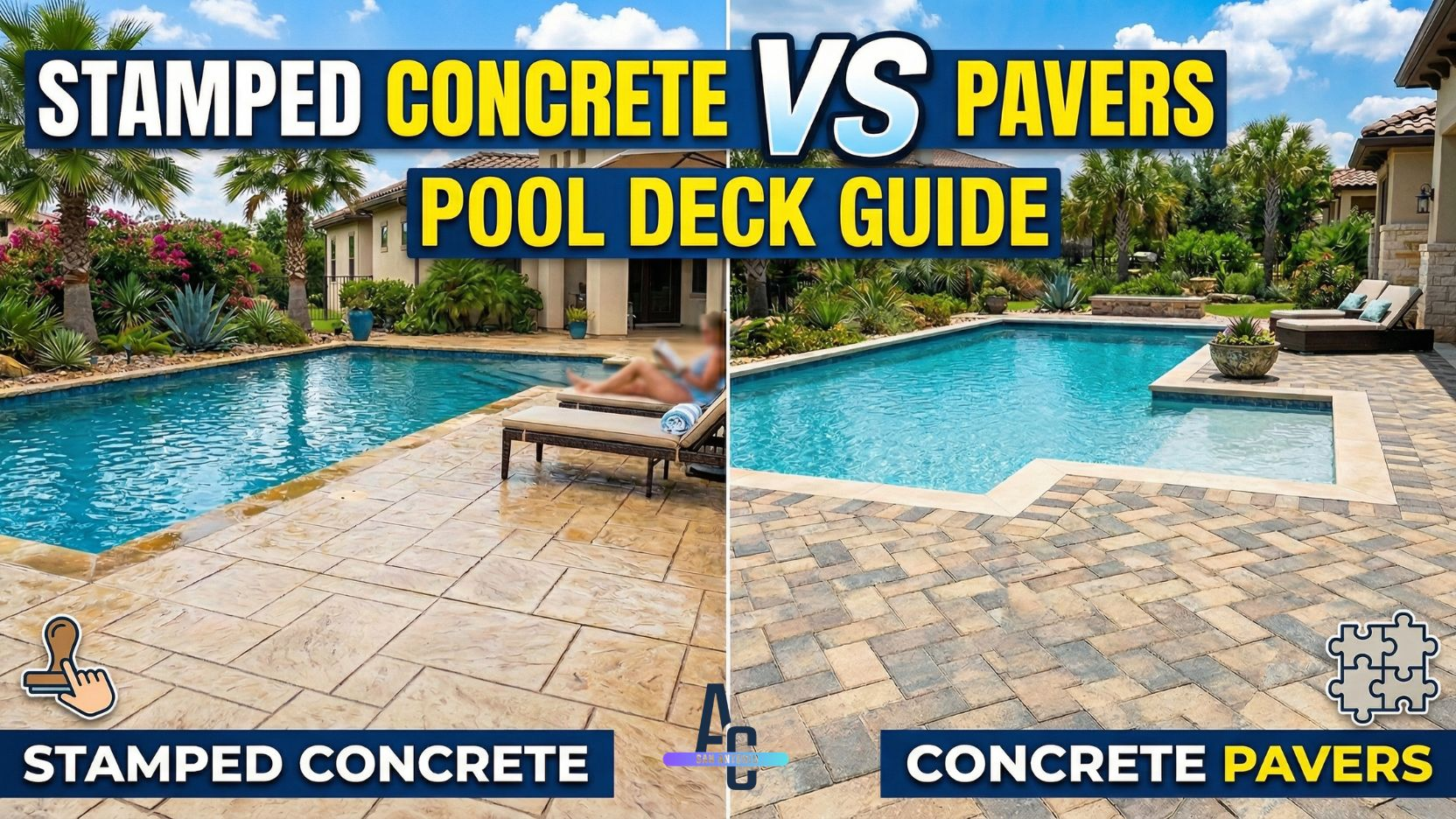
Homeowners in San Antonio and Houston often ask whether stamped concrete or pavers are better for a pool deck. Based on hands-on experience with outdoor concrete and pool-area surfaces in South Texas, the short answer is this: stamped concrete is usually better for homeowners who want a lower-cost, customizable, seamless look, while pavers are better for those who want easier individual repairs and a higher-end modular appearance.
The right choice depends on budget, maintenance tolerance, heat, drainage, slip resistance, and design goals. Around a pool, those details matter more than appearance alone.
Are Stamped Concrete Or Pavers Better For A Pool Deck?
Stamped concrete is often the better value for a pool deck, while pavers are often better for repair flexibility and a premium look.
If your main goal is a clean, decorative surface that can mimic stone, slate, brick, or tile at a lower upfront cost, stamped concrete is usually the better fit. If you want a segmented surface where individual pieces can be replaced more easily, pavers may be the better option.
Here’s a quick comparison:
| Feature | Stamped Concrete | Pavers |
| Upfront cost | Usually lower | Usually higher |
| Design options | High | High |
| Appearance | Seamless decorative surface | Modular, upscale look |
| Repairs | Harder to blend patches | Easier to replace units |
| Maintenance | Seal and monitor cracks | Maintain joints and leveling |
| Slip resistance | Good with proper finish | Good with textured pavers |
| Weed/joint issues | Minimal | More common |
Key takeaway: For many residential pool decks, stamped concrete offers the best balance of cost, design, and performance.
Is Stamped Concrete A Good Idea Around A Pool?
Yes, stamped concrete can be a very good pool deck material when it is installed with the right texture, slope, and sealer.
Many homeowners choose stamped concrete because it can create the look of natural stone or pavers without the same installation cost. It also gives you a more continuous surface, which many people prefer for modern outdoor spaces.
Stamped concrete works well around pools when it includes:
- Proper drainage slope
- Slip-resistant texture
- Appropriate expansion joints
- A sealer suited for wet outdoor surfaces
- Light or medium color choices to help reduce heat absorption
A pool deck should not be chosen for appearance alone. The finish must also support traction, comfort, and long-term durability.
When Are Pavers Better Than Stamped Concrete For A Pool Deck?
Pavers are often better when repairability and a segmented look matter more than seamless design.
Pavers can be a strong option if you want:
- Easy replacement of stained or damaged areas
- A high-end, resort-style appearance
- Defined visual patterns and borders
- Less concern about visible slab cracking
Because pavers are installed as individual units, they are easier to repair one section at a time. That can be useful if a tree root, soil movement, or drainage issue affects part of the deck.
However, pavers come with more joints. Around a pool, that can mean more maintenance over time.
Which Pool Deck Stays Cooler In Texas Heat?
In many cases, lighter-colored pavers may stay cooler than darker stamped concrete, but surface temperature depends heavily on color, finish, and sun exposure.
In San Antonio and Houston, summer heat is a serious factor. Both stamped concrete and pavers can become hot under direct sun.
To improve comfort:
- Choose lighter colors
- Avoid very dark finishes
- Consider textured or specialty coatings where appropriate
- Plan for shade when possible
Stamped concrete can be made more comfortable with the right color and finish selection. The same is true for pavers. No pool deck material stays automatically cool just because of the category it falls into.
Is Stamped Concrete More Slippery Than Pavers?
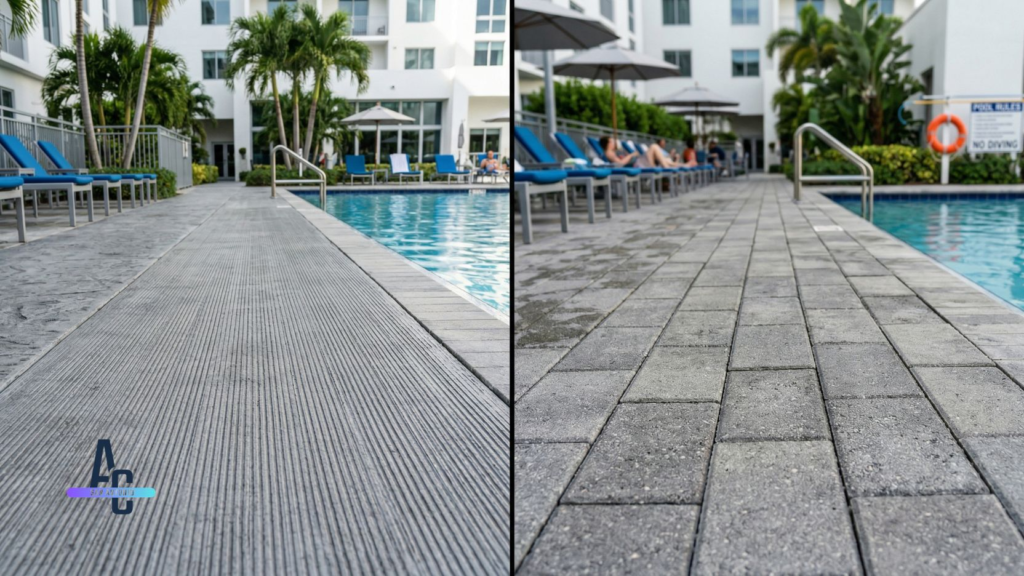
Stamped concrete is not necessarily more slippery than pavers, but both materials must be finished correctly for pool safety.
Slip resistance depends more on the surface profile and sealer than on the material name. A glossy sealed surface may become slick if the finish is wrong for wet conditions.
For safer pool decks, look for:
- Slip-resistant sealers
- Textured stamp patterns
- Proper drainage
- Regular cleaning to prevent algae or buildup
Key takeaway: The safest pool deck is the one designed for wet-foot traffic, not just the one that looks best in photos.
Which Lasts Longer: Stamped Concrete Or Pavers?
Both can last for many years, but they fail in different ways.
Stamped concrete may develop cracks over time due to soil movement, expansion, or drainage problems. Pavers are less likely to crack as one large surface, but they can shift, settle, or separate if the base is not prepared properly.
Longevity depends on:
- Base preparation
- Drainage design
- Installation quality
- Ongoing maintenance
- Local soil movement
In South Texas, ground movement and water management matter as much as the surface material itself.
Which Is More Affordable For Homeowners?
Stamped concrete is usually more affordable upfront than pavers.
That lower cost is one reason stamped concrete is so popular for residential pool decks. It offers decorative appeal without the same labor and material cost typically associated with paver installations.
Pavers may cost more initially, but some homeowners still prefer them because individual repairs are simpler. The best value depends on whether you prioritize:
- Lower initial budget
- Long-term repair convenience
- Design preference
- Maintenance expectations
How Should Homeowners In San Antonio And Houston Choose?
Choose stamped concrete if you want a decorative, lower-cost, continuous pool deck. Choose pavers if you want a premium modular look and easier spot repairs.
Stamped concrete is often best for:
- Homeowners upgrading backyard pool areas
- Projects focused on curb appeal and budget
- Larger decorative pool decks
- Homes wanting a seamless custom design
Pavers may be best for:
- Homes with a resort-style design goal
- Owners willing to invest more upfront
- Projects where future sectional repair is a priority
FAQs
Is Stamped Concrete Cheaper Than Pavers For A Pool Deck?
Yes. Stamped concrete is usually cheaper upfront than pavers for most residential pool deck projects.
Do Pavers Crack Less Than Stamped Concrete?
They crack differently. Pavers are less likely to show large slab cracks, but they can shift or settle if the base fails.
Is Stamped Concrete Safe Around Pools?
Yes, if it is installed correctly. Stamped concrete can be safe around pools when it has proper texture, drainage, and a slip-resistant sealer.