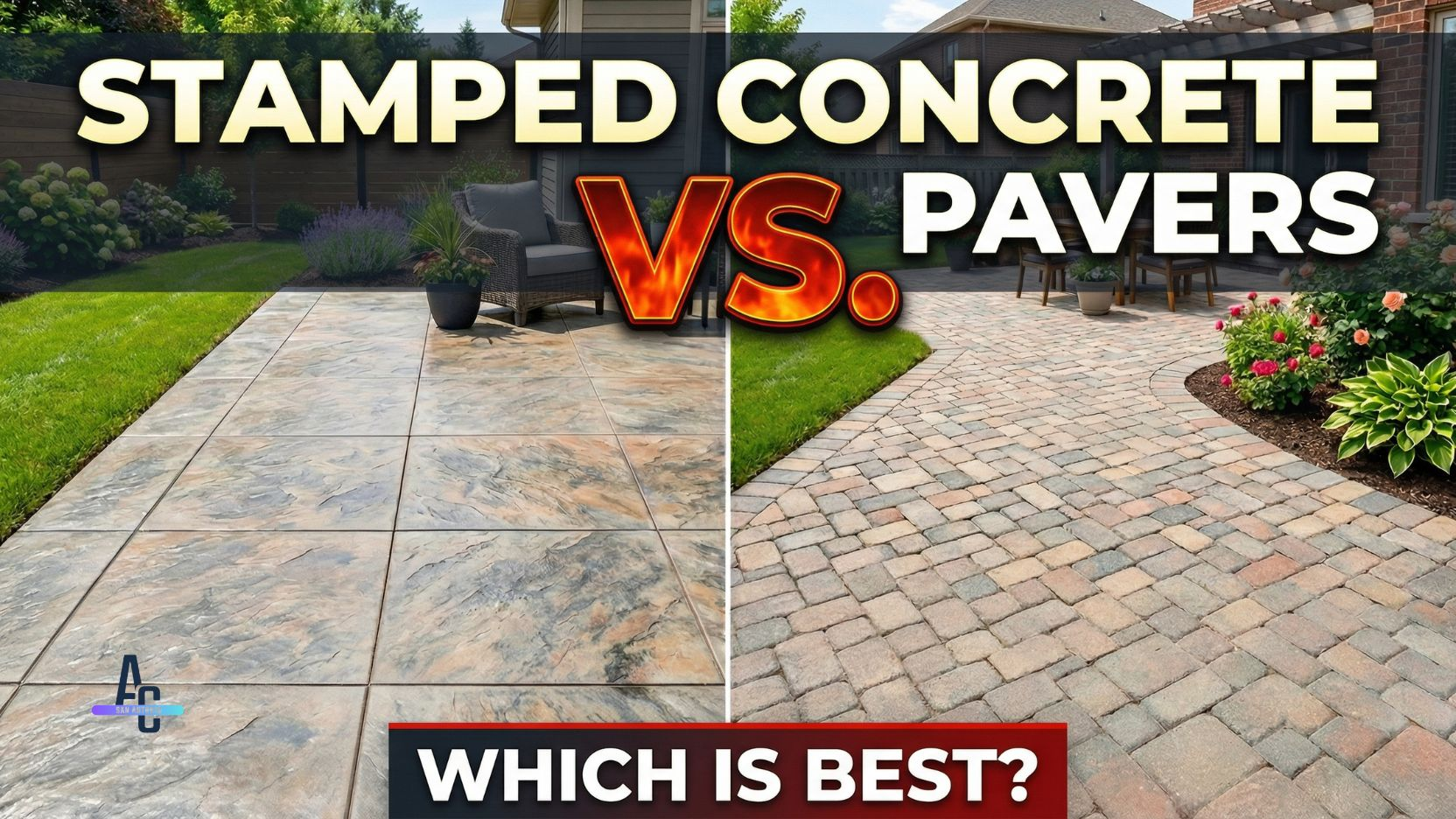
If you are comparing stamped concrete vs pavers, the best choice depends on your budget, design goals, and how much maintenance you are willing to handle. In most residential projects, stamped concrete is often better for lower upfront cost and a seamless custom look, while pavers are often better for easier spot repairs and joint flexibility.
At Affordable Concrete San Antonio, projects are evaluated based on real site conditions like Texas heat, drainage, soil movement, pool use, and long-term upkeep needs. For homeowners in San Antonio and Houston, the right answer is rarely one-size-fits-all.
Are Stamped Concrete Or Pavers Better For Patios, Pool Decks, And Driveways?
Stamped concrete is usually better if you want a clean look, lower installation cost, and custom decorative finishes. Pavers are usually better if repairability and modular installation matter most.
Here is the simple comparison:
| Feature | Stamped Concrete | Pavers |
| Upfront cost | Usually lower | Usually higher |
| Appearance | Seamless, decorative | Premium, piece-by-piece look |
| Repairs | Harder to patch invisibly | Easier to replace individual units |
| Weed growth | No joints for weeds | Weeds may grow between joints |
| Surface movement | Slab can crack if base shifts | Individual pavers may shift |
| Maintenance | Needs sealing | Needs joint sand maintenance |
| Drainage | Must be sloped correctly | Permeable options available |
Key takeaway: If appearance and value are your top priorities, stamped concrete is often the better fit. If long-term repair flexibility matters most, pavers may be worth the extra cost.
Is Stamped Concrete Cheaper Than Pavers?
Yes, stamped concrete usually costs less to install than pavers. That is one of the main reasons homeowners choose it for larger patios, pool decks, and driveways.
Why stamped concrete often costs less:
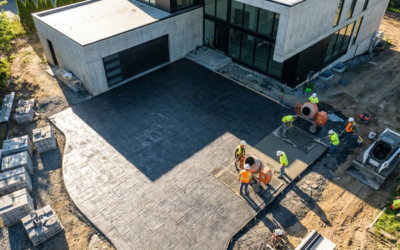
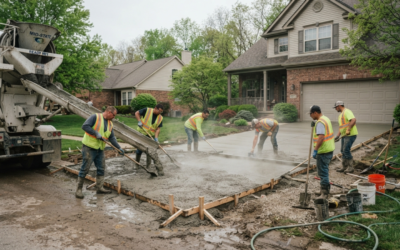
- It is poured as one slab
- Installation is usually faster
- Labor is generally lower than piece-by-piece paver installation
Pavers typically cost more because:
- Each unit must be placed individually
- Base prep and edge restraint are critical
- Labor time is higher
That said, lower upfront cost does not always mean lower lifetime cost. If a stamped slab cracks badly, repairs may be more noticeable. With pavers, damaged sections can often be lifted and replaced.
Which Lasts Longer In San Antonio And Houston Weather?
Both stamped concrete and pavers can last for many years if installed correctly, but local conditions matter. In San Antonio and Houston, heat, heavy rain, and shifting soils can affect both systems.
Stamped concrete performs well when:
- The subgrade is properly prepared
- Expansion joints are placed correctly
- The slab is reinforced as needed
- The surface is sealed and maintained
Pavers perform well when:
- The base is compacted correctly
- Drainage is managed properly
- Joint sand is maintained
- Edge restraints stay intact
In South Texas, expansive soils can create movement. That matters because:
- Stamped concrete may crack if the slab moves
- Pavers may settle unevenly or spread if the base fails
Key takeaway: Installation quality matters more than material choice. A well-built system usually outperforms a poorly installed one, no matter which option you pick.
Are Pavers Easier To Repair Than Stamped Concrete?
Yes, pavers are usually easier to repair. That is one of their strongest advantages.
If a paver area gets stained, settles, or is damaged:
- Individual pavers can often be removed
- The base can be corrected
- Matching units can be reinstalled
With stamped concrete:
- Crack repairs may still be visible
- Color matching can be difficult
- Pattern continuity is harder to restore
This does not mean stamped concrete is a poor choice. It means homeowners should understand the tradeoff: lower upfront cost and strong visual appeal vs more complex repair work later.
Which Looks Better: Stamped Concrete Or Pavers?
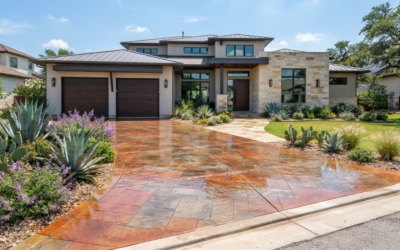
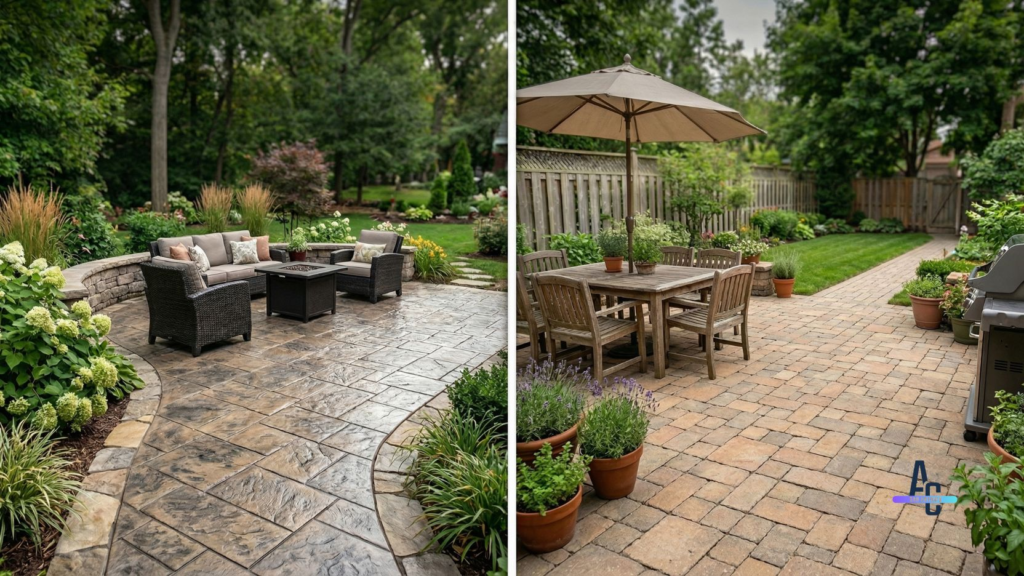
Stamped concrete is often better for a seamless decorative look, while pavers offer a more traditional high-end modular look.
Stamped concrete can mimic:
- Stone
- Brick
- Slate
- Tile
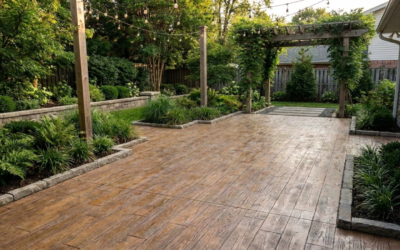
- Wood plank textures
Pavers offer:
- Distinct unit patterns
- Strong visual texture
- A classic segmented appearance
For many homeowners, the decision comes down to style:
- Choose stamped concrete if you want a smooth, custom, cohesive design
- Choose pavers if you prefer a more defined pattern with visible joints
For pool decks and patios, stamped concrete is often selected because it creates a broad, finished look that ties outdoor living areas together.
What Is Better For Pool Decks In Texas Heat?
Stamped concrete can be an excellent pool deck choice when the finish, texture, and coating are selected correctly. Pavers can also work well, but joint maintenance and movement should be considered.
For pool areas, homeowners usually care about:
- Slip resistance
- Heat underfoot
- Drainage
- Appearance
- Maintenance
Stamped concrete pool decks may include:
- Textured finishes for traction
- Color options to match the home
- Acrylic or protective sealers
- Expansion joints for movement control
Pavers may be useful around pools because:
- Individual units can be replaced
- Some systems allow better drainage
- They provide a textured look
Key takeaway: For a pool deck, neither material is automatically best. The safer and better-looking option depends on texture, slope, drainage, and installation quality.
How Should Homeowners Choose Between Stamped Concrete And Pavers?
Choose based on budget, maintenance tolerance, design goals, and site conditions.
Stamped concrete may be best if you want:
- Lower upfront cost
- Decorative finishes
- A seamless patio or driveway
- Less concern about weed growth between joints
Pavers may be best if you want:
- Easier repairs
- Modular design
- Possible permeability options
- A segmented architectural look
For homeowners replacing cracked or worn outdoor surfaces, the smartest next step is to compare:
- Existing drainage issues
- Soil movement risk
- Surface use
- Desired finish
- Long-term maintenance expectations
FAQs
Does Stamped Concrete Crack More Than Pavers?
Stamped concrete can crack if the slab moves or joints are not planned correctly. Pavers do not crack the same way, but they can shift, settle, or separate if the base fails.
Do Weeds Grow Through Pavers?
Yes, weeds can grow in paver joints over time. Regular maintenance and proper joint sand help reduce this issue.
Is Stamped Concrete Good For Driveways?
Yes, stamped concrete can work well for driveways when it is properly reinforced and installed on a stable base. It is popular for curb appeal and decorative finishes.