
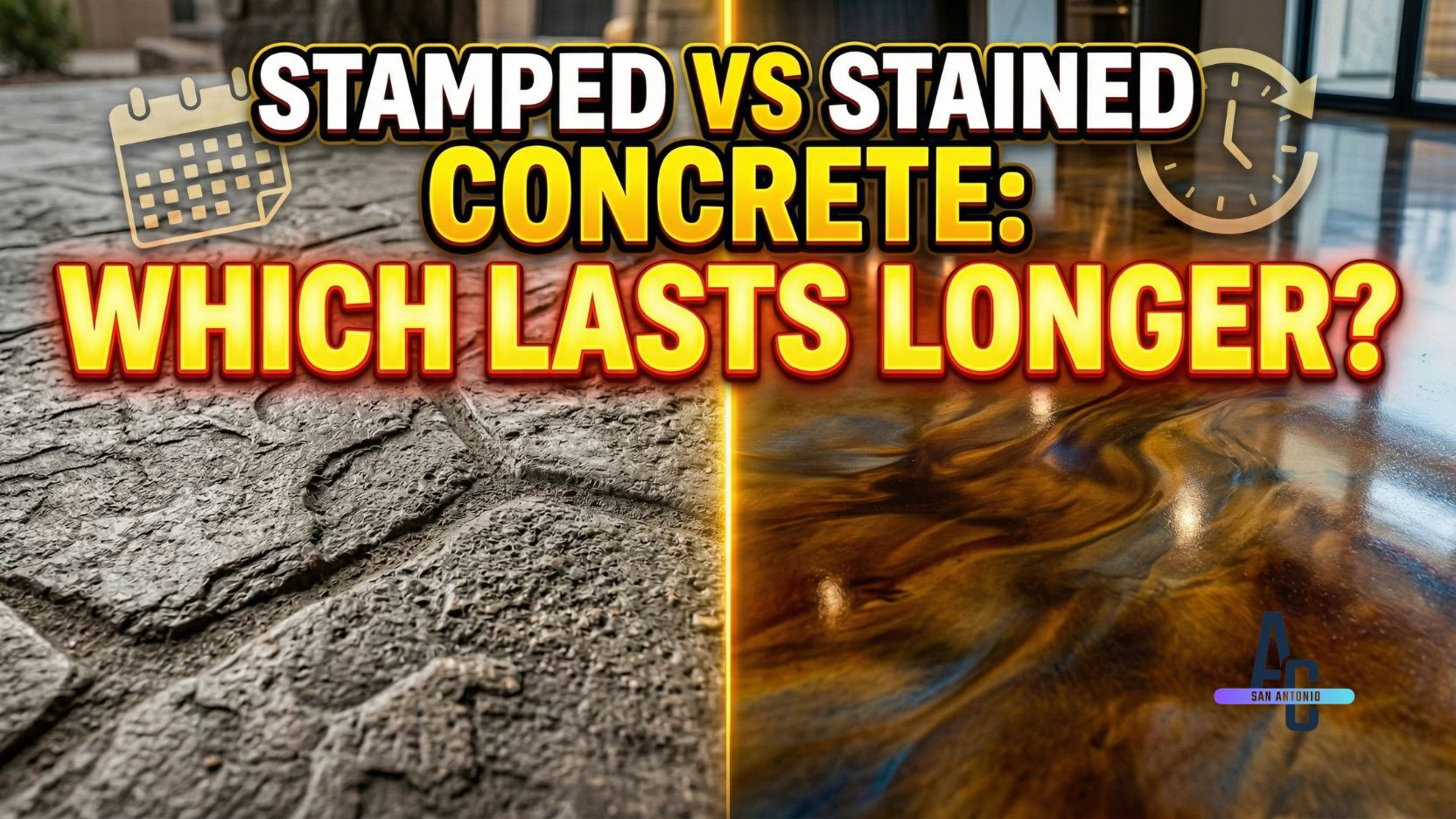
With decades of hands-on concrete experience and years serving San Antonio-area homeowners, we’ve seen how different finishes hold up in Texas heat, sun, rain, and foot traffic. Based on real-world performance, stamped concrete usually lasts longer than stained concrete as a finish choice because the pattern is built into the slab, while stain is a surface treatment that depends more on sealing and maintenance.
That does not mean stained concrete is a poor option. Both stamped and stained concrete can last for many years, but they age differently. If your main goal is long-term texture and pattern retention outdoors, stamped concrete often has the edge. If your goal is colour, style, and a simpler decorative finish, stained concrete can still perform very well.
What Is The Main Difference Between Stamped And Stained Concrete?
Stamped concrete alters the texture and appearance of the slab. Stained concrete changes the surface colour.
That difference matters for lifespan.
Stamped Concrete
Stamped concrete is poured and then patterned to look like:
- Stone
- Brick
- Slate
- Tile
- Wood plank
Because the texture is pressed into fresh concrete, the design becomes part of the slab.
Stained Concrete
Stained concrete uses colour to transform cured concrete. It can create:
- Earth-tone finishes
- Marbled effects
- Modern decorative floors
- Rich color variation
Stain usually penetrates the surface, but the final appearance still depends heavily on the sealer condition and surface care.
Which Lasts Longer Outdoors In San Antonio?
Stamped concrete usually lasts longer outdoors when properly installed and sealed.
Why? Because:
- The pattern is not just a coating
- It handles sun exposure better than many surface colour treatments
- Wear is less noticeable when the texture is built into the slab
In San Antonio and Houston, outdoor concrete faces:
- Strong UV exposure
- High summer heat
- Heavy rain events
- Soil movement
- Pool water and chemical exposure
These conditions can wear down sealers faster. When the sealer breaks down, stained concrete may fade sooner, especially in uncovered areas.
Key takeaway: For patios, pool decks, and driveways in Texas, stamped concrete often keeps its visual character longer than stained concrete.
Does Stained Concrete Fade Faster Than Stamped Concrete?
Yes, stained concrete can fade faster in outdoor settings if it is not resealed on schedule.
That is especially true for:
- Pool decks
- Sunny patios
- Driveways
- Walkways with heavy foot traffic
Stamped concrete can also lose colour if a tinted release or colour hardener was used, but the stamped pattern remains. With stained concrete, once the colour dulls, the whole decorative effect may look weaker.
Real-World Durability Factors
The lifespan of both finishes depends on:
- Concrete mix quality
- Base preparation
- Drainage
- Sealing schedule
- Sun exposure
- Traffic load
Poor installation shortens the life of both.
Is Stamped Concrete More Durable Than Stained Concrete?
Stamped concrete is usually more durable as an outdoor decorative system, but stained concrete may be easier to refresh.
Here is a simple comparison:
| Feature | Stamped Concrete | Stained Concrete |
| Pattern longevity | Excellent | Not applicable |
| Color longevity outdoors | Good to very good | Fair to good |
| UV resistance | Better overall | More sealer-dependent |
| Best for patios/pool decks | Yes | Sometimes |
| Best for indoor floors | Sometimes | Yes |
| Repair blending | Can be harder | Often easier |
| Maintenance | Moderate | Moderate |
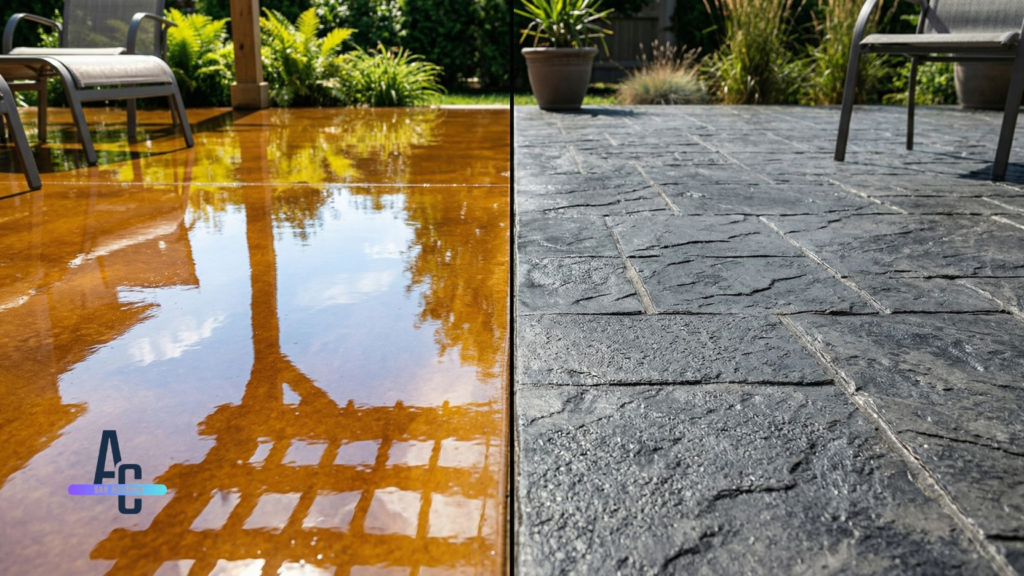
Best choice for outdoor curb appeal: stamped concrete
Best choice for decorative interior or covered areas: stained concrete
Which Option Needs More Maintenance?
Stained concrete usually needs closer attention to keep its colour looking fresh outdoors.
Both surfaces need:
- Cleaning
- Resealing
- Crack repair if needed
- Drainage control
But stained concrete often shows wear faster when:
- Sealer peels
- Water sits on the surface
- Direct sun is intense
- The slab gets frequent traffic
Stamped concrete also needs sealing, especially around pools and on driveways, but its texture helps preserve the decorative look even as the finish ages.
Is Stamped Or Stained Concrete Better For Patios, Pool Decks, And Driveways?
Stamped concrete is usually better for outdoor living spaces and driveways, while stained concrete works best where colour is the main design goal.
Best Uses For Stamped Concrete
- Backyard patios
- Pool decks
- Walkways
- Driveways
- Outdoor entertaining areas
Best Uses For Stained Concrete
- Covered patios
- Interior concrete floors
- Garage floors
- Low-traffic decorative spaces
- Modern residential surfaces
For homeowners upgrading cracked or plain concrete, stamped concrete often offers the stronger long-term value outdoors.
What Should Homeowners In San Antonio And Houston Choose?
Choose stamped concrete for a longer-lasting outdoor finish. Choose stained concrete if you want a colour-focused design and are prepared to seal it regularly.
In South Texas, climate matters. Heat, UV, and moisture swings can shorten the life of decorative finishes if the slab is not installed correctly. A good contractor should evaluate:
- Existing slab condition
- Drainage slope
- Surface prep
- Expansion joints
- Shade vs full sun
- Traffic level
That is what helps concrete last, not just the finish type.
Final Through
If you are asking which lasts longer, stamped concrete usually outlasts stained concrete for outdoor use because the pattern is embedded in the slab and holds up better under the sun and traffic. Stained concrete can still last for many years, but it usually requires more maintenance to keep its colour strong.
FAQs
Does Stamped Concrete Crack More Than Stained Concrete?
Not inherently. Cracking usually comes from soil movement, poor base prep, weak reinforcement, or drainage issues, not the decorative finish itself.
How Often Should Decorative Concrete Be Sealed In Texas?
Many outdoor surfaces are resealed every 2 to 3 years, but exposure, traffic, and weather can shorten that schedule.
Is Stained Concrete Cheaper Than Stamped Concrete?
Usually, yes. Stained concrete often costs less than stamped concrete because it requires less labour for forming and texturing.