
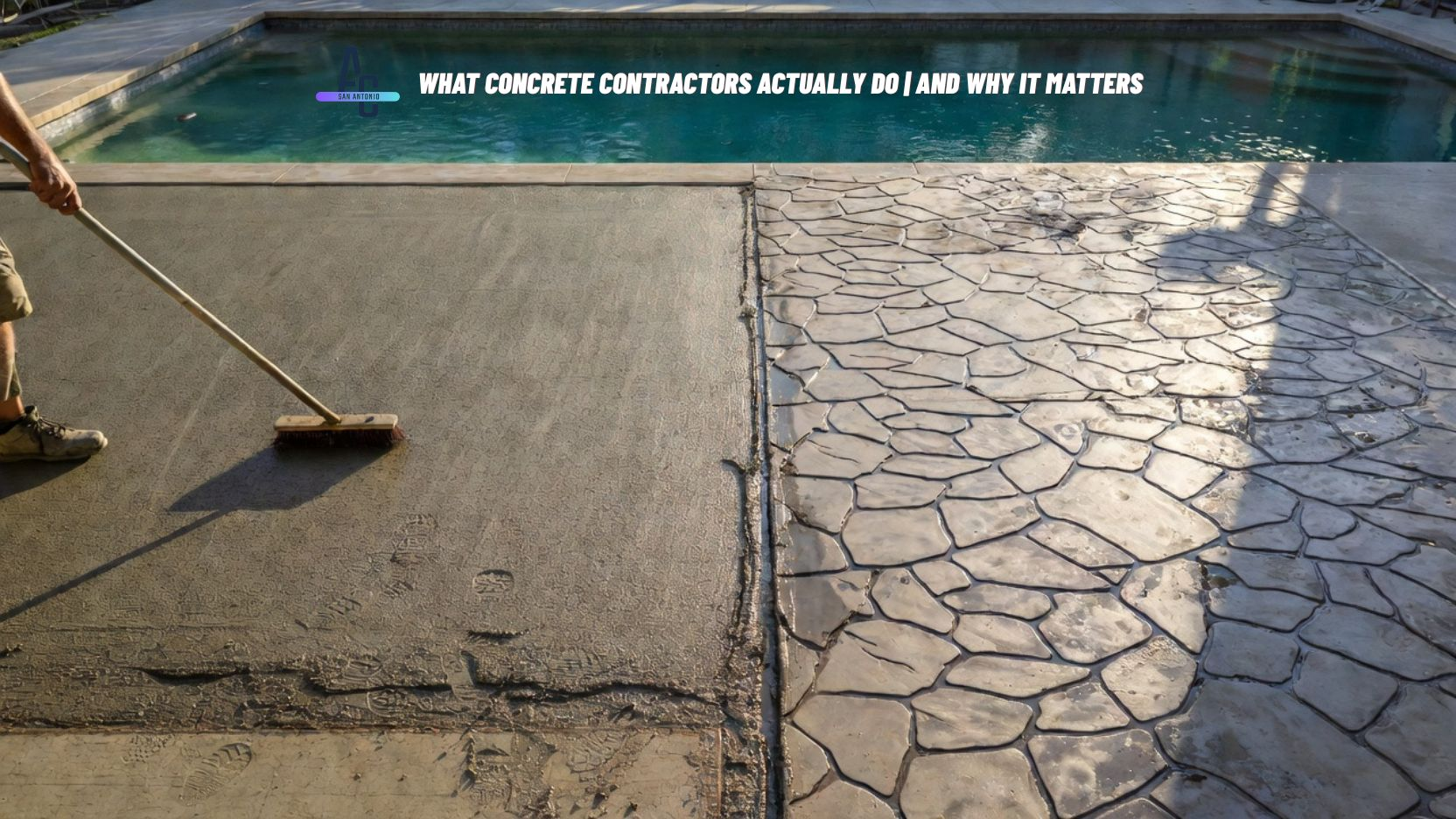
After years of analyzing residential construction projects across Texas and working closely with crews in San Antonio and Houston, I’ve seen a common misconception: people think concrete contractors “just pour concrete.” That’s not accurate.
Concrete contractors plan, prepare, reinforce, pour, finish, and protect structural surfaces that directly impact your property’s durability, drainage, safety, and value. The pouring is only one step in a much larger technical process.
If you’re a homeowner upgrading curb appeal or replacing damaged concrete, here’s what concrete contractors actually do step by step.
What Do Concrete Contractors Do Before Pouring Anything?
Before any concrete is mixed, professionals handle planning, engineering, and site evaluation.
This is where good contractors separate themselves from average crews.
Pre-Pour Responsibilities Include:
- Site inspection and measurements
- Soil evaluation (critical in Houston’s clay-heavy areas)
- Drainage and slope planning
- Permitting (if required)
- Material selection (strength rating, thickness)
- Providing a written scope and estimate
In San Antonio (1247 W Thompson Pl) and Houston (6203 Lawford Ln), soil movement is a real issue. Contractors must account for expansion and contraction to prevent premature cracking.
Key takeaway: Proper planning determines how long your concrete will last, not just how it looks on day one.
How Do Concrete Contractors Prepare The Ground?
Site preparation is the most important structural step in any concrete project.
Concrete is only as strong as the base underneath it.
Ground Prep Typically Includes:
- Demolition of old concrete
- Excavation to proper depth
- Compacted gravel or crushed stone base
- Installation of forms (wood or metal framing)
- Adding rebar or wire mesh reinforcement
Without proper compaction, concrete can settle unevenly leading to cracks, pooling water, or sinking slabs.
In Houston, expansive clay soils require extra attention. In San Antonio, limestone-heavy soil may affect excavation depth.
Key takeaway: If a contractor skips base prep, the project will likely fail early.
What Happens During The Concrete Pour?
The pouring process is controlled, timed, and technical not rushed.
Once concrete arrives on-site, contractors must work efficiently before it begins setting.
During The Pour, They:
- Spread and level (screed) the concrete
- Remove air pockets
- Smooth the surface with floats
- Shape edges and corners
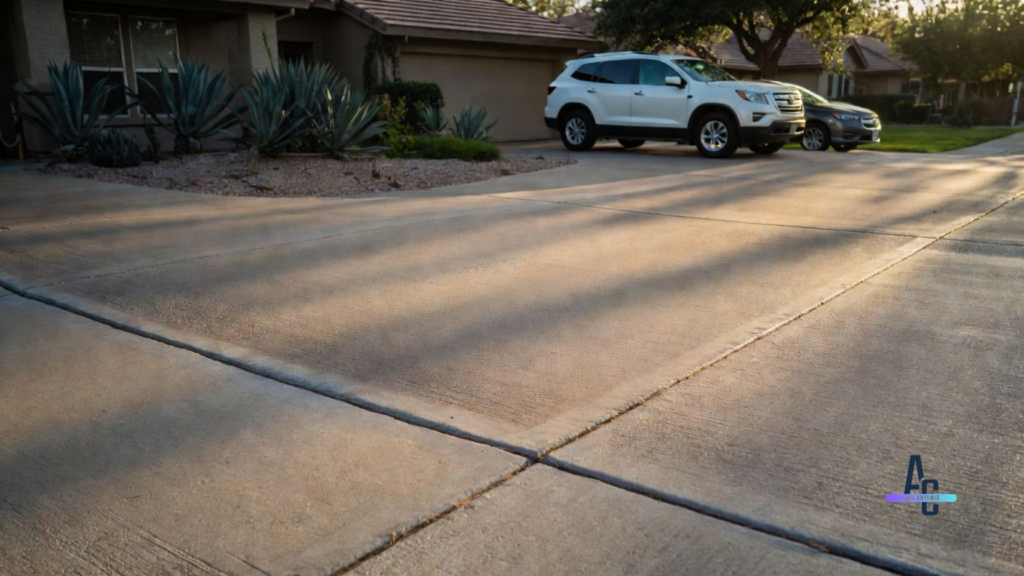
- Install control joints
Control joints are critical. They guide where natural cracking will occur, rather than letting cracks form randomly.
Professionals also ensure proper thickness:
| Application | Standard Thickness |
| Sidewalk | 4 inches |
| Patio | 4–5 inches |
| Driveway | 5–6 inches |
| Light commercial | 6+ inches |
How Do Contractors Finish Concrete Surfaces?
Finishing determines both appearance and slip resistance.
After leveling, contractors apply a finish based on function and design goals.
Common Finish Types:
- Broom finish (textured, slip-resistant)
- Smooth trowel finish
- Stamped concrete (decorative patterns)
- Exposed aggregate
- Stained or colored concrete
For pool owners and outdoor spaces, slip resistance is critical. A professional contractor balances design with safety.
When installed correctly, stamped concrete can significantly enhance curb appeal and property value.
Do Concrete Contractors Handle Repairs Too?
Yes, many concrete contractors repair cracked, sunken, or damaged surfaces.
Common repair services include:
- Crack filling and sealing
- Surface resurfacing
- Section replacement
- Concrete lifting or leveling
- Joint resealing
However, not all cracks are cosmetic. Structural cracks may indicate soil or drainage problems that need correction.
Key takeaway: Repair without fixing the root cause leads to recurring damage.
How Do Contractors Manage Curing And Aftercare?
Concrete does not reach full strength immediately curing is critical.
Concrete typically:
- Becomes walkable in 24–48 hours
- Supports vehicles in 5–7 days
- Reaches full strength in 28 days
Contractors may:
- Apply curing compounds
- Recommend moisture control
- Suggest sealing decorative surfaces
In Texas heat, curing must be carefully managed to prevent surface cracking.
Are Concrete Contractors Responsible For Drainage?
Yes, proper drainage is a core responsibility.
Slabs, patios, and driveways must slope away from your home to prevent:
- Foundation issues
- Water pooling
- Surface deterioration
- Mold and moisture damage
A professional contractor calculates the slope before forming and pouring.
Improper drainage is one of the most expensive mistakes in residential concrete work.
What Makes A Concrete Contractor “Professional”?
Not every crew operates at the same level.
You should expect:
- Written contracts
- Clear project timeline
- Defined thickness and reinforcement plan
- Cleanup after completion
- Explanation of the curing process
Professionalism isn’t about branding it’s about process control and structural integrity.
Final Summary: What Concrete Contractors Actually Do
Concrete contractors are responsible for:
- Site evaluation and planning
- Soil and drainage assessment
- Excavation and base preparation
- Reinforcement installation
- Controlled pouring and finishing
- Joint placement and crack management
- Proper curing guidance
- Repair and maintenance recommendations
They don’t just pour concrete. They build long-term structural surfaces that impact your home’s value, safety, and longevity.
FAQs
Do Concrete Contractors Need To Inspect The Site Before Giving A Quote?
Yes. A site visit ensures accurate pricing, proper slope planning, and evaluation of soil conditions.
How Long Should Residential Concrete Last In Texas?
With proper installation and maintenance, driveways and patios typically last 20–30 years.
Is Thicker Concrete Always Better?
Not necessarily. Thickness must match the load requirement. Overbuilding increases cost without always adding value.