
If you are comparing patio, driveway, or pool deck upgrades in South Texas, stamped concrete is poured concrete that is textured, patterned, and often colored to look like stone, brick, slate, tile, or even wood. This guide is written for homeowners in San Antonio and Houston, where heat, UV exposure, and seasonal rain all affect how decorative concrete should be installed and sealed.
In simple terms, stamped concrete gives you the look of premium materials with the durability and continuous surface of concrete. It is commonly used for patios, walkways, driveways, entryways, and pool decks.
How Does Stamped Concrete Work?
Stamped concrete is made by pouring fresh concrete, adding color if desired, and pressing patterned mats into the surface before it fully hardens. After that, the slab is cleaned and sealed to protect the finish.
Here is the basic process:
- Site prep and grading
- Forming and reinforcement
- Concrete pour
- Base color and release color application
- Stamping with texture mats
- Joint cutting and curing
- Sealing
Key takeaway: Stamped concrete is still real concrete. The “stamped” part refers to the decorative texture and pattern added on top.
What Does Stamped Concrete Look Like?
Stamped concrete can mimic high-end materials without requiring individual pavers or natural stone pieces. That is why many homeowners choose it for curb appeal upgrades.
Popular stamped concrete patterns include:
- Ashlar slate
- Random stone
- Brick
- Cobblestone
- Flagstone
- Wood plank texture
Popular color choices include:
- Warm tan
- Charcoal gray
- Terra cotta
- Sandstone
- Walnut brown
- Multi-tone antique finishes
Because the surface is continuous, it can create a clean, custom look across larger areas, such as backyard patios and pool surrounds.
Is Stamped Concrete A Good Choice For Patios, Driveways, And Pool Decks?
Yes, stamped concrete is a strong option for many outdoor living spaces, especially when homeowners want a decorative surface without the higher material and labor costs of natural stone. The right use depends on traffic, drainage, and maintenance expectations.
Stamped concrete works well for:
- Patios: attractive, customizable, and easier to clean than loose stone
- Driveways: durable, but need proper base prep and control joints
- Pool decks: can be textured for slip resistance and styled to match the home
- Walkways: seamless appearance and strong visual impact
For homeowners in San Antonio and Houston, proper installation matters because extreme sun, expansion and contraction, and water management can affect long-term performance.
What Are The Pros And Cons Of Stamped Concrete?
Stamped concrete offers strong visual value, but it is not maintenance-free. Knowing both sides helps homeowners choose the right surface.
Pros Of Stamped Concrete
- Decorative look without using individual stone or brick units
- Usually more affordable than natural stone
- Wide range of colors and patterns
- Continuous surface with fewer weed-growth issues than pavers
- Good choice for improving curb appeal and property value perception
Cons Of Stamped Concrete
- Can crack like any concrete slab
- Needs periodic sealing
- Repairs can be visible if the color or texture is hard to match
- Can become slippery if sealed incorrectly, especially near pools
- Not ideal if you want easy piece-by-piece replacement like pavers
Key takeaway: Stamped concrete is best for homeowners who want a decorative concrete surface and are willing to maintain the sealer.
How Is Stamped Concrete Different From Plain Concrete, Pavers, And Natural Stone?
The biggest difference is appearance versus installation style. Stamped concrete is a single slab of decorative concrete, while pavers and stone are installed as separate pieces.
| Surface Type | Look | Maintenance | Repair Ease | Cost Range |
| Stamped concrete | Decorative, custom patterns | Moderate | Moderate to difficult to blend | Mid-range |
| Plain concrete | Basic, utilitarian | Low to moderate | Easier | Lower |
| Pavers | Premium, segmented | Moderate | Easier to replace sections | Mid to high |
| Natural stone | High-end, unique | Moderate | Varies | High |
If your priority is design impact at a controlled budget, stamped concrete is often the middle-ground option.
How Long Does Stamped Concrete Last?
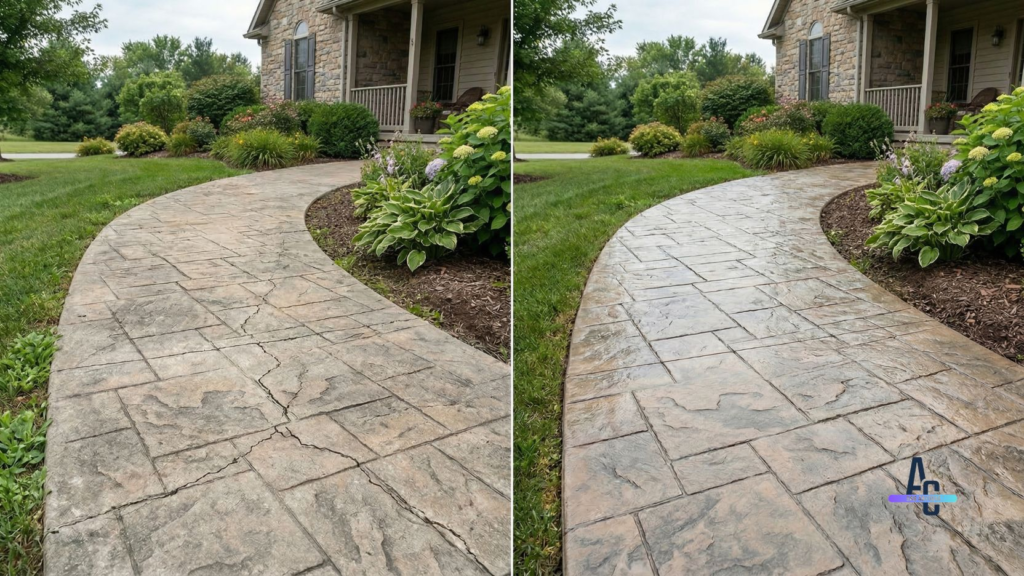
Well-installed stamped concrete can last for decades, but longevity depends heavily on base preparation, drainage, reinforcement, and sealer maintenance. Poor installation shortens the lifespan faster than the pattern itself.
To help stamped concrete last longer:
- Reseal it as needed
- Wash off dirt and debris
- Avoid harsh de-icing chemicals
- Address drainage issues early
- Repair minor cracks before they worsen
In Texas, UV exposure can wear down sealers more quickly, so homeowners should expect periodic maintenance rather than a one-time finish.
Is Stamped Concrete Expensive?
Stamped concrete usually costs more than plain concrete but less than many natural stone installations. The total price depends on pattern complexity, color layers, site access, demolition needs, and slab thickness.
Factors that raise cost include:
- Existing concrete removal
- Intricate borders or multiple stamp patterns
- Large square footage
- Heavy reinforcement needs
- Drainage correction
- Premium sealers or slip-resistant finishes
For many property owners, the value is not just the surface itself but the upgraded appearance of the whole outdoor space.
Is Stamped Concrete Worth It In San Antonio And Houston?
Yes, stamped concrete can be worth it in San Antonio and Houston when installed for the local climate and maintained properly. It is especially popular for patios, pool decks, and front entry improvements.
Why it fits these markets:
- Outdoor living spaces are used heavily for much of the year
- Decorative surfaces can improve curb appeal
- Homeowners often want a custom look without full natural stone pricing
- Large backyard areas benefit from a continuous decorative surface
For local projects, homeowners should pay close attention to:
- Expansion joints
- Proper subgrade prep
- Drainage slope
- Heat-reflective color choices
- Pool deck traction
- Sealer selection for UV exposure
How Do You Know If Stamped Concrete Is Right For Your Home?
Stamped concrete is a good fit if you want the look of a premium surface, need a durable slab, and understand that resealing is part of ownership. It is often a smart choice for homeowners who want to replace cracked concrete or upgrade plain outdoor areas.
It may be right for you if:
- You want to improve curb appeal
- You are upgrading a patio, pool deck, or walkway
- You prefer one continuous surface over pavers
- You want decorative results at a mid-range budget
- You are comfortable with routine maintenance
Not ideal for if:
- You want easy spot repairs
- You dislike periodic sealing
- You prefer the natural variation of real stone
FAQs
Does Stamped Concrete Crack?
Yes, it can crack like any concrete. Proper base prep, reinforcement, joint placement, and drainage help reduce the risk.
Is Stamped Concrete Slippery Around A Pool?
It can be if sealed improperly. A textured pattern and slip-resistant additive in the sealer can improve traction.
Can Old Concrete Be Stamped?
Usually, no, not in the true stamped-concrete sense. Stamping is typically done while new concrete is still fresh, though resurfacing systems may create a similar decorative effect.