
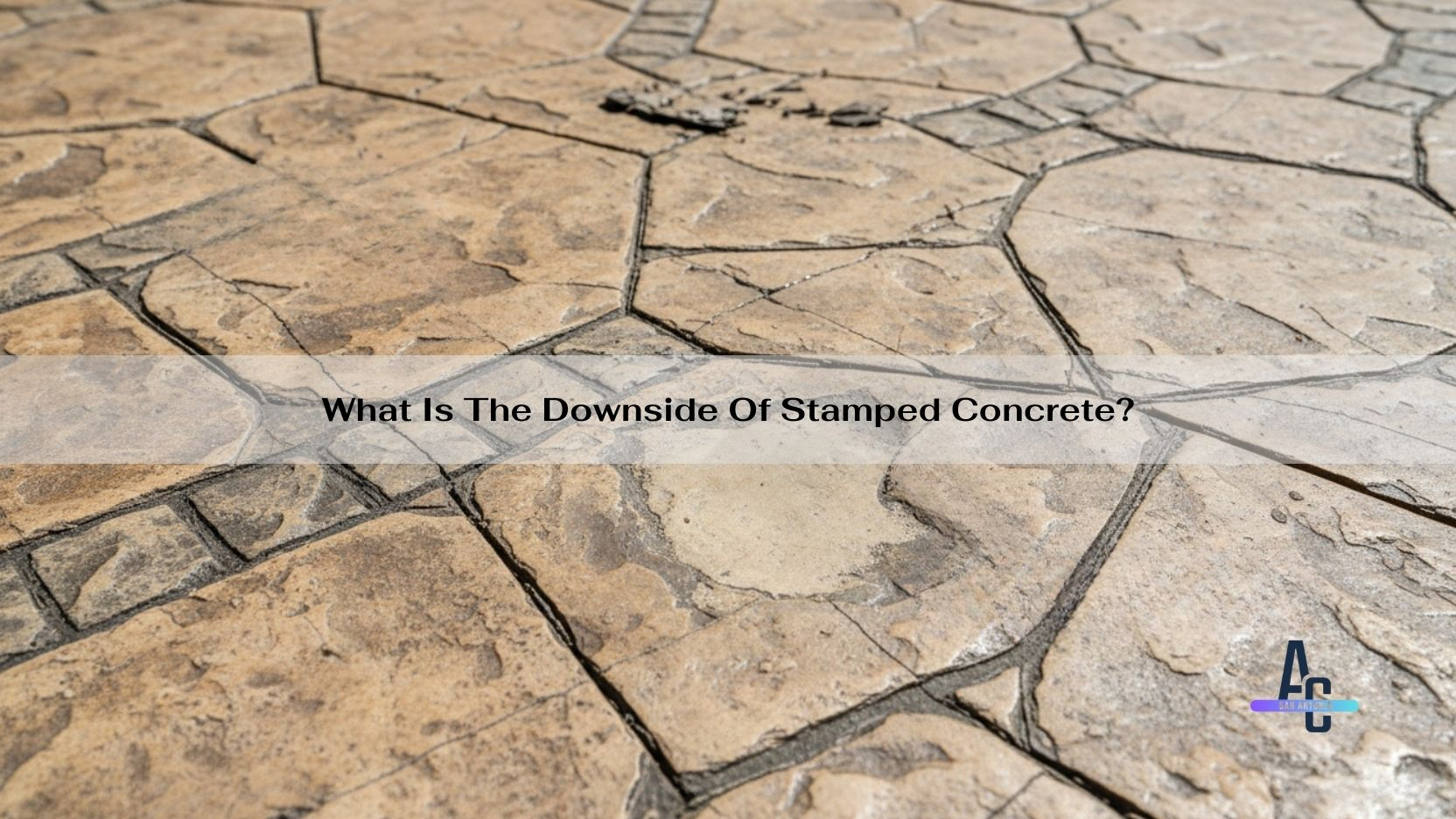
What is the downside of stamped concrete?
That’s the right question to ask before choosing it for a patio, driveway, pool deck, or commercial surface.
Stamped concrete is widely praised for its ability to mimic stone, brick, slate, or wood at a fraction of the cost. In markets like San Antonio, it’s one of the most requested decorative concrete solutions. But while stamped concrete offers strong visual appeal and affordability, it also comes with real limitations, risks, and long-term tradeoffs that are often underexplained in sales-driven content.
This article delivers a clear, research-driven breakdown of the downsides of stamped concrete, grounded in real-world installation experience, climate considerations, and maintenance realities so you can make an informed decision, not a rushed one.
What Is Stamped Concrete?
Stamped concrete also called imprinted or textured concrete is poured concrete patterned and colored to resemble materials like brick, slate, flagstone, tile, or wood. The stamping process occurs while the concrete is still wet, followed by sealing to enhance appearance and durability.
According to Wikipedia’s overview of stamped concrete, the technique is primarily decorative and relies heavily on surface treatments rather than structural differences.
What Is The Downside Of Stamped Concrete?
The primary downside of stamped concrete is that it is prone to cracking and requires ongoing maintenance to preserve its appearance. Unlike individual pavers or natural stone, stamped concrete is a single continuous slab, meaning movement, temperature changes, or soil shifts can result in visible cracks that are difficult to disguise.
In short:
- It looks premium but behaves like concrete
- Repairs are not seamless
- Maintenance is not optional
Cracking: The #1 Risk Homeowners Underestimate
All concrete cracks. The issue with stamped concrete is how noticeable those cracks become.
Why Cracking Happens
- Soil movement (common in Texas clay soils)
- Extreme temperature fluctuations
- Improper subgrade preparation
- Insufficient control joints
According to HomeAdvisor’s concrete repair cost data, decorative concrete repairs are often more expensive because cracks disrupt the visual pattern.
Key drawback: Even hairline cracks can break the illusion of stone or brick, making the surface look damaged rather than decorative.
Maintenance Requirements Over Time
Stamped concrete is often marketed as “low maintenance,” but that claim is relative not absolute.
Ongoing Maintenance Includes:
- Resealing every 2–3 years
- Regular cleaning to prevent discoloration
- Reapplying anti-slip additives if used near pools
According to Angi’s stamped concrete maintenance guide, failure to reseal is the leading cause of premature wear and color loss.
Downside: Maintenance is predictable but unavoidable.
Fading, Wear, And Surface Degradation
Stamped concrete relies heavily on:
- Color hardeners
- Release agents
- Topical sealers
Over time, UV exposure and foot traffic wear down these surface treatments.
Common Issues Include:
- Color fading in high-sun areas
- Patchy wear patterns
- Dull or chalky finishes
In hot climates like San Antonio, UV degradation accelerates surface aging, especially on south-facing patios and driveways.
Slippery Surfaces & Safety Concerns
When sealed, stamped concrete can become slick when wet, particularly around:
- Pool decks
- Outdoor kitchens
- Sloped walkways
While anti-slip additives exist, they:
- Increase maintenance
- Slightly dull the finish
- Must be reapplied during resealing
The Concrete Network notes that slip resistance is one of the most common homeowner complaints after installation.
Repair Limitations And Aesthetic Challenges
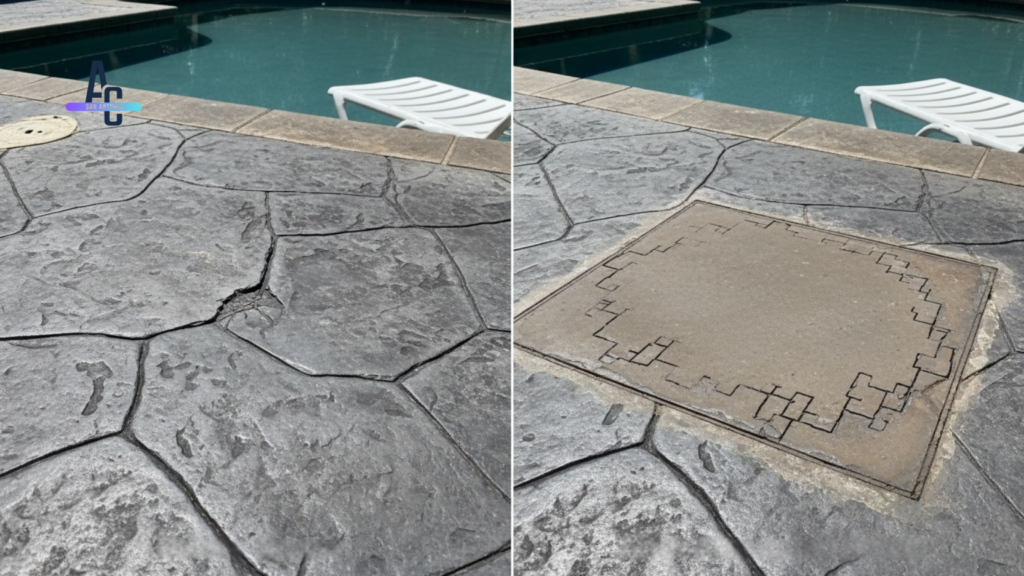
One of the biggest downsides of stamped concrete is repair visibility.
Unlike pavers, where individual units can be replaced, stamped concrete repairs often result in:
- Mismatched color
- Broken pattern continuity
- Visible patch lines
This makes stamped concrete less forgiving than modular systems like interlocking pavers.
Climate-Specific Downsides (San Antonio & Similar Regions)
Stamped concrete performs differently depending on climate.
In Hot, Dry Regions:
- Faster sealant breakdown
- Increased surface expansion
In Wet Or Freeze-Thaw Regions:
- Moisture intrusion
- Surface scaling and spalling
According to The Concrete Network’s climate performance guidance, decorative concrete requires region-specific installation techniques to avoid premature failure.
Cost Vs Long-Term Value Comparison
| Surface Type | Upfront Cost | Repair Flexibility | Long-Term Maintenance |
| Stamped Concrete | Low–Medium | Poor | Moderate |
| Pavers | High | Excellent | Low |
| Natural Stone | High | Good | Low |
| Plain Concrete | Low | Good | Low |
Stamped concrete wins on initial cost, but not always on lifetime value.
When Stamped Concrete Is The Right Choice
Despite the downsides, stamped concrete is a strong option when:
- Budget is a primary concern
- Design continuity matters
- The area has low structural movement
- Professional installation is guaranteed
Commercial spaces, patios, and decorative walkways often benefit the most.
How To Reduce The Downsides Of Stamped Concrete
Many drawbacks can be minimized with the right approach:
- Proper subgrade preparation
- Strategic control joint placement
- High-quality sealers with UV protection
- Professional installation by experienced contractors
According to Yelp contractor reviews, workmanship quality is the single biggest factor in stamped concrete satisfaction.
Final Verdict: Is Stamped Concrete Worth It?
So what is the downside of stamped concrete?
It’s not the material itself, it’s the expectation gap.
Stamped concrete delivers exceptional visual value at a reasonable cost, but it requires ongoing maintenance, professional installation, and realistic expectations about cracking and wear. When those factors are understood upfront, it can be a smart, attractive, and durable solution.
For homeowners and businesses considering stamped concrete in San Antonio, working with experienced specialists like Affordable Concrete San Antonio ensures the design, installation, and sealing process is done right the first time.
Request a free stamped concrete estimate Cell: 713-504-2341