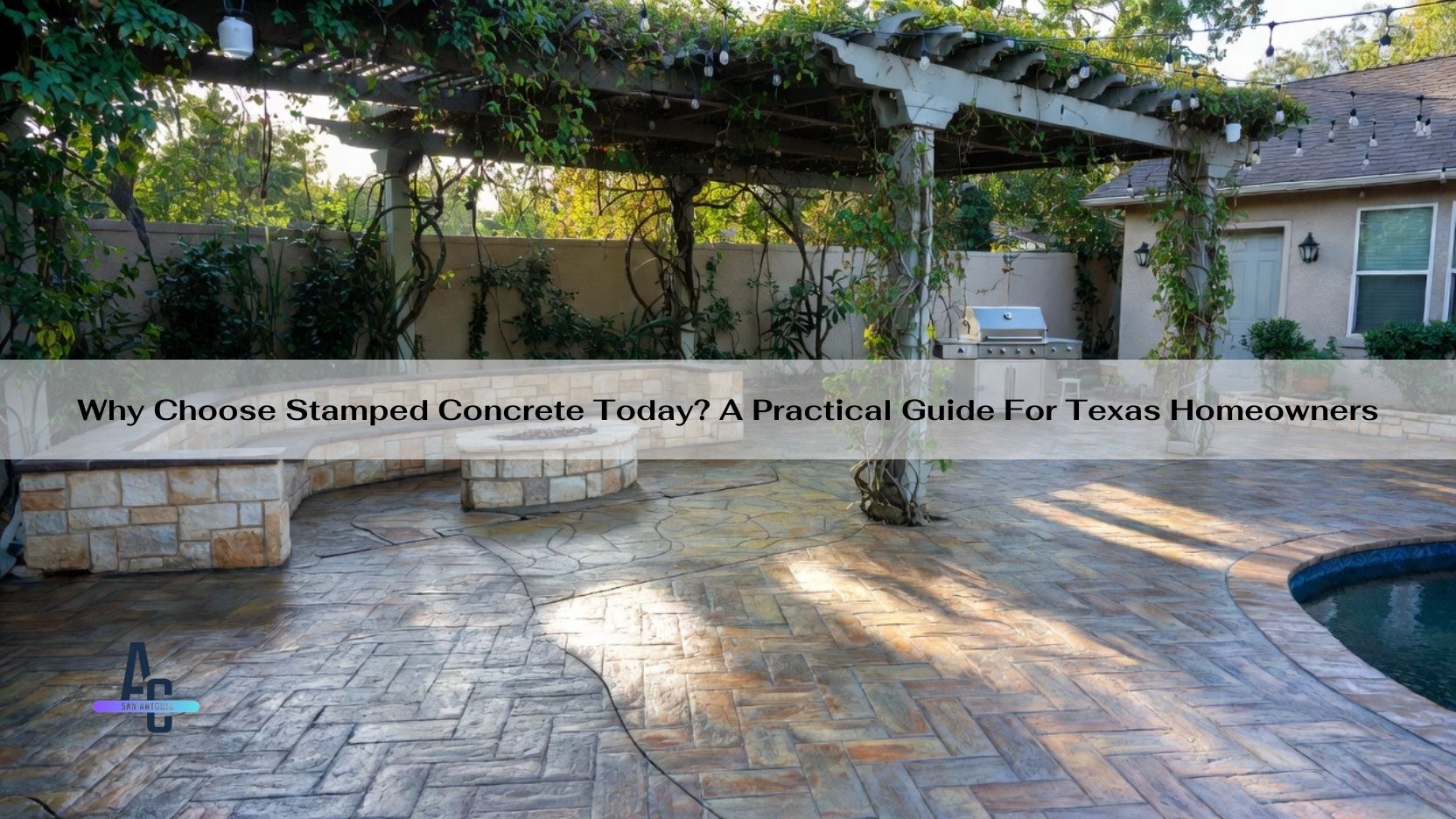
With over a decade of hands-on concrete installation experience in South Texas, we’ve worked on patios, driveways, and pool decks exposed to extreme heat, heavy rain, and shifting clay soils. Based on real-world performance, homeowners choose stamped concrete today because it combines high-end appearance, structural durability, and lower lifetime cost compared to natural stone or pavers.
If you want a surface that looks premium but performs like reinforced concrete, stamped concrete is one of the most balanced outdoor upgrades available.
Why Choose Stamped Concrete Today Instead Of Pavers Or Natural Stone?
Stamped concrete delivers the look of stone or brick at a lower cost and with fewer long-term maintenance issues.
Here’s how it compares:
| Feature | Stamped Concrete | Pavers | Natural Stone |
| Installation Cost | Moderate | Higher | Highest |
| Weed Growth | None (solid slab) | Possible between joints | Possible |
| Surface Shifting | Minimal (if installed properly) | Common over time | Possible |
| Maintenance | Reseal every 2–3 years | Re-level, joint sand | Seal + joint care |
Because stamped concrete is poured as one continuous slab, it avoids many of the joint and settling issues common with modular systems.
Key takeaway: You get decorative appeal with structural strength.
Is Stamped Concrete A Good Investment In San Antonio And Houston?
Yes, especially in hot climates where durability matters.
In areas like San Antonio (1247 W Thompson Pl, San Antonio, TX 78226) and Houston (6203 Lawford Ln, Houston, TX 77040), outdoor surfaces must handle:
- High UV exposure
- Intense summer heat
- Heavy rain events
- Expansive clay soils
Stamped concrete performs well when installed with:
- Compacted base preparation
- Steel reinforcement
- Control joints
- Professional sealing
Compared to asphalt, stamped concrete lasts longer and maintains its appearance better under UV exposure.
Does Stamped Concrete Increase Curb Appeal?
Yes. Decorative concrete significantly improves visual impact.
Stamped concrete can mimic:
- Flagstone
- Slate
- Brick
- Cobblestone
- Wood plank textures
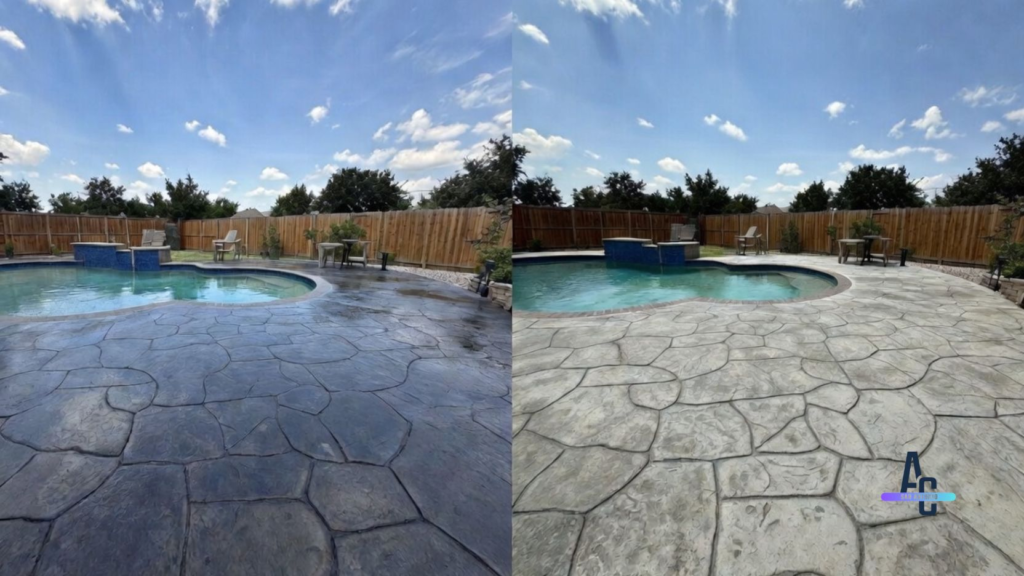
For homeowners upgrading cracked or plain gray concrete, this transformation is noticeable.
Driveways and front walkways especially benefit because they influence first impressions. For property value-focused homeowners, exterior presentation matters.
Key takeaway: A stamped concrete driveway or patio enhances both style and perceived home value.
How Durable Is Stamped Concrete For Driveways And Patios?
Stamped concrete can last 25 years or more with proper installation and maintenance.
Durability depends on:
- Proper slab thickness (typically 4 inches for patios, thicker for driveways)
- Reinforcement
- Proper curing
- Periodic resealing
When sealed correctly, stamped concrete resists:
- Surface wear
- Moisture penetration
- Fading from UV exposure
While all concrete can crack, control joints help manage where cracking occurs.
For pool owners and outdoor entertainers, durability combined with style makes it a practical choice.
Is Stamped Concrete Safe Around Pools?
Yes, when finished with slip-resistant texture and proper sealer.
Stamped concrete for pool decks should include:
- Textured patterns for traction
- Non-gloss or anti-slip sealers
- Lighter colors to reduce heat absorption
In hot Texas summers, lighter stamped finishes stay more comfortable underfoot than dark surfaces.
Safety depends on professional finishing, not just the pattern chosen.
What Makes Stamped Concrete Worth Choosing Today?
Stamped concrete offers design flexibility, cost efficiency, and structural reliability in one system.
Why many homeowners choose it today:
- Rising natural stone prices
- Desire for low-maintenance landscaping
- Increased focus on outdoor living spaces
- Need for long-lasting driveway replacements
Stamped concrete fits modern outdoor living trends, including:
- Outdoor kitchens
- Fire pit patios
- Extended pool decks
- Decorative entryways
It balances performance and design without requiring multiple material systems.
When Might Stamped Concrete Not Be The Best Option?
Stamped concrete may not be ideal if:
- You prefer modular systems with individual replaceable units
- Your soil requires engineered structural solutions beyond standard residential slabs
- You want authentic natural stone regardless of cost
However, for most residential properties upgrading standard concrete, it provides strong overall value.
FAQS
How Often Does Stamped Concrete Need To Be Sealed?
Typically every 2–3 years, depending on traffic and sun exposure.
Does Stamped Concrete Crack More Than Regular Concrete?
No. It behaves like standard concrete. Proper base preparation and control joints reduce uncontrolled cracking.
Is Stamped Concrete Good For Commercial Spaces?
Yes, for light commercial applications such as storefront walkways or small parking areas when properly engineered.