With over a decade of hands-on experience installing residential and light commercial concrete in South Texas, we’ve seen which driveway materials truly last. In climates like San Antonio and Houston, durability and soil movement matter.
Concrete driveways are worth the investment because they last longer, require less maintenance, handle heavy loads better, and improve curb appeal compared to asphalt or gravel. When properly installed, they can perform for 25–30+ years.
Below is a practical breakdown for homeowners considering a driveway upgrade.
Are Concrete Driveways Really More Durable Long Term?
Yes. Concrete typically outlasts asphalt and gravel by a wide margin.
In Texas conditions heat, rain, and expansive clay soils material performance matters.
| Material | Average Lifespan | Maintenance Level |
| Concrete | 25–30+ years | Low |
| Asphalt | 15–20 years | Moderate |
| Gravel | 5–10 years | High |
Concrete does not soften in extreme heat the way asphalt can. It also resists rutting under heavy vehicles like trucks and SUVs, which are common in San Antonio and Houston.
Key takeaway: Over decades, concrete often delivers the lowest cost per year of service.
Does A Concrete Driveway Increase Property Value?
Yes. A well-installed concrete driveway improves curb appeal and buyer perception.
Driveways are one of the first features people see. Cracks, uneven surfaces, or patchwork repairs can lower visual appeal.
Concrete enhances value by:
- Creating a clean, finished appearance
- Providing long-term structural stability
- Reducing visible wear over time
- Supporting decorative options like stamped or stained finishes
For property value-focused homeowners, curb appeal improvements can influence resale conversations.
Is Concrete More Cost-Effective Than Asphalt Over Time?
In many cases, yes, especially when evaluating long-term maintenance.
While initial installation costs for concrete may be higher than asphalt, consider:
- Asphalt requires sealing every 3–5 years
- Asphalt may need resurfacing sooner
- Gravel requires frequent grading and replenishment
Concrete maintenance is minimal:
- Occasional cleaning
- Optional sealing
- Monitoring joints
When calculated over 20–30 years, concrete often results in fewer repair cycles.
Key takeaway: The upfront cost is higher, but lifecycle costs are typically lower.
How Does Concrete Perform In San Antonio And Houston Soil Conditions?
Concrete performs well when installed with proper base preparation and reinforcement.
South Texas soil presents challenges:
- Expansive clay
- Heavy rainfall
- Drainage concerns
- Occasional freeze events
Driveway longevity depends on:
- Compacted subgrade
- Reinforced slab (rebar or mesh)
- Control joints
- Proper thickness (typically 4–6 inches)
At locations like 1247 W Thompson Pl, San Antonio, TX 78226 and 6203 Lawford Ln, Houston, TX 77040, soil movement is a real factor. Installation quality determines long-term performance.
Most driveway failures are caused by poor installation, not the material itself.
Are Decorative Concrete Driveways Worth The Upgrade?
Yes, for homeowners who want both function and visual impact.
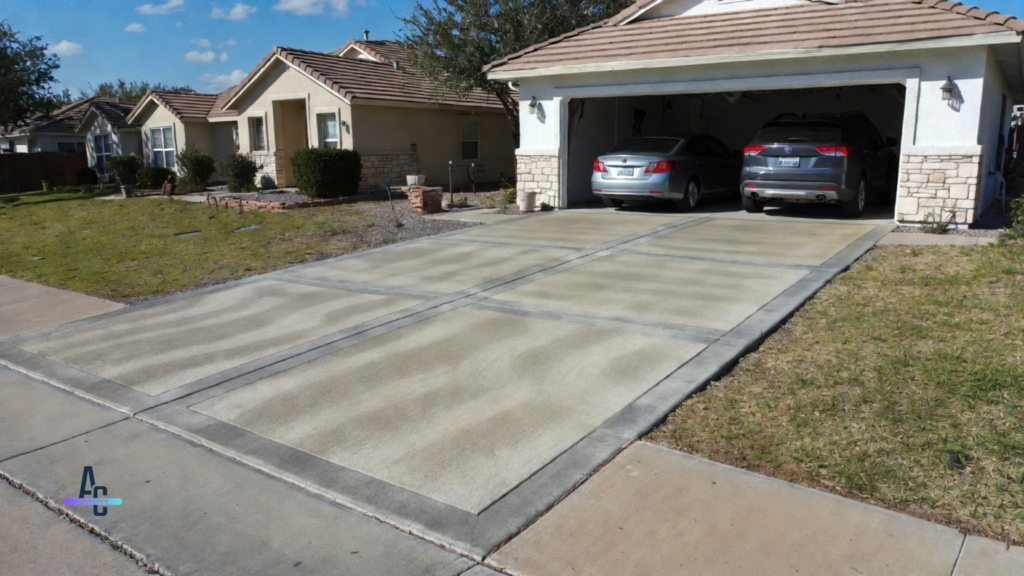
Concrete offers design flexibility that asphalt cannot match:
- Stamped concrete (stone, brick, slate appearance)
- Exposed aggregate (textured, durable surface)
- Colored concrete
- Broom finish (classic, slip-resistant texture)
For outdoor space upgrades or pool-adjacent driveways, decorative concrete can unify the look of patios, walkways, and hardscaping.
Can Concrete Handle Heavy Vehicles And Light Commercial Use?
Yes, when installed at proper thickness and reinforcement levels.
Concrete has high compressive strength. It supports:
- Large SUVs
- Pickup trucks
- RVs (when designed accordingly)
- Light commercial traffic
Increasing slab thickness from 4 inches to 5–6 inches significantly improves load capacity.
For homeowners replacing cracked or sunken driveways, upgrading thickness can prevent repeat issues.
What Makes Concrete A Low-Maintenance Choice?
Concrete requires less frequent upkeep than most driveway materials.
Routine care includes:
- Sweeping debris
- Washing stains
- Sealing every few years (optional but recommended in high-traffic areas)
It does not require annual grading like gravel or repeated sealing for structural integrity like asphalt.
Key takeaway: Minimal intervention keeps concrete functional and attractive.
FAQs
How Long Does A Concrete Driveway Take To Cure?
You can walk on it within 24–48 hours.
Vehicles should wait at least 7 days.
Full strength develops around 28 days.
Does Concrete Crack Over Time?
Minor cracking can occur. However, control joints are designed to manage and guide cracks, preventing structural damage.
How Thick Should A Residential Concrete Driveway Be?
Standard residential driveways are 4 inches thick.
For heavier vehicles or light commercial use, 5–6 inches is recommended.
Final Thoughts
For homeowners in San Antonio and Houston looking to replace damaged concrete or upgrade curb appeal, concrete driveways offer durability, structural strength, aesthetic flexibility, and long-term value.
When installed correctly with proper base preparation and reinforcement, they remain one of the most practical driveway investments available.