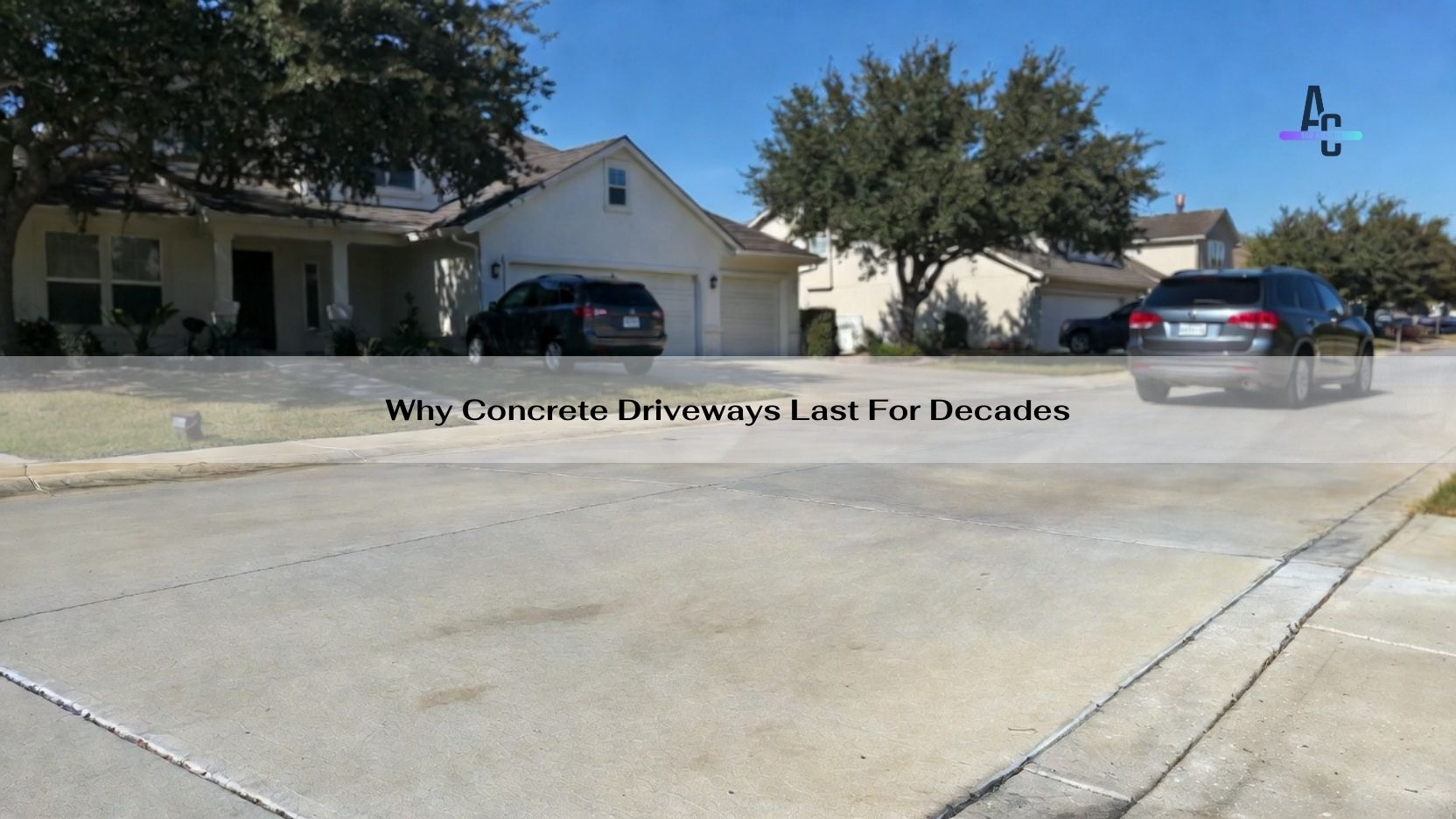
With over 14 years of hands-on experience installing and replacing concrete driveways across San Antonio and Houston, we’ve seen what makes some slabs last 30+ years while others fail early. Climate, soil, and installation quality all matter.
Concrete driveways last for decades because of their high compressive strength, proper base preparation, reinforcement, control joints, and low maintenance requirements. When installed correctly, a residential concrete driveway can perform reliably for 25–30 years or more even in Texas conditions.
Below is a clear breakdown of why that longevity is possible.
What Makes Concrete So Durable Compared To Other Driveway Materials?
Concrete has high compressive strength and structural stability.
Concrete is designed to withstand heavy loads without deforming. Once cured, it becomes a rigid slab capable of supporting:
- SUVs and pickup trucks
- Work vans
- Light commercial vehicles
Compared to asphalt:
| Feature | Concrete | Asphalt |
| Lifespan | 25–30+ years | 15–20 years |
| Heat Resistance | Strong | Can soften in high heat |
| Surface Stability | Rigid | Flexible |
In Texas heat, asphalt can soften and rut. Concrete maintains its structural integrity.
Key takeaway: Strength and rigidity are major reasons concrete lasts longer.
How Does Proper Base Preparation Affect Lifespan?
The base is the foundation of driveway longevity.
Many early driveway failures are caused by poor subgrade preparation, not the concrete itself.
A long-lasting driveway requires:
- Excavation to stable soil
- Compacted crushed stone base
- Proper grading for drainage
- Moisture control before pouring
In areas like San Antonio (78226) and Houston (77040), expansive clay soils expand and contract with moisture changes. A properly compacted base helps minimize slab movement.
Without proper base preparation, even high-quality concrete can crack prematurely.
Why Are Control Joints Important For Long-Term Performance?
Control joints help manage natural cracking.
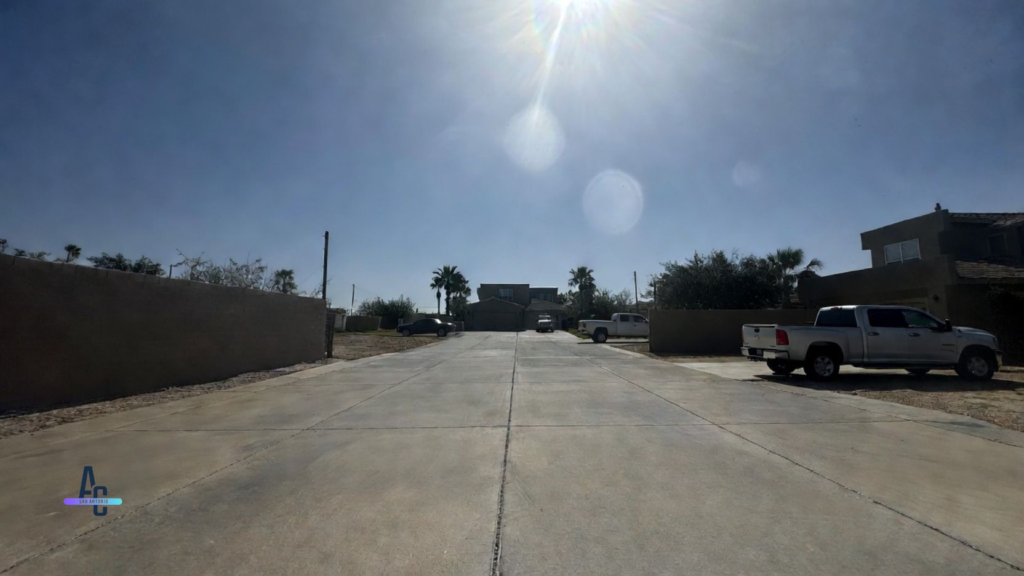
Concrete naturally shrinks slightly as it cures. Control joints are intentionally placed cuts that guide where cracks occur.
Benefits include:
- Preventing random surface cracks
- Maintaining structural integrity
- Preserving visual appearance
Cracking is not always a failure it becomes a problem only when uncontrolled.
Key takeaway: Planned cracking is better than uncontrolled cracking.
Does Reinforcement Really Extend Driveway Life?
Yes. Reinforcement improves load distribution and crack resistance.
Common reinforcement methods include:
- Steel rebar
- Welded wire mesh
- Fiber additives
Reinforcement strengthens the slab, especially in high-traffic areas or where heavier vehicles are parked.
Increasing slab thickness from 4 inches to 5–6 inches can further improve durability.
For homeowners replacing cracked driveways, reinforcement is often a major upgrade.
How Does Climate Affect Concrete Lifespan In Texas?
Concrete performs well in hot climates when installed correctly.
Texas weather includes:
- Extended high temperatures
- Heavy rainfall
- Occasional freezes
- Expansive clay soils
Concrete withstands:
- UV exposure
- Heat without softening
- Heavy vehicle pressure
Proper curing is essential. Concrete must retain moisture during early curing to reach full strength.
In South Texas conditions, attention to curing methods significantly affects long-term performance.
Is Maintenance A Factor In Why Concrete Lasts So Long?
Yes. Concrete requires minimal but important maintenance.
Basic upkeep includes:
- Cleaning debris and stains
- Monitoring joints
- Applying sealer when appropriate
- Maintaining proper drainage
Unlike asphalt, concrete does not require regular resurfacing to maintain structural strength.
Consistent but simple care can help extend lifespan beyond 30 years.
Does Installation Quality Matter More Than Material?
Yes. Installation quality often determines whether a driveway lasts 10 years or 30 years.
Critical factors include:
- Proper mix design
- Correct slab thickness
- Adequate reinforcement
- Controlled curing process
- Drainage planning
Even high-strength concrete can fail if installed incorrectly.
For property value-focused homeowners, hiring experienced installers reduces long-term repair risks.
Key takeaway: The installer’s process matters as much as the material itself.
FAQs
How Long Should A Concrete Driveway Last?
A properly installed residential concrete driveway can last 25–30 years or more, depending on soil conditions and maintenance.
What Causes Concrete Driveways To Fail Early?
Common causes include poor base preparation, lack of reinforcement, improper curing, and drainage issues.
Can Sealing Extend Driveway Lifespan?
Sealing helps protect against moisture penetration and surface wear. While not mandatory, it can support long-term durability.
Final Thoughts
Concrete driveways last for decades because of their structural strength, controlled cracking systems, proper reinforcement, and minimal maintenance needs. In areas like San Antonio and Houston, installation quality and soil preparation play a critical role.
For homeowners upgrading cracked or aging surfaces, a properly installed concrete driveway remains one of the most durable exterior improvements available.