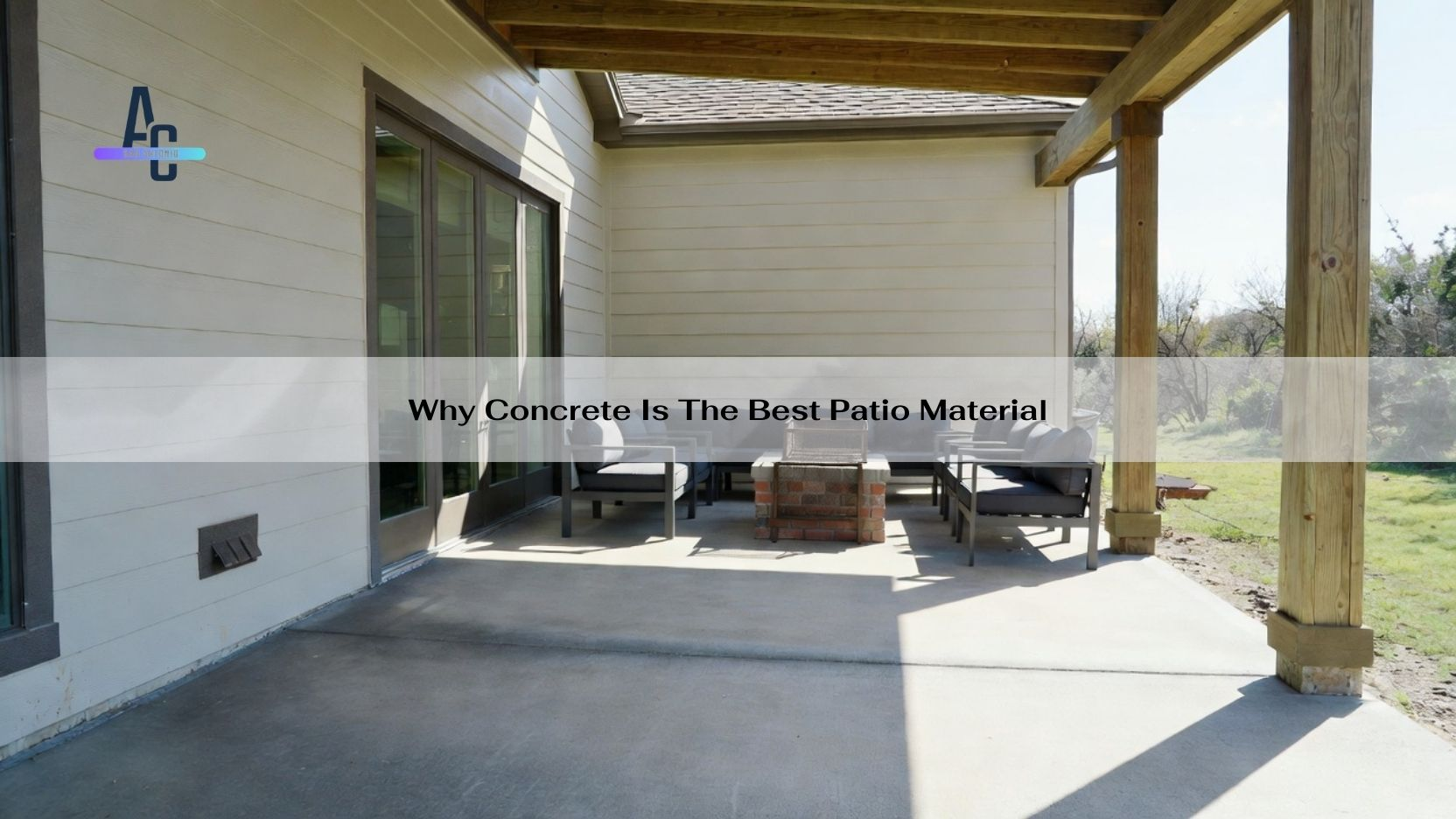
With over 10 years of hands-on experience installing patios across San Antonio and Houston, TX, I’ve worked with concrete, pavers, natural stone, and wood decks in real Texas conditions. I’ve seen which materials fail in heat and humidity and which ones consistently perform.
Concrete is the best patio material for most Texas homeowners because it offers superior durability, low maintenance, cost efficiency, and long-term value especially in hot climates with shifting soil like San Antonio and Houston.
Here’s a clear, practical breakdown of why.
Why Does Concrete Perform Better In Texas Weather?
Concrete handles extreme heat, heavy rain, and soil movement better than most patio materials.
South Texas conditions include:
- 100°+ summer temperatures
- Sudden heavy storms
- Expansive clay soil
- High humidity (especially in Houston)
Wood absorbs moisture and warps.
Pavers can shift as soil expands and contracts.
Natural stone can crack if not properly supported.
A reinforced concrete slab with proper base preparation is engineered to manage expansion and load stress.
Key takeaway: In Texas climates, structural stability matters and concrete delivers it.
Is Concrete More Durable Than Pavers Or Wood?
Yes. Properly installed concrete patios can last 25–30+ years with minimal structural issues.
Here’s a side-by-side comparison:
| Material | Lifespan | Common Issues |
| Wood Deck | 10–15 yrs | Rot, warping, termites |
| Pavers | 20+ yrs | Shifting, weeds, settling |
| Natural Stone | 25+ yrs | High cost, base failure risk |
| Concrete | 25–30+ yrs | Minor surface cracking |
Concrete may develop small hairline cracks, which are usually cosmetic and controlled with joints.
Compared to the structural deterioration common in wood decks, concrete requires far fewer repairs over time.
Is Concrete The Most Cost-Effective Patio Material?
In most cases, yes, especially long term.
Concrete typically offers:
- Lower installation cost than natural stone
- Comparable or lower cost than pavers
- Minimal maintenance expenses
Wood decks often require:
- Annual sealing
- Board replacement
- Structural repairs
Pavers may require re-leveling and weed control.
Over 20–30 years, maintenance costs often make wood the most expensive option.
Property value-focused homeowners often see the strongest return on investment with concrete.
Does Concrete Look Good, Or Is It Just Plain Gray?
Modern concrete is highly customizable and can look high-end when properly designed.
Options include:
- Stamped concrete (stone, brick, wood textures)
- Integral color
- Surface staining
- Exposed aggregate
- Clean broom finishes for modern homes
In both San Antonio and Houston neighborhoods, decorative concrete is widely used for:
- Pool decks
- Outdoor kitchens
- Covered patios
- Contemporary backyard renovations
Concrete is no longer just a basic slab, it’s a design surface.
Is Concrete Safe And Practical For Pool Areas?
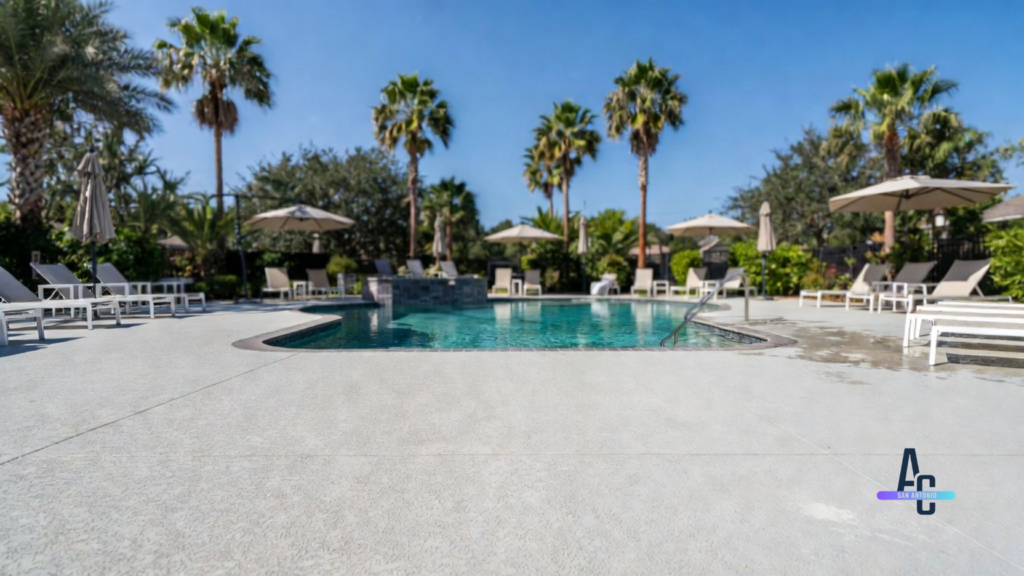
Yes. Concrete is one of the best materials for Texas pool decks.
Pool owners need surfaces that:
- Resist water damage
- Provide slip resistance
- Stay stable despite soil movement
Textured finishes improve traction.
Light-colored surfaces reduce heat absorption.
Wood near pools is vulnerable to rot and becomes slippery. Pavers can shift and create uneven edges.
Concrete provides a durable, low-risk surface for high-use areas.
What About Cracking Doesn’t Concrete Always Crack?
Concrete can crack, but proper installation dramatically reduces serious issues.
Minor hairline cracks are normal due to natural curing and soil movement.
Major cracking typically results from:
- Poor base preparation
- Lack of reinforcement
- Inadequate control joints
- Drainage problems
When installed with:
- Compacted base
- Steel reinforcement (rebar or mesh)
- Planned control joints
Concrete performs reliably for decades.
Key takeaway: Most concrete failures are installation issues not material failures.
Is Concrete Strong Enough For Heavy Outdoor Features?
Yes. Concrete provides the structural support needed for outdoor living upgrades.
Many Texas homeowners add:
- Built-in grills
- Fire pits
- Pergolas
- Outdoor fireplaces
- Covered patio extensions
Concrete supports heavy loads without sagging or flexing like wood decking.
For light commercial spaces, this strength is equally valuable.
Does Concrete Increase Property Value In San Antonio And Houston?
Yes, especially when it enhances usable outdoor space.
Buyers in Texas expect functional backyards.
A well-designed concrete patio:
- Expands livable square footage
- Requires little maintenance
- Signals durability
A deteriorating wood deck can hurt resale appeal. A clean, modern concrete patio often improves it.
Key takeaway: Concrete combines performance, aesthetics, and resale value.
FAQs
Is Concrete Better Than Pavers For Patios?
Concrete is generally more stable in expansive clay soils like those in San Antonio and Houston. Pavers allow modular repair but may shift over time.
Does Concrete Get Too Hot In Texas Summers?
Concrete can warm in direct sun, but lighter finishes reduce heat absorption compared to darker materials.
How Long Does A Concrete Patio Last In Texas?
With proper installation, 25–30 years or more is common.