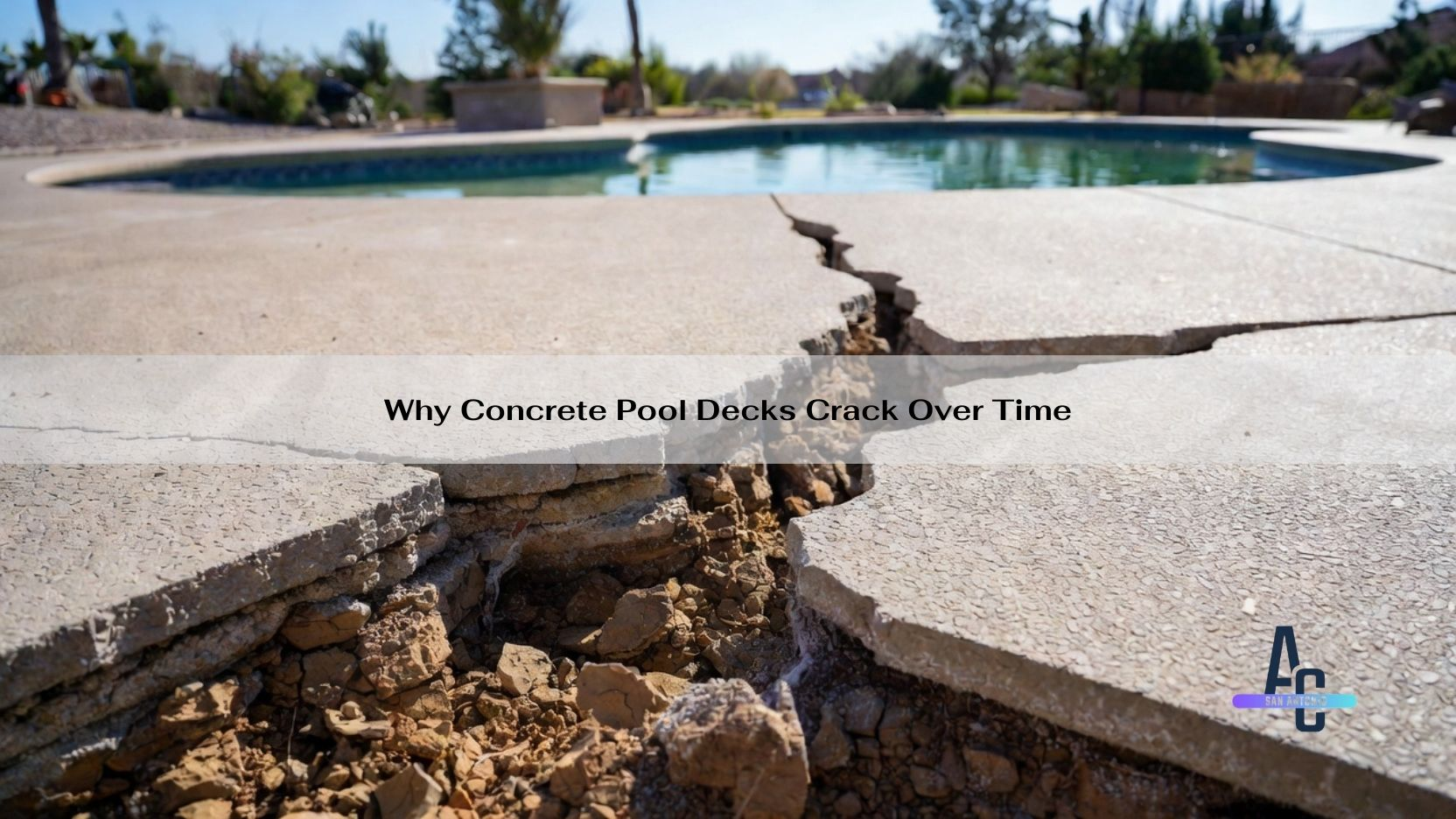
With over 10 years of hands-on experience repairing residential concrete in San Antonio and Houston, I’ve inspected hundreds of cracked pool decks in Texas climates. Concrete pool decks crack over time due to natural settling, soil movement, temperature expansion and contraction, moisture intrusion, and improper installation. In Texas, expansive clay soil and extreme heat accelerate this process.
If your pool deck is cracking, it’s usually not random; it’s a predictable reaction to environmental and structural stress.
Is It Normal For Concrete Pool Decks To Crack?
Yes, minor cracking is normal but widening or uneven cracks are not.
Concrete is strong in compression but weak in tension. As it cures and ages, it naturally shrinks slightly. This often results in:
- Hairline surface cracks
- Small shrinkage fractures
- Minor cosmetic lines
However, cracks become a concern when they:
- Widen over time
- Create uneven edges
- Allow water penetration
- Indicate slab movement
Key takeaway: Small cracks can be normal; expanding cracks signal deeper issues.
How Does Soil Movement Cause Pool Deck Cracks?
Shifting soil is one of the biggest causes of concrete cracking in Texas.
In areas near 1247 W Thompson Pl, San Antonio and 6203 Lawford Ln, Houston, clay-heavy soil expands when wet and shrinks when dry.
This cycle creates:
- Upward pressure (heaving)
- Voids beneath slabs
- Uneven settling
When the ground moves, the concrete above it flexes and eventually cracks.
Unlike interior slabs, pool decks are more exposed to drainage fluctuations, making them especially vulnerable.
Does Texas Heat Make Pool Decks Crack Faster?
Yes. Extreme heat accelerates expansion and contraction cycles.
Concrete expands when temperatures rise and contracts when they drop. In Texas summers, surface temperatures can exceed 120°F.
Repeated expansion and contraction causes:
- Stress fractures
- Joint separation
- Surface deterioration
Without proper expansion joints or control joints, cracks will form where stress builds up.
Key takeaway: Heat doesn’t just dry concrete it actively stresses it.
Can Water Damage Cause Concrete Pool Deck Cracks?
Yes. Water intrusion is a major contributor to slab instability.
Water enters through small cracks and seeps beneath the slab. This can:
- Wash away supporting soil
- Create empty voids
- Weaken the sub-base
- Cause uneven sinking
Ironically, pool decks are constantly exposed to moisture, making proper drainage critical.
Warning signs of water-related cracking include:
- Pooling water
- Soft spots near slab edges
- Cracks that widen after heavy rain
Does Poor Installation Lead To Cracks?
Improper installation significantly increases the likelihood of cracking.
Common installation issues include:
- Inadequate soil compaction
- Missing or poorly spaced control joints
- Incorrect concrete mix
- Insufficient thickness
Control joints are designed to “control” where cracks occur. Without them, concrete cracks unpredictably.
If a deck was poured without proper reinforcement or base preparation, cracking may appear within just a few years.
Are Tree Roots A Cause Of Pool Deck Cracks?
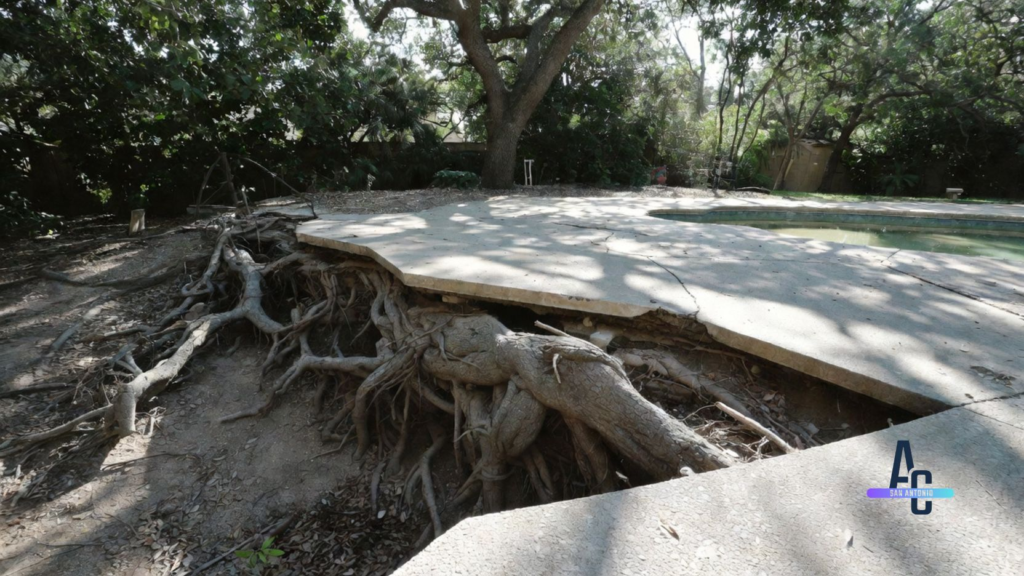
Yes, nearby tree roots can lift and fracture concrete slabs.
Roots naturally grow toward moisture sources including pools and irrigation systems.
As roots expand, they apply upward pressure, resulting in:
- Raised sections
- Linear cracks
- Slab displacement
If you see cracking near landscaping features, root intrusion may be a factor.
How Can You Tell What Caused Your Pool Deck Crack?
The crack pattern often reveals the cause.
Here’s a quick guide:
| Crack Type | Likely Cause |
| Thin hairline | Shrinkage |
| Wide and uneven | Soil movement |
| Long straight lines | Missing control joints |
| Edge lifting | Root growth or heaving |
| Worsens after rain | Water erosion |
A professional inspection can determine whether the crack is cosmetic or structural.
Can Pool Deck Cracks Be Prevented?
Cracks can’t be completely prevented but they can be controlled and minimized.
Best practices include:
- Proper soil compaction
- Installing control joints
- Maintaining good drainage
- Sealing cracks early
- Avoiding heavy loads near edges
Routine inspection is especially important in Texas climates.
Key takeaway: You can’t stop all cracking, but you can prevent serious damage.
When Should You Be Concerned About Pool Deck Cracks?
You should act quickly if you notice:
- Cracks wider than ¼ inch
- Uneven slab sections
- Trip hazards
- Rapid expansion
- Water pooling beneath slabs
Delaying repairs often leads to:
- Slab leveling needs
- Structural correction
- Full replacement
Addressing cracks early is almost always more cost-effective.
FAQs
Why Do New Concrete Pool Decks Crack So Quickly?
Early cracking often results from improper curing, poor soil compaction, or missing control joints.
Are Hairline Cracks In Pool Decks Dangerous?
Hairline cracks are usually cosmetic, but they should be sealed to prevent water intrusion and expansion.
How Long Should A Concrete Pool Deck Last?
With proper installation and maintenance, a concrete pool deck can last 20–30 years, though minor cracking may occur over time.