
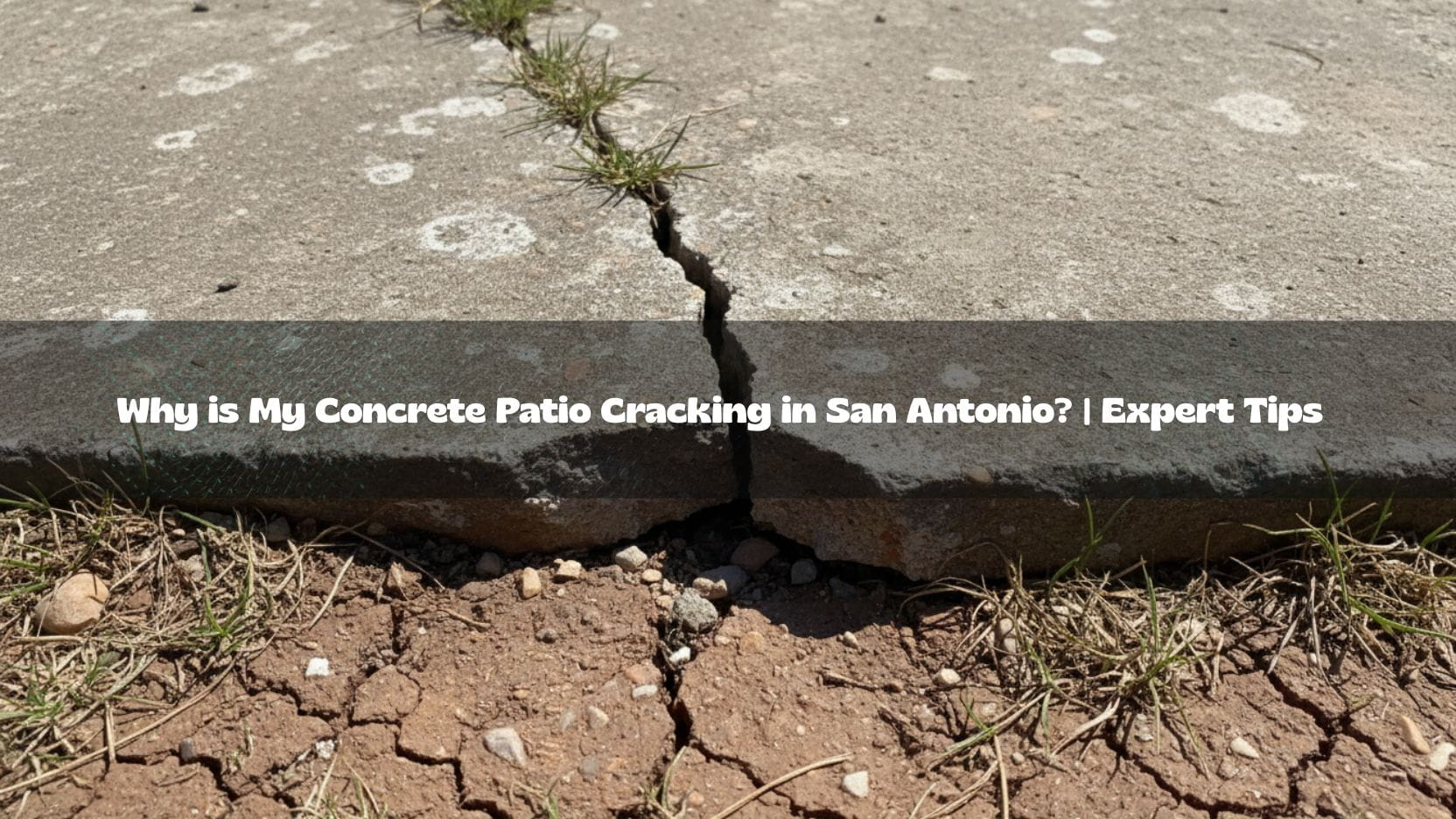
Concrete patios are a popular feature in many homes across San Antonio, offering a durable and attractive outdoor space. However, if you’ve noticed cracks appearing in your patio, you might be wondering, Why is my concrete patio cracking in San Antonio?
Concrete cracking is a common issue, and understanding its causes can help you prevent further damage and decide on the best course of action for repairs. Whether you’re dealing with hairline cracks or significant structural issues, this article will provide insights into why concrete patios crack and how to address the problem.
What Causes Concrete Patios to Crack?
Concrete is known for its strength and durability, but it’s not impervious to damage. Various factors can lead to cracking in concrete patios, especially in areas like San Antonio, where the climate and soil conditions play a significant role in the integrity of concrete structures.
1. Temperature Fluctuations
San Antonio’s hot summers and mild winters cause significant temperature swings that can affect concrete. As concrete expands and contracts with temperature changes, cracks can form over time. If the patio is exposed to extreme heat, followed by sudden cold snaps, these changes can stress the surface, resulting in cracks.
2. Improper Installation
One of the leading causes of cracking in concrete patios is poor installation. Concrete requires proper preparation, including the right mix, reinforcement, and adequate curing time. If the patio wasn’t installed correctly, it might be more prone to cracking as it settles or experiences external stress.
3. Shrinking and Settling
Concrete naturally shrinks as it dries and cures, especially if it wasn’t adequately hydrated during the curing process. This shrinkage can create cracks in the surface. Additionally, as concrete settles over time, it may shift and cause cracking if the ground beneath it isn’t stable or properly compacted.
4. Soil Movement
San Antonio has expansive clay soils that swell when wet and shrink when dry. This moisture-driven movement can put pressure on a concrete patio, causing it to crack. If the soil beneath the patio shifts or settles, the concrete may experience uneven stress, leading to cracks.
5. Heavy Loads and Stress
If the patio is subjected to excessive weight or stress, such as heavy furniture, vehicles, or equipment, cracks can develop. Concrete patios are designed to handle typical loads, but over time, heavy or concentrated loads can cause the surface to crack, particularly if the concrete was not reinforced properly.
6. Water Damage
Excessive water exposure can weaken the concrete, making it more prone to cracking. In San Antonio, frequent rainstorms can cause water to pool on or around the patio. Without proper drainage, water can seep into the cracks and further deteriorate the concrete, causing larger fissures.
7. Chemical Exposure
Certain chemicals, such as salts or de-icing agents used during colder months, can react with the concrete, leading to surface damage and cracking. These chemicals can cause the concrete to weaken, making it more vulnerable to cracking, especially in areas where exposure is frequent.
How to Prevent Concrete Patio Cracking
While some causes of cracking are inevitable, there are several preventative measures you can take to reduce the risk of cracks forming in your concrete patio.
1. Proper Installation and Reinforcement
Ensure that your patio is installed by a professional contractor who follows best practices for concrete installation. This includes using the right concrete mix, adding reinforcement such as rebar or wire mesh, and ensuring proper curing. This helps improve the overall strength and durability of the patio, reducing the likelihood of cracking.
2. Use Expansion Joints
Expansion joints are essential for allowing concrete to expand and contract with temperature changes without causing cracks. These joints create a gap between sections of concrete, providing space for movement. Properly placed expansion joints can prevent cracks from forming as the patio shifts.
3. Adequate Drainage
Proper drainage around your patio is crucial in preventing water damage. Ensure that rainwater can flow away from the patio by grading the surface and installing drainage systems, such as French drains or downspouts. This helps avoid water pooling on the patio, which can cause cracks and damage over time.
4. Control Moisture Levels in the Soil
To prevent soil movement beneath the patio, maintain consistent moisture levels in the soil. Avoid over-watering the area, which can cause the soil to swell. Additionally, using soil stabilization techniques can help prevent shifting and settling, reducing the risk of cracks.
5. Sealing the Concrete
Applying a concrete sealer to your patio can help protect it from water damage, chemicals, and weathering. A good quality sealer forms a protective barrier on the surface, preventing moisture from seeping into the concrete and causing cracks.
How to Repair Cracked Concrete Patios in San Antonio
If your concrete patio is already cracked, don’t worry. There are several effective ways to repair it, depending on the severity of the damage.
1. Small Cracks
For minor hairline cracks, you can use a concrete patching compound to fill in the gaps. These products are easy to apply and can restore the appearance of your patio. Simply clean the crack, apply the patching compound, and smooth it over the surface. Once the patch has cured, the patio will look as good as new.
2. Larger Cracks
If the cracks are more significant, you may need to use a more robust repair solution, such as a concrete filler or epoxy. This process involves cleaning out the crack, applying a bonding agent, and filling the gap with a durable filler material. It’s essential to smooth out the surface to ensure a seamless finish.
3. Resurfacing
For patios with extensive cracking, resurfacing may be the best option. This involves applying a new layer of concrete over the existing surface. Resurfacing can hide the cracks, restore the patio’s appearance, and add an extra layer of protection against future damage.
4. Professional Repairs
For severe or deep cracks, it’s best to contact a professional concrete contractor. They can assess the damage and determine the most effective solution, whether it’s structural reinforcement, slab leveling, or complete replacement. A professional can also address any underlying issues with the soil or foundation that might be causing the cracks.
When to Call a Professional Concrete Contractor
While DIY solutions can be effective for minor cracks, it’s always a good idea to consult a professional for larger or more complex issues. A professional concrete contractor will have the expertise to assess the extent of the damage, repair the cracks properly, and prevent further damage.
If your concrete patio in San Antonio is showing signs of cracking, contact us at Affordable Concrete San Antonio for expert repairs. Our experienced team can restore your patio to its original condition and ensure that it remains durable for years to come.
For service inquiries, contact us via cell at: 713-504-2341.
Conclusion
Concrete patio cracks are a common issue in San Antonio, but understanding the causes and preventive measures can help you minimize the risk. Temperature fluctuations, improper installation, soil movement, and water damage are just a few of the factors that can lead to cracking. By taking the proper steps during installation, maintaining proper drainage, and sealing your patio, you can prolong its lifespan and keep it looking great.
If you’re dealing with cracked concrete, don’t wait to address the issue. Contact a professional concrete contractor to get the repairs you need. Reach out to us at 713-504-2341 for expert service in San Antonio.