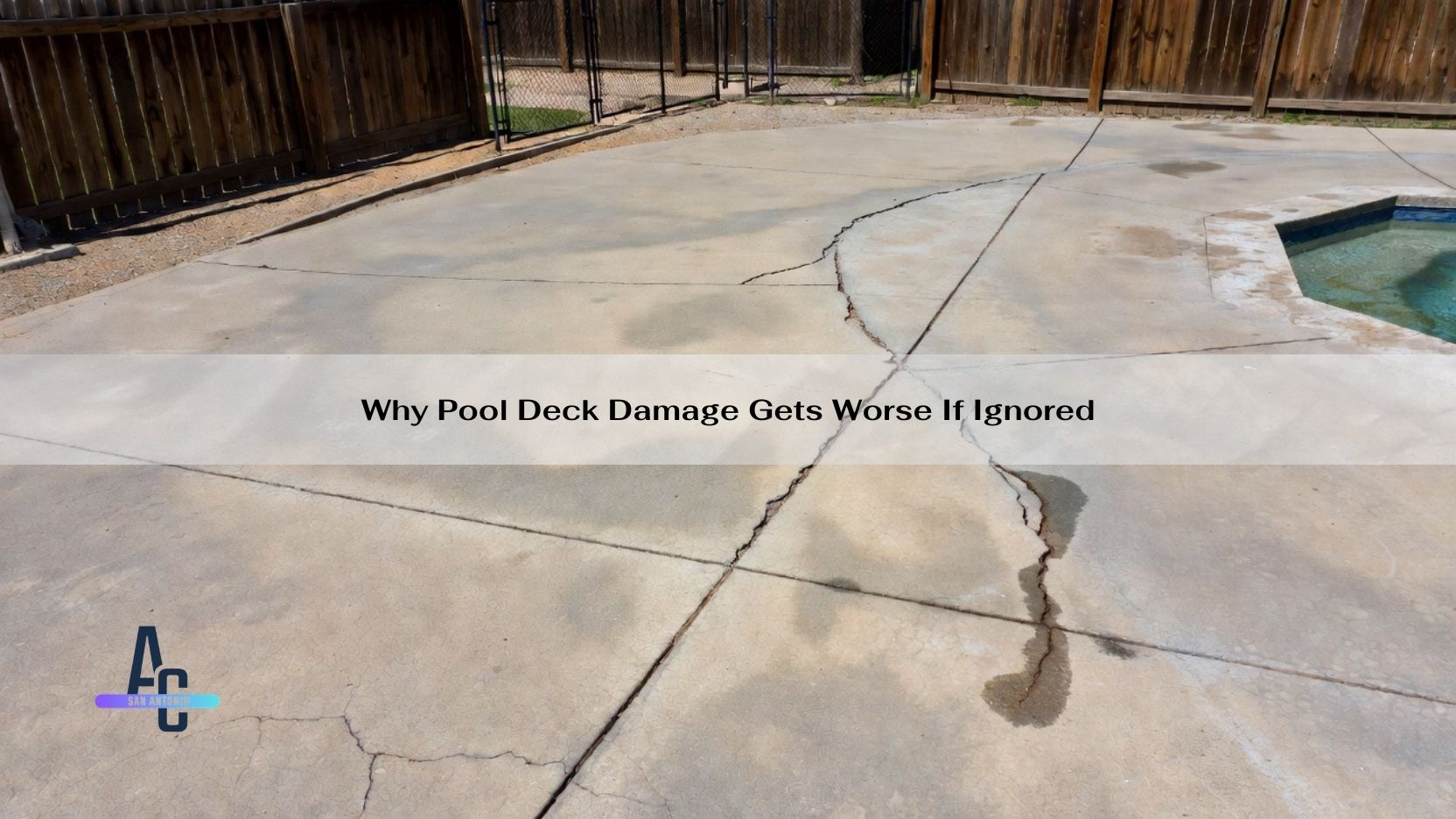
With over 10 years of hands-on experience repairing residential concrete across San Antonio and Houston, I’ve seen minor pool deck issues turn into major structural repairs simply because they were delayed. Pool deck damage gets worse if ignored because cracks widen, water infiltrates the sub-base, soil shifts increase, and small safety hazards turn into costly structural failures.
In Texas climates, damage doesn’t stay the same, it accelerates.
Do Small Pool Deck Cracks Really Get Bigger Over Time?
Yes. Small cracks almost always expand if left untreated.
Concrete is constantly exposed to:
- Heat expansion
- Cooling contraction
- Water penetration
- Soil movement
In areas near 1247 W Thompson Pl, San Antonio and 6203 Lawford Ln, Houston, clay-heavy soils expand when wet and shrink when dry. That movement stresses existing cracks, causing them to widen.
A 1/16-inch crack today can become a ¼-inch separation within a season.
Key takeaway: Concrete cracks rarely stay stable in Texas conditions.
Why Does Water Make Pool Deck Damage Worse?
Water intrusion is the biggest reason damage accelerates.
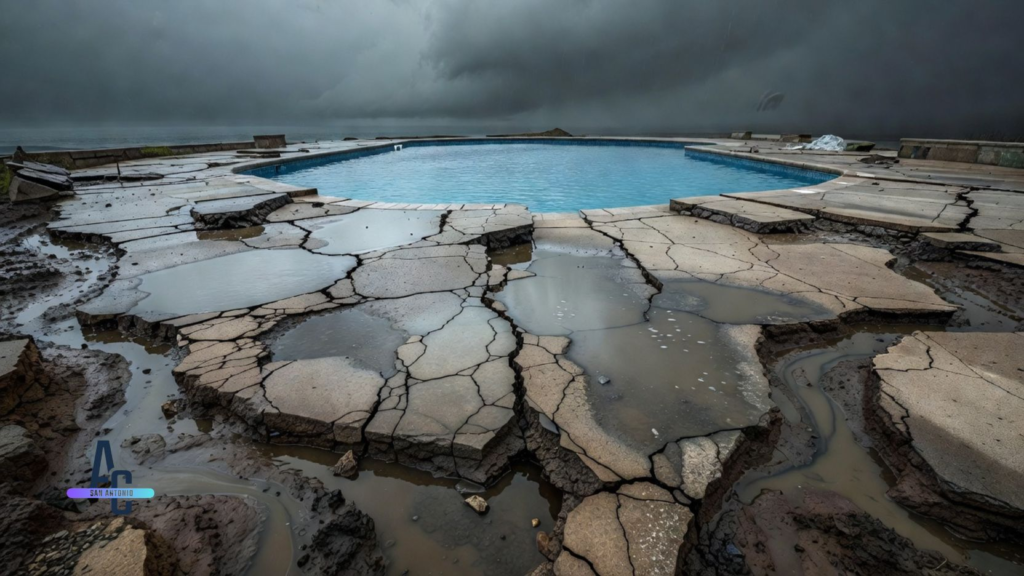
Once cracks form, water seeps beneath the slab. Over time, this causes:
- Soil erosion
- Voids under the concrete
- Uneven settling
- Slab displacement
Heavy rains common in Houston and seasonal storms in San Antonio intensify this process.
When the ground beneath a pool deck becomes unstable, repairs shift from simple sealing to structural correction.
Can Ignoring Pool Deck Damage Lead To Full Replacement?
Yes. Delayed repairs often lead to slab failure requiring replacement.
Here’s how the progression typically works:
| Stage | Condition | Repair Type |
| Early | Hairline cracks | Seal and monitor |
| Moderate | Widening cracks | Structural repair |
| Advanced | Uneven slabs | Leveling/stabilization |
| Severe | Major shifting | Full replacement |
The cost difference between early repair and full replacement can be substantial.
Acting early is almost always more affordable.
Does Pool Deck Damage Become A Safety Hazard?
Yes. Damage increases slip and trip risks, especially around wet areas.
As cracks widen or slabs shift:
- Edges become raised
- Surface texture breaks down
- Water pools in low spots
- Algae growth increases
Pool decks already present slip risks. Damaged concrete multiplies the hazard.
For homeowners, this creates:
- Injury risk
- Potential insurance claims
- Liability exposure
Key takeaway: Safety concerns grow as damage worsens.
Why Does Texas Climate Accelerate Pool Deck Deterioration?
Heat, humidity, and soil movement cause faster deterioration than in milder regions.
Texas pool decks face:
- Extended 100°+ temperatures
- Sudden heavy rainstorms
- High UV exposure
- Expansive clay soils
This cycle stresses concrete repeatedly.
Cracks expand faster. Surfaces deteriorate sooner. Soil movement becomes more aggressive.
Delaying repair in this environment means damage compounds quickly.
Can Surface Damage Turn Into Structural Problems?
Yes. Surface cracks often indicate deeper sub-base movement.
What looks like cosmetic cracking may signal:
- Improper drainage
- Subgrade instability
- Inadequate soil compaction
- Missing control joints
Once water and soil movement interact beneath the slab, structural shifting begins.
By the time slabs become uneven, repair options become more complex.
Does Ignoring Pool Deck Damage Affect Property Value?
Yes. Visible damage reduces curb appeal and buyer confidence.
Outdoor living spaces are major selling features in San Antonio and Houston.
Cracked or uneven pool decks suggest:
- Deferred maintenance
- Possible foundation issues
- Future repair costs
Buyers often use visible exterior damage to negotiate lower prices.
Maintaining your pool deck protects:
- Home value
- Marketability
- Visual appeal
What Are The Warning Signs That Damage Is Getting Worse?
Watch for:
- Cracks widening over time
- Uneven slab edges
- Water pooling after rain
- Surface flaking (spalling)
- Sections that feel hollow underneath
If cracks are spreading or changing shape, progression is already underway.
Early professional evaluation can prevent larger repairs.
When Is The Best Time To Address Pool Deck Damage?
The best time to repair damage is as soon as it appears.
Ideal inspection times include:
- Early spring
- After major storms
- Before peak summer heat
Addressing issues before extreme temperature swings can limit expansion and soil movement effects.
FAQs
How Fast Does Pool Deck Damage Spread?
In Texas climates, cracks can widen noticeably within months due to heat and soil movement cycles.
Is It Okay To Wait Until Next Year To Fix Cracks?
Waiting increases the risk of water intrusion and slab shifting. Early repair is typically less expensive.
Can Resurfacing Fix Advanced Pool Deck Damage?
Resurfacing works for surface-level deterioration. Uneven slabs or structural movement require leveling or stabilization first.