
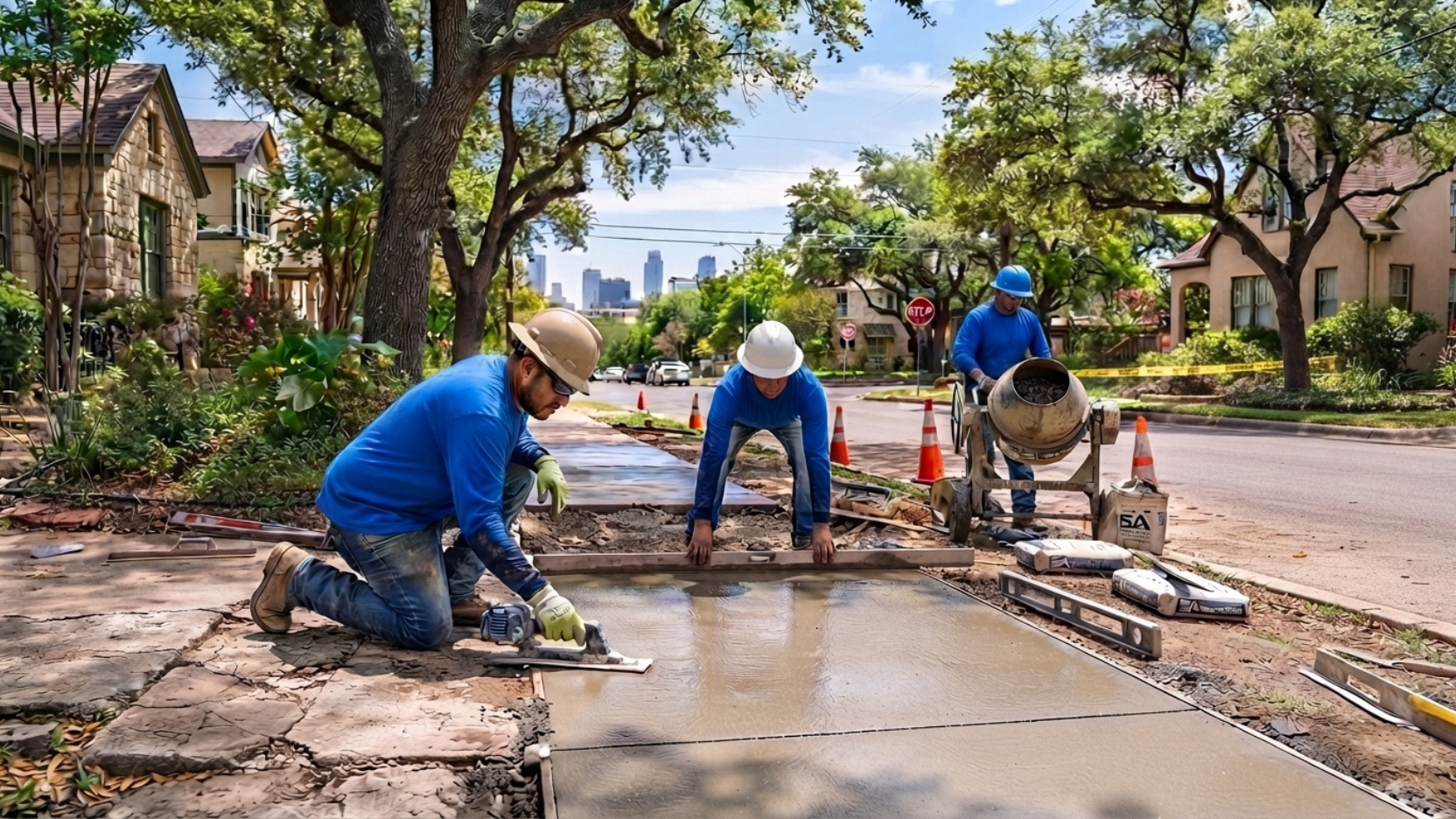
A cracked, heaved, or trip-hazard sidewalk is a liability problem, not just a curb-appeal issue. This guide covers how to spot damage that actually needs repair, who is responsible for the fix under San Antonio’s rules, which repair method fits your situation, and exactly how to vet the contractor who does the work.
A damaged sidewalk rarely announces itself as an emergency. It starts as a hairline crack near a joint, or a slight lift where a tree root pushed up from underneath. Then someone trips, or the crack widens into a full heave, and what was a small repair becomes a liability question. San Antonio’s expansive clay soils and mature street trees make sidewalks more prone to this kind of movement than in most cities, which is exactly why knowing how to evaluate the damage and the contractor matters before you sign anything.
This guide walks through how to tell if a sidewalk actually needs repair, who is responsible for paying for it under San Antonio’s rules, which repair method fits which type of damage, and the specific questions that separate a contractor who will fix the problem for good from one who will patch it for a season.
Patching over a crack without addressing what caused it, usually a tree root, a washed-out base, or poor drainage, means the same damage returns within a year or two. A contractor who only offers to fill cracks and skip base repair is offering a temporary fix at a permanent price. Before agreeing to any method, ask what caused the damage and how the proposed repair addresses that root cause, not just the visible symptom.
Damage Assessment
The first step in any sidewalk project is figuring out what kind of damage you actually have, because the fix is completely different depending on the answer. Hairline cracks under 1/4 inch wide are usually cosmetic. A raised or sunken slab, a joint with vertical displacement, or a section with standing water after rain point to a base or drainage problem underneath, which no amount of surface patching will solve.
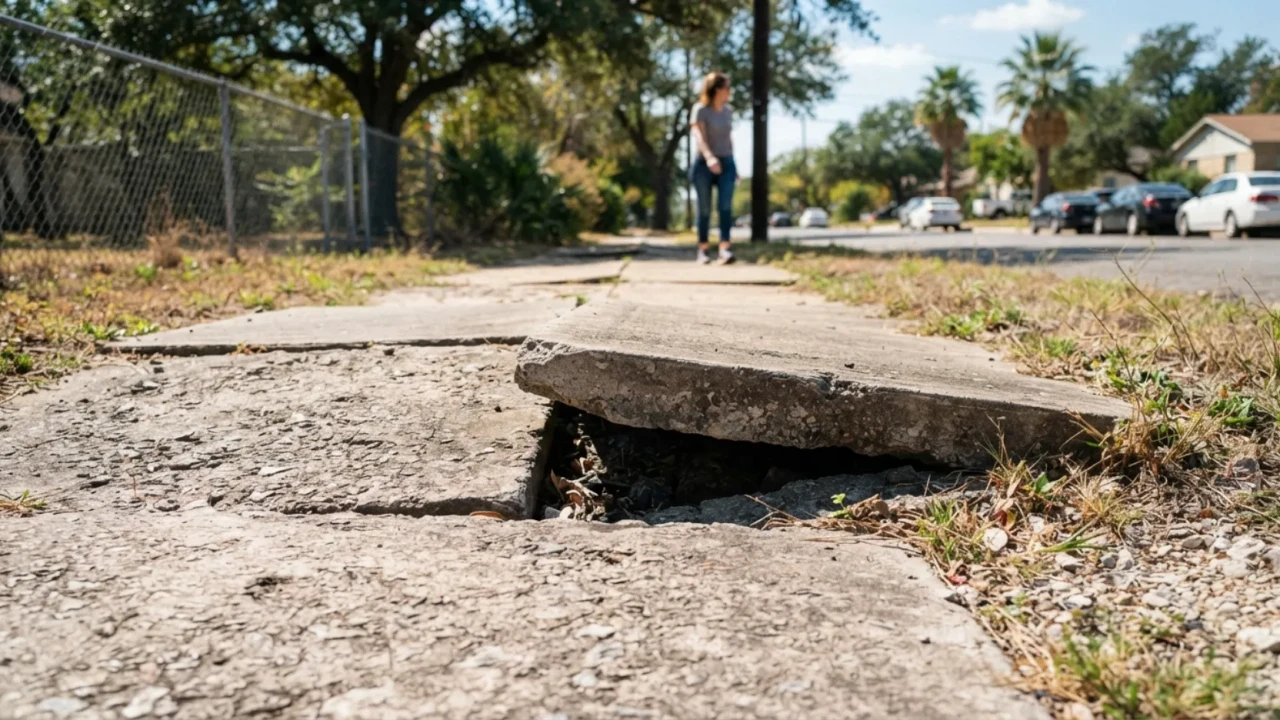
Hairline cracks (cosmetic): Under 1/4″ wide with no vertical offset. Usually shrinkage cracking from curing. A sealant or crack filler is often all that is needed.
Trip hazards (vertical offset): One side of a joint or crack sits 1/4″ or higher above the other. This is the threshold most cities, including San Antonio, use to define an actionable trip hazard. Grinding can resolve small offsets; larger ones need slab replacement.
- Measure the vertical offset at any crack or joint: 1/4″ or more is a trip hazard, not just cosmetic
- Check for standing water after rain, which signals a drainage or slope problem beneath the slab
- Note nearby trees within 10 to 15 feet, since root intrusion is the leading cause of heaving locally
- Photograph the damage with a coin or ruler in frame before getting quotes, for accurate comparison
- Ask whether the proposed fix addresses the underlying cause or only the visible crack
Homeowner Responsibility
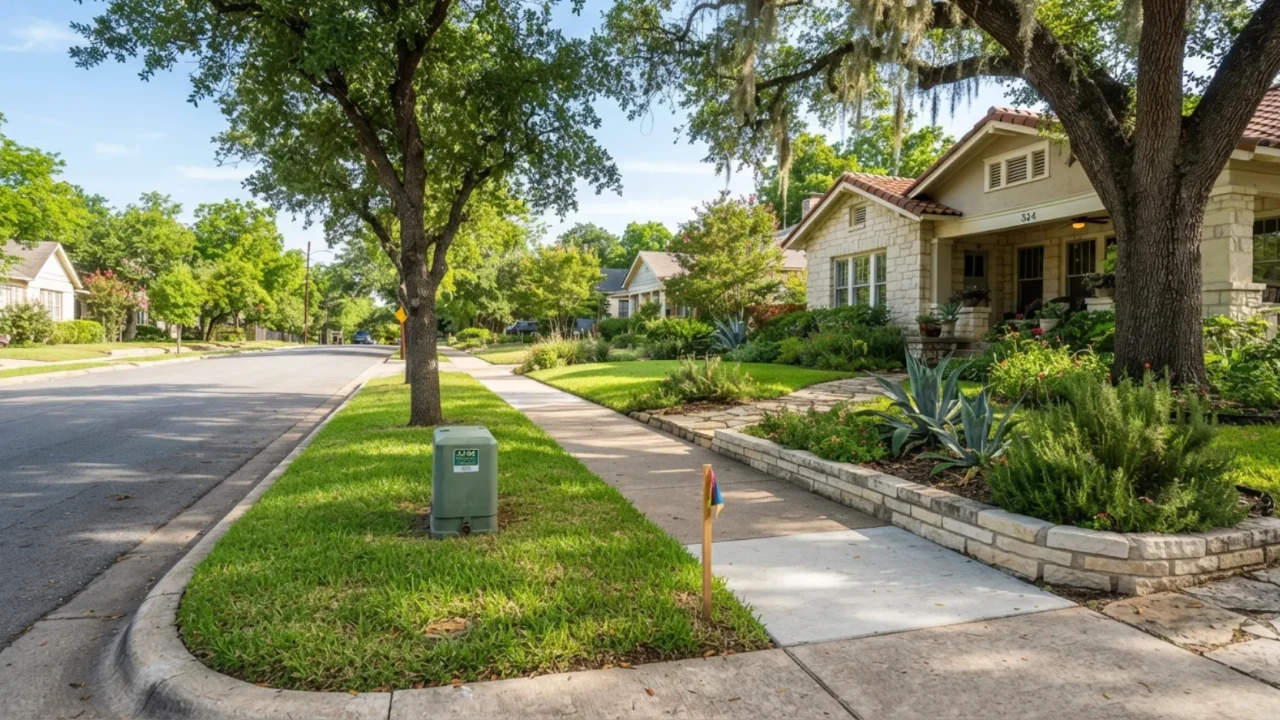
In most Texas cities, including San Antonio, the sidewalk in front of a residential property sits in the public right-of-way, but the adjacent property owner is typically responsible for keeping it in safe, walkable condition. That means the cost of repair usually falls on the homeowner, even though the sidewalk itself is technically public property.
The City of San Antonio periodically runs targeted sidewalk improvement programs in specific corridors, and some repairs tied to a city capital project may be handled or reimbursed differently. Because these rules and programs can change, always confirm current responsibility and any available assistance with the City of San Antonio Public Works Department before starting work, rather than assuming either the city or the homeowner automatically covers the cost.
Why this matters beyond cost: if someone is injured on a damaged sidewalk in front of your property and you were aware of the hazard, you may carry liability exposure even though the city technically owns the land. Getting known trip hazards repaired promptly, and documenting that you did, protects you both legally and financially.
Repair Methods
Sidewalk repair is not one-size-fits-all. A contractor who only offers full replacement, regardless of the damage, is either inexperienced or padding the invoice. Here is how the common repair methods compare, from least to most invasive.
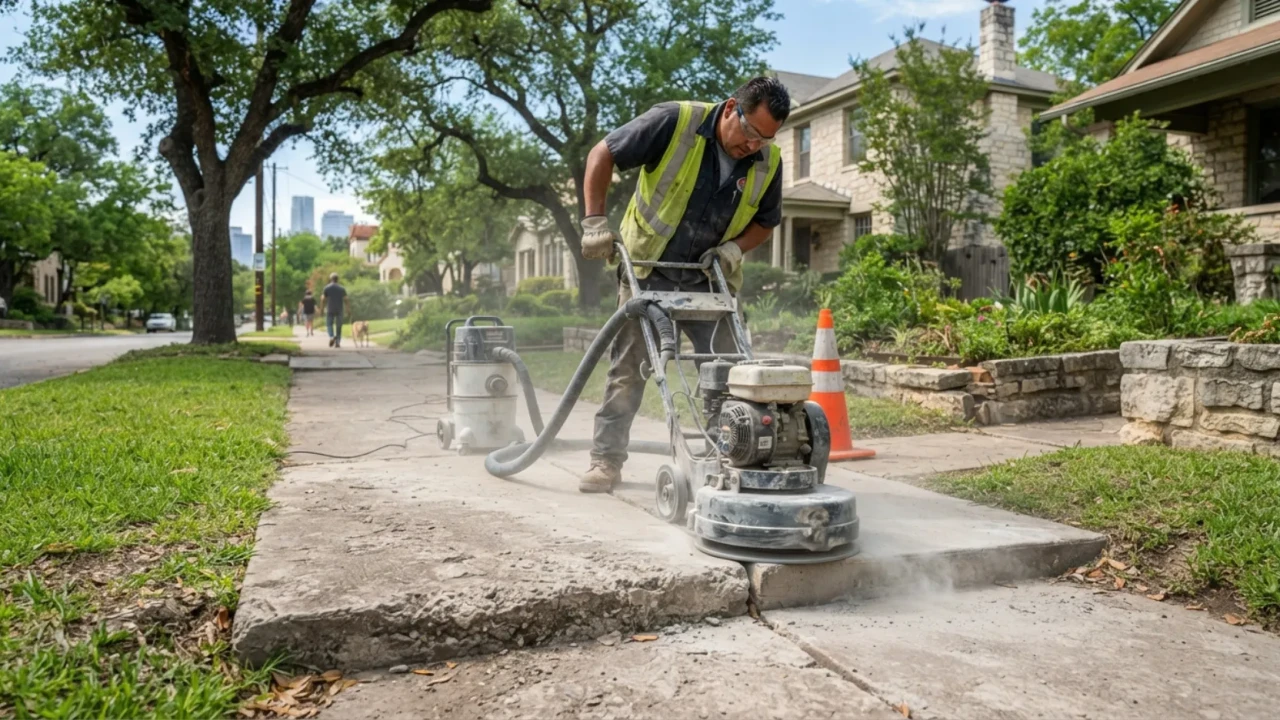
Grinding (concrete leveling): A diamond grinder shaves down a raised edge to create a level transition. Fast, inexpensive, and ideal for offsets under about 1.5 inches where the slab itself is still structurally sound.
Mudjacking / slabjacking: A cement-based or polyurethane foam mixture is pumped underneath a sunken slab to raise it back to grade. Works well when the slab is intact but the base has settled or washed out.
- Method matched to damage type: grinding for offsets, mudjacking for settling, replacement for cracked or heaved slabs
- Root cause addressed, not just the visible crack or offset
- Root barrier or trimming plan included if tree roots caused the damage
- Quote specifies exact square footage and which sections are being repaired versus replaced
- Color and finish match confirmed for replaced sections next to existing sidewalk
Contractor Vetting
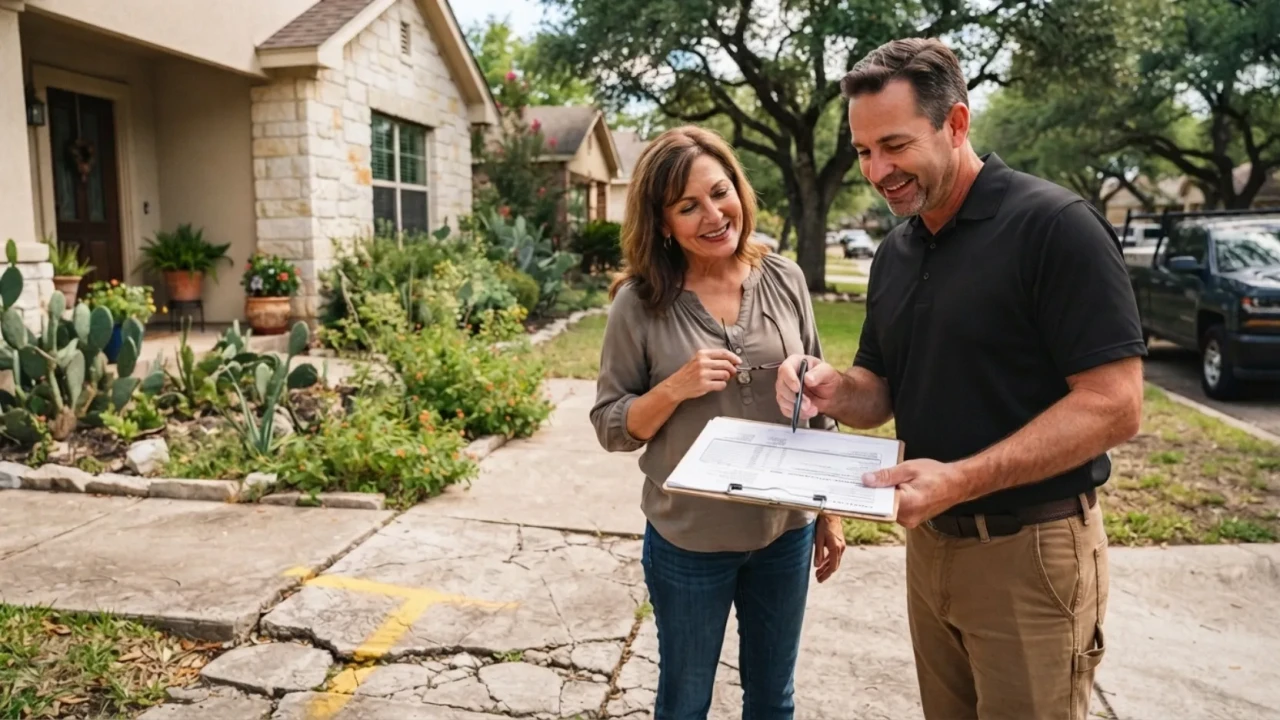
Sidewalk work sits in the public right-of-way, which means it often involves permitting and coordination with the city that a driveway or patio project does not. A contractor unfamiliar with San Antonio’s right-of-way process can leave you dealing with fines or a failed inspection after the work is done.
| What to check | What a good contractor provides | Red flag response |
|---|---|---|
| Liability insurance | Certificate of insurance on request, $1M+ general liability minimum | “We’re covered” with no documentation, or a policy below $1M |
| Right-of-way permit knowledge | Explains whether a City of San Antonio right-of-way permit is needed and handles the application | No mention of permits, or says none are ever required |
| Written quote details | Square footage, repair method, base repair scope, and finish match all specified in writing | Quote just says “sidewalk repair” with a lump-sum price |
| Root cause diagnosis | Identifies the cause, root, base failure, drainage, before proposing a fix | Offers the same fix regardless of what caused the damage |
| Local references | Photos and references from completed sidewalk repairs in San Antonio neighborhoods | Only stock photos, or no local references available |
| Payment terms | Modest deposit, balance due after completion and inspection | Full payment demanded up front |
Process Guide
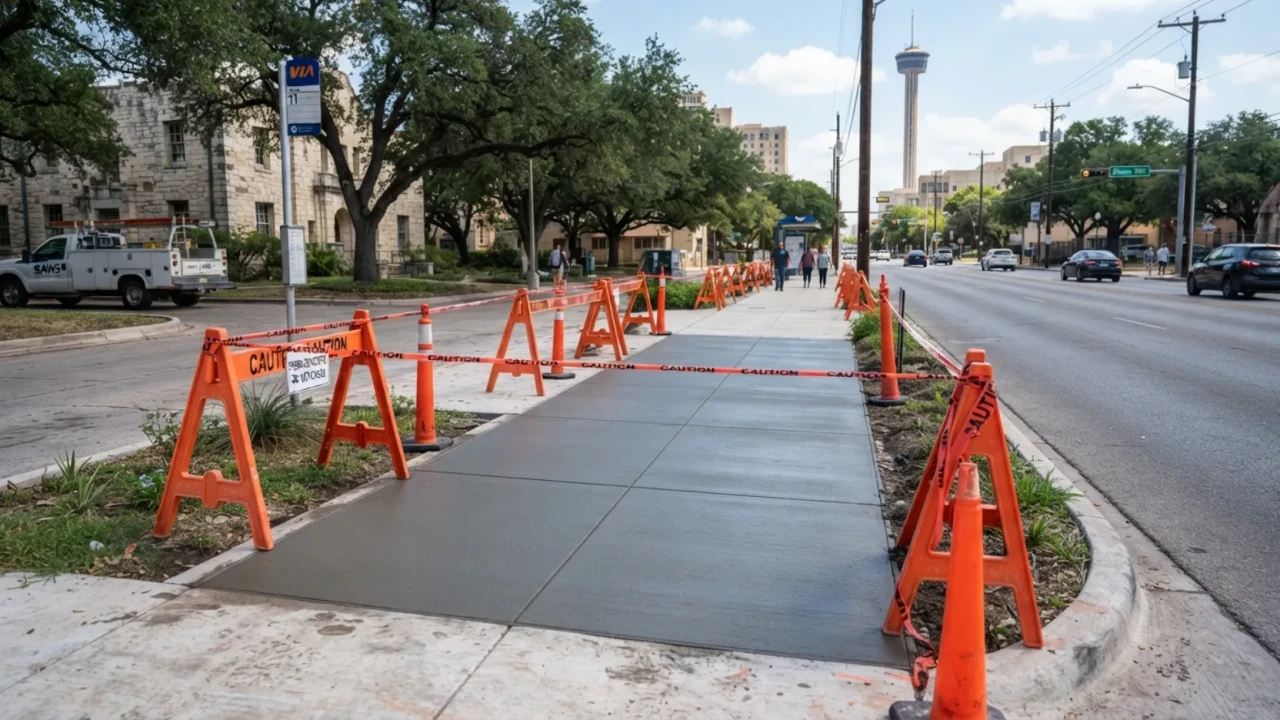
Most sidewalk repairs are completed faster than a comparable patio or driveway project, since the affected area is usually a single slab section or a short run rather than an entire surface. That said, work in the public right-of-way often requires more coordination up front than a private surface would.
Because pedestrians use the sidewalk right up until the repair begins, expect the contractor to barricade the section clearly and provide a safe temporary path around the work zone. In San Antonio’s summer heat, a reputable contractor will wet-cure or apply a curing compound to the new section just as they would on a driveway or patio, since fast surface drying in high heat can weaken the final cure.
Best time to schedule sidewalk repair: outside of the hottest summer weeks if your timeline allows it. Fall through spring gives the new concrete a more forgiving cure environment and often means less contractor demand, which can translate into a slightly faster turnaround.
- Site visit completed and repair method confirmed in writing before any work begins
- Right-of-way permit confirmed as needed or not needed, with the contractor handling the filing if required
- Work zone barricaded and a safe pedestrian path maintained during construction
- Curing process confirmed: wet curing or liquid compound applied after the pour
- No foot traffic for at least 24 to 48 hours; full cure expected at 28 days
Use this table as a starting reference. A contractor’s on-site assessment should always confirm the right method for your specific section of sidewalk.
| Damage type | Likely cause | Recommended fix | Typical cost |
|---|---|---|---|
| Hairline crack, no offset | Shrinkage during original cure | Crack sealant or monitor | $0–150 |
| Raised joint, under 1.5″ | Minor root intrusion or heave | Grinding / leveling | $3–6/sqft |
| Sunken slab, intact surface | Washed-out or settled base | Mudjacking / slabjacking | $5–10/sqft |
| Cracked or heavily heaved slab | Major root intrusion, base failure | Full slab replacement | $6–10/sqft |
| Recurring heave near a tree | Ongoing root growth | Root barrier plus replacement | $300–800 per barrier |
| Sidewalk exceeds ADA slope | Original grading or settlement | Full section regrade and pour | $7–12/sqft |
- Vertical offset measured at every crack or joint, with 1/4″ or more flagged as a trip hazard
- Cause identified: tree root, base failure, drainage issue, or original construction defect
- Photos taken with a size reference before getting quotes
- Homeowner versus city responsibility confirmed with San Antonio Public Works Department
- Right-of-way permit need confirmed and filed before demolition, if required
- HOA covenants checked if the sidewalk falls under shared common area maintenance
- Certificate of insurance received and verified, $1M+ general liability
- Quote itemizes repair method, square footage, base work, and finish match separately
- Root cause fix included, such as a root barrier, not just a cosmetic patch
- Payment terms confirmed: modest deposit, balance on completion
- Work zone was barricaded and a safe pedestrian path maintained during construction
- Curing process confirmed and no foot traffic for at least 24 to 48 hours
- Final inspection walkthrough completed and slope or level confirmed at the repaired section
How much does sidewalk repair cost in San Antonio?
Is the homeowner or the city responsible for sidewalk repair?
Do I need a permit to repair a sidewalk in San Antonio?
Will grinding down a raised sidewalk actually fix the problem?
How long does a sidewalk repair take from start to finish?
Get a free sidewalk repair quote in San Antonio
Tell us about the damage, a raised joint, a crack, a sunken section, and we’ll assess the cause on-site and give you a detailed written quote at no cost.