
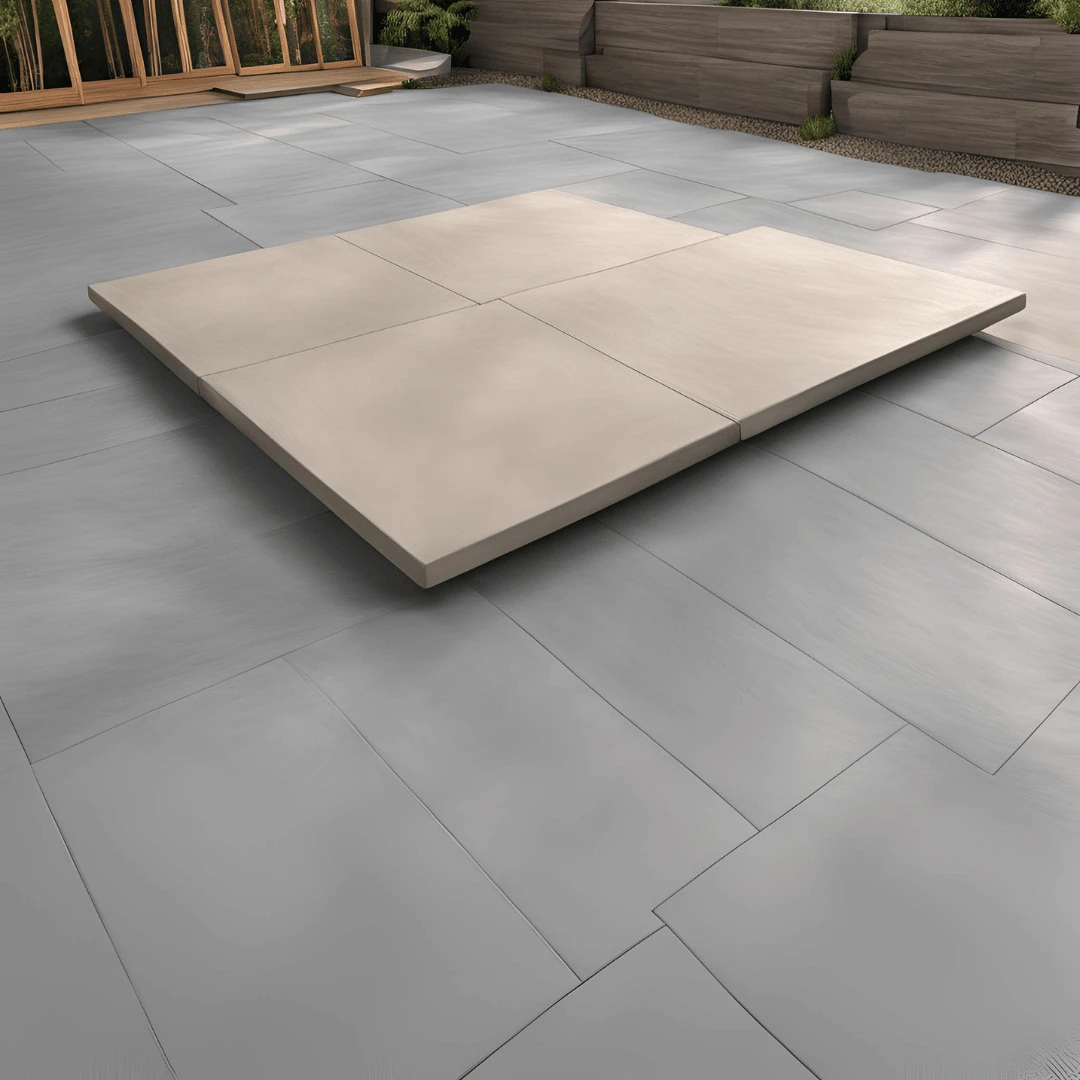
A concrete slab for a shed keeps the floor dry, level, and solid for decades, but only if the base, thickness, and reinforcement suit San Antonio’s clay soil. This guide covers what a shed slab needs, what to look for in a concrete shed foundation contractor, what drives the cost, size and thickness, City permit rules for sheds, timing, and the questions to ask before you hire.
- What does a concrete slab for a shed need?
- What should I look for in a concrete shed foundation contractor?
- How much does a concrete slab for a shed cost in San Antonio?
- How big and how thick should a shed slab be?
- Do I need a permit for a shed slab in San Antonio?
- How does San Antonio soil affect a shed slab?
- How long does it take to pour a shed slab?
- Is a concrete slab better than a gravel pad for a shed?
- What should I ask a shed slab contractor before hiring?
- Where do we work?
- What else are homeowners asking?
A concrete slab for a shed is usually 4 inches thick on a 4 to 6 inch compacted gravel base. In San Antonio, storage sheds up to 300 square feet are on the City No Permit Required list, but our clay soil moves, so call a pro for rebar, thickened edges, and a level pour.
What does a concrete slab for a shed need?
A concrete slab for a shed needs a compacted gravel base, the right thickness for the load, reinforcement, and a level top with the ground sloping away. Those four things decide whether the shed door still closes square years from now.
- Base: Soft soil and roots removed, then 4 to 6 inches of compacted crushed stone.
- Thickness: About 4 inches for most storage sheds, more for workshops or anything with wheels.
- Reinforcement: Rebar or wire mesh to hold the slab together as the clay moves.
- Level and drainage: A level slab set slightly above grade, with soil graded away so water does not pool at the walls.
- Anchors: Anchor bolts or straps placed in the wet concrete if the shed maker calls for them.
We pour shed slabs and other small backyard slabs as part of our patio slabs service in San Antonio.
What should I look for in a concrete shed foundation contractor?
Look for a concrete shed foundation contractor who carries liability insurance, visits the site before pricing, and puts size, thickness, base depth, and reinforcement in a written bid. A small slab is still a structural base, so the crew should treat it like one.
- Insurance: Ask for a certificate of liability insurance. We carry $2,000,000 in liability coverage.
- No state license to check: Texas does not issue a statewide license for concrete contractors, so insurance, local references, and photos of past slabs are your proof.
- A site visit: Access for the truck or wheelbarrows, slope, trees, and soil all change the job. Be wary of a firm price over the phone.
- An itemized bid: Slab size, thickness, base depth, reinforcement, finish, and anchors each on their own line.
- Small jobs welcome: Confirm the contractor takes small pours and will not add surprise minimum-load or short-load fees later.
How much does a concrete slab for a shed cost in San Antonio?
The cost of a concrete slab for a shed depends mostly on size, thickness, base work, reinforcement, and how easy the site is to reach. We price shed slabs in writing after a free site visit rather than publishing a flat rate.
| Cost factor | What changes the price |
|---|---|
| Size | Square footage sets the concrete volume, forms, and labor |
| Thickness | A 5 or 6 in. workshop slab uses more concrete than a 4 in. storage slab |
| Base work | Removing turf or old gravel and adding base runs about $1 – $3 / sq. ft. in our parking pad guide |
| Reinforcement | Rebar grid and thickened edges add steel and labor |
| Access | Backyards behind fences may need a pump or wheelbarrows |
| Small-load fees | Ready-mix plants often charge extra for small orders; ask if it is included |
For scale, our concrete parking pad guide puts a single-car pad of about 10 by 20 feet at about $1,500 to $3,000 in San Antonio, checked October 23, 2026. A shed slab is often smaller, but the same factors set its price. These are not quotes; your price is set in writing after a free site visit.
What most San Antonio backyards can expect
How big and how thick should a shed slab be?
Make the slab the same size as the shed footprint or a few inches larger on each side, and about 4 inches thick for a storage shed. Workshops that hold mowers, ATVs, or heavy tools are usually built 5 to 6 inches thick, like a driveway.
| Shed size | Area | Concrete at 4 in. | Concrete at 6 in. |
|---|---|---|---|
| 8 x 10 ft. | 80 sq. ft. | About 1.0 cu. yd. | About 1.5 cu. yd. |
| 10 x 12 ft. | 120 sq. ft. | About 1.5 cu. yd. | About 2.2 cu. yd. |
| 12 x 16 ft. | 192 sq. ft. | About 2.4 cu. yd. | About 3.6 cu. yd. |
| 16 x 18 ft. | 288 sq. ft. | About 3.6 cu. yd. | About 5.3 cu. yd. |
Volumes are length times width times thickness divided by 27, before 5 to 10 percent extra for waste. Thickened edges add more. See our volume of a slab guide and calculator.
Do I need a permit for a shed slab in San Antonio?
A one-story detached storage shed of no more than 300 square feet is on the City of San Antonio’s No Permit Required list, as long as it meets the setback rules in the Unified Development Code. Larger sheds, or sheds in historic and conservation districts, need more checking first.
- Up to 300 sq. ft.: Tool and storage sheds, playhouses, and similar one-story detached structures typically do not need a City permit (checked October 23, 2026).
- Setbacks still apply: The shed must meet the setback requirements in Sec. 35-370(b) of the Unified Development Code.
- Historic, Neighborhood Conservation, or Corridor Districts: Design and materials can be restricted even when no permit is needed.
- Over 300 sq. ft. or with power and plumbing: Expect a permit; call Development Services at 210-207-1111 before you pour.
- HOA and utilities: Check HOA rules, and call 811 before digging so buried lines are marked.
How does San Antonio soil affect a shed slab?
San Antonio’s expansive clay swells when wet and shrinks in drought, which can crack a thin slab or tilt a shed out of square. A good base, reinforcement, and drainage are what keep a shed slab flat.
- Remove soft soil: Topsoil and roots come out before the base goes in.
- Compact the base: 4 to 6 inches of crushed stone, compacted in lifts; see our patio thickness guide.
- Reinforce: Rebar grid holds a slab together better on moving clay; our rebar or wire mesh guide compares the two.
- Thickened edges: A deeper perimeter under the walls helps on larger sheds and workshops.
- Drainage: Set the slab a little above grade and slope the soil away.
- The shed is over 300 sq. ft., or will have power, plumbing, or a heavy workshop load
- The yard slopes, holds water, or has cracked slabs nearby
- The site is near trees, fences, or property lines where setbacks matter
- You will park a mower, ATV, golf cart, or trailer inside
Call (713) 504-2341 for a free look, or see our patio slabs page.
How long does it take to pour a shed slab?
Most shed slabs take one to two days on site, from excavation and base to forms and pour. Plan on about 7 days of curing before building a typical storage shed, and the full 28-day cure before heavy equipment.
- Site visit and written price: Size, location, access, and soil checked.
- Layout and rules check: Setbacks, HOA, and 811 locate.
- Excavation and base: Soft soil out, crushed stone in and compacted.
- Forms and steel: Forms set level, rebar placed, anchors ready.
- Pour and finish: Early-morning pours in hot months, then curing.
- Cure and build: About 7 days before the shed goes up.
Is a concrete slab better than a gravel pad for a shed?
A concrete slab is better for large, heavy, or permanent sheds and workshops, while a gravel pad can work for small, light storage sheds with their own floor. Concrete gives a solid floor that keeps out moisture, pests, and weeds.
- Concrete slab: Best for workshops, metal sheds without floors, and anything with wheels or heavy tools.
- Gravel pad: Cheaper and faster for small wood sheds on skids, but it can shift on clay.
- Blocks or piers: Fine for small, light sheds, but settling can rack the frame over time.
Need a pad for an AC unit, generator, or equipment too? See our concrete pad contractors guide.
What should I ask a shed slab contractor before hiring?
Ask every contractor the same questions so the bids line up side by side. Get at least three itemized bids for the same slab.
- What size, thickness, and base depth are you pricing?
- Is it rebar or wire mesh, and will the edges be thickened?
- Will you set anchor bolts for my shed model?
- Are small-load, pump, or haul-off fees included?
- Can I see your insurance certificate and photos of recent shed slabs?
- When can the shed be built on the slab?
Ready for a price? See our patio slabs page, our driveway installation page for vehicle slabs, or request a free quote.
Need a concrete slab for your shed?
Free site visit, a base and thickness plan for San Antonio clay, and a written price before any work starts. Licensed and insured, $2,000,000 liability coverage.
Where do we work?
Affordable Concrete San Antonio works across San Antonio and nearby areas from our shop at 1247 W Thompson Pl, San Antonio, TX 78226.
We pour shed slabs, patio slabs, and pads in San Antonio and these nearby areas: Helotes, Leon Valley, Shavano Park, Terrell Hills, Alamo Heights, Converse, Universal City, Schertz, Boerne, Cibolo, Fair Oaks Ranch, Bulverde, Spring Branch, New Braunfels, Pleasanton, Floresville, Castroville, Lytle, and Von Ormy. Not sure about your address? Call (713) 504-2341.
What else are homeowners asking?
These are the short answers people want before they book a quote.
How thick should a concrete slab for a shed be?
About 4 inches for most storage sheds, on a 4 to 6 inch compacted gravel base. Workshops that hold mowers, ATVs, or heavy equipment are usually poured 5 to 6 inches thick with thickened edges.
Do I need a permit for a shed in San Antonio?
A one-story detached storage shed of no more than 300 square feet is on the City No Permit Required list if it meets setback rules. Historic and conservation districts can add limits, and larger sheds need a permit, so call Development Services at 210-207-1111.
How much concrete do I need for a 10 by 12 shed slab?
About 1.5 cubic yards at 4 inches thick, before adding 5 to 10 percent extra for waste. At 6 inches it is about 2.2 cubic yards.
How much does a concrete slab for a shed cost?
It depends on size, thickness, base work, reinforcement, and access, so we give a written price after a free site visit. For scale, a single-car parking pad of about 10 by 20 feet typically runs $1,500 to $3,000 in San Antonio.
Is a concrete slab or gravel better for a shed?
A concrete slab is better for large, heavy, or permanent sheds and workshops. A gravel pad can work for small, light sheds with their own floor, but it can shift on clay soil.
How long before I can build a shed on a new slab?
About 7 days for a typical storage shed. Concrete reaches full strength at about 28 days, so wait that long before rolling in heavy equipment.
Sources used in this article:
- City of San Antonio, No Permit Required List, checked October 23, 2026, sa.gov
- City of San Antonio, Development Services Department, sa.gov
- Affordable Concrete San Antonio, patio slabs service page, affordableconcretesanantonio.com/concrete-patio-san-antonio/patio-slabs/
- Affordable Concrete San Antonio, concrete parking pad contractors guide, checked October 23, 2026, affordableconcretesanantonio.com/concrete-blogs/concrete-parking-pad-contractors/
- Affordable Concrete San Antonio, volume of a slab guide, affordableconcretesanantonio.com/concrete-blogs/how-to-calculate-concrete-slab-volume-accurately/
- Affordable Concrete San Antonio, rebar or wire mesh for a concrete patio, affordableconcretesanantonio.com/concrete-blogs/rebar-or-wire-mesh-for-concrete-patio/
This article is general information for San Antonio homeowners. Prices are typical estimates as of October 2026 and can change. City rules can change too; the City of San Antonio is the final authority on permits. It is not a quote and does not replace a site visit.
What should I read next?
Start with our patio slabs page, or keep reading if you are still planning the slab.