
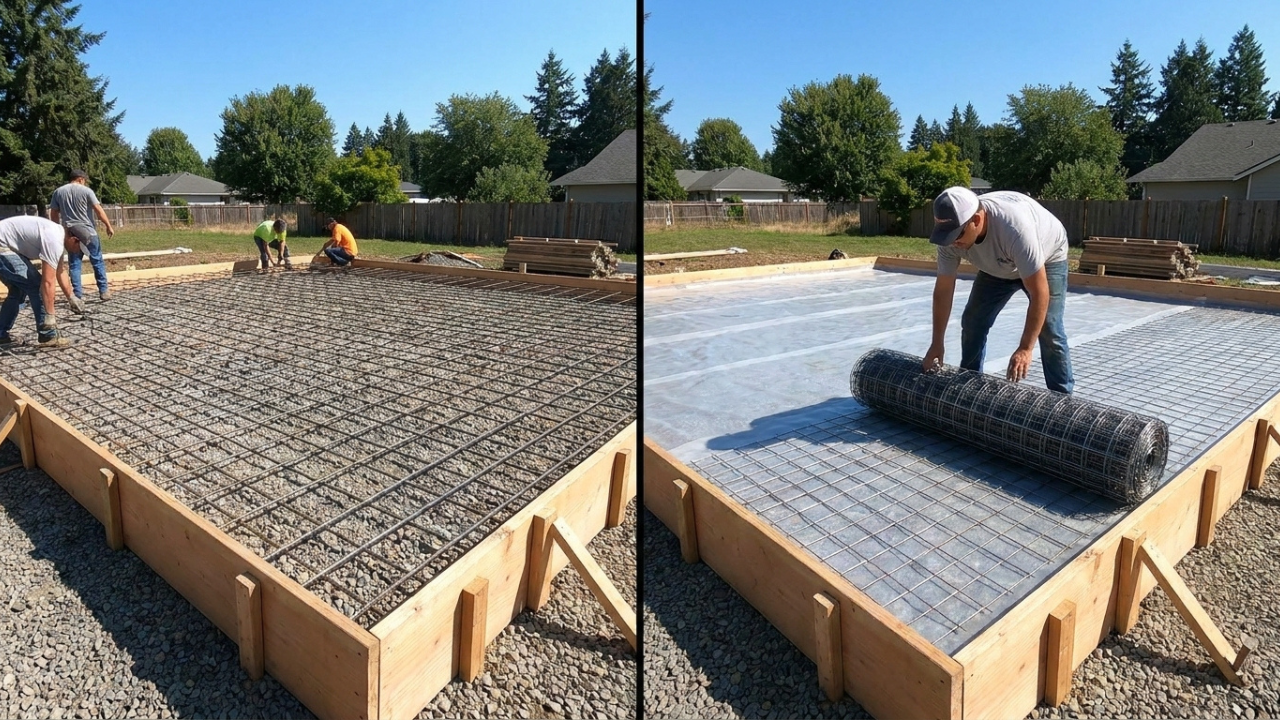
Most patio estimates mention reinforcement, and the question is always the same: rebar or wire mesh? This guide explains what each one does, what neither one can do, and why placement and the base matter more than the steel on San Antonio clay.
- Rebar or wire mesh for a concrete patio?
- What is the difference between rebar and wire mesh?
- Does rebar or wire mesh stop a patio from cracking?
- Where should the steel sit in the slab?
- When does a patio call for rebar?
- How does San Antonio clay soil change the choice?
- Does reinforcement change the price of a patio?
- What should I ask my contractor about reinforcement?
- Where do we work?
- What else are homeowners asking?
Wire mesh suits most light patio slabs, and rebar suits heavier loads. Either one only works when it is held up off the ground; the Wire Reinforcement Institute says supports usually go 2 to 3 feet apart. Neither stops cracks, it keeps them tight. On San Antonio clay soil, have a pro check the base before you pour.
Rebar or wire mesh for a concrete patio?
Wire mesh is the common choice for a light patio slab, and rebar is used when the slab carries heavier loads or sits on tougher soil. Either one only helps when it is held at the right depth during the pour.
The Wire Reinforcement Institute says millions of square feet of residential slabs, driveways, sidewalks, and patios are reinforced with welded wire mesh. Our guide to how thick a concrete patio is covers when a thicker slab or heavier load calls for rebar instead. In both cases, the steel is only as good as the base under it and the way it is placed.
Checked the concrete patio and patio slabs service pages, two Wire Reinforcement Institute Tech Facts, an American Concrete Institute guide preview, and a Concrete Reinforcing Steel Institute page on October 8, 2026.
What is the difference between rebar and wire mesh?
Rebar is individual steel bars tied together with wire on site. Wire mesh is a factory-made grid of welded wires that comes in sheets or rolls.
| Wire mesh (welded wire reinforcement) | Rebar (reinforcing bars) | |
|---|---|---|
| What it is | Welded wire grid, sold in sheets and rolls | Separate steel bars tied together with wire |
| Main job in a patio | Controls cracking and crack width | Controls cracking; used where loads or soil need more steel |
| How it is held in place | Chairs, bolsters, or concrete blocks | Bar supports, from concrete blocks to plastic or wire chairs |
| Common mistake | Laid on the ground and “hooked” up during the pour | Bars left without supports or proper cover |
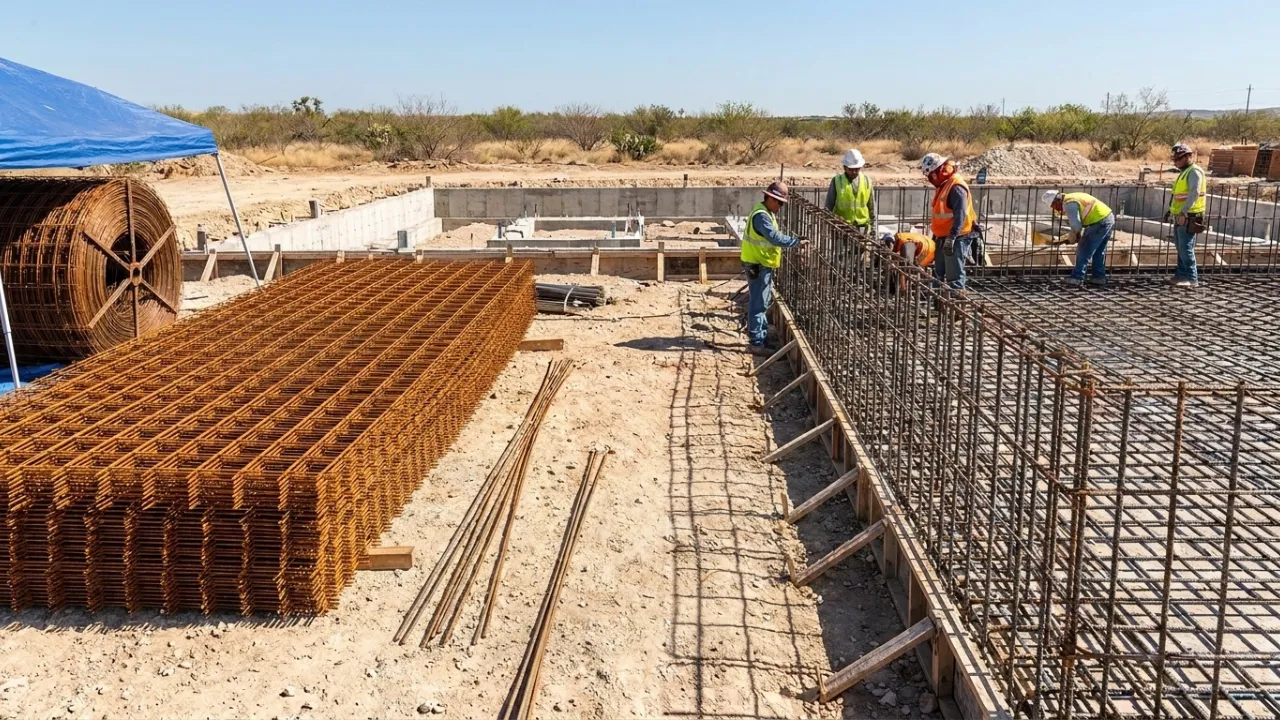
The Concrete Reinforcing Steel Institute says the concrete cover over rebar protects it from corrosion, and bar supports hold the bars at the right depth. The Wire Reinforcement Institute says mesh sheets give better placement control than rolls, because they do not have to be unrolled and straightened. You may also hear about fiber, which is mixed into the concrete. Our guide to what concrete patios are made of lists it alongside rebar and wire mesh.
Does rebar or wire mesh stop a patio from cracking?
No, reinforcement does not stop cracks. It holds cracked sections tightly together so the slab keeps acting as one piece.
The American Concrete Institute’s slab guide says it is unrealistic to expect crack-free floors, even with the best design and construction. The Wire Reinforcement Institute says the main job of wire mesh is to control cracking and crack widths. That matters because the jagged faces of a tight crack lock together and share load. The institute says that interlock is usually no longer effective once a crack is wider than 1/16 inch.
Already seeing cracks? Read why is my concrete patio cracking in San Antonio?
Placement matters as much as the steel
Where should the steel sit in the slab?
Up in the slab, not on the ground. The Wire Reinforcement Institute says a single layer should sit at or above mid-depth and never below it, and about one-third of the depth below the surface is generally enough.
- No “hooking”: WRI says laying mesh on the ground and pulling it up during the pour is not an acceptable placement method, because where it ends up is guesswork.
- No “walking in”: Pressing mesh down into fresh concrete is not recommended either, for the same reason.
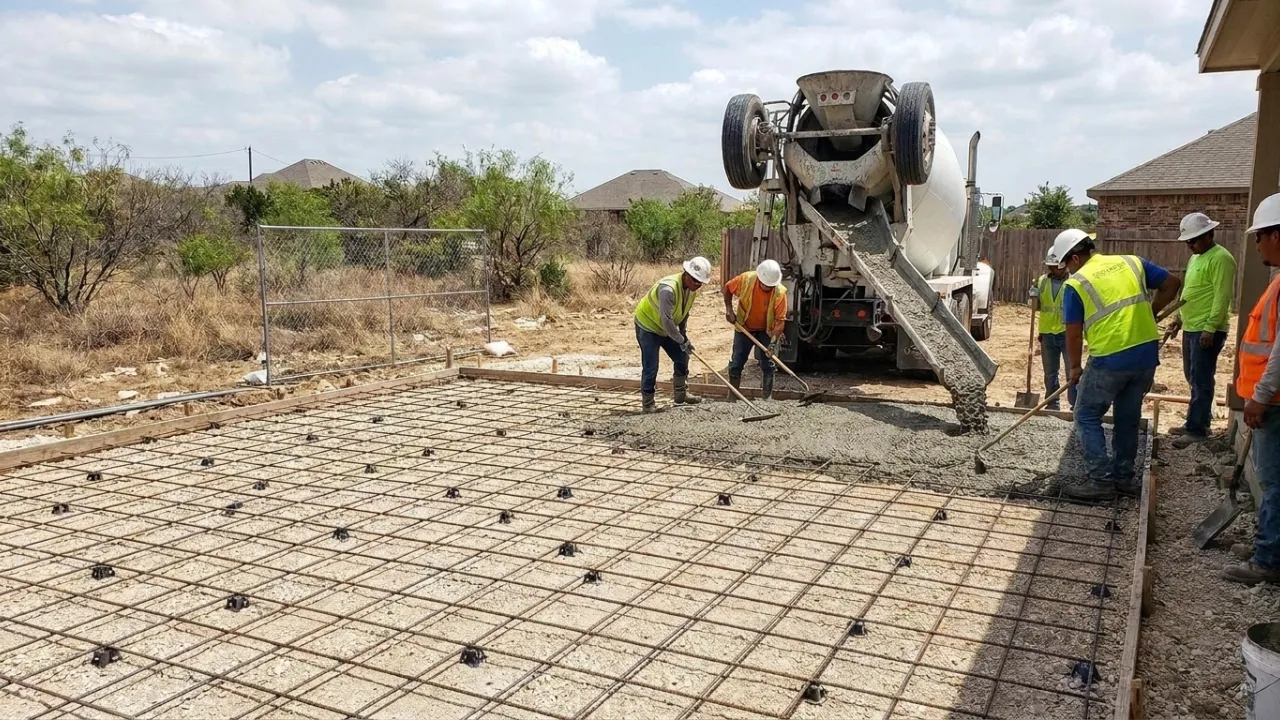
- Use supports: Chairs, bolsters, or small concrete blocks hold the steel in place. WRI says common practice for mesh is supports 2 to 3 feet apart.
- Firm footing: Supports need a solid base so they do not sink into the soil or base material during the pour.
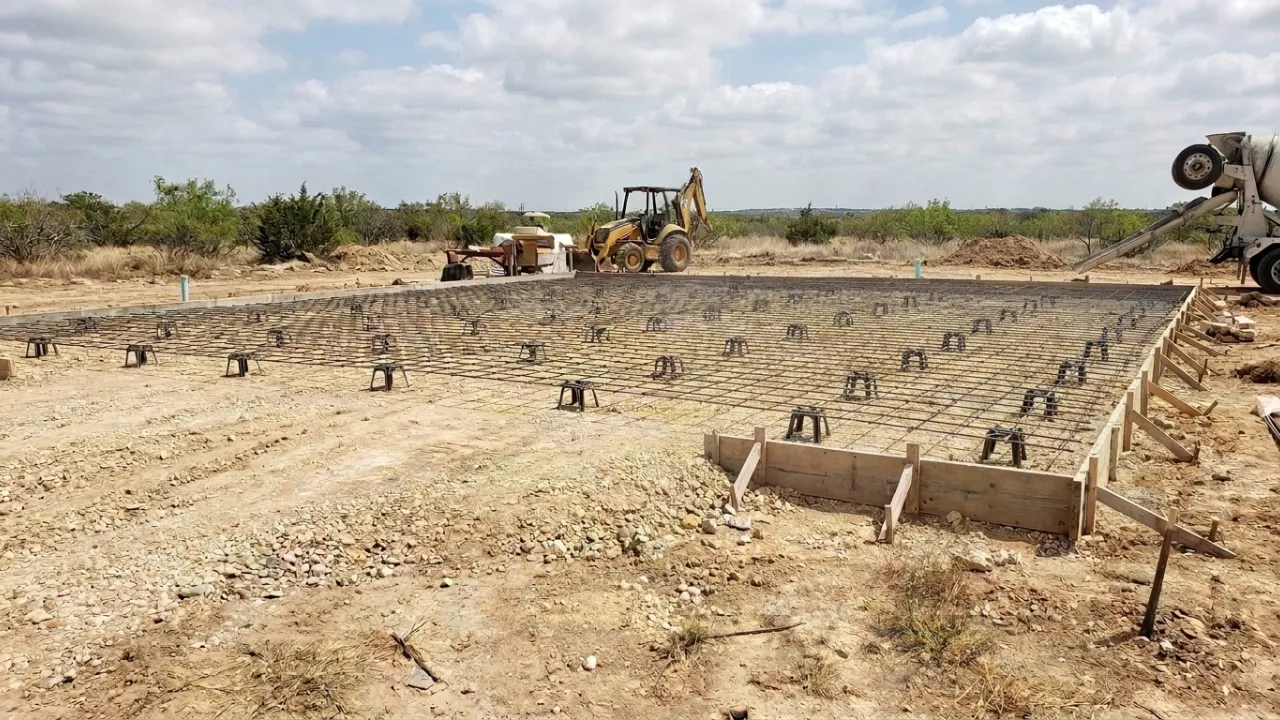
Ask to see the steel on its supports before the concrete truck arrives. It is the easiest point in the job to check.
When does a patio call for rebar?
When the slab has to do more than hold patio furniture. Heavier loads, a thicker slab, or a hard soil site are when the crew looks at rebar instead of mesh.
- Heavy loads: A hot tub, outdoor kitchen, or anything that could put a vehicle on the slab changes the design.
- Thicker slabs: Our patio thickness guide explains when a patio needs to go thicker.
- Tough soil: Sites with a history of movement get a closer look at both the base and the steel.
The Wire Reinforcement Institute also points out that a thicker slab does not shrink less, because a four-inch slab and a five-inch slab contract the same amount from drying and cold. Extra concrete alone is not a crack plan.
How does San Antonio clay soil change the choice?
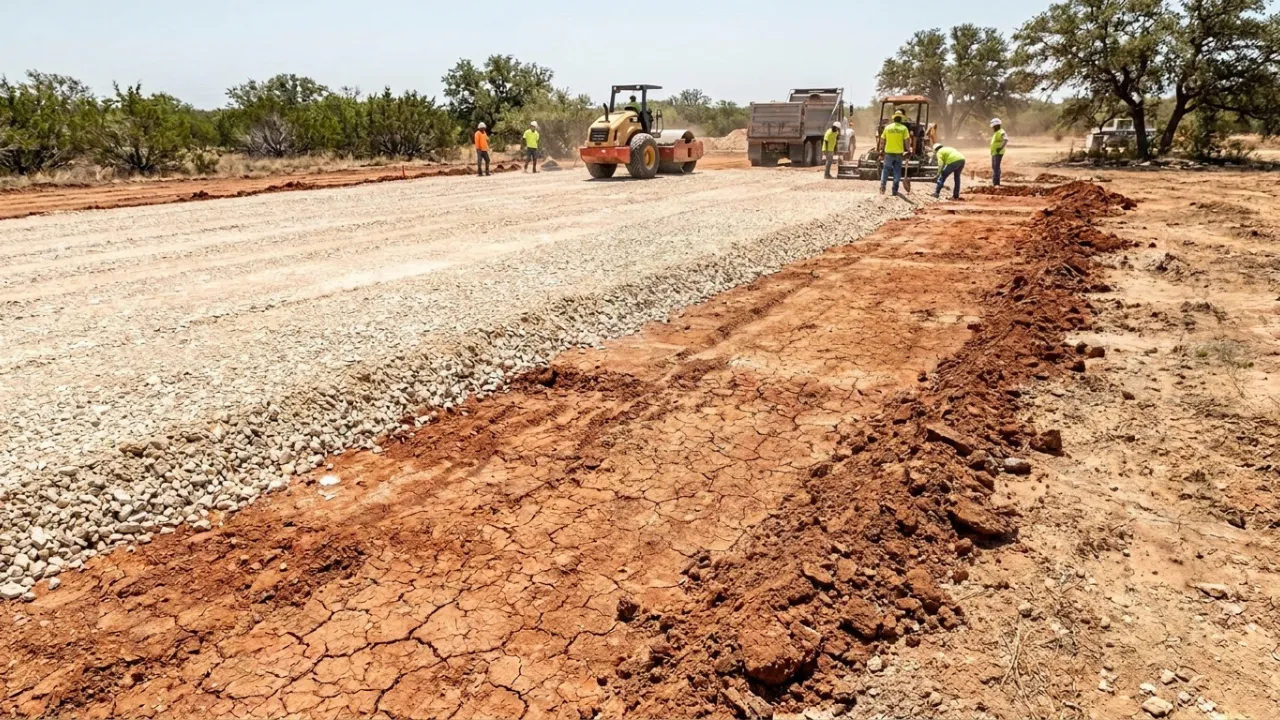
It makes the base matter more than the type of steel. Our service pages say San Antonio heat, clay soil, and sudden storms put real stress on concrete, and soil movement opens cracks across patio slabs.
- Uniform support: WRI says the soil or base must support the slab evenly. If it does not, one side of a crack can drop below the other.
- Heat: WRI says temperature changes have a profound effect on outdoor slabs like patios, and a 100-degree temperature drop shrinks concrete about 2/3 inch per 100 feet.
- Water: Puddles soften the base. Our patio page says the crew checks drainage and base conditions before it pours. See how much slope a concrete patio needs.
Planning a concrete patio slab in San Antonio? Our crew measures, checks drainage and the base, and puts the reinforcement plan in the written estimate.
“I recently had some concrete work done at my home, and I’m quite pleased with the results. The team arrived on time and finished within the expected timeframe. Smooth surface, exactly what I hoped for.”
Derek M., San Antonio · Google review shown on our patio service page
Does reinforcement change the price of a patio?
It is part of the job, but it is rarely the biggest line. Our service pages say price depends on square footage, access, demolition needs, finish type, and site prep, and they do not publish a dollar figure.
The Wire Reinforcement Institute says the material cost of reinforcement is almost always less than the material cost of extra concrete. Ask for the reinforcement to be named in your written estimate so you can compare quotes fairly.
What should I ask my contractor about reinforcement?
Ask what steel goes in, how it will be held up, and what base goes under it. A good crew answers all three before the pour.
Your patio reinforcement checklist
Use these questions when you compare estimates.
- Will the slab get wire mesh, rebar, or fiber?
- Why that choice for this patio and this soil?
- What will hold the steel up during the pour?
- How will the base be prepared and compacted?
- Will anything heavy sit on the patio?
- Where will the control joints go?
- Can I see the steel in place before the pour?
- Is the reinforcement listed in the written estimate?
Want the slab done right from the base up?
Free look at the site, price in writing before work, licensed and insured crew.
Where do we work?
Affordable Concrete San Antonio works across San Antonio and nearby areas. The patio service page lists Helotes, Leon Valley, Shavano Park, Terrell Hills, Alamo Heights, Converse, Universal City, Schertz, Boerne, Cibolo, Fair Oaks Ranch, Bulverde, Spring Branch, New Braunfels, Pleasanton, Floresville, Castroville, Lytle, and Von Ormy. Not sure about your address? Call (713) 504-2341.
What else are homeowners asking?
These are the short answers people want before they book a quote.
Is rebar or wire mesh better for a concrete patio?
Wire mesh is the common choice for a light patio slab, and rebar is used for heavier loads or tougher soil. Either one only helps when it is held at the right depth during the pour.
Does wire mesh stop concrete from cracking?
No. The Wire Reinforcement Institute says its main job is to control cracking and crack widths, keeping cracked sections close together so the slab acts as one piece.
Can wire mesh lie on the ground before the pour?
No. The Wire Reinforcement Institute says laying mesh on the ground and hooking it up during the pour is not an acceptable placement method. It should sit on chairs or blocks.
Where should reinforcement sit in a patio slab?
The Wire Reinforcement Institute says a single layer should sit at or above mid-depth, never below, and about one-third of the depth below the surface is generally enough.
Does clay soil mean I need rebar?
Not on its own. Clay soil makes base prep and drainage more important, because steel does not fix a slab without even support. The crew checks the base on site first.
Is the estimate free?
Yes. The site visit and the written estimate are free, with no obligation, and you see the price before anyone forms or pours.
Sources used in this article:
- Affordable Concrete San Antonio, concrete patio service page, checked October 8, 2026, affordableconcretesanantonio.com/concrete-patio-san-antonio/
- Affordable Concrete San Antonio, patio slabs service page, checked October 8, 2026, affordableconcretesanantonio.com/concrete-patio-san-antonio/patio-slabs/
- Wire Reinforcement Institute, Tech Fact TF 702-R-21, Supports Are Needed for Long-Term Performance of Welded Wire Reinforcement in Slabs-On-Grade, checked October 8, 2026, wirereinforcementinstitute.org (PDF)
- Wire Reinforcement Institute, Tech Fact TF 202-R-21, How to Specify, Order and Use Welded Wire Reinforcement in Light Construction, checked October 8, 2026, wirereinforcementinstitute.org (PDF)
- American Concrete Institute, ACI 360R-10 Guide to Design of Slabs-on-Ground (public preview), checked October 8, 2026, concrete.org (PDF preview)
- Concrete Reinforcing Steel Institute, Placing Bars, checked October 8, 2026, crsi.org/reinforcing-basics/reinforced-concrete/placing-bars/
This article is general information for San Antonio homeowners. It is not a quote or an engineered design, and it does not replace a look at your site. The company does not publish reinforcement prices, so none are given here.
What should I read next?
Start with our patio service page, or keep reading if you are still choosing a finish or deciding what to do with an old slab.