
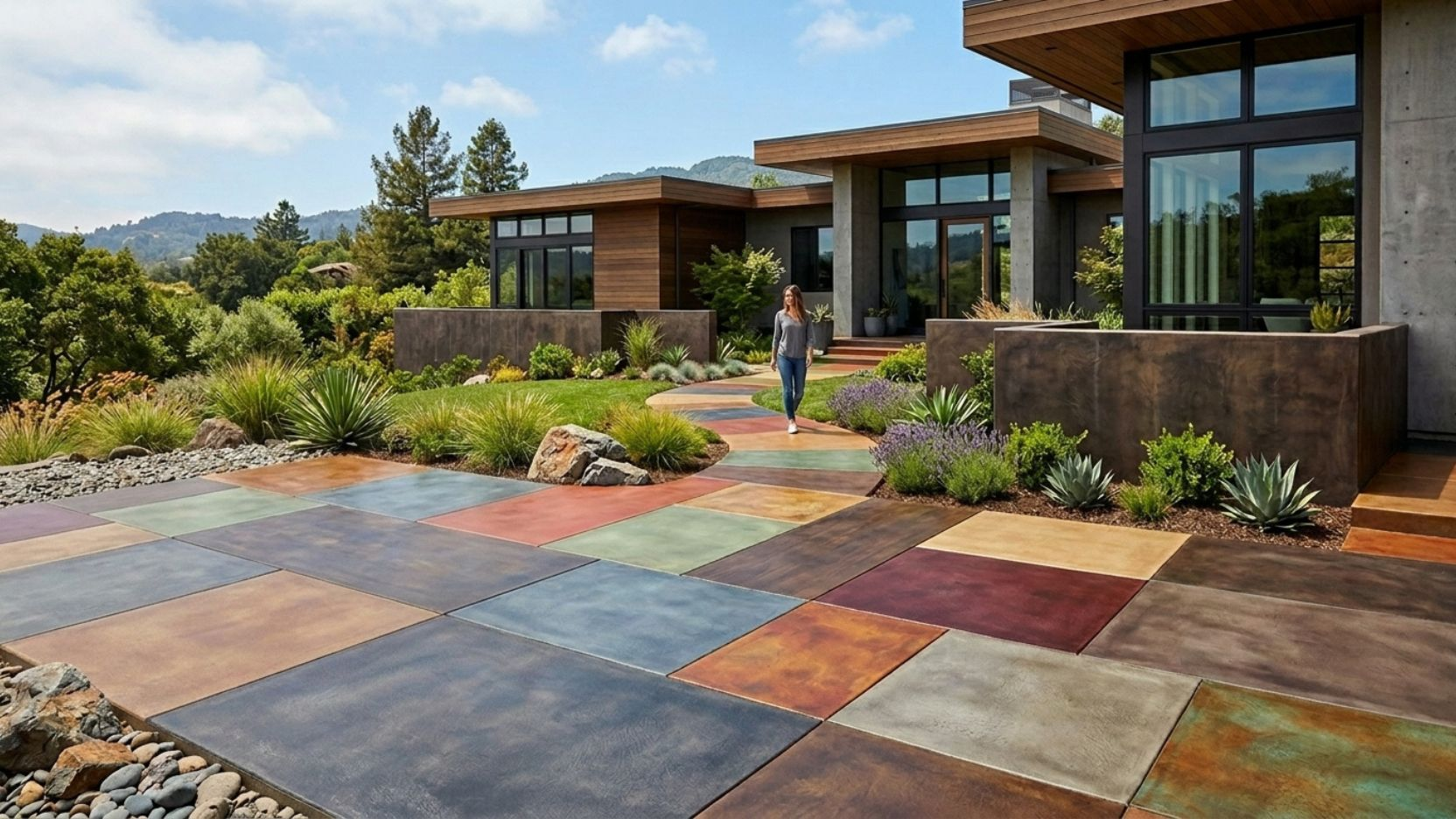
From rich terracotta earth tones to sleek charcoal grays and warm coastal tans, the right concrete stain color transforms a plain slab into a design statement. This guide covers all 15 top-performing stain colors for San Antonio homes including which finish types deliver each look, local cost ranges, and how to pick a color that holds up against Texas sun and heat.
Concrete staining is one of the most cost-effective ways to upgrade floors and outdoor surfaces in a San Antonio home. Unlike paint or coating systems that sit on top of the slab, quality stains penetrate the concrete and create color that cannot peel, chip, or flake off. The result is a surface that actually improves with age developing a patina that generic gray concrete never achieves.
The challenge is that concrete staining color choices are not the same as paint chips from a hardware store. Acid stains react chemically with the existing concrete, meaning the final color depends on the mineral composition of your specific slab. Water-based stains are more predictable, but still require correct surface prep to deliver consistent tone. This guide walks through 15 of the most popular color choices across both stain types, what each color actually looks like on a cured slab under Texas sunlight, and which applications each color suits best.
Always test your chosen stain color on a 12×12 inch section of your actual slab before committing to the full project. Concrete stain color chips and manufacturer samples are produced on controlled concrete in a lab environment. Your existing slab has a different water-cement ratio, aggregate blend, and mineral content all of which shift the final color. A quick test patch costs nothing and eliminates the single biggest source of staining disappointment.
Acid stains are the gold standard for concrete color that lasts. A mild hydrochloric acid solution carries metallic salts into the concrete surface, where they react with the calcium hydroxide in the cement paste to form permanent, insoluble color compounds. The result is a translucent, mottled finish with natural variation that no two applications replicate exactly giving every stained floor and patio its own character.
Acid Stain

Walnut brown is the workhorse of acid stain colors and for good reason. The finished surface reads as a warm, rich brown with natural variation ranging from golden tan in thinner areas to deep espresso in sections with higher cement paste concentration. On a San Antonio patio under afternoon sun, this color creates a grounded, organic look that pairs with almost any home exterior from limestone veneer to contemporary stucco.
- Concrete must be clean, free of sealers, paint, and curing compounds before stain is applied
- Surface profile: light grind or acid etch for proper penetration on dense slabs
- Apply two coats for richer tone variation; one coat produces lighter, more uniform results
- Neutralize and rinse thoroughly before applying sealer residual acid affects bond
Acid Stain
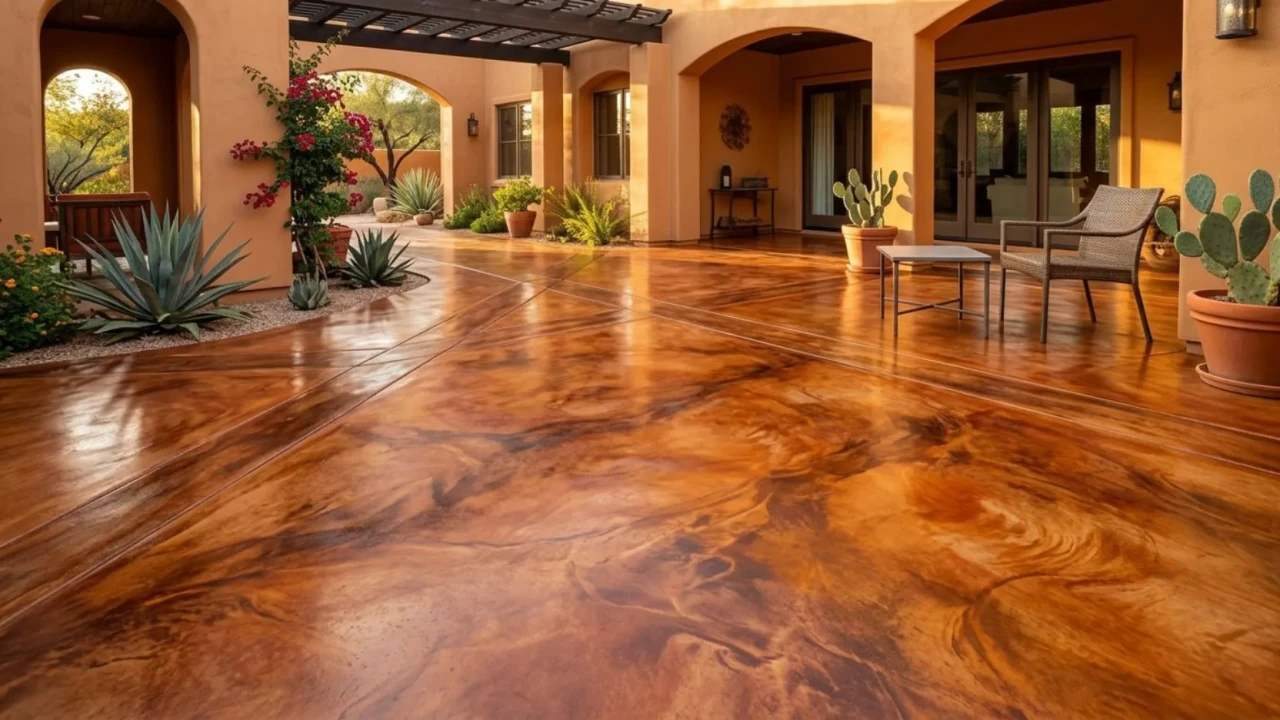
Terracotta amber is the quintessential San Antonio stain color. The warm orange-red tones echo the clay tile roofs, limestone facades, and desert landscape that characterize Bexar County residential architecture. Unlike paint pigments that fade in UV exposure, acid stain color is locked into the mineral structure of the concrete making terracotta amber an ideal choice for exposed outdoor patios and pool decks where direct sun is unavoidable.
- Variation between light amber and deep rust no two sections look identical, which is the intended aesthetic
- Lighter areas appear where concrete is denser or had less water at the surface during curing
- Two-tone layering (amber base + walnut accent) creates a natural sandstone appearance
- UV sealer application mandatory for exterior surfaces prevents sealer yellowing in Texas sun
Acid Stain
Hazel is one of the more nuanced acid stain colors available and one of the most underappreciated. The reactive chemistry creates a medium brown base with subtle olive or moss green undertones that appear in areas where iron content in the concrete is higher. On a San Antonio garage floor or covered patio, hazel reads as a sophisticated earthy neutral less common than straight brown, and more complex than basic tan. It pairs exceptionally well with natural wood accents, olive green cabinetry, and cream interior walls.
Acid Stain
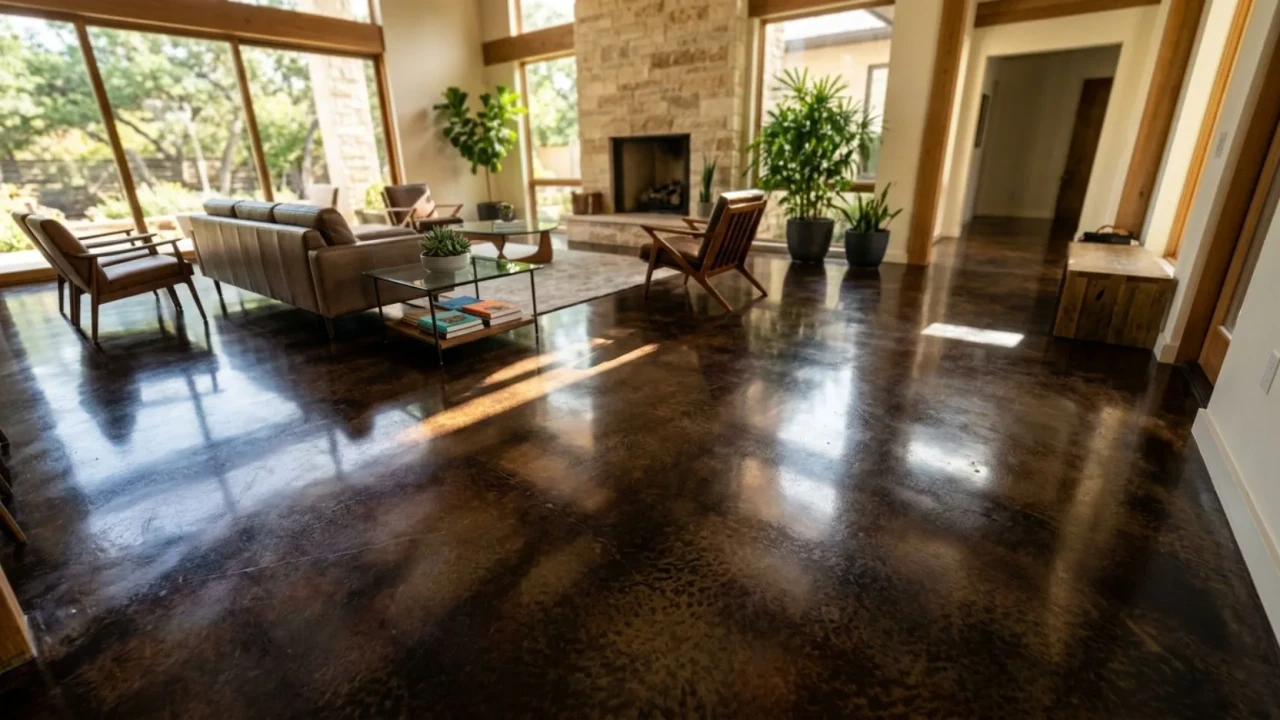
Dark espresso and coffee acid stains have grown significantly in popularity as San Antonio homeowners move toward modern farmhouse and transitional design styles that feature light walls, dark floors, and natural material accents. Achieving a true deep chocolate on concrete requires multiple stain applications, careful surface prep, and a high-quality gloss sealer to bring out the depth. The result reads almost like polished dark wood from a distance with the added benefit of being completely waterproof and far more durable.
Layering for depth on dark colors: A single pass of dark acid stain on concrete typically produces a medium-dark result. To achieve true espresso depth, experienced contractors apply a light amber stain as a base coat, allow it to cure and neutralize, then apply the dark brown stain on top. The base layer adds warmth and visual complexity that a single dark coat cannot replicate.
Acid Stain
Sage green acid stain is produced by iron-based reactive chemistry that deposits a green-gray tone with brown undertones. On a San Antonio covered patio surrounded by mature live oak trees or native landscaping, this color creates a surface that feels like it belongs in the yard rather than being dropped on top of it. It is a subtle choice that rewards close observation never garish, always grounded.
Acid Stain
Golden tan delivers a warm honey-yellow tone with light caramel variation. It is the most compatible acid stain color with San Antonio’s prevalent architectural styles Mediterranean revival, Spanish colonial, and Tuscan-inspired exteriors all benefit from a golden tan concrete surface that mirrors the warm tones of stucco and terracotta. Indoors, golden tan reads as a richly warmed neutral that brightens rooms without the visual weight of a dark floor.
Acid Stain
Cola brown acid stain sits between walnut and espresso on the depth scale, with a distinctive reddish-copper cast in lighter areas. This warm variation makes it one of the more dynamic-looking stain colors on driveways and entry walkways the surface shifts in appearance from deep brown in shade to copper-tinged bronze in direct sunlight, making the concrete look different at different times of day. For San Antonio homeowners who want a stained driveway that stands out from the neighborhood without being flashy, cola brown delivers.
Acid Stain
Desert sand is one of the lightest achievable acid stain tones a pale cream-beige with subtle warm variation that creates a bleached, sun-washed appearance. On a San Antonio backyard patio with white or cream exterior walls, this color creates a cohesive, airy outdoor room that feels wider and more open than darker alternatives. It also stays noticeably cooler underfoot in summer, making it a top pick for large exposed patios where family members spend time barefoot.
Water-based concrete stains are not reactive like acid stains they work by depositing fine pigment particles into the pores of the concrete surface rather than triggering a chemical reaction. The advantage is predictability: the color you see on the chip is very close to the color you get on your floor. Water-based stains also open up the full spectrum of color, including grays, blues, and even whites that are impossible to achieve with acid stains. They are the right choice when precise, modern color is the priority.
Water-Based
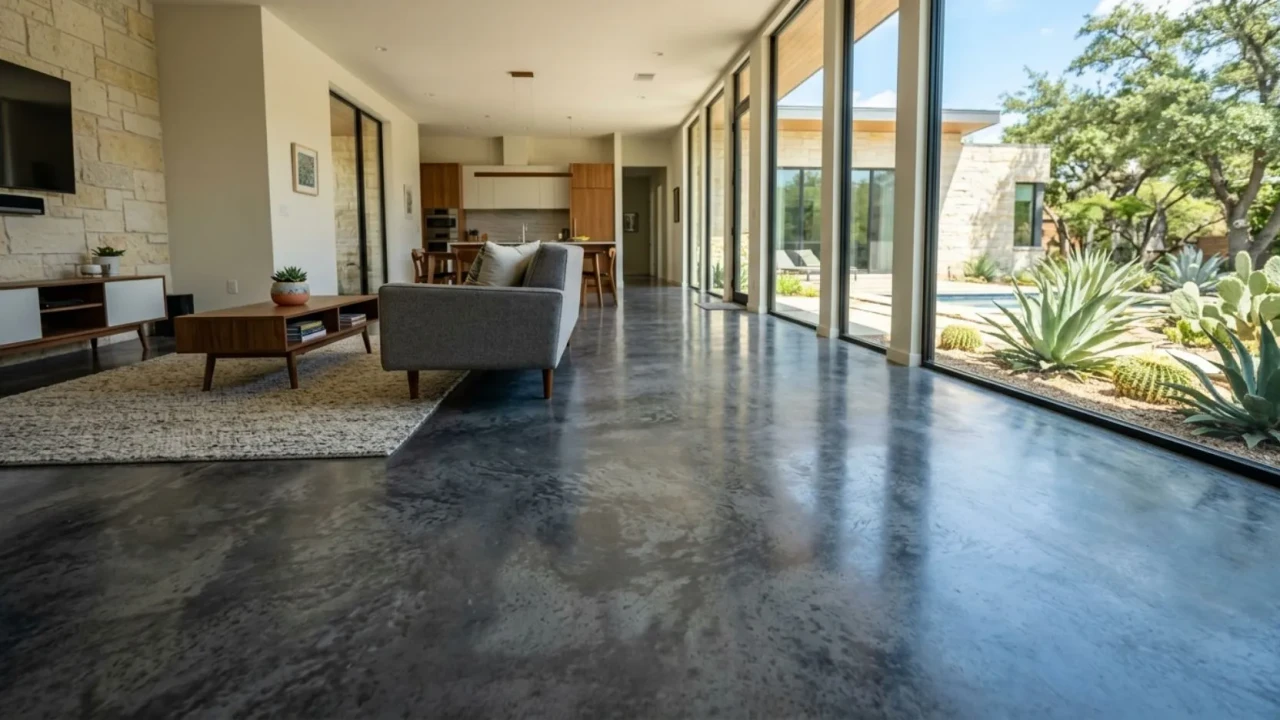
Slate gray is the water-based answer to polished concrete in upscale residential projects. Where acid stains produce warm earth tones with organic variation, slate gray delivers a clean, cool, consistent tone that reads as sophisticated and deliberately modern. San Antonio builders and designers have adopted slate gray stained concrete as a high-value flooring alternative to large-format tile same visual weight, lower material cost, and better durability underfoot.
- Diamond grind the slab to a smooth, consistent surface profile before staining concrete variation shows more in gray than warm tones
- Fill all cracks, control joints, and surface voids before stain application
- Apply a concrete densifier before staining if the slab is older or shows significant porosity
- Two to three coats of stain are typical for a uniform, deep gray result
Water-Based
Charcoal black stained concrete is among the most striking floor options available in San Antonio residential design. Under a high-gloss sealer, a well-executed charcoal black floor creates a mirror-like surface that reflects ambient light and makes even modest room proportions appear grander. It is the floor choice for architecturally designed homes where the flooring is as much a design element as the furniture above it. The trade-off is maintenance visibility: dust, pet hair, and footprints are more apparent on dark floors and require more frequent cleaning to maintain the intended appearance.
Water-Based
Warm beige water-based stain occupies the comfortable middle ground between the cool neutrality of gray and the rich warmth of acid stain earth tones. It is the stain color of choice for transitional-style San Antonio homes where the design language mixes contemporary and traditional elements. Warm beige reads as fresh and updated without feeling cold, making it one of the most livable floor colors for families with young children and pets practical daily use demands a color that forgives real-world imperfections.
Water-Based
Dusty blue-gray is one of the fastest-growing concrete stain color choices in the San Antonio market heading into 2026. The color is inspired by the weathered limestone and cedar of the Texas Hill Country and reads as simultaneously relaxed and refined. It works particularly well in homes near the Medina River corridor and on the north side of San Antonio where Hill Country design aesthetics are most prominent. As a water-based stain, dusty blue-gray achieves consistent, predictable tone across the full floor area without the reactive variation of acid stain.
Water-Based
Where acid stain terracotta amber produces variation and mottling, water-based brick red delivers a saturated, even red-orange tone that reads confidently across the whole floor. This is the color choice for homeowners who want a bold statement surface an outdoor kitchen counter, a covered breezeway, a feature room floor where the concrete color is an intentional design choice rather than a neutral backdrop. In San Antonio’s warm, sun-drenched environment, brick red stained concrete creates a vibrant connection to the regional palette of clay soil, fired tile, and terracotta pot gardens.
Water-Based

Pewter and silver water-based stains produce a cool, metallic-leaning gray that is the top color choice for garage floor makeovers and commercial retail spaces in San Antonio. The reflective quality of a gloss-sealed pewter floor dramatically brightens a garage without the cost of epoxy floor coating. It resists the tire marks and chemical staining that bare concrete accumulates over time and is far easier to maintain than an unsealed slab. For homeowners converting garages to workshops, home gyms, or entertainment spaces, pewter stain creates a finished, professional-quality surface at a fraction of epoxy cost.
- Degrease thoroughly before staining oil and automotive fluids prevent pigment adhesion
- Diamond grind any existing sealer, paint, or coating before applying new stain
- Apply a moisture-blocking primer if the garage slab is below grade or shows any efflorescence
- Use a commercial-grade polyurethane topcoat, not a standard concrete sealer, for garage applications
Custom Blend
The most sophisticated concrete staining work in San Antonio combines multiple stain types in layers to achieve colors that no single product can produce alone. A common pairing for high-end residential patios is an amber acid stain base coat which creates organic warmth and natural variation followed by a thin wash of gray water-based stain. The gray settles into the valleys and low points of the acid stain texture, creating a two-tone result that mimics aged limestone or flagstone far more convincingly than a single-color application. This technique requires experienced hands and careful timing, but the results command a price premium that reflects the skill involved.
Request a physical sample board before any multi-layer stain project: For layered stain work, a skilled contractor will produce a 12×12 inch sample board using your actual concrete mix or a closely matched sample, showing you exactly how the finished layers appear under indoor and outdoor lighting. This step eliminates surprises and is standard practice for any project where the staining technique is unconventional. If a contractor cannot provide a sample board, that is a significant warning sign.
Concrete staining pricing in San Antonio depends on four variables: stain type (acid vs. water-based), the number of stain coats applied, surface preparation required, and sealer selection. The following cost ranges reflect real project pricing from our crews across Bexar County in 2025 and 2026.
The color palette you want is often the deciding factor between stain types. But durability, ease of application, and long-term maintenance schedules also differ significantly between acid-based and water-based systems. Use this comparison to guide your conversation with a contractor.
| Feature | Acid-Based Reactive Stain | Water-Based Stain |
|---|---|---|
| Color range | Earth tones only: browns, ambers, tans, sage green, terracotta | Full spectrum: gray, blue, red, black, white, custom blends |
| Color predictability | Variable reacts with individual slab chemistry; test patch required | Consistent pigment deposits predictably; matches color chips closely |
| Permanence | Chemically bonded cannot peel or flake; extremely long-lasting | Penetrates pores very durable but slightly less permanent than acid |
| Application difficulty | More complex requires acid safety protocols and neutralization step | Simpler water cleanup, no acid handling; better for DIY adjacent projects |
| Best applications | Patios, pool decks, exterior surfaces, large interior floors | Garage floors, interior living areas, commercial spaces, precise color matching |
| Typical cost in San Antonio | $2 to $4 per sqft installed | $3 to $5 per sqft installed |
| Sealer required | Yes acrylic, polyurethane, or epoxy depending on application | Yes same sealer options apply |
| UV resistance (exterior) | Excellent color is mineral-based and inherently UV stable | Good requires UV-stable sealer for exterior applications |
- Stain type selected: acid-based for earth tones and organic variation, water-based for precise modern color
- Color confirmed with a physical test patch on your actual slab before full project begins
- Interior vs. exterior application confirmed sealer type changes between the two
- Multi-color layering decided: single tone or layered technique for depth and custom effect
- Sheen level selected: matte, satin, semi-gloss, or high gloss based on room use and design intent
- Existing sealers, coatings, or paint removed before staining these block stain penetration
- Concrete degreased for garage floors oil contamination is the top cause of staining failure
- Cracks and surface voids filled and allowed to cure before stain application
- Surface profile confirmed: light acid etch for acid stain, diamond grind for water-based on dense slabs
- Portfolio of completed staining projects in San Antonio reviewed including color examples in Texas sun
- Quote specifies stain brand and product name, number of coats, sealer type, and prep scope
- Acid safety protocols confirmed if acid staining: proper neutralization and disposal included in scope
- Certificate of insurance received and verified $1M+ general liability minimum
- Sealer reapplication schedule confirmed: every 2 to 3 years for exterior surfaces under Texas UV
- Cleaning protocol agreed: pH-neutral cleaner only acid or bleach cleaners degrade sealer
- Scratch and chip repair process understood: light re-stain and recoat for damaged sections
- First 30 days care noted: avoid dragging heavy furniture across newly sealed floors
What is the most popular concrete stain color for patios in San Antonio?
Will concrete stain fade in the San Antonio sun?
Can I stain my existing concrete driveway or does it need to be new concrete?
How long does concrete staining take and when can I use the surface?
Is concrete staining a good alternative to tile for an interior floor in San Antonio?
What concrete stain color holds up best on a pool deck in San Antonio?
Get a Free Concrete Staining Quote in San Antonio
Tell us about your surface patio, garage floor, driveway, or pool deck and your color goals. We will assess your slab, recommend the right stain type, and give you a detailed written quote at no cost.