
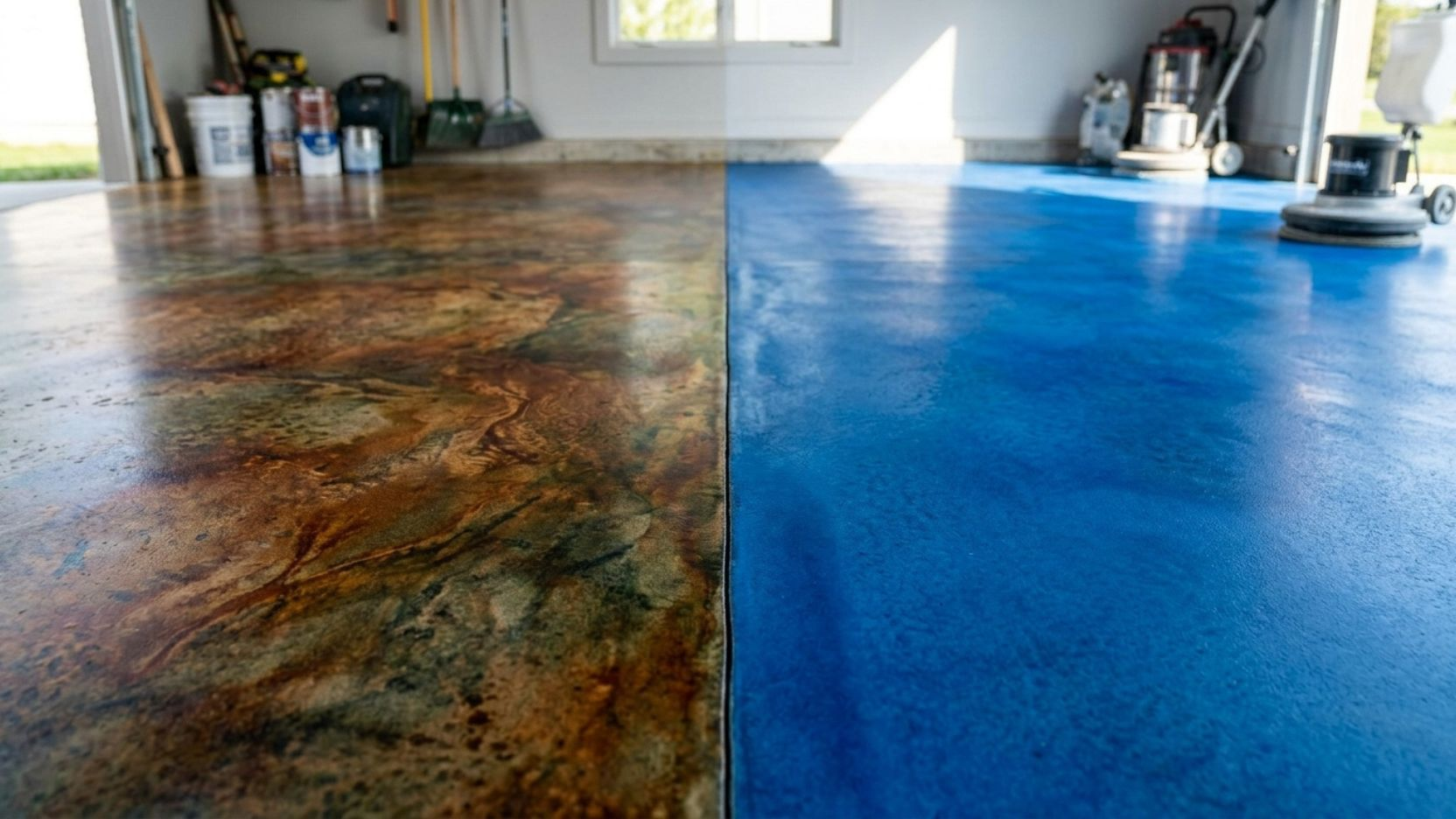
Acid stain and water-based stain both color concrete, but they work in different ways, look different, and fail in different ways. This guide compares acid stain vs water-based concrete stain on looks, installed cost in San Antonio, durability in our sun, the most common water-based concrete stain problems, and where each one works best, so you can choose before anyone opens a can.
- What is the difference between acid stain and water-based concrete stain?
- Which looks better, acid stain or water-based stain?
- How much does acid stain cost compared to water-based stain in San Antonio?
- Which concrete stain lasts longer in the San Antonio sun?
- What are the most common water-based concrete stain problems?
- What can go wrong with acid stain?
- Which stain is better for patios, pool decks, driveways, and garages?
- Can I apply acid stain or water-based stain myself?
- When should I call a pro to stain concrete?
- Where do we work?
- What else are homeowners asking?
Pick acid stain for mottled earth tones that become part of the concrete, and water-based stain for even or brighter colors. In San Antonio, acid stain runs about $3 to $7 per square foot installed and water-based about $2 to $5. Our sun means resealing about every 2 years, so call a pro if the slab was ever sealed.
What is the difference between acid stain and water-based concrete stain?
Acid stain reacts chemically with the lime in the concrete to make a permanent, variegated color, while water-based stain carries pigment into the surface pores without a reaction. Acid stain changes the concrete itself; water-based stain colors it more like a deep, thin coat.
- Acid stain: Metallic salts in a mild acid solution react with the concrete. The result is translucent, marbled, and permanent.
- Water-based stain: Pigment in a water-based carrier soaks into open pores. Color is predictable and can be removed later by grinding.
- Both need a sealer: Neither stain protects the surface on its own. A sealer locks in the color and takes the wear.
Our guide to how concrete staining works covers the basics, and our concrete staining page shows the work we do in San Antonio.
Which looks better, acid stain or water-based stain?
Acid stain looks better if you want a natural, stone-like finish in earth tones, and water-based stain looks better if you want an exact or bright color. It comes down to whether you want variation or consistency.
| Feature | Acid stain | Water-based stain |
|---|---|---|
| Colors | Earth tones: amber, brown, terracotta, green, blue-gray | Full range, including whites, grays, and reds |
| Look | Mottled and marbled; every slab is different | Even and consistent; easy to match a sample |
| How it colors | Chemical reaction with the concrete | Pigment soaks into the pores |
| Permanence | Permanent; cannot be undone | Can be removed by grinding |
| Fumes and handling | Acid fumes; must be neutralized | Low odor; simpler cleanup |
| Best fit | Patios, pool decks, interior floors | Driveways, garages, commercial floors |
Comparison checked against our concrete staining cost guide on October 23, 2026.
How much does acid stain cost compared to water-based stain in San Antonio?
Acid stain typically costs about $3 to $7 per square foot installed in San Antonio, and water-based stain about $2 to $5. Acid stain costs more mainly because of the extra labor to apply, neutralize, and rinse it.
| Item | Acid stain | Water-based stain |
|---|---|---|
| Installed price | About $3 – $7 / sq. ft. | About $2 – $5 / sq. ft. |
| 400 sq. ft. patio | About $1,200 – $2,800 | About $800 – $2,000 |
| Prep: strip old sealer | About $1.00 – $2.50 / sq. ft. when needed | |
| Prep: degrease | About $0.50 – $1.50 / sq. ft. when needed | |
| Solvent acrylic sealer | About $0.50 – $1.00 / sq. ft. | |
| Professional patio reseal | About $150 – $350 | |
Installed, prep, sealer, and reseal ranges are from our concrete staining cost guide, checked October 23, 2026. The 400 sq. ft. row is simple arithmetic from the per-square-foot ranges. These are typical estimates, not quotes; your price is set in writing after a free site visit.
What most San Antonio slabs can expect
Which concrete stain lasts longer in the San Antonio sun?
Acid stain color lasts longer because it is part of the concrete and cannot peel, but both stains depend on the sealer to survive our sun. With resealing on schedule, stained concrete can look good for 15 to 20 years or more.
- Sealer choice: Solvent-based acrylic is about $0.50 to $1.00 per square foot and needs resealing every 2 to 3 years, closer to 2 in San Antonio sun.
- Water-based acrylic sealer: Cheaper at about $0.35 to $0.75, but it needs resealing every 1 to 2 years and is not ideal on south-facing slabs.
- Polyurethane topcoat: About $1 to $2 per square foot and lasts about 4 to 6 years, mostly used indoors and in garages.
- Cleaning: Use a pH-neutral cleaner; harsh cleaners wear the sealer down early.
Sealer prices and intervals are from our concrete staining cost guide, checked October 23, 2026.
What are the most common water-based concrete stain problems?
Most water-based concrete stain problems come from the surface, not the stain: an old sealer, a hard troweled finish, or oil keeps the pigment from soaking in. The result is blotchy color, or stain that peels within the first year.
- Old sealer on the slab: Stain sits on top and peels. Do a water drop test; if water beads instead of soaking in, the sealer has to be stripped first.
- Blotchy or uneven color: Dense, power-troweled concrete or oil spots absorb unevenly. Degreasing and light profiling fix most of it.
- Lap marks: Uneven spraying or letting edges dry before the next pass leaves visible lines.
- Peeling from heavy coats: Too much stain builds a film instead of soaking in, and the film lifts.
- Wear in traffic lanes: Without a maintained sealer, driveways and garage lanes lose color first.
Our concrete staining mistakes guide covers more of the problems we are called to fix.
What can go wrong with acid stain?
Acid stain can come out a different color than the sample, react weakly on some concrete, and cause the sealer to fail if it is not neutralized. Because it is permanent, mistakes cannot simply be washed off.
- Surprise color: The reaction depends on the slab’s age, mix, and finish, so two areas of one patio can look different. Always test a hidden spot.
- Weak reaction: Patched areas, old weathered concrete, or slabs with little free lime take less color.
- Residue left behind: Acid stain must be neutralized, usually with a baking soda solution, and rinsed. Poor neutralization stops the sealer from bonding.
- Fumes and safety: Acid fumes and splash risk need protective gear and care around plants and metal.
Which stain is better for patios, pool decks, driveways, and garages?
Acid stain is usually better for patios, pool decks, and interior floors, and water-based stain is usually better for driveways, garages, and commercial floors. Match the stain to how the surface is used and how even you want the color.
- Patios and pool decks: Acid stain’s natural stone look suits outdoor living areas.
- Driveways and garages: Water-based stain gives a consistent color across large areas, and color can be refreshed later.
- Interior floors: Acid stain is a classic choice for polished-look floors.
- Commercial spaces: Water-based stain matches brand colors and repeats well across rooms.
Still deciding between a stain and a coating? See our concrete staining vs epoxy comparison.
Can I apply acid stain or water-based stain myself?
Water-based stain is the more forgiving choice for DIY, with materials around $0.50 to $2.00 per square foot. Acid stain is harder to do yourself because of the fumes, neutralizing, and permanent results.
- Check the surface: Water drop test for old sealer, and look for oil and patches.
- Clean and prep: Degrease, strip sealer if needed, and let the slab dry.
- Test a hidden spot: Let it dry fully before judging the color.
- Apply evenly: Keep a wet edge to avoid lap marks.
- Neutralize acid stain: Baking soda solution, then rinse until clean.
- Seal: Then keep foot traffic off for 24 hours and vehicles off for 72 hours.
DIY material range is from our concrete staining cost guide, checked October 23, 2026.
When should I call a pro to stain concrete?
Call a pro when the slab was ever sealed, has oil or patches, is large, or you want acid stain. Those are the jobs where prep and technique decide whether the color lasts.
- Water beads on the surface, which means an old sealer is still there
- You want acid stain, which is permanent and must be neutralized
- The slab has oil stains, patches, or cracks that will show through
- The concrete is less than 28 days old
San Antonio sun and heat make stain and sealer harder to apply evenly and wear sealer out faster. Call (713) 504-2341 for a free look, or see our concrete staining page.
Ready for a price? Request a free quote and we will test the slab, recommend acid or water-based stain, and give you a written price.
Not sure which stain your concrete needs?
Free site visit, a water drop and color test, and a written price for acid or water-based stain before any work starts. Licensed and insured crew.
Where do we work?
Affordable Concrete San Antonio works across San Antonio and nearby areas from our shop at 1247 W Thompson Pl, San Antonio, TX 78226.
We stain and seal patios, pool decks, driveways, and floors in San Antonio and these nearby areas: Helotes, Leon Valley, Shavano Park, Terrell Hills, Alamo Heights, Converse, Universal City, Schertz, Boerne, Cibolo, Fair Oaks Ranch, Bulverde, Spring Branch, New Braunfels, Pleasanton, Floresville, Castroville, Lytle, and Von Ormy. Not sure about your address? Call (713) 504-2341.
What else are homeowners asking?
These are the short answers people want before they book a quote.
Is acid stain or water-based stain more durable?
Acid stain color is more permanent because it reacts with the concrete and cannot peel. Both stains rely on a sealer, and with resealing about every 2 years outdoors in San Antonio, stained concrete can look good for 15 to 20 years or more.
Can you use acid stain and water-based stain together?
Yes. A common approach is acid stain for the base color and water-based stain for accents or to adjust tone. Apply and neutralize the acid stain first, let the slab dry, then add the water-based stain before sealing.
Why did my acid stain turn out a different color than the sample?
Acid stain reacts with the lime in the concrete, so the age, mix, finish, and patches of the slab all change the final color. Always test a hidden area and let it dry fully before judging.
Can you stain new concrete?
Yes, but wait until the concrete has cured for about 28 days. Staining earlier can cause uneven color and sealer problems.
Can you put water-based stain over an old sealer?
No. Stain over an existing sealer usually looks blotchy or peels within a year. If water beads on the surface, the sealer needs to be stripped first.
How much does it cost to stain a 400 square foot patio in San Antonio?
At typical installed prices, acid stain on a 400 square foot patio runs about $1,200 to $2,800 and water-based stain about $800 to $2,000. Sealer stripping or degreasing adds to that when needed.
Sources used in this article:
- Affordable Concrete San Antonio, concrete staining service page, affordableconcretesanantonio.com/concrete-staining-san-antonio/
- Affordable Concrete San Antonio, how much does concrete staining cost in San Antonio, checked October 23, 2026, affordableconcretesanantonio.com/concrete-blogs/how-much-does-concrete-staining-cost-in-san-antonio/
- Affordable Concrete San Antonio, 10 concrete staining mistakes homeowners should avoid, affordableconcretesanantonio.com/concrete-blogs/10-concrete-staining-mistakes-homeowners-should-avoid/
- Affordable Concrete San Antonio, concrete staining vs epoxy, affordableconcretesanantonio.com/concrete-blogs/concrete-staining-vs-epoxy-which-is-better/
This article is general information for San Antonio property owners. Prices are typical estimates as of October 2026 and can change. It is not a quote and does not replace a site visit and color test.
What should I read next?
Start with our staining page, or keep reading if you are still comparing finishes.