
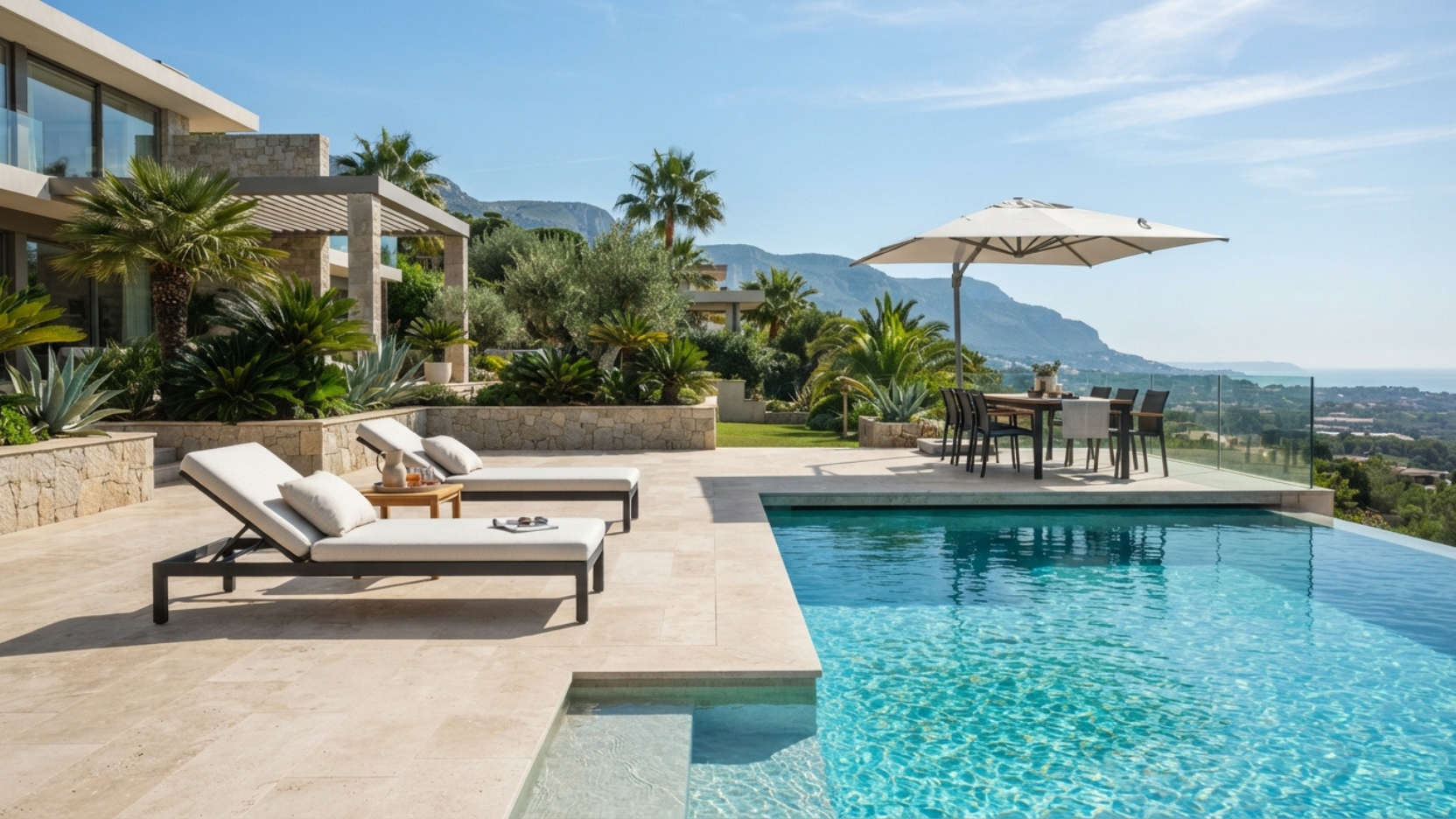
A tired, cracked, or scorching hot pool deck does not always need to be torn out and replaced. In most cases it can be refinished for a fraction of the cost of a full tear out, with a surface that looks better and stays cooler underfoot. This guide compares every refinishing option available in San Antonio, along with cost, durability, and comfort trade offs.
A concrete pool deck rarely fails all at once. More often it fades, develops surface cracks, gets uncomfortably hot in the San Antonio summer sun, or simply starts to look dated next to an updated pool or landscaping. In nearly every one of those cases, refinishing the existing slab costs far less than demolition and a full replacement, and can be completed in a matter of days rather than weeks.
This guide walks through the refinishing options available for concrete pool decks, what each one costs, how it performs underfoot in Texas heat, and how to decide which finish fits your pool, your budget, and how the deck actually gets used.
Refinishing addresses cosmetic issues and comfort, such as fading, minor surface cracking, and heat retention, by applying a new surface layer over sound existing concrete. Repair fixes structural problems like heaving, spalling, or major cracks before any refinishing happens. Replacement is only necessary when the slab has widespread structural failure. Most San Antonio pool decks over 8 to 15 years old are strong candidates for refinishing rather than replacement, since the base slab is usually still structurally sound even when the surface looks worn out.
Budget Friendly
A spray texture overlay is a thin, sprayed on cementitious coating applied over the existing slab, then knocked down with a trowel to create a light, slip resistant texture. It is the fastest and least expensive way to cover hairline cracks, staining, and surface wear while giving the deck a fresh, uniform look. It is typically finished with an acrylic sealer in a light color to help reflect heat.
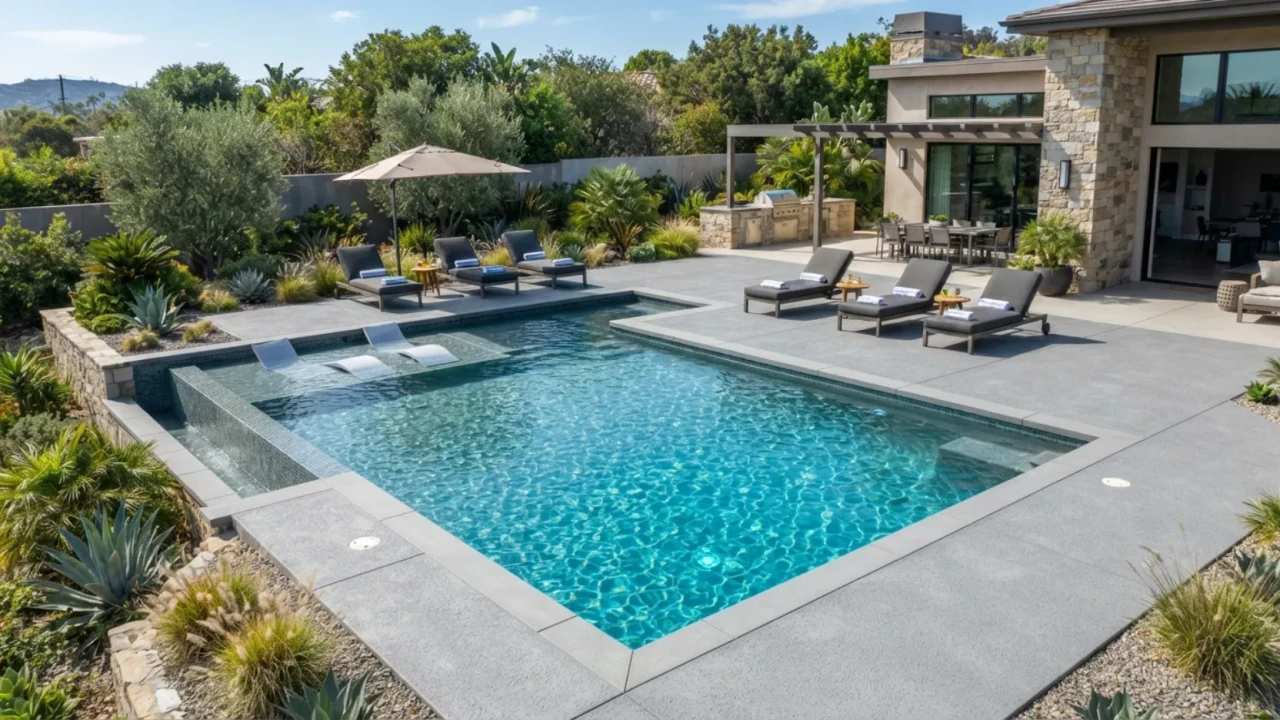
This is the right choice when the existing slab is structurally sound and the main complaints are appearance, minor surface cracking, or a rough, worn texture. It will not hide significant cracks or unevenness, and it is not a substitute for structural repair if the slab has settled or heaved in sections.
Stamped Overlay
A stamped overlay is a thicker cementitious layer, applied over the existing deck and pressed with textured mats before it cures to create the look of natural stone, slate, or travertine. It gives the biggest visual transformation of any refinishing option and is the closest thing to a full replacement in terms of design flexibility, at a much lower cost.
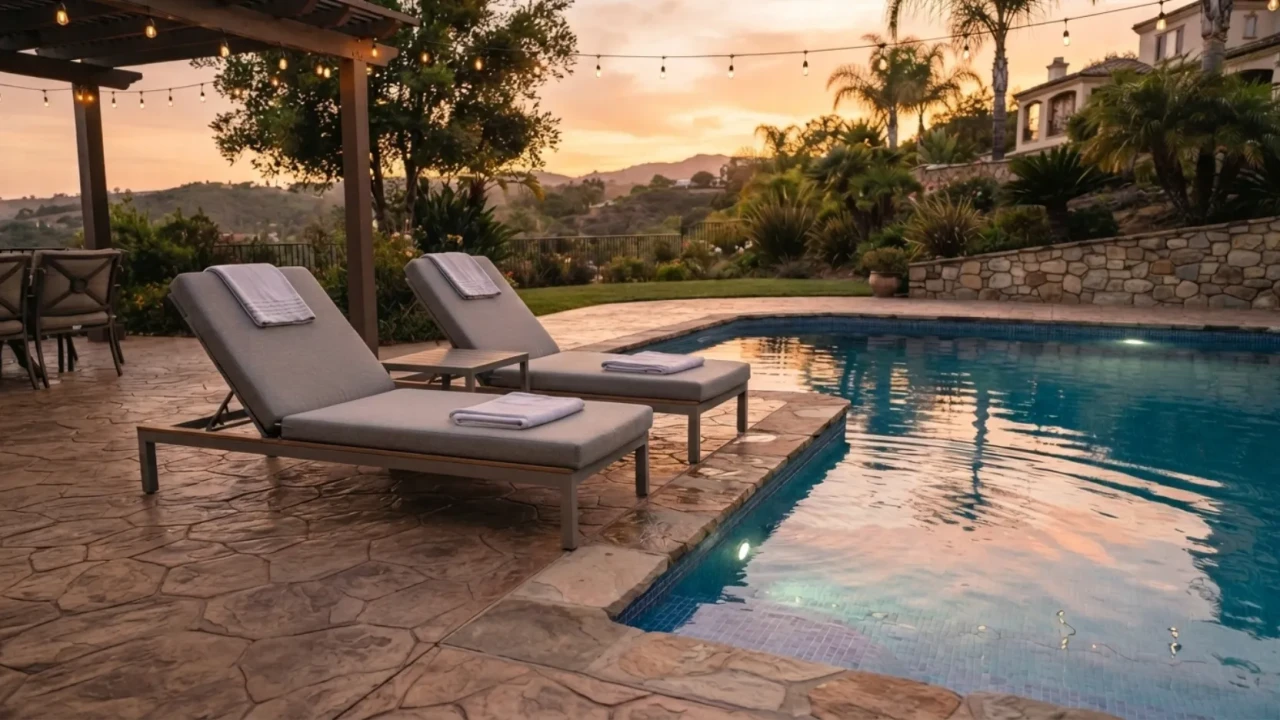
Because the pattern and color are applied during installation, a stamped overlay can be matched to a home’s existing patio or driveway for a cohesive look across the property. It does require the existing slab to be in reasonably good structural condition, since any movement in the base concrete will eventually telegraph through the overlay.
Heat Reflective
Cool deck coatings are acrylic based products formulated with light colored pigments and sometimes small aggregate that reflect sunlight rather than absorbing it. In San Antonio summer heat, a plain gray concrete deck can reach temperatures uncomfortable to walk on barefoot by mid morning, while a properly applied cool deck coating can run noticeably cooler.
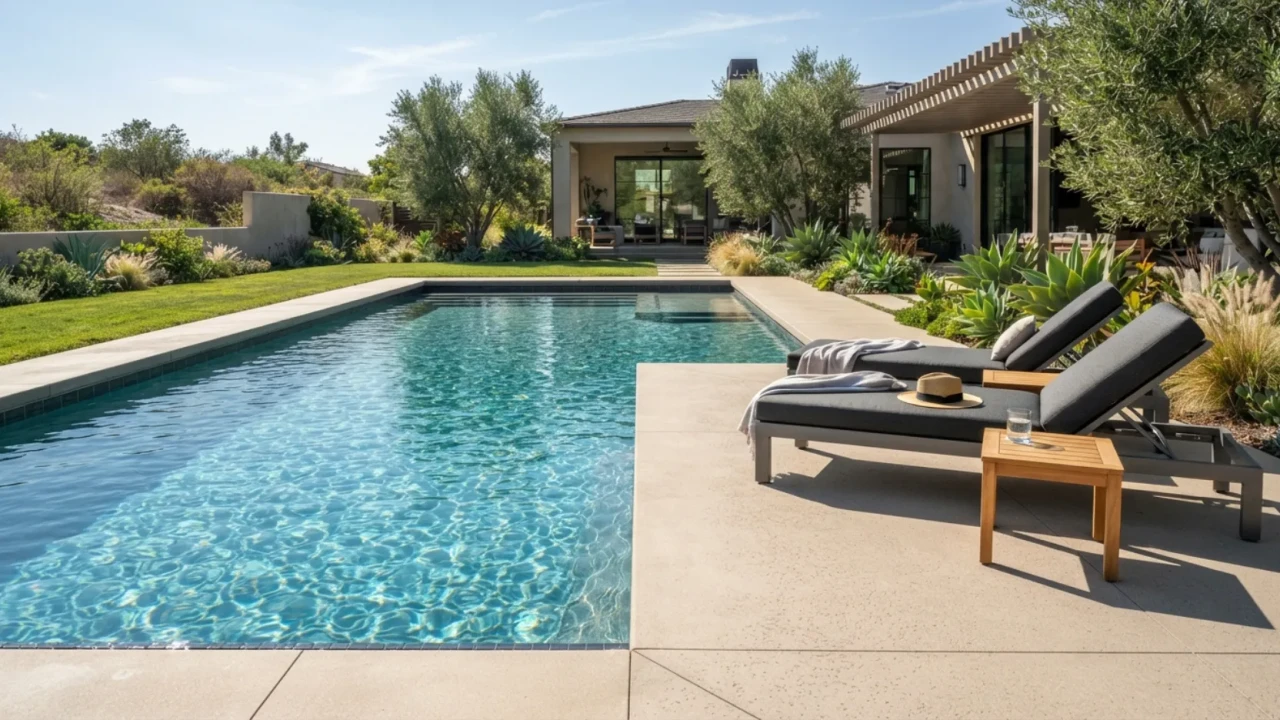
This coating is often applied as a topcoat over an existing spray texture or knockdown finish rather than as a standalone system, which means it can be added during a broader resurfacing project without much added cost. Light colors perform best for heat reflection, so homeowners choosing darker tones for aesthetic reasons should expect less of a temperature benefit.
Pebble Finish
A pebble overlay embeds small, smooth river stones or aggregate into a cementitious binder applied over the existing deck. It creates a natural, textured surface that is one of the most slip resistant finishes available, even when wet, which makes it a strong choice for the immediate splash zone around the pool edge.
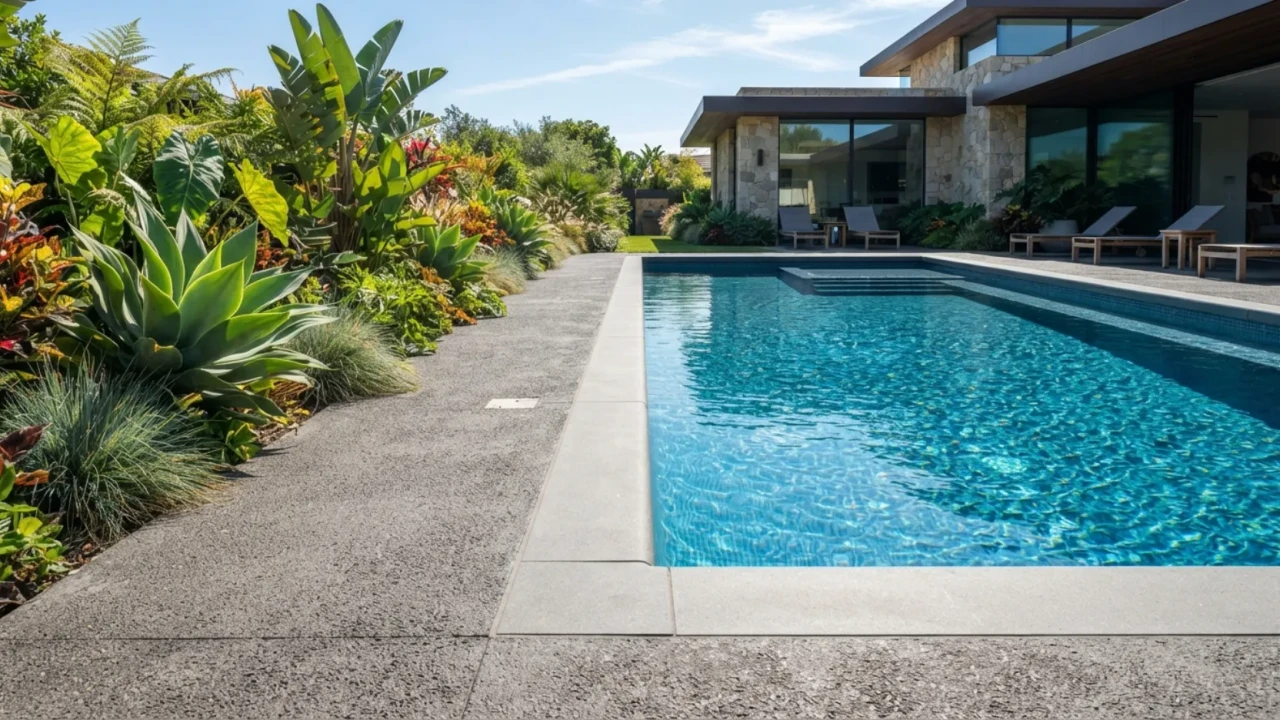
The exposed stone also runs somewhat cooler underfoot than a smooth, dark colored finish, since the irregular surface reduces direct contact area. Pebble finishes are more expensive than a basic spray texture, and the textured surface takes slightly more effort to clean thoroughly, but the trade off is a deck that looks upscale and performs well in wet conditions.
Stain & Seal
When the existing slab is in genuinely good shape, with only fading or minor discoloration and no meaningful surface cracking, acid staining is the lightest touch refinishing option. The stain reacts chemically with the concrete to produce rich, variegated color rather than a flat, uniform tone, and a fresh sealer coat restores sheen and slip resistance.
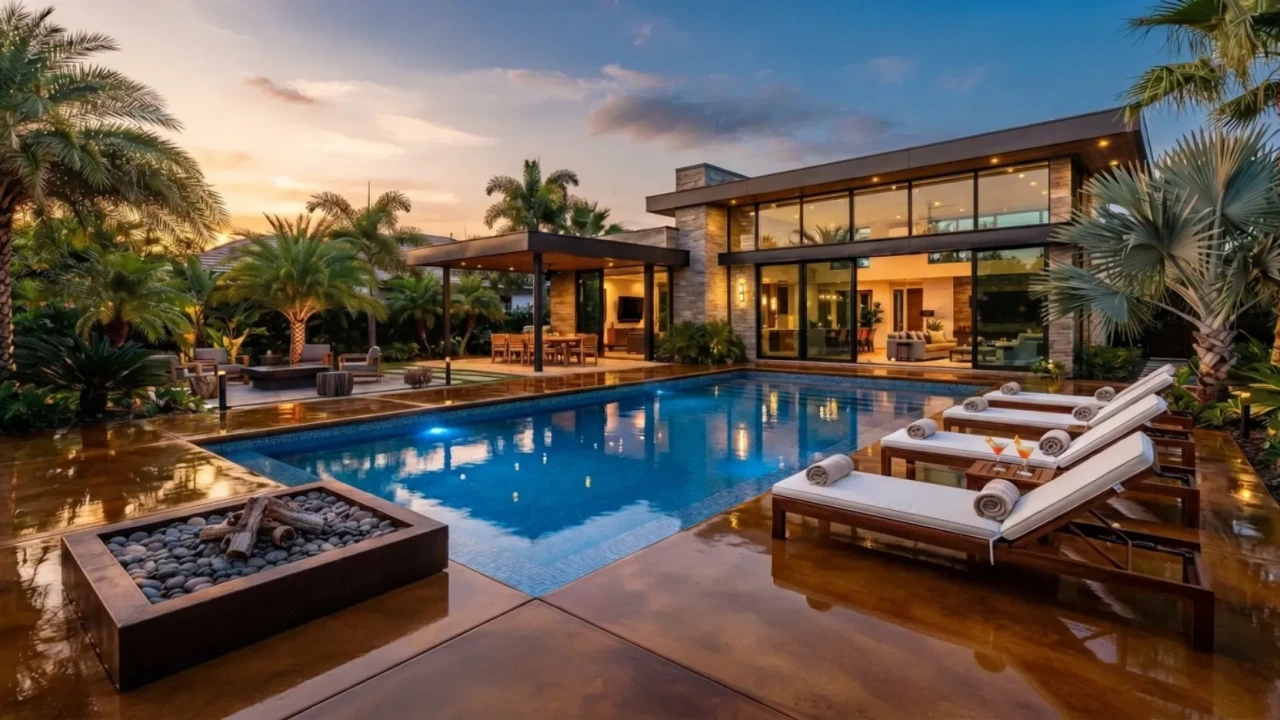
Because staining does not add any material thickness, it will not hide texture problems or cracking, and it is the least durable option in terms of how long the finish holds up to pool chemical splash and foot traffic. It is best suited to a deck that mainly needs a color update rather than a texture or comfort upgrade.
Premium Finish
For homeowners who want the look of genuine travertine or natural stone tile without the cost of tearing out the deck and installing real stone, a travertine style stamped or tile look overlay is the closest match. This finish uses deeper, more detailed stamp patterns and multi tone color blending to closely mimic the veining and texture of natural stone.
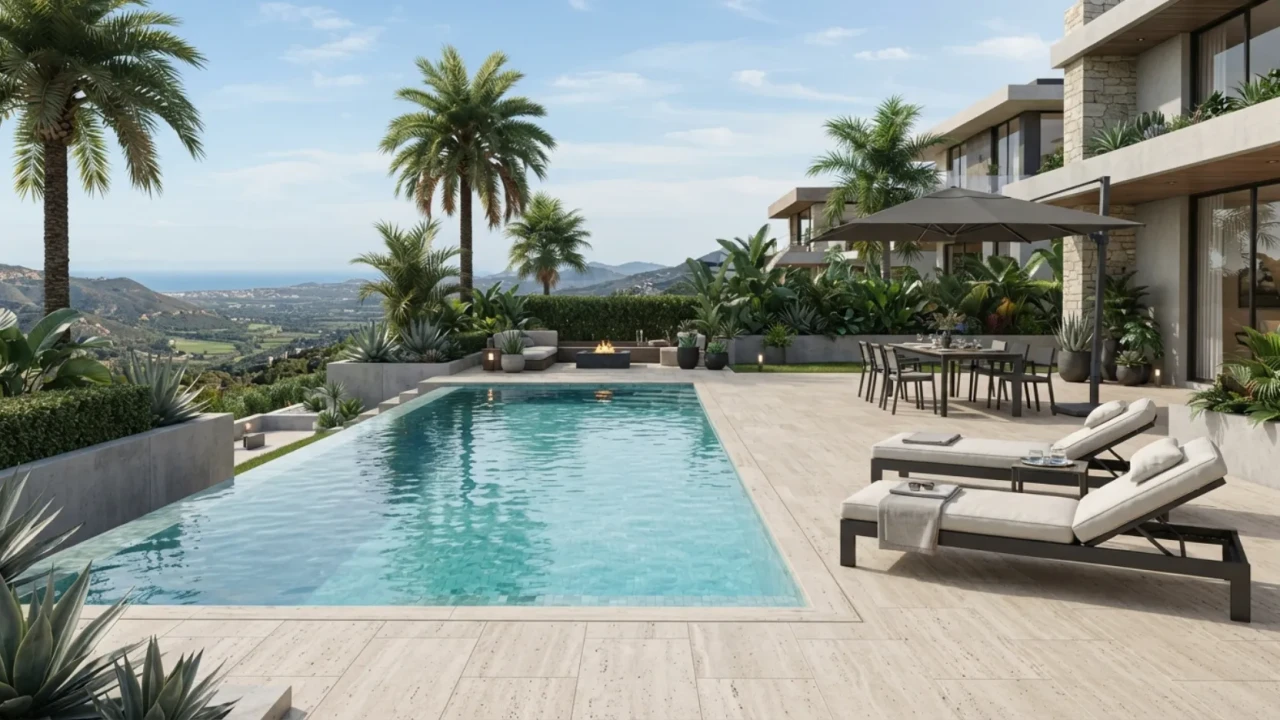
This is the highest cost refinishing option on this list, but it still runs well below the cost of removing an existing slab and installing genuine travertine or porcelain pavers. It suits pool areas that function as an outdoor living space, with furniture, a covered patio, or an outdoor kitchen nearby, where the deck needs to hold up visually next to higher end finishes.
- Existing slab assessed for structural cracking, heaving, or drainage issues before refinishing begins
- Finish selected based on how the deck is actually used, not appearance alone
- Color confirmed with heat performance in mind if bare feet and hot summers are a concern
- Slip resistance rating discussed for areas immediately around the pool edge
- Sealing schedule confirmed at installation, and every 2 to 3 years afterward
| Refinishing option | Typical cost | Heat performance | Slip resistance |
|---|---|---|---|
| Spray texture / knockdown | $4–7/sqft | Moderate, improves with light color | Good |
| Stamped concrete overlay | $10–16/sqft | Moderate, depends on color choice | Good |
| Cool deck acrylic coating | $1–3/sqft added | Excellent, built for heat reflection | Good |
| Pebble / aggregate overlay | $8–13/sqft | Good, texture reduces heat retention | Excellent, even wet |
| Acid stain and seal | $3–6/sqft | Depends on color chosen | Moderate |
| Travertine look tile overlay | $12–18/sqft | Good, lighter stone tones common | Good |
Ask your contractor to test a small sample panel of your chosen finish and color in full sun before committing to the full deck. Colors and textures can look very different in a showroom sample than they do reflecting the Texas sun next to blue pool water, and a sample panel is a cheap way to avoid an expensive surprise.
How do I know if my pool deck needs repair or just refinishing?
How long does pool deck refinishing take?
Can pool deck refinishing be done while the pool stays full of water?
Which refinishing option holds up best to San Antonio’s summer heat?
Do I need a permit to refinish an existing pool deck in San Antonio?
Get a free pool deck refinishing quote in San Antonio
Tell us about your pool deck and what is bothering you about it, whether that is cracking, fading, or heat. We will visit your property, assess the existing slab, and give you a detailed written quote at no cost.