
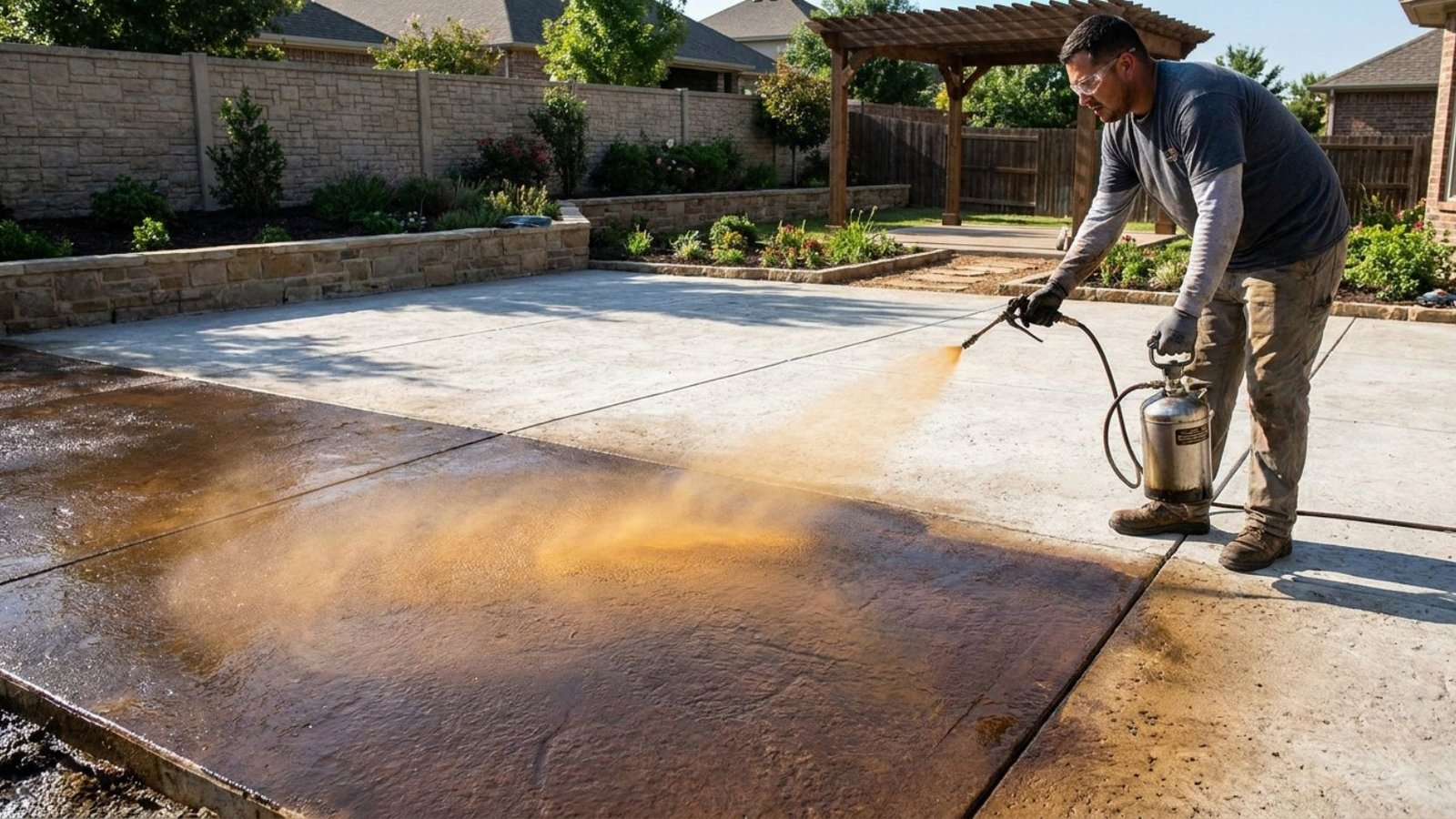
Your patio is solid, it just looks tired, gray, or patched. This guide explains when you can stain an existing concrete patio, what has to happen before the color goes on, and when stain is the wrong fix.
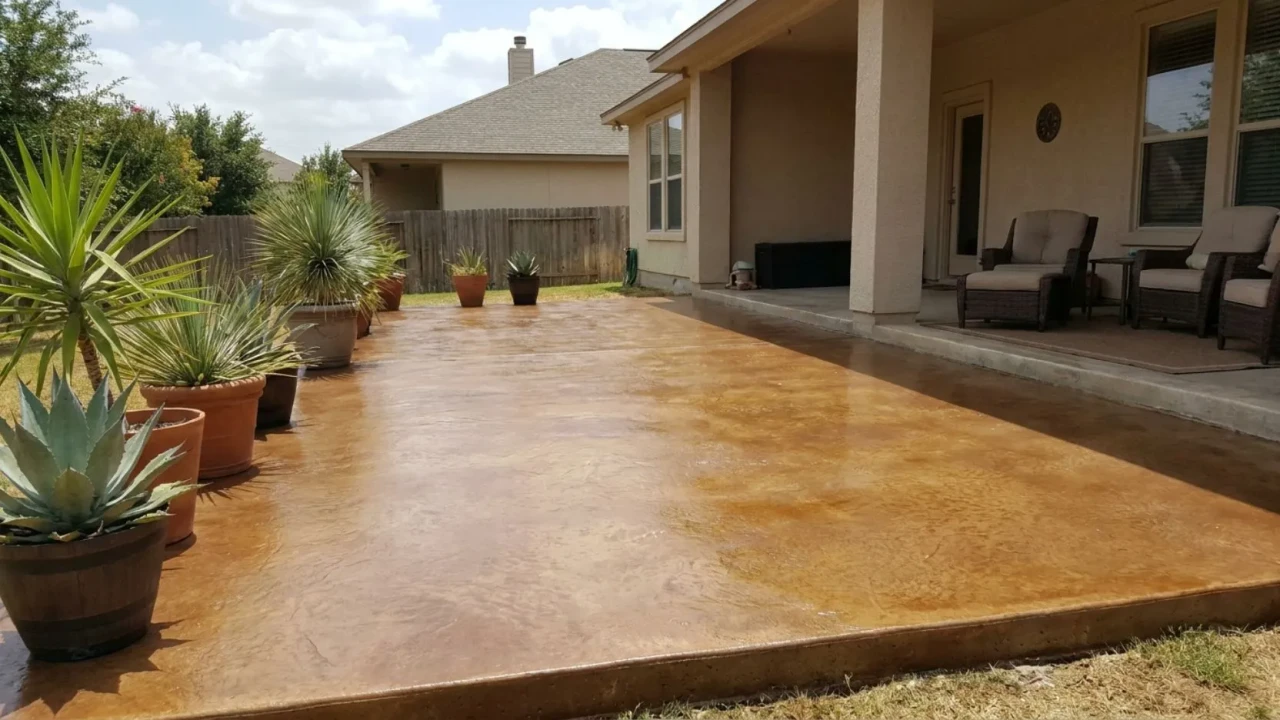
- Can you stain an existing concrete patio?
- How do I know if my old patio will take stain?
- What prep does an old patio need before staining?
- Will stain hide cracks, patches, and old marks?
- How does San Antonio sun affect a stained patio?
- Should I stain the patio myself or hire a crew?
- What changes the price of staining an existing patio?
- What should I check before I stain my patio?
- Where do we work?
- What else are homeowners asking?
Usually, yes, if the slab is sound. Ted’s crew, with 40 years in concrete, cleans and profiles the surface so color takes evenly, then seals it, because San Antonio sun fades old stain fast. Wide cracks, sunken sections, or an old sealer change the plan, so call for a free look before you buy stain.
Can you stain an existing concrete patio?
Yes, in most cases. A sound patio that is clean, open to the stain, and sealed afterward can take new color without being torn out.
The patio service page lists staining as one way to bring back a worn or faded finish “without always needing a full tear-out.” The staining page goes further: a solid stain or antique finish can turn a basic patio into a designed surface at a fraction of replacement cost. The catch is the word “sound.” Stain changes how the slab looks. It does not fix how the slab sits.
Checked the concrete patio, patio resurfacing, and concrete staining service pages on October 7, 2026.
How do I know if my old patio will take stain?
Look at three things: whether the slab is level and in one piece, whether water soaks in, and whether anything is sitting on top of the concrete. If all three check out, stain is usually a good fit.
| What you see | What it usually means | Likely next step |
|---|---|---|
| Faded, gray, or dull but level | The slab is fine and the finish is worn | Clean, profile, stain, and seal |
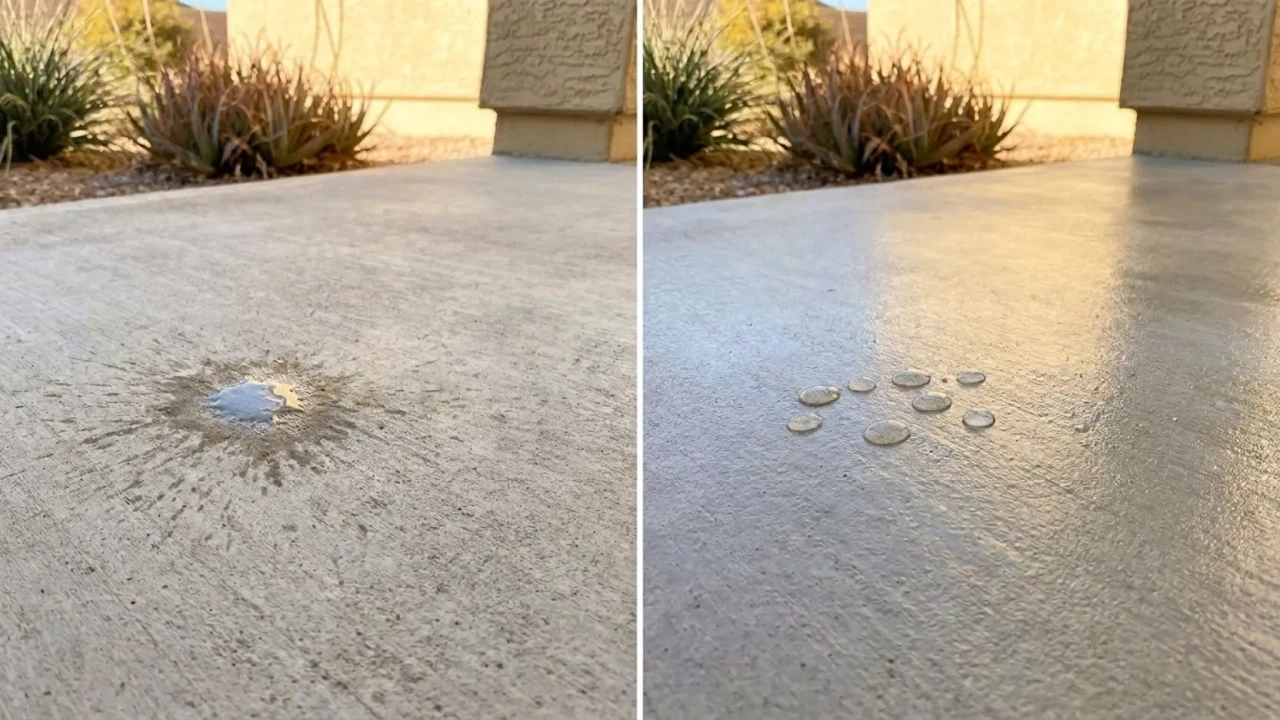
| Water beads up on the surface | An old sealer or coating is likely still on top | It has to come off so stain can soak in |
| Oil, rust, or organic marks | Stains that ordinary cleaners do not lift | Treat the surface, then a color coat that hides the damage |
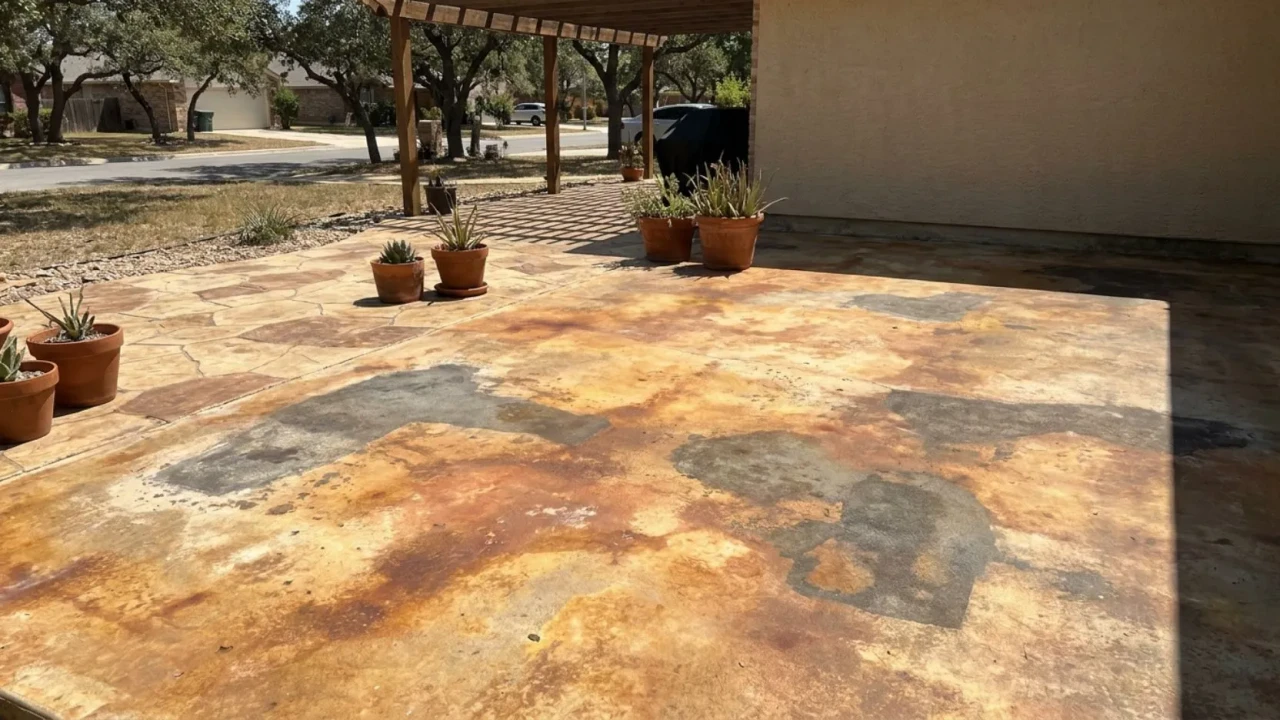
| Gray patches on an older slab | Past repairs that do not match | Color matching and blending |
| Sunken sections or wide cracks | The slab or base underneath is moving | Repair or repour first, then talk about color |
| Puddles after rain | The pitch is wrong | Fix drainage before any finish work |
A simple water test
Sprinkle water on a few spots, including a high-traffic area and a corner. If it darkens the concrete and soaks in, stain can usually soak in too. If it sits in beads, something on the surface is blocking it.
What prep does an old patio need before staining?
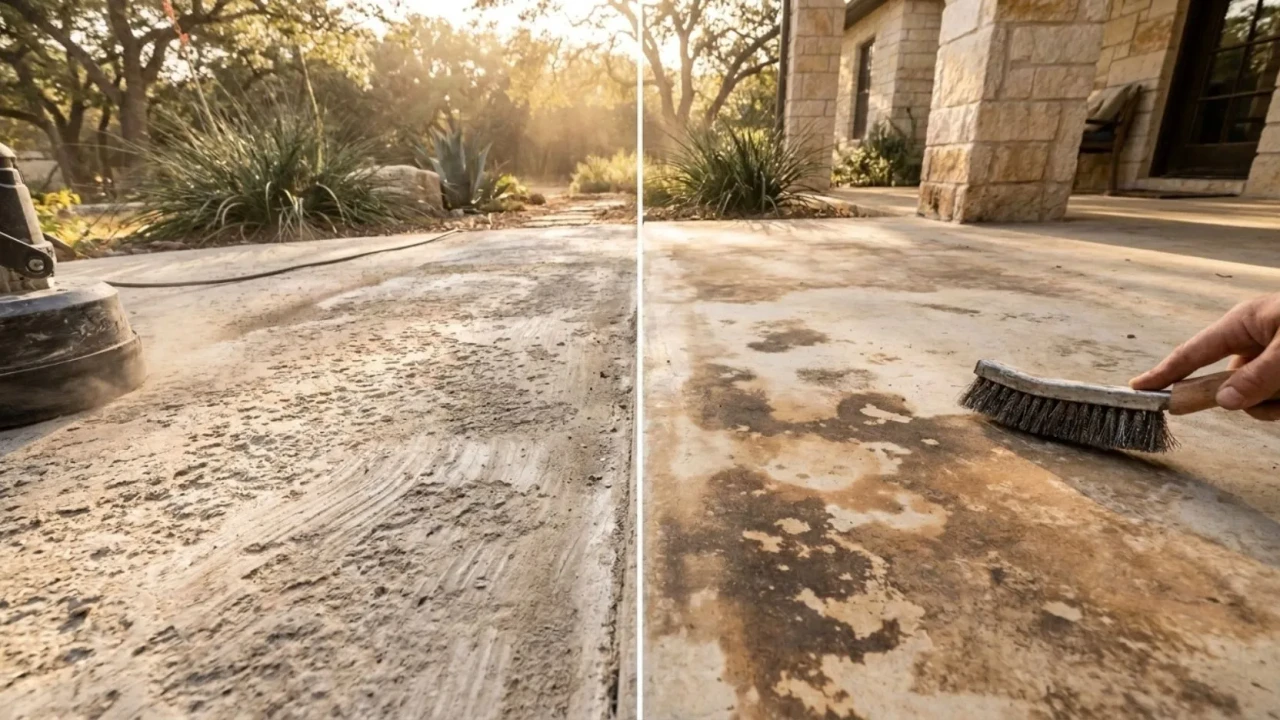
Cleaning and profiling come first. The staining page says professional staining starts with cleaning and profiling so color takes evenly, and that skipping that prep is what leaves streaks and hot spots.
- Clean: Dirt, grease, and organic growth come off so they do not lock under the new color.
- Strip what blocks stain: An old sealer, paint, or coating has to come off or the stain sits on top instead of going in.
- Profile: The surface is opened up so it takes color evenly across the whole patio.
- Repair: Cracks and low spots are handled before color, since they show through a finish.
- Seal: The job is not done until the sealer is on. The staining page says unsealed stained concrete looks chalky and absorbs everything.
Choosing a stain type? Read acid stain vs water-based concrete stain before you pick a color.
The slab decides, then the color
Will stain hide cracks, patches, and old marks?
It can hide marks and blend patches, but it will not close a crack. Color changes the surface, so anything structural still needs a repair.
- Oil, rust, and organic stains: The staining page says the crew treats the surface, then locks in a new color coat that hides damage.
- Mismatched patches: New gray patches stick out on a stained slab. Color matching and blending bring the surface back to one look.
- Hairline cracks: They often stay visible through a stain. Some owners like the aged look, others want them filled first.
- Wide or growing cracks: The patio page notes cracks trap water and keep getting wider. Fix the cause, then stain.
Not sure if the cracks are cosmetic? Start with should I repair or replace my concrete patio?
How does San Antonio sun affect a stained patio?
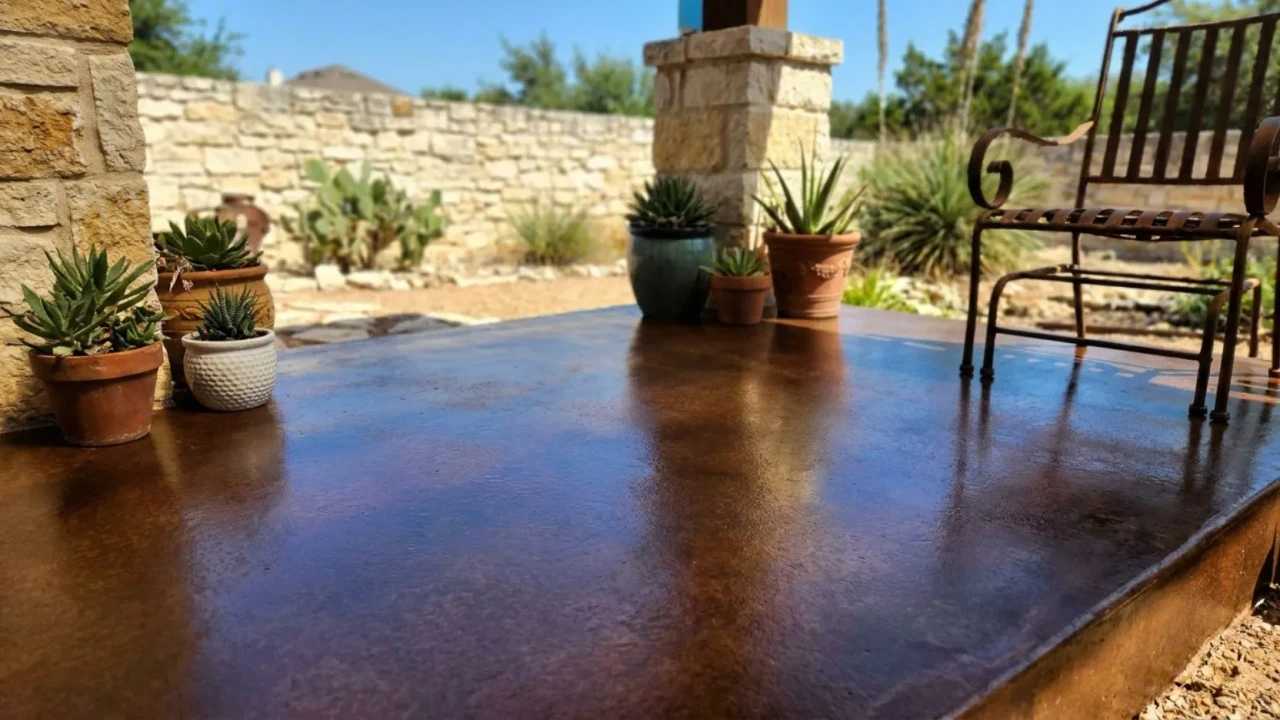
It fades it. The staining page says sun fades old stains fast, and a refreshed stain plus a quality sealer restore depth without replacing the slab.
That is why the sealer is not optional on an outdoor slab here. It also means a stained patio is something you keep up, not something you finish once. Plan on refreshing the sealer, and the color when it dulls, as part of owning it.
Related reading: how San Antonio weather affects stained concrete
Should I stain the patio myself or hire a crew?
You can do it yourself on a clean, sound, unsealed slab, but most bad results come from skipped prep. The staining page names DIY stains and poor prep as the cause of streaks and hot spots.
- DIY fits when: the patio is level, water soaks in, there are no old coatings, and you are fine with some variation in color.
- Call a crew when: there is an old sealer to strip, patches to blend, oil or rust marks, cracks, or standing water.
- Either way: seal it. Unsealed stain looks chalky and soaks up everything.
Going the DIY route? Read how to stain concrete yourself first. If you would rather have it done, our stained concrete patio in San Antonio work starts with a free look at the slab.
“I am beyond happy with the stamped concrete patio they created for me. The process was smooth, the team kept me informed, and the stain color is exactly what I envisioned.”
Homeowner, San Antonio · Google review shown on our patio service page
What changes the price of staining an existing patio?
Square footage, access, demolition needs, finish type, and site prep. The service pages name those five factors and do not publish a dollar figure, so the price comes in writing after a free look.
- Size: More area means more cleaning, more stain, and more sealer.
- Prep: Stripping an old sealer or treating oil and rust marks adds steps.
- Finish: One solid color is simpler than an antique look, blending, or a pattern.
- Repairs: Cracks and low spots that need fixing first are part of the job.
The staining page also says a small repair typically costs less than a full replacement, which is the main reason people stain an old patio instead of pouring a new one.
What should I check before I stain my patio?
Check that the slab is sound, that water soaks in, and that you have a plan for sealing. Then decide whether you or a crew does the prep.
Your existing patio staining checklist
Do these before you buy stain or book a crew.
- Walk the patio and look for sunken or tilted sections.
- Mark any crack wider than a hairline.
- Do the water test in three spots.
- Note oil, rust, or leaf stains you want gone.
- Check for puddles after the next rain.
- Save photos of the color you want.
- Ask that sealing be part of the plan.
- Get the price in writing before work starts.
Want to know if your patio can take stain?
Free look at the slab, price in writing before work, licensed and insured crew.
Where do we work?
Affordable Concrete San Antonio works across San Antonio and nearby areas. The patio service page lists Helotes, Leon Valley, Shavano Park, Terrell Hills, Alamo Heights, Converse, Universal City, Schertz, Boerne, Cibolo, Fair Oaks Ranch, Bulverde, Spring Branch, New Braunfels, Pleasanton, Floresville, Castroville, Lytle, and Von Ormy. Not sure about your address? Call (713) 504-2341.
What else are homeowners asking?
These are the short answers people want before they book a quote.
Can you stain an existing concrete patio?
Yes, in most cases. A sound patio that is cleaned, profiled, and sealed afterward can take new color without being torn out.
How do I know if my patio will take stain?
Sprinkle water on a few spots. If it soaks in and darkens the concrete, stain can usually soak in too. If it beads up, an old sealer or coating has to come off first.
Will stain cover cracks in my patio?
No. Stain can hide marks and help blend patches, but it does not close a crack. Wide or growing cracks need a repair before any color goes on.
Does a stained patio need to be sealed?
Yes. Unsealed stained concrete looks chalky and absorbs everything, and sealer helps the color hold up in San Antonio sun.
How long does stain last in San Antonio sun?
The service pages do not give a number of years. They say sun fades old stains fast, and a refreshed stain plus a quality sealer restore depth without replacing the slab.
Is the estimate free?
Yes. The site visit and the written estimate are free, with no obligation, and you see the price before any work starts.
Sources used in this article:
- Affordable Concrete San Antonio, concrete patio service page, checked October 7, 2026, affordableconcretesanantonio.com/concrete-patio-san-antonio/
- Affordable Concrete San Antonio, concrete staining service page, checked October 7, 2026, affordableconcretesanantonio.com/concrete-staining-san-antonio/
- Affordable Concrete San Antonio, patio resurfacing service page, checked October 7, 2026, affordableconcretesanantonio.com/concrete-patio-san-antonio/resurfacing/
This article is general information for San Antonio homeowners. It is not a quote, and it does not replace a look at your patio. The company does not publish a staining price or a stain lifespan in years, so none is given here.
What should I read next?
Start with our patio service page, or keep reading if cost or permits are your next question.