
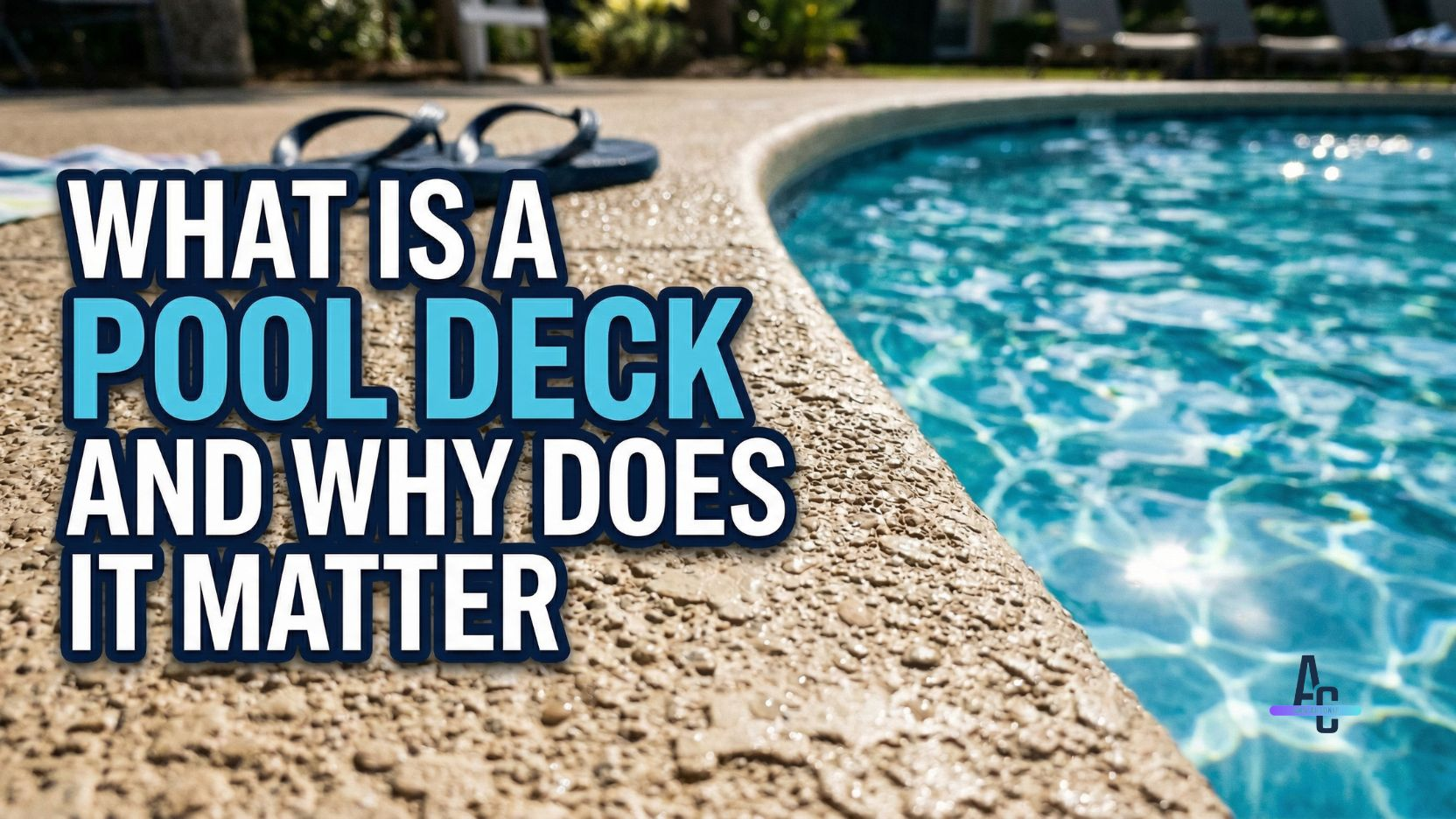
If you own a pool, the deck around it is not just extra concrete. A pool deck is the surface that surrounds a swimming pool, and it matters because it affects safety, drainage, comfort, maintenance, and the overall look of your outdoor space. For homeowners in San Antonio and Houston, where heat, sun, and heavy rain can all impact outdoor surfaces, the right pool deck design and material choice can make a major difference.
At Affordable Concrete San Antonio, pool deck work is a core part of residential concrete projects, including repairs, resurfacing, coatings, and decorative finishes. That hands-on experience matters because pool decks have to do more than look good. They need to withstand water, foot traffic, weather, and time.
What Is A Pool Deck?
A pool deck is the finished surface built around a swimming pool for walking, seating, access, and outdoor use. It creates the area where people enter and exit the pool, place furniture, and move safely around wet surfaces.
Pool decks are commonly made from:
- Concrete
- Stamped concrete
- Pavers
- Natural stone
- Textured overlays
- Kool Deck-style coatings
For many homeowners, concrete pool decks are a popular choice because they are durable, cost-effective, and highly customizable.
Why Does A Pool Deck Matter So Much?
A pool deck matters because it supports safety, protects the area around the pool, and improves how the space looks and functions.
A well-built pool deck helps with:
- Slip resistance on wet surfaces
- Drainage and water runoff
- Surface temperature in hot weather
- Long-term durability
- Easier cleaning and maintenance
- Better backyard appearance
- Improved property value
Key takeaway: The pool deck is one of the most used and most visible parts of a backyard pool area.
How Does A Pool Deck Affect Safety?
Pool deck safety is one of the biggest reasons this surface matters. Wet concrete, cracks, uneven sections, and poor drainage can create slip-and-trip hazards.
A safer pool deck should include:
- A slip-resistant texture
- Proper slope for drainage
- Smooth transitions and even surfaces
- Expansion joints to reduce cracking
- Repairs when spalling or surface wear appears
In Texas, heat can also make some surfaces uncomfortable to walk on barefoot. That is why many homeowners consider cooler surface options, such as textured coatings or Kool Deck finishes.
What Makes Concrete A Good Pool Deck Material?
Concrete is a strong pool deck material because it is durable, versatile, and easier to customize than many alternatives.
Here is a quick comparison:
| Material | Benefits | Considerations |
| Concrete | Durable, affordable, customizable | Can crack if not installed or maintained properly |
| Stamped Concrete | Decorative look, mimics stone or brick | Needs sealing and texture for traction |
| Pavers | Easy to replace individual units | Can shift over time |
| Natural Stone | High-end appearance | Higher cost and maintenance |
Concrete works well for pool decks because it can be finished in several ways, including:
- Broom finish
- Stamped concrete
- Stained concrete
- Colored concrete
- Spray texture
- Resurfaced overlays
What Happens If A Pool Deck Is Damaged?
A damaged pool deck can become a safety issue and lead to more expensive repairs later. Small cracks, worn coatings, and uneven sections often worsen if ignored.
Common pool deck problems include:
- Cracks
- Surface scaling or spalling
- Faded or worn sealers
- Loose or failed joints
- Poor drainage
- Hot, uncomfortable surfaces
- Slippery finishes
When these issues show up, homeowners often need:
- Pool deck repair
- Concrete resurfacing
- Joint repair
- Sealing
- Non-slip coating updates
Key takeaway: Repairing damage early is usually more practical than waiting for full replacement.
Why Does Pool Deck Drainage Matter?
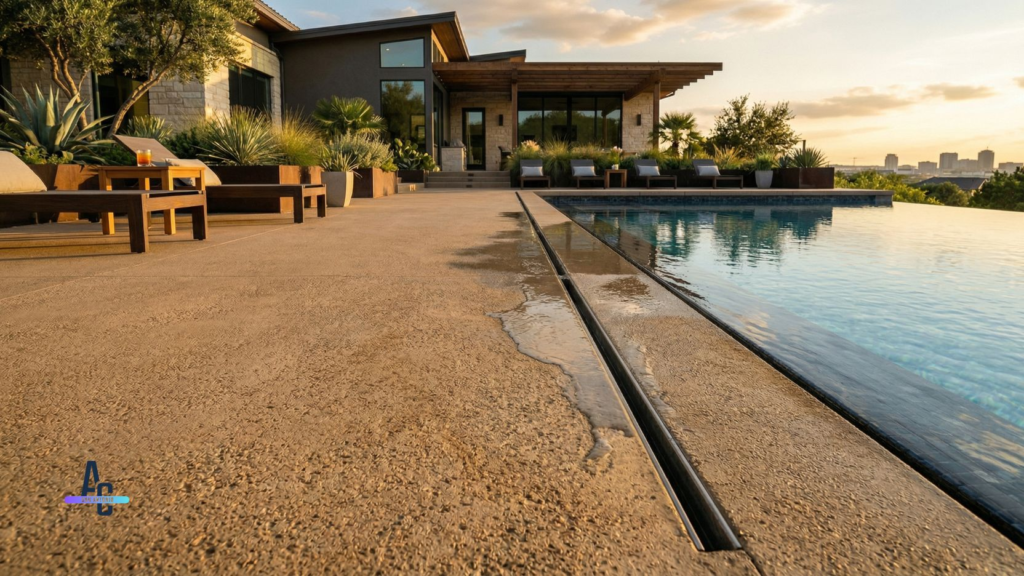
Drainage matters because standing water increases slip risk and can shorten the deck’s lifespan. A pool deck should not be perfectly flat. It should have a slight slope that helps water move away from the pool and nearby structures.
Good drainage helps prevent:
- Puddles
- Water damage
- Surface staining
- Algae growth
- Faster wear
This is especially important in places like San Antonio and Houston, where heavy rain and heat can stress outdoor concrete.
Can A Pool Deck Improve Home Value And Curb Appeal?
Yes, a well-designed pool deck can improve curb appeal and make the backyard feel more finished and usable. While the exact value depends on the market and the property’s condition, attractive outdoor living spaces are often a strong selling point.
A quality pool deck can make a space feel:
- Cleaner
- Safer
- More modern
- More comfortable for guests
- Better suited for outdoor living
Decorative concrete finishes can also help match the home’s style without the cost of higher-end stone materials.
What Should Homeowners In San Antonio And Houston Look For?
Homeowners in San Antonio and Houston should look for pool deck materials and finishes that handle heat, sun, rainfall, and regular use.
A practical pool deck should offer:
- Durability in Texas weather
- Slip-resistant texture
- Good drainage design
- Low maintenance
- Finish options that fit the home
If your existing deck is cracked, faded, or rough underfoot, consider repair or resurfacing rather than waiting for larger surface failure.
FAQs
Is A Pool Deck The Same As A Patio?
No. A pool deck is specifically the surface around a swimming pool, while a patio is a more general outdoor living area.
What Is The Best Finish For A Concrete Pool Deck?
The best finish depends on your goals, but slip-resistant textured finishes, broom finishes, and coated surfaces designed for wet areas are common choices.
Does A Cracked Pool Deck Need Repair Right Away?
In many cases, yes. Cracks can grow over time and may create safety or drainage problems, especially around wet, high-traffic areas.